Kirjojen hintavertailu – 12 859 829 kirjaa ja 27 kauppaa

Kirjailija

Mark Carrigan

Kirjat ja teokset yhdessä paikassa: 9 kirjaa, julkaisuja vuosilta 2016–2025, suosituimpiin kuuluu Generative AI for Academics. Vertaile teosten hintoja ja tarkista saatavuus suomalaisista kirjakaupoista.

9 kirjaa

Kirjojen julkaisuvuodet: 2016–2025.

Platform and Agency

Platform and Agency

Mark Carrigan

TAYLOR FRANCIS LTD
2025
sidottu
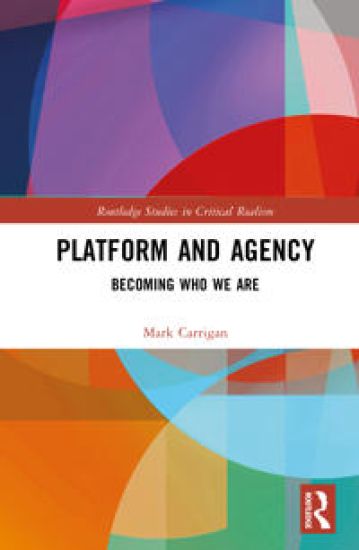
This book examines how digital platforms are reconfiguring the parameters of agency and reflexivity in contemporary social life. Drawing on Margaret Archer's social realist framework, it moves beyond treating platforms merely as tools or environments to conceptualize them as distinct sociotechnical structures with emergent properties and powers that shape human action without determining it. The book develops the concept of platform and agency to explore the temporal dimensions of sociotechnical change, tracing how platforms condition personal and collective reflexivity through mechanisms of distraction, cultural abundance, and multiplying communication channels. While affirming the analytical distinction between structure, culture and agency, it demonstrates how platforms constitute a fourth dimension necessary for understanding contemporary social morphogenesis. Through the conceptual pairing of psychobiography and personal morphogenesis, the book offers a nuanced account of how individuals become who they are within platformized lifeworlds. Rather than announcing an epochal break with previous social forms, the analysis illuminates the accumulating consequences of platform mediation across biographical timescales. This book will interest researchers and graduate students in social theory, philosophy of technology, digital sociology, platform studies, media and communication studies, critical data studies, internet studies, surveillance studies, sociology of knowledge, digital anthropology, and social informatics.
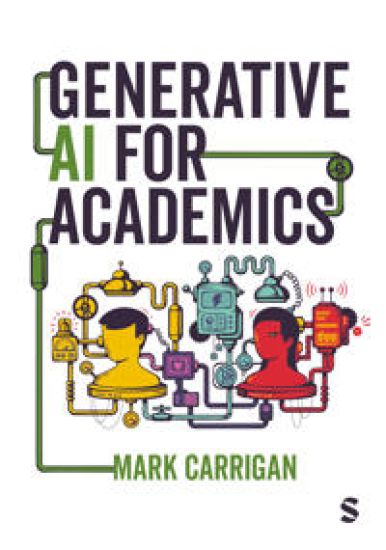
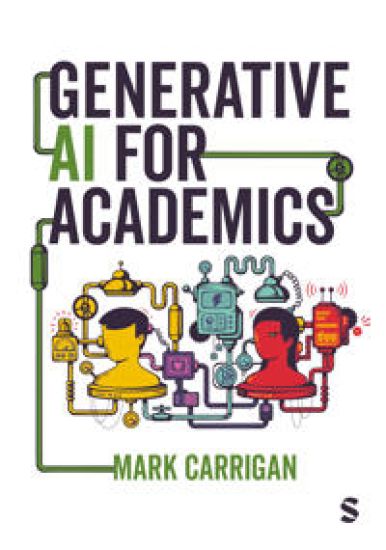
Generative AI for Academics

Generative AI for Academics

Mark Carrigan

SAGE PUBLICATIONS LTD
2024
sidottu
"This is your indispensable guide to navigating the rise of generative AI as an academic. It thoughtfully explores rapidly evolving AI capabilities reshaping higher education, examining challenges and ethical dilemmas across the sector." It provides useful strategies for using generative AI in your scholarly work while upholding professional standards. This practical guidance addresses four core areas of academic work: Thinking: How to use generative AI to augment individual and collaborative scholarly thinking that can assist in developing novel ideas and advancing impactful projectsCollaborating: Explore how generative AI can be used as a research assistant, coordinating teams and enhancing scholarly cooperationCommunicating: Cautioning against over-reliance, examine how generative AI can relieve communication burdens while maintaining professionalism and etiquetteEngaging: thoughtful and practical frameworks are offered for using these developments to support online engagement without sacrificing scholarly principles Dr Mark Carrigan is a digital sociologist, author and Senior Lecturer in Education at the University of Manchester, where he is co-lead of the Digital Education Manchester group. ***Unlock exclusive, time-limited access to our custom GPT, designed to deepen your engagement, when you purchase a copy of the book***
Generative AI for Academics

Generative AI for Academics

Mark Carrigan

SAGE PUBLICATIONS LTD
2024
nidottu

Halvin toimitettuna 34,80 €

"This is your indispensable guide to navigating the rise of generative AI as an academic. It thoughtfully explores rapidly evolving AI capabilities reshaping higher education, examining challenges and ethical dilemmas across the sector." It provides useful strategies for using generative AI in your scholarly work while upholding professional standards. This practical guidance addresses four core areas of academic work: Thinking: How to use generative AI to augment individual and collaborative scholarly thinking that can assist in developing novel ideas and advancing impactful projectsCollaborating: Explore how generative AI can be used as a research assistant, coordinating teams and enhancing scholarly cooperationCommunicating: Cautioning against over-reliance, examine how generative AI can relieve communication burdens while maintaining professionalism and etiquetteEngaging: thoughtful and practical frameworks are offered for using these developments to support online engagement without sacrificing scholarly principles Dr Mark Carrigan is a digital sociologist, author and Senior Lecturer in Education at the University of Manchester, where he is co-lead of the Digital Education Manchester group. ***Unlock exclusive, time-limited access to our custom GPT, designed to deepen your engagement, when you purchase a copy of the book***
The Public and Their Platforms

The Public and Their Platforms

Mark Carrigan; Lambros Fatsis

Bristol University Press
2021
sidottu
Available Open Access digitally under CC-BY-NC-ND licence. As social media is increasingly becoming a standard feature of sociological practice, this timely book rethinks the role of these mediums in public sociology and what they can contribute to the discipline in the post-COVID world. It reconsiders the history and current conceptualizations of what sociology is, and analyzes what kinds of social life emerge in and through the interactions between ‘intellectuals’, ‘publics’ and ‘platforms’ of communication. Cutting across multiple disciplines, this pioneering work envisions a new kind of public sociology that brings together the digital and the physical to create public spaces where critical scholarship and active civic engagement can meet in a mutually reinforcing way.
The Public and Their Platforms

The Public and Their Platforms

Mark Carrigan; Lambros Fatsis

Bristol University Press
2021
nidottu
Available Open Access digitally under CC-BY-NC-ND licence. As social media is increasingly becoming a standard feature of sociological practice, this timely book rethinks the role of these mediums in public sociology and what they can contribute to the discipline in the post-COVID world. It reconsiders the history and current conceptualizations of what sociology is, and analyzes what kinds of social life emerge in and through the interactions between ‘intellectuals’, ‘publics’ and ‘platforms’ of communication. Cutting across multiple disciplines, this pioneering work envisions a new kind of public sociology that brings together the digital and the physical to create public spaces where critical scholarship and active civic engagement can meet in a mutually reinforcing way.
Structure, Culture and Agency

Structure, Culture and Agency

Tom Brock; Mark Carrigan; Graham Scambler

Routledge
2020
nidottu
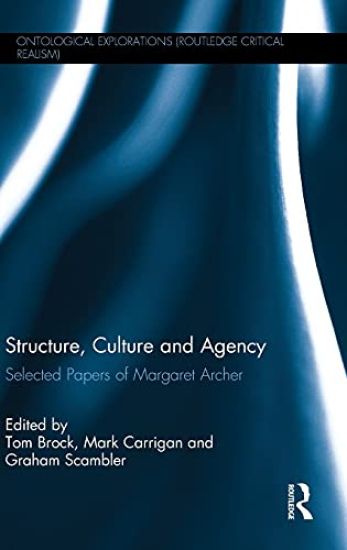
Professor Margaret Archer is a leading critical realist and major contemporary social theorist. This edited collection seeks to celebrate the scope and accomplishments of her work, distilling her theoretical and empirical contributions into four sections which capture the essence and trajectory of her research over almost four decades. Long fascinated with the problem of structure and agency, Archer’s work has constituted a decade-long engagement with this perennial issue of social thought. However, in spite of the deep interconnections that unify her body of work, it is rarely treated as a coherent whole. This is doubtless in part due to the unforgiving rigour of her arguments and prose, but also a byproduct of sociology’s ongoing compartmentalisation. This edited collection seeks to address this relative neglect by collating a selection of papers, spanning Archer’s career, which collectively elucidate both the development of her thought and the value that can be found in it as a systematic whole. This book illustrates the empirical origins of her social ontology in her early work on the sociology of education, as well as foregrounding the diverse range of influences that have conditioned her intellectual trajectory: the systems theory of Walter Buckley, the neo-Weberian analysis of Lockwood, the critical realist philosophy of Roy Bhaskar and, more recently, her engagement with American pragmatism and the Italian school of relational sociology. What emerges is a series of important contributions to our understanding of the relationship between structure, culture and agency. Acting to introduce and guide readers through these contributions, this book carries the potential to inform exciting and innovative sociological research.
Social Media for Academics

Social Media for Academics

Mark Carrigan

SAGE Publications Ltd
2019
nidottu
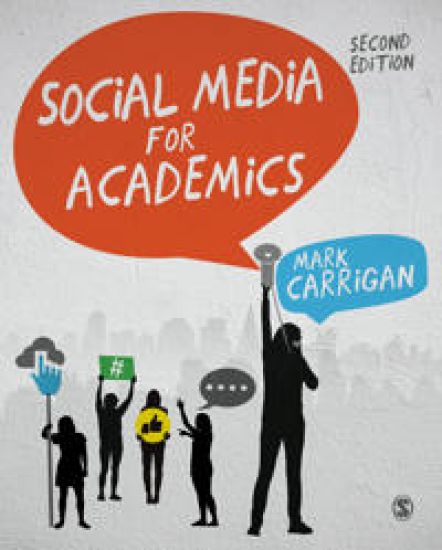
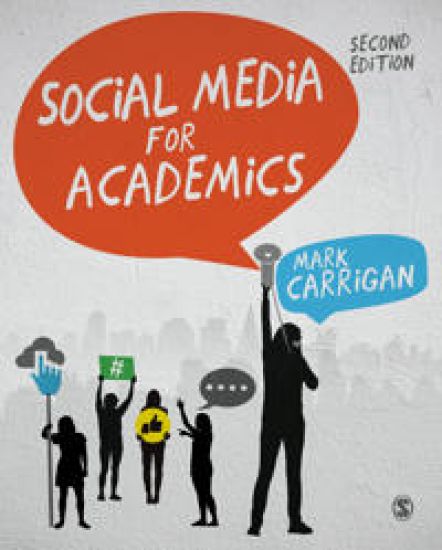
Social media has become an inescapable part of academic life. It has the power to transform scholarly communication and offers new opportunities to publish and publicise your work, to network in your discipline and beyond and to engage the public. However, to do so successfully requires a careful understanding of best practice, the risks, rewards and what it can mean to put your professional identity online. Inside you'll find practical guidance and thoughtful insight on how to approach the opportunities and challenges that social media presents in ways that can be satisfying and sustainable as an academic. The guide has been updated throughout to reflect changes in social media and digital thinking since the last edition, including: The dark side of social media – from Trump to harassmentEmerging forms of multimedia engagement – and how to use to your advantage Auditing your online identity – the why and howTaking time out – how to do a social media sabbatical. Visit Mark's blog for more insights and discussion on social media academic practice.
Social Media for Academics

Social Media for Academics

Mark Carrigan

SAGE Publications Ltd
2019
sidottu
Social media has become an inescapable part of academic life. It has the power to transform scholarly communication and offers new opportunities to publish and publicise your work, to network in your discipline and beyond and to engage the public. However, to do so successfully requires a careful understanding of best practice, the risks, rewards and what it can mean to put your professional identity online. Inside you'll find practical guidance and thoughtful insight on how to approach the opportunities and challenges that social media presents in ways that can be satisfying and sustainable as an academic. The guide has been updated throughout to reflect changes in social media and digital thinking since the last edition, including: The dark side of social media – from Trump to harassmentEmerging forms of multimedia engagement – and how to use to your advantage Auditing your online identity – the why and howTaking time out – how to do a social media sabbatical. Visit Mark's blog for more insights and discussion on social media academic practice.
Structure, Culture and Agency

Structure, Culture and Agency

Tom Brock; Mark Carrigan; Graham Scambler

Routledge
2016
sidottu
Professor Margaret Archer is a leading critical realist and major contemporary social theorist. This edited collection seeks to celebrate the scope and accomplishments of her work, distilling her theoretical and empirical contributions into four sections which capture the essence and trajectory of her research over almost four decades. Long fascinated with the problem of structure and agency, Archer’s work has constituted a decade-long engagement with this perennial issue of social thought. However, in spite of the deep interconnections that unify her body of work, it is rarely treated as a coherent whole. This is doubtless in part due to the unforgiving rigour of her arguments and prose, but also a byproduct of sociology’s ongoing compartmentalisation. This edited collection seeks to address this relative neglect by collating a selection of papers, spanning Archer’s career, which collectively elucidate both the development of her thought and the value that can be found in it as a systematic whole. This book illustrates the empirical origins of her social ontology in her early work on the sociology of education, as well as foregrounding the diverse range of influences that have conditioned her intellectual trajectory: the systems theory of Walter Buckley, the neo-Weberian analysis of Lockwood, the critical realist philosophy of Roy Bhaskar and, more recently, her engagement with American pragmatism and the Italian school of relational sociology. What emerges is a series of important contributions to our understanding of the relationship between structure, culture and agency. Acting to introduce and guide readers through these contributions, this book carries the potential to inform exciting and innovative sociological research.