Kirjojen hintavertailu – 12 876 675 kirjaa ja 26 kauppaa
Kirjailija
Mark Chirnside
Kirjat ja teokset yhdessä paikassa: 15 kirjaa, julkaisuja vuosilta 2004–2026, suosituimpiin kuuluu Olympic and Titanic. Vertaile teosten hintoja ja tarkista saatavuus suomalaisista kirjakaupoista.
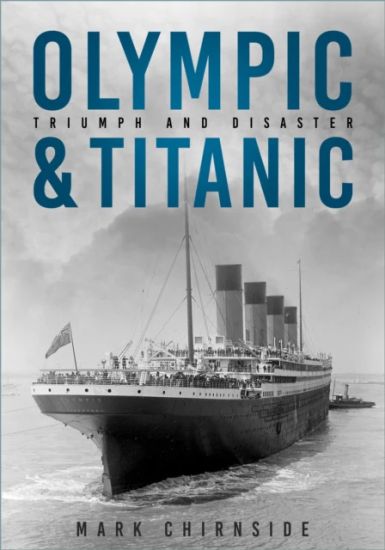
It is impossible to understand Titanic without appreciating the broader context: the development of the White Star Line and its competitors in the preceding decades; Anglo-German competition; the British fear of the ‘American peril’ as foreign capital increasingly controlled British shipping companies; and the relentless advance in shipbuilding and technology. This definitive reference volume explores the lead up to the construction of Olympic and Titanic; providing a step-by-step account of the design process; looking at the financial, logistical and political obstacles they had to tackle; the ups and downs of Olympic’s maiden season in 1911 and 1912; and summarising Titanic’s disastrous end. Relying on extensive primary source research and presenting much unpublished data, this new book is not only a valuable reference tool, but provides an essential insight into understanding this period of history.
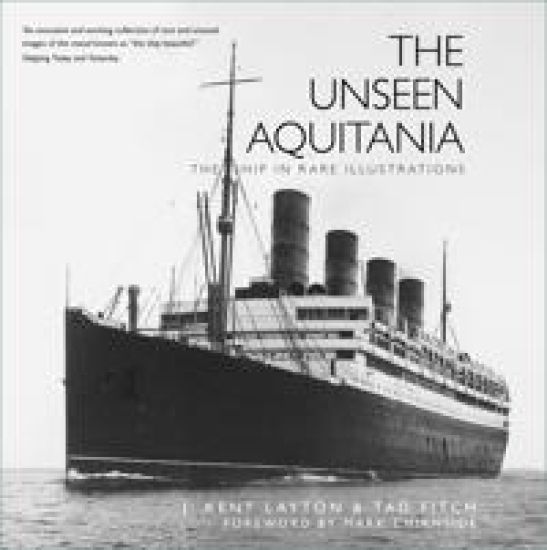
‘An evocative and exciting collection of rare and unusual images of the vessel known as “the ship beautiful”.’ – Shipping Today and YesterdayRMS Aquitania was in service for decades, and was very much beloved. The third in Cunard Line’s ‘grand trio’ of express liners, running mate of the lost Lusitania and the legendary Mauretania (1907), Aquitania was the last surviving four-funnelled ocean liner. Aquitania was pressed into service during both world wars and was one of the longest serving passenger liners of the twentieth century. She was also one of the most elegant, nicknamed the ‘ship beautiful’. Maritime authors J. Kent Layton and Tad Fitch have collaborated to put together the most evocative and exciting collection of rare and unusual imagery relating to this historic vessel ever shown.
RMS Majestic’s history was shaped by war. Built in Germany for Albert Ballin’s HAPAG, she was launched just before the start of the First World War as Bismarck. Following Germany’s defeat, she was allocated to the United Kingdom and purchased by the White Star Line from the British government. Renamed Majestic, she earned the affectionate nickname ‘The Magic Stick’ during the Roaring Twenties, when she was the largest and one of the most popular liners in the world. The merger of the Cunard and White Star Lines and the Depression of the Thirties led to her withdrawal from service after only fourteen years, after which the British government acquired her as a naval training ship. She became Caledonia and served until fire consumed her in September 1939. RMS Majestic: The ‘Magic Stick’ was the first book devoted to her history. This revised and expanded edition is a lavish illustration of her life and times, showcasing many rare or previously unpublished images and new material, all put together by one of maritime history’s most celebrated historians.
Oceanic was the largest ship in the world when she was launched in 1899. The White Star Line’s ‘Ship of the Century’, she was their last express liner before the Olympic and Titanic and her lavish first-class accommodation became renowned among Atlantic travellers. Serving on the company’s express service for fifteen years, she earned a reputation for running like clockwork. Days after the outbreak of war, she was commissioned into the Royal Navy and converted into an armed merchant cruiser. However, her new-found status was not to last – she grounded on the rocks off Foula, in the Shetlands, within weeks and became a total loss. When she was wrecked, she had on board Charles Lightoller, Titanic’s senior surviving officer. Oceanic: White Star’s ‘Ship of the Century’ is the first book that looks at the entire career of this one-of-a-kind flagship. With human anecdotes, hitherto unpublished material and rare illustrations, Mark Chirnside’s book is a beautiful tribute to a unique ocean liner.
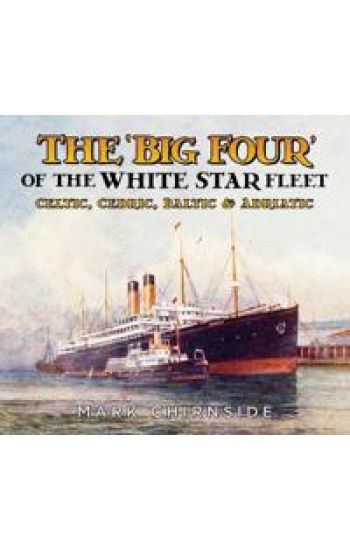
The White Star Line's Celtic (1901), Cedric (1903), Baltic (1904) and Adriatic (1907), collectively known as the ‘Big Four’, served for a combined 110 years. Together they carried around 1.5 million passengers on the Liverpool to New York and Southampton to New York routes during their time in service. Arguably the most successful series of ships the company ever produced, they have been overlooked in maritime literature until now. In this ground-breaking book, Mark Chirnside relates the history of the ‘Big Four’, in many ways the forerunners of the famous ‘Olympic’ class ships. Features including a gymnasium and Turkish and electric baths were trialled on Adriatic before their use on Olympic, Titanic and Britannic. Charting their history from civilian passenger ships to armed merchant cruisers and troop ships in the First World War, The ‘Big Four’ of the White Star Fleet explores the adventures and experiences passengers and crew had on board over the decades.
Samuel Halpern; Cathy Akers-Jordan; George Behe; Bruce Beveridge; Mark Chirnside; Tad Fitch; Dave Gittins; Steve Hall; Lester Mitcham; Charles Weeks; Bill Wormstedt; J. Kent Layton
Report into the Loss of the SS Titanic is a complete re-evaluation of the loss of Titanic based on evidence that has come to light since the discovery of the wreck in 1985. This collective undertaking is compiled by eleven of the world’s foremost Titanic researchers – experts who have spent many years examining the wealth of information that has arisen since 1912. Following the basic layout of the 1912 Wreck Commission Report, this modern report provides fascinating insights into the ship itself, the American and British inquiries, the passengers and crew, the fateful journey and ice warnings received, the damage and sinking, rescue of survivors, the circumstances in connection with the SS Californian and SS Mount Temple, and the aftermath and ramifications that followed the disaster. The book seeks to answer controversial questions, such as whether steerage passengers were detained behind gates, and also reveals the names and aliases of all passengers and crew who sailed on Titanic’s maiden voyage. Containing the most extensively referenced chronology of the voyage ever assembled and featuring a wealth of explanatory charts and diagrams, as well as archive photographs, this comprehensive volume is the definitive ‘go-to’ reference book for this ill-fated ship.
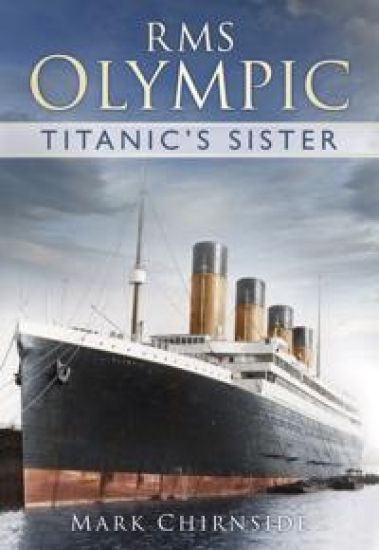
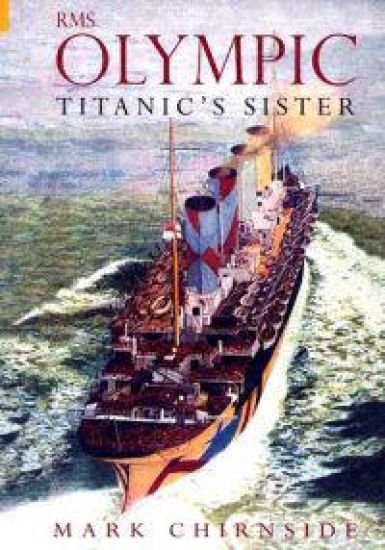
Launched as the pride of British shipbuilding and the largest vessel in the world, Olympic was more than 40 per cent larger than her nearest rivals: almost 900ft long and the first ship to exceed 40,000 tons. She was built for comfort rather than speed and equipped with an array of facilities, including Turkish and electric baths (one of the first ships to have them), a swimming pool, gymnasium, squash court, á la carte restaurant, large first-class staterooms and plush public rooms. Surviving from 1911 until 1935, she was a firm favourite with the travelling public – carrying hundreds of thousands of fare-paying passengers – and retained a style and opulence even into her twilight years. During the First World War, she carried more troops than any other comparable steamship and was the only passenger liner ever to sink an enemy submarine by ramming it. Overshadowed frequently by her sister ships Titanic and Britannic, Olympic’s history deserves more attention than it has received. She was evolutionary in design rather than revolutionary, but marked an ambition for the White Star Line to dominate the North Atlantic express route. Rivals immediately began trying to match her in size and luxury. The optimism that led to her conception was rewarded, whereas her doomed sisters never fulfilled their creators’ dreams. This revised and expanded edition of the critically acclaimed RMS Olympic: Titanic’s Sister uses new images and further original research to tell the story of this remarkable ship 80 years after her career ended.
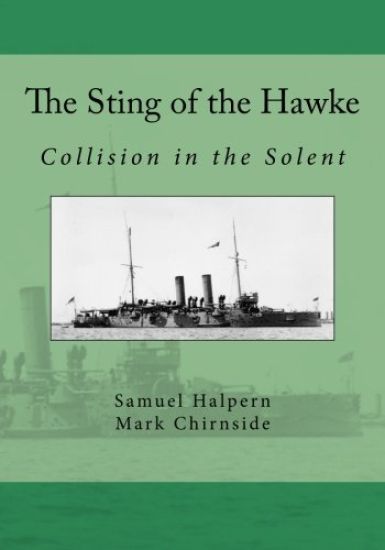
On the 20th of September 1911 the White Star Liner RMS Olympic, coming out of Southampton Water, was making a turn to port around the West Bramble buoy in the Solent. At the same time, HMS Hawke, a protected cruiser of the Royal Navy, was making a turn to starboard around Egypt Point, a prominent landmark on the north end of the Isle of Wight. As the two vessels completed their respective turns they steadied on what appeared to be almost parallel courses with Olympic accelerating rapidly towards her full ahead speed for restricted waters. As Olympic drew ahead of Hawke, the much smaller cruiser unexpectedly veered sharply to port, as if her helm was starboarded, and struck the massive White Star Liner in her starboard quarter. As a result of the collision, both vessels suffered severe damage and had to return to port for repairs. As a result of the damages to Olympic, the maiden voyage of her sister ship Titanic was delayed from the 20th of March to the 10th of April while considerable labor, parts and materials were diverted to repair Olympic. That delay in Titanic's schedule later proved to be fatal. At the trial that followed the collision in the Solent, both sides blamed the other for the mishap. Olympic claimed that Hawke was an overtaking vessel coming up from behind, and as such should have given way to Olympic. Hawke claimed that Olympic was a crossing vessel, and having Hawke on her starboard side, was obligated to give way to Hawke. During the one-sided Admiralty hearings held in Portsmouth only two days after the collision, it came out that Hawke's helm had jammed at a critical moment just as an uncontrollable force seemed to pull Hawke toward the much more massive ocean liner. At the Court trial that followed in November, the Admiralty claimed that Olympic made too wide a turn around the buoy bringing her too close to the port side of the cruiser, and the suction created by Olympic's close proximity and excessive speed caused the cruiser to swerve uncontrollably to port thereby bringing about the collision. What really happened that September day in 1911 in the Solent? Was it a simple case of hydrodynamic suction or negligent navigation on part of one or both vessels? For the first time, the events leading up to this collision are examined in great detail, with the claims of both sides thoroughly analyzed to see what was possible and what was not. Based on all the evidence presented, a most likely scenario of what really happened in the Solent that day is presented showing the minute-by-minute movements of each vessel before and after the collision. Finally, the question of could the collision have been prevented is critically analyzed.
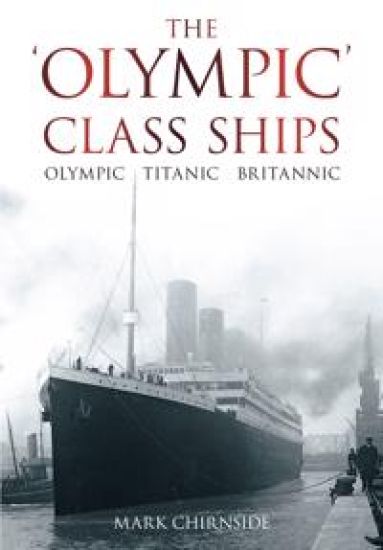
At the beginning of the twentieth century, competition between the North Atlantic shipping lines was fierce. While Britain responded to the commercial threat posed by the growing German merchant marine, there was also rivalry between the great Cunard Line and its chief competitor, the White Star Line. Against this backdrop Olympic, Titanic and Britannic were conceived. Designed for passenger comfort, they were intended to provide luxurious surroundings and safe, reliable service rather than record-breaking speed. Ironically, fate decreed that only Olympic would ever complete a single commercial voyage and she went on to serve for a quarter of a century in peace and war. Titanic’s name would become infamous after she sank on her maiden voyage. The third sister, Britannic, saw a brief and commendable career as a hospital ship during the First World War, sinking in the Aegean Sea in 1916.
At the beginning of the twentieth century, competition between the North Atlantic shipping lines was fierce. While Britain responded to the commercial threat posed by the growing German merchant marine, there was also rivalry between the great Cunard Line and its chief competitor, the White Star Line. Against this backdrop Olympic, Titanic and Britannic were conceived. Designed for passenger comfort, they were intended to provide luxurious surroundings and safe, reliable service rather than record-breaking speed. Ironically, fate decreed that only Olympic would ever complete a single commercial voyage and she went on to serve for a quarter of a century in peace and war. Titanic’s name would become infamous after she sank on her maiden voyage. The third sister, Britannic, saw a brief and commendable career as a hospital ship during the First World War, sinking in the Aegean Sea in 1916.
The Titanic is one of the most famous maritime disasters of all time, but did the Titanic really sink on the morning of 15 April 1912? Titanic’s older sister, the nearly identical Olympic, was involved in a serious accident in September 1911 – an accident that may have made her a liability to her owners the White Star Line. Since 1912 rumours of a conspiracy to switch the two sisters in an elaborate insurance scam has always loomed behind the tragic story of the Titanic. Could the White Star Line have really switched the Olympic with her near identical sister in a ruse to intentionally sink their mortally damaged flagship in April 1912, in order to cash in on the insurance policy? Laying bare the famous conspiracy theory, world-respected Titanic researchers investigate claims that the sister ships were switched in an insurance scam and provide definitive proof for whether it could - or could not - have happened.
Samuel Halpern; Cathy Akers-Jordan; George Behe; Bruce Beveridge; Mark Chirnside; Tad Fitch; Steve Hall; Lester Mitcham; Charles Weeks; Bill Wormstedt; Dave Gittins; J. Kent Layton
Samuel Halpern has written many books and articles on Titanic and often used the 1912 wreck report as a source of reference. It occurred to him one day how fascinating it would be if a team of dedicated, passionate and expert authors were to issue a modern-day report, with the knowledge we have today - what would such a report look like? In this book we have the answer. Sam has gathered a team of experts of write the ultimate Titanic reference book, with all the benefits of hindsight. Following the basic layout of the report, this team provides fascinating insights into the ship herself, the American and British inquiries, the passengers and crew, the fateful journey and ice warnings received, the damage and sinking, protocol and process of rescue, the circumstances in connection with the SS Californian and SS Mount Temple, and the aftermath and ramifications around the world. These experts offer the last words on the subject, 100 years on.
The intensifying competition on the North Atlantic in the early years of the twentieth century led the White Star Line to order three huge liners. While their British rival, the Cunard Line, focused on speed, White Star concentrated on size and luxury. Orders were placed for Olympic and Titanic to be built at Harland & Wolff ’s yard in Belfast, while the third sister ship, Britannic, would follow at a later date. Each ship was subtly different. Lessons learned from the service of Olympic were put into practice for Titanic, as other shipping lines immediately began to plan their response. Following Titanic’s loss on her maiden voyage, radical improvements were made to the third sister ship, improving the watertight subdivision. These changes, however, did not prevent Britannic sinking in less than an hour in the Aegean in 1916, while serving as a hospital ship for the war effort. Illustrated with many rare images of all three ships, including a brand new colour section, this revised and expanded edition brings the story up to date, providing a comprehensive history in one volume.
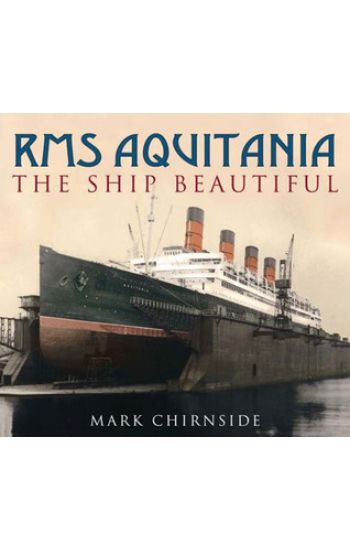
Aquitania entered service two months before the start of World War One and was scrapped six years after World War Two ended. For two wars she spent much time transporting troops but for the rest of her career she travelled the North Atlantic as one of the most famous liners afloat. Holding many records, Aquitania was built for the Cunard Line, not for speed but for luxury, at which she excelled, being called the Ship Beautiful from her entry into service. Mark Chirnside writes with a passion about this most beautiful of ships, a ship that was the epitome of the four-funnelled liner.
For the first time, this is the definitive story of Titanic's sister, RMS Olympic, the only passenger liner to sink a submarine by ramming, and the ship that was so safe they nicknamed her 'Old Reliable'.