
Kirjojen hintavertailu – 12 859 818 kirjaa ja 27 kauppaa

Kirjailija

Mark Cronin

Kirjat ja teokset yhdessä paikassa: 3 kirjaa, julkaisuja vuosilta 2013–2017, suosituimpiin kuuluu Chemical Toxicity Prediction. Vertaile teosten hintoja ja tarkista saatavuus suomalaisista kirjakaupoista.

3 kirjaa

Kirjojen julkaisuvuodet: 2013–2017.

Poverty and Inclusion in Early Years Education

Poverty and Inclusion in Early Years Education

Mark Cronin; Karen Argent; Chris Collett

Routledge
2017
nidottu
Poverty and Inclusion in Early Years Education will help practitioners to understand the experiences of young children who are living in poverty. It examines the potentially devastating impact of poverty and social exclusion on children’s chances in later life, and considers recent policy and practice reforms which have recognised the critical role played by early years settings and practitioners in guaranteeing a secure foundation for children’s future attainment. The book explores the historical, political and legal aspects of policy on poverty and social exclusion, before offering guidance on how practitioners can help to address the inequalities caused by poverty and break the cycle of deprivation. Chapters go on to address the practicalities of working with children, families and agencies to create an inclusive early years environment, and focus on issues including: developing effective partnerships with families collaborating with outside agencies encouraging awareness of different socio-economic backgrounds. With case studies, reflective questions and further reading included throughout to help the reader to apply the ideas to their own practice, the book will be an invaluable resource for early years practitioners, students, and all those wishing to promote social inclusion and tackle the impact of social exclusion and poverty in early years settings.
Poverty and Inclusion in Early Years Education

Poverty and Inclusion in Early Years Education

Mark Cronin; Karen Argent; Chris Collett

Routledge
2017
sidottu
Poverty and Inclusion in Early Years Education will help practitioners to understand the experiences of young children who are living in poverty. It examines the potentially devastating impact of poverty and social exclusion on children’s chances in later life, and considers recent policy and practice reforms which have recognised the critical role played by early years settings and practitioners in guaranteeing a secure foundation for children’s future attainment. The book explores the historical, political and legal aspects of policy on poverty and social exclusion, before offering guidance on how practitioners can help to address the inequalities caused by poverty and break the cycle of deprivation. Chapters go on to address the practicalities of working with children, families and agencies to create an inclusive early years environment, and focus on issues including: developing effective partnerships with families collaborating with outside agencies encouraging awareness of different socio-economic backgrounds. With case studies, reflective questions and further reading included throughout to help the reader to apply the ideas to their own practice, the book will be an invaluable resource for early years practitioners, students, and all those wishing to promote social inclusion and tackle the impact of social exclusion and poverty in early years settings.
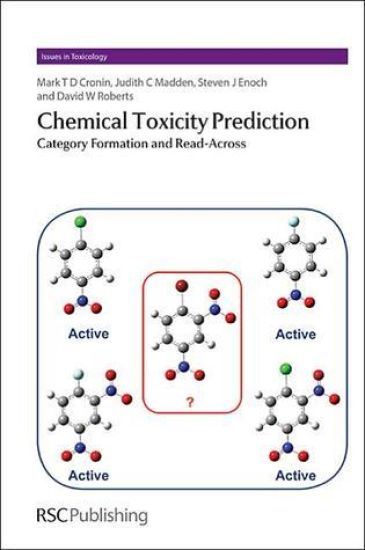
Chemical Toxicity Prediction

Chemical Toxicity Prediction

Mark Cronin; Judith Madden; Steven Enoch; David Roberts

Royal Society of Chemistry
2013
sidottu
The aim of this book is to provide the scientific background to using the formation of chemical categories, or groups, of molecules to allow for read-across i.e. the prediction of toxicity from chemical structure. It covers the scientific basis for this approach to toxicity prediction including the methods to group compounds (structural analogues and / or similarity, mechanism of action) and the tools to achieve this. The approaches to perform read-across within a chemical category are also described. Chemical Toxicity Prediction provides concise practical guidance for those wishing to apply these methods (in risk / hazard assessment) and will be illustrated with case studies. This is the first book that addresses the concept of category formation and read-across for toxicity prediction specifically. This topic has really taken off in the past few years due to concerns over dealing with the REACH legislation and also due to the availability of the OECD (Q)SAR Toolbox. Much (lengthy and complex) guidance is available on category formation e.g. from the OECD and, to a lesser extent, the European Chemicals Agency but there is no one single source of information that covers all techniques in a concise user-friendly format.