
Kirjojen hintavertailu – 12 903 725 kirjaa ja 27 kauppaa

Kirjailija

Mark D. Varien

Kirjat ja teokset yhdessä paikassa: 2 kirjaa, julkaisuja vuosilta 1999–2006, suosituimpiin kuuluu Tracking Ancient Footsteps. Vertaile teosten hintoja ja tarkista saatavuus suomalaisista kirjakaupoista.

2 kirjaa

Kirjojen julkaisuvuodet: 1999–2006.

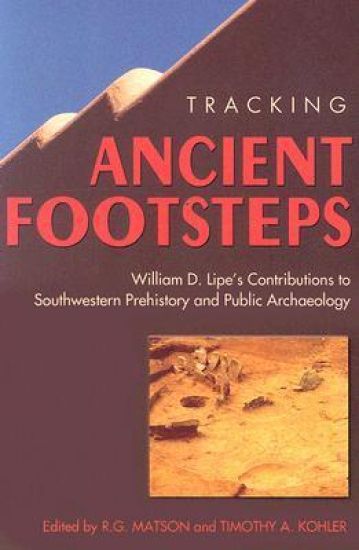
Tracking Ancient Footsteps

Tracking Ancient Footsteps

Don D. Fowler; Phil R. Geib; W. James Judge; Ricky R. Lightfoot; Sarah H. Schlanger; Lynne Sebastian; Mark D. Varien

Washington State University Press
2006
pokkari
Tracking Ancient Footsteps celebrates William D. Lipe's five-decade career in Southwestern and conservation archaeology. From the arid expanses of Glen Canyon, the Red Rock Plateau, and Cedar Mesa in Utah, to the relatively lush Dolores Valley and Mesa Verde regions of Colorado, Lipe participated in the key projects defining much of what is known today about the ancient Native American past in the Southwest. And, in 1974, he provided a timely definition for "public archaeology" that influences researchers and land managers to the present time. In Tracking Ancient Footsteps, nine of his close colleagues share their experiences, providing a chronology of one man's life intersecting with our understanding of Southwestern Prehistory, the role of government land-holding agencies, and the archaeological profession as a whole.
Sedentism and Mobility in a Social Landscape

Sedentism and Mobility in a Social Landscape

Mark D. Varien

University of Arizona Press
1999
sidottu
Research on hunting and gathering peoples has given anthropologists a long-standing conceptual framework of sedentism and mobility based on seasonality and ecological constraints. This work challenges that position by arguing that mobility is a socially negotiated activity and that neither mobility nor sedentism can be understood outside of its social context. Drawing on research in the Mesa Verde region that focuses on communities and households, Mark Varien expands the social, spatial, and temporal scales of archaeological analysis to propose a new model for population movement. Rather than viewing sedentism and mobility as opposing concepts, he demonstrates that they were separate strategies that were simultaneously employed. Households moved relatively frequently--every one or two generations--but communities persisted in the same location for much longer. Varien shows that individuals and households negotiated their movements in a social landscape structured by these permanent communities. Varien's research clearly demonstrates the need to view agriculturalists from a perspective that differs from the hunter-gatherer model. This innovative study shows why current explanations for site abandonment cannot by themselves account for residential mobility and offers valuable insights into the archaeology of small-scale agriculture.