Kirjojen hintavertailu – 12 903 725 kirjaa ja 27 kauppaa

Kirjailija

Mark Fenwick

Kirjat ja teokset yhdessä paikassa: 4 kirjaa, julkaisuja vuosilta 2016–2023, suosituimpiin kuuluu International Business Law. Vertaile teosten hintoja ja tarkista saatavuus suomalaisista kirjakaupoista.

4 kirjaa

Kirjojen julkaisuvuodet: 2016–2023.

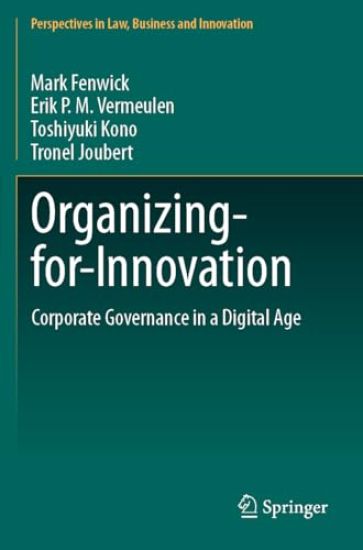
Organizing-for-Innovation

Organizing-for-Innovation

Mark Fenwick; Erik P.M. Vermeulen; Toshiyuki Kono; Tronel Joubert

SPRINGER VERLAG, SINGAPORE
2023
nidottu
This book argues that large corporations need to implement governance practices and processes that make them better innovators and that the challenge is to identify organizational principles and practices that provide the best chance of delivering innovative products to create a meaningful consumer experience. In this context, it is important to recognize that when we address organizational forms, we are not thinking of corporate governance in the sense of managing agency costs and ensuring regulatory compliance, but the more pressing business task of putting in place organizational systems and processes that facilitate value creation through continued and sustained innovation. The book examines how the contemporary concept and discourse of corporate governance may be obsolete or, at least, is increasingly disconnected from the needs and realities of the most innovative firms today. The concept of organizing for innovation—identifying process and practices that deliver the best opportunities for innovation—needs to take centre stage. This book aims to contribute to the nascent debate in this area by bringing together a series of chapters that examine various issues related to organizing for innovation.
Organizing-for-Innovation

Organizing-for-Innovation

Mark Fenwick; Erik P.M. Vermeulen; Toshiyuki Kono; Tronel Joubert

SPRINGER VERLAG, SINGAPORE
2022
sidottu
This book argues that large corporations need to implement governance practices and processes that make them better innovators and that the challenge is to identify organizational principles and practices that provide the best chance of delivering innovative products to create a meaningful consumer experience. In this context, it is important to recognize that when we address organizational forms, we are not thinking of corporate governance in the sense of managing agency costs and ensuring regulatory compliance, but the more pressing business task of putting in place organizational systems and processes that facilitate value creation through continued and sustained innovation. The book examines how the contemporary concept and discourse of corporate governance may be obsolete or, at least, is increasingly disconnected from the needs and realities of the most innovative firms today. The concept of organizing for innovation—identifying process and practices that deliver the best opportunities for innovation—needs to take centre stage. This book aims to contribute to the nascent debate in this area by bringing together a series of chapters that examine various issues related to organizing for innovation.
International Business Law

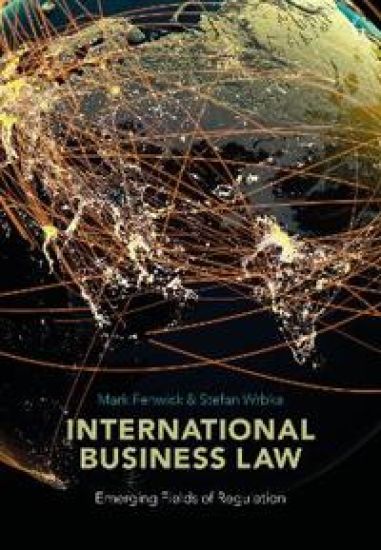
International Business Law

Mark Fenwick; Stefan Wrbka

Hart Publishing
2018
nidottu
This book provides an accessible introduction to selected new issues in transnational law, and connects them to existing theoretical debates on transnational business regulation. More specifically, (i) it introduces the argument about the evolving character of contemporary international business regulation; (ii) it provides an overview of some of the main fields of law that are currently important for firms that operate across borders; and (iii) it sets out an interpretive framework for making sense of disparate developments occurring across a number of jurisdictions, among which are the form of regulation and style of enforcement, issues of legal certainty, and behavioural aspects of regulation. The selected topics are indicative of some key issues confronting businesses looking to operate across national borders, as well as policy makers seeking to introduce and enforce meaningful regulatory standards in an increasingly global society. Topics include: consumer law; product liability; warranty law and obsolescence; collective redress; alternative dispute resolution; corporate wrongdoing; corporate governance; and e-commerce. This timely work offers a novel perspective on transnational business law and examines a range of legal issues that preoccupy companies operating transnationally. This book is intended not only for law students looking for an introduction, overview or commentary on the contemporary state of international business law, but also for anyone looking for an introduction to the regulation of business in a global, inter-connected economy.
Te Matau a M?ui

Te Matau a M?ui

Chris Paulin; Mark Fenwick

University of Hawai'i Press
2016
sidottu
Prior to European arrival in New Zealand, fishing was a significant component of M?ori subsistence. The abundant fish stocks provided a rich and readily available resource, with methods of procuring fish based on careful observations of generations of fishers. Supplemented by shellfish and birds, the fish stocks were sufficient to provide adequate food supplies, except when seasonal periods of adverse weather prevented harvesting. M?ori fished efficiently and sustainably utilizing nets (some over a mile long), traps, pots, spears, and lures, as well as hooks made of wood, bone, shell or stone that were as effective as any modern steel hook. The surplus catch was prepared and stored for later consumption. In the late 1700s, European sealers and whalers traded with M?ori, often using metal tools as barter. The superiority of metal for working implements soon became apparent to M?ori, who rapidly discarded their traditional tools. By the late 19th century these tools were less evident; however, artefacts were being made by both M?ori and Europeans to meet the demand from tourists and collectors. Changes in M?ori lifestyles associated with the increasing availability of European agricultural cultivars and domestic animals, as well as urbanization, led to a decline in M?ori fishing activity. Another impact of colonization was the loss of indigenous knowledge (m?tauranga) surrounding fish-hook design and use. Present-day interpretation of traditional tools including the rotating M?ori fishhook design has influenced the custom of wearing hei matau (stylized fish-hooks) as personal adornment.