Kirjailija
Mark Findlay
Kirjat ja teokset yhdessä paikassa: 21 kirjaa, julkaisuja vuosilta 1999–2025, suosituimpiin kuuluu Regulatory Worlds. Vertaile teosten hintoja ja tarkista saatavuus suomalaisista kirjakaupoista.
21 kirjaa
Kirjojen julkaisuvuodet: 1999–2025.
This ambitious book takes up the grand challenge to design regulatory thinking for a global future beyond wealth and growth, and towards social sustainability. Assuming a 'South World' perspective on market regulation and social sustainability, the authors present the options and possibilities for radically repositioning regulatory principle. The analysis of intersections between the market economies of the South and North reconsiders fundamental regulatory relationships and outcomes motivated by sustainability rather than individual wealth creation and economic growth models. The book aims to return economy to society at a critical global juncture, demanding new and creative regulatory intervention outside the regulatory state model. Along with new perspectives on regulation, the analysis offers a better understanding of the problematic future of global regulation by revealing the different reasons for fragmentation within and between very different regulatory spaces. Students of social development and scholars researching market economics and the global crisis will find this book to be a valuable and challenging resource. Policy makers and readers interested in law and regulation will also benefit from the thoughtful discussion presented in this volume.
This prescient book examines social ordering and governance in the digital universe. It demonstrates how attempts to enact regulations in virtual spaces cannot replicate laws and market arrangements in the real world, advocating for an alternative ‘new law’ to enable safe, sustainable and beneficial digital communities. Mark Findlay discusses how this ‘new law’ could be achieved and the challenges it might face, addressing ideas of inclusive and collaborative governance, digital self-determination and communal bonding in virtual spaces. He outlines the differences between the metaverse and ‘realspace’ which call into question conventional legal reasoning and appreciations, rethinking current reductive paradigms of the virtual universe as an outpost for private property and exchange markets. Governing the Metaverse ultimately explores the notion of law as an enabler of change rather than an enforcer of the status quo and emphasises the potential of this more adaptable interpretation of the law to create an empowering digital world. Students and scholars of constitutional and administrative law, law and politics and internet and technology law will greatly benefit from this thought-provoking book. It is also a vital resource for policymakers and practitioners in the fields of public policy, regulation and governance and technology and IT.
Globalisation, Populism, Pandemics and the Law
Mark Findlay
Edward Elgar Publishing Ltd
2021
sidottu
Advocating a style of law and a role for legal agency which returns to its essential humanist ideology and represents public spiritedness, this unique book confronts the myths surrounding globalisation, advancing the role for law as a change agent unburdened from its current market functionality. Mark Findlay argues that law has a new and urgent relevance to confront the absence of resilience in self-determined market places, and to make coherent the anarchic forces which are running, and ruining the world. The inevitability of law's re-invention during global crises is considered, offering a critical evaluation of the future of legal agency, service delivery and access to justice. Chapters also engage with citizen-centric surveillance society to examine the dangers to personal data, individual integrity, and work-life quality from unregulated mass data sharing. Exciting and thought-provoking, this book will be critical reading for scholars and students in law, economics and governance interested in globalisation and crises, such as pandemics, as well as populist politics and anxiety governance.
Clinical Companion in Nephrology
Jack Fairweather; Mark Findlay; Christopher Isles
Springer Nature Switzerland AG
2021
nidottu
The second edition of this educational book provides an updated resource on how best to discuss and manage acute and chronic presentations of renal diseases. All chapters have been reviewed and updated to reflect changes which directly affect clinical practice and new chapters have been added including Dialysis and Poisoning, Urinalysis/Microscopy and Renal Biopsy. Chapters now include information on key clinical trials for management strategiesAllowing for concise reading on specific topics this book acts as both a quick reference text and study guide. The layout has been designed in a question and answer format in order to promote self-directed learning. Images and diagrams have been further standardized and improved for the new edition and remain a key feature of the book. Clinical Companion in Nephrology, second edition, is an invaluable resource for junior doctors, medical students and renal nurses who encounter renal patients in their daily practice.
Principled International Criminal Justice
Mark Findlay; Joanna Chuah Hui Ying
Routledge
2020
nidottu
Commencing its search for a principled international criminal justice, this book argues that the Preamble to the Rome Statute requires a very different notion of justice than that which would be expected in domestic jurisdictions. This thinking necessitates theorising what international criminal justice requires in terms of its legitimacy much more than normative invocations, which in their unreality can endanger the satisfaction of two central concerns – the punitive and the harm-minimisation dimensions. The authors suggest that because of the unique nature and form of the four global crimes, pre-existing proof technologies are failing prosecutors and judges, forcing the development of an often unsustainable line of judicial reasoning. The empirical focus of the book is to look at JCE (joint criminal enterprise) and aiding and abetting as case-studies in the distortion of proof tests. The substantial harm focus of ICJ (international criminal justice) invites applying compatible proof technologies from tort (causation, aggregation, and participation). The book concludes by examining recent developments in corporate criminal liability and criminalising associations, radically asserting that even in harmonising/hybridising international criminal law there resides a new and rational vision for the juridical project of international criminal justice.
Clinical Companion in Nephrology
Jack Fairweather; Mark Findlay; Christopher Isles
Springer Nature Switzerland AG
2020
sidottu
The second edition of this educational book provides an updated resource on how best to discuss and manage acute and chronic presentations of renal diseases. All chapters have been reviewed and updated to reflect changes which directly affect clinical practice and new chapters have been added including Dialysis and Poisoning, Urinalysis/Microscopy and Renal Biopsy. Chapters now include information on key clinical trials for management strategiesAllowing for concise reading on specific topics this book acts as both a quick reference text and study guide. The layout has been designed in a question and answer format in order to promote self-directed learning. Images and diagrams have been further standardized and improved for the new edition and remain a key feature of the book. Clinical Companion in Nephrology, second edition, is an invaluable resource for junior doctors, medical students and renal nurses who encounter renal patients in their daily practice.
Principled International Criminal Justice
Mark Findlay; Joanna Chuah Hui Ying
CRC Press Inc
2018
sidottu
Commencing its search for a principled international criminal justice, this book argues that the Preamble to the Rome Statute requires a very different notion of justice than that which would be expected in domestic jurisdictions. This thinking necessitates theorising what international criminal justice requires in terms of its legitimacy much more than normative invocations, which in their unreality can endanger the satisfaction of two central concerns – the punitive and the harm-minimisation dimensions. The authors suggest that because of the unique nature and form of the four global crimes, pre-existing proof technologies are failing prosecutors and judges, forcing the development of an often unsustainable line of judicial reasoning. The empirical focus of the book is to look at JCE (joint criminal enterprise) and aiding and abetting as case-studies in the distortion of proof tests. The substantial harm focus of ICJ (international criminal justice) invites applying compatible proof technologies from tort (causation, aggregation, and participation). The book concludes by examining recent developments in corporate criminal liability and criminalising associations, radically asserting that even in harmonising/hybridising international criminal law there resides a new and rational vision for the juridical project of international criminal justice.
Focusing on the information economy, free trade exploitation, and confronting terrorist violence, Mark Findlay critiques law's regulatory commodification. Conventional legal regulatory modes such as theft and intellectual property are being challenged by waves of property access and use, which demand the rethinking of property 'rights' and their relationships with the law. Law's Regulatory Relevance? theorises how the law should reposition itself in order to help rather than hinder new pathways of market power, by confronting the dominant neo-liberal economic model that values property through scarcity. With in-depth analysis of empirical case studies, the author explores how law is returning to its communal utility in strengthening social ties, which will in turn restore property as social relations rather than market commodities. In a world of contested narratives about property valuing, law needs to ground its inherent regulatory relevance in the ordering of social change. This book is an essential read for students of law and regulation wanting to explore the contemporary dissent against neo-liberal market economies and the issues of communitarian governance and social resistance. It will also appeal to policy makers interested in law's failing regulatory capacity, particularly through criminalising attacks on conventional property rights, by offering insights into why law's regulatory relevance is at a cross-roads.
This collection discusses appropriate methodologies for comparative research and applies this to the issue of trial transformation in the context of achieving justice in post-conflict societies. In developing arguments in relation to these problems, the authors use international sentencing and the question of victims' interests and expectations as a focus. The conclusions reached are wide-ranging and haighly significant in challenging existing conceptions for appreciating and giving effect to the justice demands of victims of war and social conflict. The themes developed demonstrate clearly how comparative contextual analysis facilitates our understanding of the legal and social contexts of international punishment and how this understanding can provide the basis for expanding the role of restorative international criminal justice within the context of international criminal trials.
In this revealing comparative study, Mark Findlay examines the problematic nexus between undervalued labour and vulnerable migration status in dis-embedded markets. It highlights the frustrations raised by timeless regulatory failure and the chronic complicity of private property arrangements in delivering unsustainable market engagement. Mark Findlay identifies the challenge for normative and functional foundations of equitable governance, by repositioning regulatory principle, to restore dignity to market relations. The accountability of property through wider access and inclusion, it is argued, grounds commodified occupation as a vitally valuable social bond in which workers are empowered to participate rather than suffer exploitation. The comparative analysis of the EU and ASEAN regulatory contexts reveals that it is not simply more regulatory activity, but rather its reversion from market interests to human values, which will advance sustainability. Property, Labour and Legal Regulation offers an insightful, critical analysis of crucial contemporary issues facing social administrators, lawyers and policy makers working in the fields of migration, labour law and regulation. Its broad disciplinary coverage lends itself to students of law and regulation who will benefit from this unique evaluation of private property, labour relations and migration exclusivity.
Australian Criminal Justice
Mark Findlay; Stephen Odgers; Stanley Yeo
OUP Australia and New Zealand
2014
nidottu
Australian Criminal Justice provides a complete overview of the criminal justice process. It analyses the influences that shape criminal justice and critically examines the institutional and administrative features of its operation in all jurisdictions. With a unique blend of theory, practice, critique and context, this book guides readers step by step through the stages of a case - from investigation to sentencing. It also explores the social context of the criminal justice system in terms of the rights of the individual, community responsibilities and international guarantees. Now in its fifth edition Australian Criminal Justice has been the definitive guide to the subject for more than 20 years.
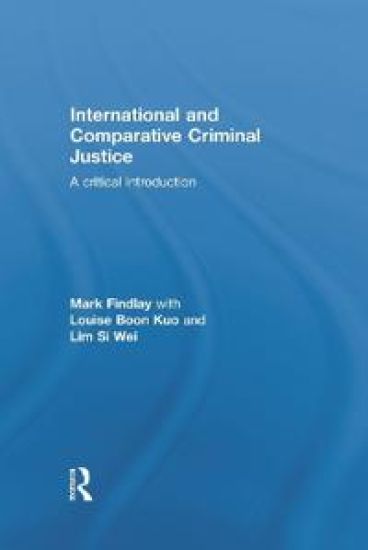
International criminal justice is in transition. This book explores the growing internationalisation of criminal justice as a phenomenon of global governance. It provides students with a critical understanding of the international institutions for regulating transnational crime, the development of alternative justice processes across the globe, and international and supra-national co-operation criminal justice policies and practices. Key topics covered include:The historical development of International Criminal Justice institutions and traditions International Restorative Justice Victim communities and collaborative justice The relationship between crime and war International Human Rights The ‘War on Terror’ The globalisation of crime and control Developments in global governance, communitarian justice and accountability This text will familiarize students with the literature and debates surrounding international criminal justice and enable them to critically appreciate their theoretical and policy context. In doing so, it encourages students to assess the strengths and weaknesses of different approaches to the study of global justice and the analysis of comparative policy convergence and research. It will also help students to reflect on, and communicate in an informed and critical way theoretical accounts and empirical studies within the field of international criminal justice. This book will be essential reading for upper level undergraduates taking courses in criminal law, international relations and governance and postgraduates engaged in international criminal justice, international law, regulation and governance and human rights.
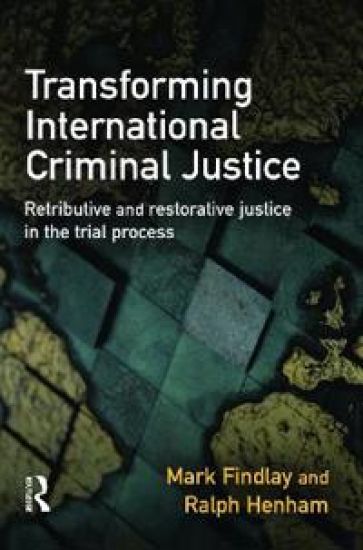
This book sets out an agenda to transform international criminal trials and the delivery of international criminal justice to victim communities through collaboration of currently competing paradigms. It reflects a transformation of thinking about the comparative analysis of the trial process, and seeks to advance the boundaries of international criminal justice through wider access and inclusivity in an environment of rights protection. Collaborative justice is advanced as providing the future context of international criminal trials. The book's radical dimension is its argument for the harmonization of restorative and retributive justice within the international criminal trial. The focus is initially on the trial process, a key symbol of developing international styles of justice. It examines theoretical models and political applications of criminal justice through detailed empirical analysis, in order to explore the underlying relationship of theory and empirical study, applying the outcome in theory testing and policy evaluation in several different jurisdictions. The book injects a significant comparative dimension into the study of international criminal justice. This is achieved through searching the traditional foundations of internationalism in justice by employing an original methodology to enable a multi-dimensional exploration of contexts (local, regional and global), so recognising the importance of difference within an agenda suggesting synthesis. The book argues for a concept of international trial within a 'rights paradigm', understood against different procedural traditions and practices, and provides a detailed description of trials and trial decision-making in various jurisdictions. Transforming International Criminal Justice also sets out to develop effective research strategies as part of its interrogation of specific trial narratives and meanings in contemporary legal cultures. Key themes are those of internationalisation, fair trial and the exercise of discretion in justice resolutions (sentencing in particular), and the lay/professional relationship and its dynamics. Finally, the book provides a searching critique of the relevance of existing criminology and legal sociology in relation to international criminal justice, and speculates on trial transformation and the merger of retributive and restorative international criminal justice. comparative analysis of the criminal trial process internationallyargues for harmonization of retributive and restorative justice within the international criminal trialsets out an agenda to transform international criminal trials and the delivery of international criminal justice to victim communities

Exploring the Boundaries of International Criminal Justice
Mark Findlay
Ashgate Publishing Limited
2011
sidottu
This collection discusses appropriate methodologies for comparative research and applies this to the issue of trial transformation in the context of achieving justice in post-conflict societies. In developing arguments in relation to these problems, the authors use international sentencing and the question of victims' interests and expectations as a focus. The conclusions reached are wide-ranging and haighly significant in challenging existing conceptions for appreciating and giving effect to the justice demands of victims of war and social conflict. The themes developed demonstrate clearly how comparative contextual analysis facilitates our understanding of the legal and social contexts of international punishment and how this understanding can provide the basis for expanding the role of restorative international criminal justice within the context of international criminal trials.
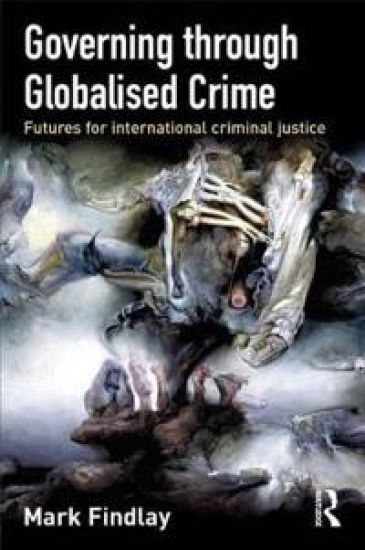
Governing through Globalised Crime provides an analysis of the impact of globalisation of crime on the governance capacity of the international criminal justice system. It explores how the perceived increased risk in global security has resulted in a reformulation of the relationship between crime and governance. The book seeks to argue that values of freedom, equality, communitarian harmony and personal integrity which the prosecution of crimes against humanity are said to advance, need not be sacrificed in a new world order obsessed with partial security and secularized risk. This book aims to address a way forward for the governance capacity of international criminal justice, arguing that international criminal justice provides a central tool for global governance. In exploring the dependency of global governance on crime and control, projections can be made about the changing face of international criminal justice. Fundamental transformation is required to hold unjust global dominion to account. The book's policy perspective challenges international criminal justice to return to the more critical position justice has exercised in the separation of powers constitutional legality. For liberal democratic theory at least, judicial authority and its institutions have ensured constitutional legality by requiring the legislature and the executive to operate accountably against a higher normative order. This is not a predominant function of judges and courts in the international context despite their statutory invocation to this task . Case-studies of global crime and control reveal contexts in which the co-opted governance of institutional ICJ in particular, has a politicized motivation which too often advances the authority and interests of one world order against the sometimes legitimate resistance of criminalized communities. When the analysis moves to the consideration of victim community interests, and from there to the appropriate global constituencies of ICJ, the nature and limitations of ICJ supporting governance in the risk/security model, becomes apparent.
Transforming International Criminal Justice
Mark Findlay; Ralph Henham
Willan Publishing
2005
sidottu
This book sets out an agenda to transform international criminal trials and the delivery of international criminal justice to victim communities through collaboration of currently competing paradigms. It reflects a transformation of thinking about the comparative analysis of the trial process, and seeks to advance the boundaries of international criminal justice through wider access and inclusivity in an environment of rights protection. Collaborative justice is advanced as providing the future context of international criminal trials. The book's radical dimension is its argument for the harmonization of restorative and retributive justice within the international criminal trial. The focus is initially on the trial process, a key symbol of developing international styles of justice. It examines theoretical models and political applications of criminal justice through detailed empirical analysis, in order to explore the underlying relationship of theory and empirical study, applying the outcome in theory testing and policy evaluation in several different jurisdictions. The book injects a significant comparative dimension into the study of international criminal justice. This is achieved through searching the traditional foundations of internationalism in justice by employing an original methodology to enable a multi-dimensional exploration of contexts (local, regional and global), so recognising the importance of difference within an agenda suggesting synthesis. The book argues for a concept of international trial within a 'rights paradigm', understood against different procedural traditions and practices, and provides a detailed description of trials and trial decision-making in various jurisdictions. Transforming International Criminal Justice also sets out to develop effective research strategies as part of its interrogation of specific trial narratives and meanings in contemporary legal cultures. Key themes are those of internationalisation, fair trial and the exercise of discretion in justice resolutions (sentencing in particular), and the lay/professional relationship and its dynamics. Finally, the book provides a searching critique of the relevance of existing criminology and legal sociology in relation to international criminal justice, and speculates on trial transformation and the merger of retributive and restorative international criminal justice. comparative analysis of the criminal trial process internationallyargues for harmonization of retributive and restorative justice within the international criminal trialsets out an agenda to transform international criminal trials and the delivery of international criminal justice to victim communities

On a contracting world stage, crime is a major player in globalization and is as much a feature of the emergent globalized culture as are other forms of consumerism. The Globalization of Crime charts crime’s evolution. It analyses how globalization has enhanced material crime relationships such that they must be understood on the same terms as any other significant market force. Trends in criminalization, crime and social development, crime and social control, the political economy of crime, and crime in transitional cultures are all examined in order to understand the role of crime as an agent of social change and present an integrated theory of crime and social context. This is the first book to challenge existing analyses of crime in the context of global transition, and show that crime is as much a force for globalization as globalization is a force for crime.