Kirjojen hintavertailu – 12 903 725 kirjaa ja 27 kauppaa

Kirjailija

Mark Griffith

Kirjat ja teokset yhdessä paikassa: 9 kirjaa, julkaisuja vuosilta 2007–2026, suosituimpiin kuuluu Sophocles I – Antigone, Oedipus the King, Oedipus at Colonus. Vertaile teosten hintoja ja tarkista saatavuus suomalaisista kirjakaupoista.

9 kirjaa

Kirjojen julkaisuvuodet: 2007–2026.

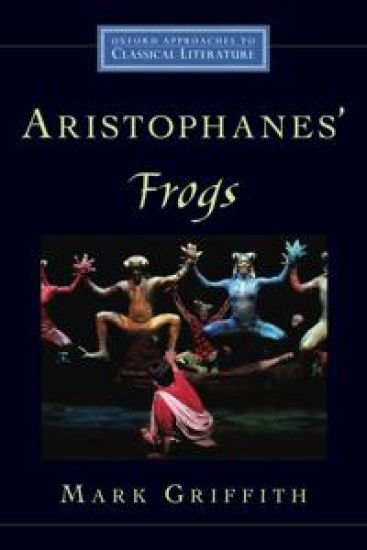
Aristophanes' Frogs

Aristophanes' Frogs

Mark Griffith

Oxford University Press Inc
2013
nidottu
Aristophanes is widely credited with having elevated the classical art of comedy to the level of legitimacy and recognition that only tragedy had hitherto achieved, and producing some of the most intriguing works of literature to survive from classical Greece in the process. Among them, Frogs has a unique appeal; written and performed in 405 BCE, the comedy won first prize in that year's Lenaea festival competition and was re-performed soon thereafter--a rare occurrence for comedies at the time. Frogs has been admired and quoted by readers and critics ever since, a testament to its timeless appeal; it remains among the most approachable of Aristophanes' plays, as well as perhaps the richest of all in insights it provides into ancient Greek cultural attitudes and values. Mark Griffith's study of the Frogs is the first single book to offer a reliable and sophisticated account of this play in light of modern notions of culture, performance, democracy, religion, and aesthetics. After placing the work in its original historical, cultural, and biographical context, Griffith goes on to underscore the originality of Frogs in relation to parallel developments in the tragedies of Aeschylus and Euripides, among others. He highlights the play's unique portrayal of the figure of Dionysus, the Eleusinian mystery cult, and the question of life after death. This title provides not only a detailed analysis of the play and a concise account of its reception, but also a succinct introduction to ancient Greek comedy, exploring the extraordinary range of theatrical conventions, moral and aesthetic assumptions, and religious beliefs that underlie the action of Aristophanes' play. The book provides an invaluable companion to Aristophanes and the theater of classical Greece for students and general readers alike.
Aristophanes' Frogs

Aristophanes' Frogs

Mark Griffith

Oxford University Press Inc
2013
sidottu
Aristophanes is widely credited with having elevated the classical art of comedy to the level of legitimacy and recognition that only tragedy had hitherto achieved, and producing some of the most intriguing works of literature to survive from classical Greece in the process. Among them, Frogs has a unique appeal; written and performed in 405 BCE, the comedy won first prize in that year's Lenaea festival competition and was re-performed soon thereafter--a rare occurrence for comedies at the time. Frogs has been admired and quoted by readers and critics ever since, a testament to its timeless appeal; it remains among the most approachable of Aristophanes' plays, as well as perhaps the richest of all in insights it provides into ancient Greek cultural attitudes and values. Mark Griffith's study of the Frogs is the first single book to offer a reliable and sophisticated account of this play in light of modern notions of culture, performance, democracy, religion, and aesthetics. After placing the work in its original historical, cultural, and biographical context, Griffith goes on to underscore the originality of Frogs in relation to parallel developments in the tragedies of Aeschylus and Euripides, among others. He highlights the play's unique portrayal of the figure of Dionysus, the Eleusinian mystery cult, and the question of life after death. This title provides not only a detailed analysis of the play and a concise account of its reception, but also a succinct introduction to ancient Greek comedy, exploring the extraordinary range of theatrical conventions, moral and aesthetic assumptions, and religious beliefs that underlie the action of Aristophanes' play. The book provides an invaluable companion to Aristophanes and the theater of classical Greece for students and general readers alike.
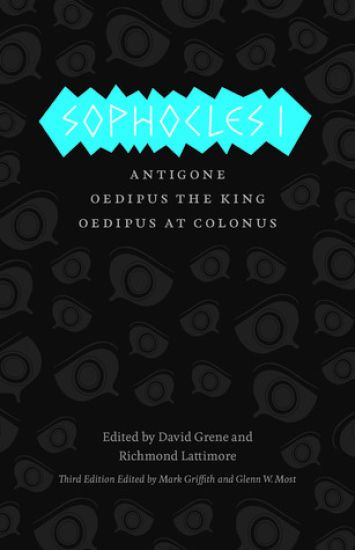
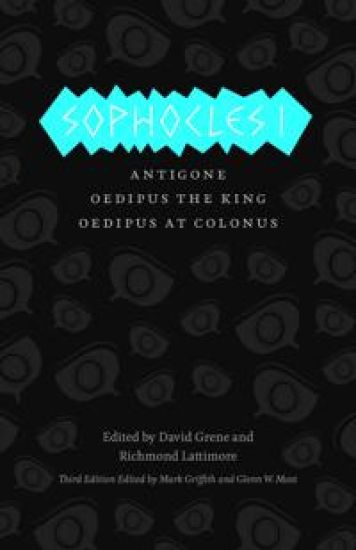
Sophocles I – Antigone, Oedipus the King, Oedipus at Colonus

Sophocles I – Antigone, Oedipus the King, Oedipus at Colonus

Sophocles Sophocles; Mark Griffith; Glenn W. Most; David Grene; Richmond Lattimore

University of Chicago Press
2013
nidottu
Sixty years ago, the University of Chicago Press undertook a momentous project: a new translation of the Greek tragedies that would be the ultimate resource for teachers, students, and readers. They succeeded. Under the expert management of eminent classicists David Grene and Richmond Lattimore, those translations combined accuracy, poetic immediacy, and clarity of presentation to render the surviving masterpieces of Aeschylus, Sophocles, and Euripides in an English so lively and compelling that they remain the standard translations. Today, Chicago is taking pains to ensure that our Greek tragedies remain the leading English-language versions throughout the twenty-first century. In this highly anticipated third edition, Mark Griffith and Glenn W. Most have carefully updated the translations to bring them even closer to the ancient Greek while retaining the vibrancy for which our English versions are famous. This edition also includes brand-new translations of Euripides' "Medea", "The Children of Heracles", "Andromache", and "Iphigenia among the Taurians", fragments of lost plays by Aeschylus, and the surviving portion of Sophocles' satyr-drama "The Trackers". New introductions for each play offer essential information about its first production, plot, and reception in antiquity and beyond. In addition, each volume includes an introduction to the life and work of its tragedian, as well as notes addressing textual uncertainties and a glossary of names and places mentioned in the plays. In addition to the new content, the volumes have been reorganized both within and between volumes to reflect the most up-to-date scholarship on the order in which the plays were originally written. The result is a set of handsome paperbacks destined to introduce new generations of readers to these foundational works of Western drama, art, and life.
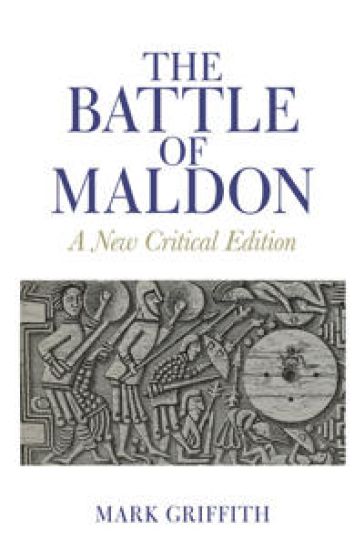
The Battle of Maldon

The Battle of Maldon

Mark Griffith

LIVERPOOL UNIVERSITY PRESS
2026
nidottu
The battle of Maldon in 991 AD was a defeat. The Old English poem about it that survives, The Battle of Maldon, celebrates the extreme valour of Byrhtnoth, the leader of the defeated Anglo-Saxons, and commemorates the heroic deaths of his followers who stand by him and who stay to the end against a horde of piratical Vikings. Though lacking both beginning and end, enough survives of the main narrative of the battle to show the poet’s skill and power in conveying his message that loyalty to one’s word and to one’s lord matters more than life. Maldon is the only substantial late Old English heroic poem to survive and provides unique testimony to the poetics of its period: close re-analysis of it shows it to be a striking mix of old and new, combining features found in much earlier verse with others only otherwise attested in Middle English alliterative poetry. This new critical edition responds to the enormous range of critical views that the poem has excited: the introduction is, accordingly, substantial, and includes sections on language, prosody, style, and narrative, as well as a new and full consideration of the reliability of the sole surviving transcript. There is a detailed literary commentary and a full glossary.
The Battle of Maldon

The Battle of Maldon

Mark Griffith

LIVERPOOL UNIVERSITY PRESS
2024
sidottu
The battle of Maldon in 991 AD was a defeat. The Old English poem about it that survives, The Battle of Maldon, celebrates the extreme valour of Byrhtnoth, the leader of the defeated Anglo-Saxons, and commemorates the heroic deaths of his followers who stand by him and who stay to the end against a horde of piratical Vikings. Though lacking both beginning and end, enough survives of the main narrative of the battle to show the poet’s skill and power in conveying his message that loyalty to one’s word and to one’s lord matters more than life. Maldon is the only substantial late Old English heroic poem to survive and provides unique testimony to the poetics of its period: close re-analysis of it shows it to be a striking mix of old and new, combining features found in much earlier verse with others only otherwise attested in Middle English alliterative poetry. This new critical edition responds to the enormous range of critical views that the poem has excited: the introduction is, accordingly, substantial, and includes sections on language, prosody, style, and narrative, as well as a new and full consideration of the reliability of the sole surviving transcript. There is a detailed literary commentary and a full glossary.
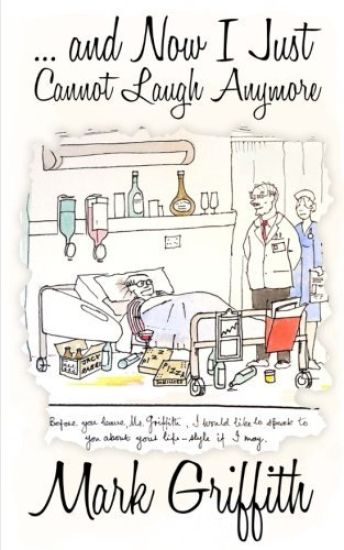
...and Now I Just Cannot Laugh Anymore

...and Now I Just Cannot Laugh Anymore

Mark Griffith

Createspace Independent Publishing Platform
2017
nidottu
This is not an autobiography. I am not famous; at least I have avoided that humiliation. We'll hit just the highlights of my life to prove that I am the person who is 'worse off' than you. But it's done with humour because you are supposed to laugh at me. Please do not look for any message of hope or bravery in this book. However, if through these ramblings of a madman some of you have a good laugh and if, God forbid, you face similar circumstances and a couple of funny lines out of this help.... then great. So, no counselling and no big hugs. I am English... 'A very entertaining read. It makes you want to have known him.' - David Levy Profits From The Sale Of This Book Will Benefit The Norfolk And Norwich University Hospital Oncology Fund. Part Of The Nnuh Charitable Fund (1048170)
Sophocles I

Sophocles I

Sophocles Sophocles; Mark Griffith; Glenn W. Most; David Grene; Richmond Lattimore

University of Chicago Press
2013
sidottu
Sixty years ago, the University of Chicago Press undertook a momentous project: a new translation of the Greek tragedies that would be the ultimate resource for teachers, students, and readers. They succeeded. Under the expert management of eminent classicists David Grene and Richmond Lattimore, those translations combined accuracy, poetic immediacy, and clarity of presentation to render the surviving masterpieces of Aeschylus, Sophocles, and Euripides in an English so lively and compelling that they remain the standard translations. Today, Chicago is taking pains to ensure that our Greek tragedies remain the leading English-language versions throughout the twenty-first century. In this highly anticipated third edition, Mark Griffith and Glenn W. Most have carefully updated the translations to bring them even closer to the ancient Greek while retaining the vibrancy for which our English versions are famous. This edition also includes brand-new translations of Euripides' "Medea", "The Children of Heracles", "Andromache", and "Iphigenia among the Taurians", fragments of lost plays by Aeschylus, and the surviving portion of Sophocles' satyr-drama "The Trackers". New introductions for each play offer essential information about its first production, plot, and reception in antiquity and beyond. In addition, each volume includes an introduction to the life and work of its tragedian, as well as notes addressing textual uncertainties and a glossary of names and places mentioned in the plays. In addition to the new content, the volumes have been reorganized both within and between volumes to reflect the most up-to-date scholarship on the order in which the plays were originally written. The result is a set of handsome paperbacks destined to introduce new generations of readers to these foundational works of Western drama, art, and life.
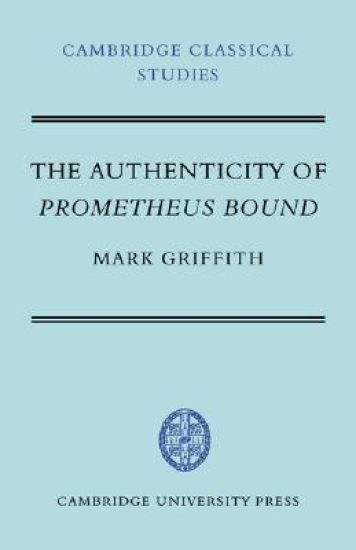
The Authenticity of Prometheus Bound

The Authenticity of Prometheus Bound

Mark Griffith

Cambridge University Press
2007
pokkari
Prometheus Bound was accepted without question in antiquity as the work of Aeschylus, and most modern authorities endorse this ascription. But since the nineteenth century several leading scholars have come to doubt Aeschylean authorship. Dr Griffith here provides a thorough and wide-ranging study of this problem, and concludes: 'Had Prometheus Bound been newly dug up from the sands of Oxyrhynchus... few scholars would regard it as the work of Aeschylus.' After a preliminary assessment of the external evidence, Dr Griffith examines minutely the idiosyncrasies of metre, dramatic technique, vocabulary, syntax and expression to be found in the play, applying the same tests to other plays of Aeschylus, Sophocles and Euripides in order to provide a control for his methods. In his final chapter he discusses how the conditions surrounding the ancient transmission and cataloguing of texts may have led to the ascription to Aeschylus.