Kirjojen hintavertailu – 12 903 725 kirjaa ja 27 kauppaa

Kirjailija

Mark Halliday

Kirjat ja teokset yhdessä paikassa: 13 kirjaa, julkaisuja vuosilta 1992–2025, suosituimpiin kuuluu Border Town. Vertaile teosten hintoja ja tarkista saatavuus suomalaisista kirjakaupoista.

13 kirjaa

Kirjojen julkaisuvuodet: 1992–2025.

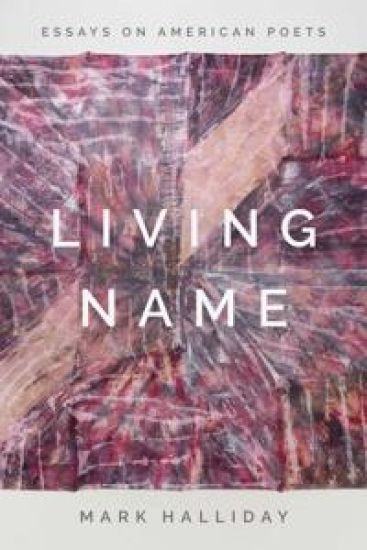
Living Name

Living Name

Mark Halliday

LOUISIANA STATE UNIVERSITY PRESS
2025
pokkari
Living Name is a collection of essays on American poetry written by an expert practitioner of that art. Poet and critic Mark Halliday turns his attention to the work of poets who interest him because they create convincing voices of people dealing with the everyday. Instead of trying to survey the vast variety of modern poetry, Halliday considers an idiosyncratic selection of poets he finds compelling for their originality of style and exploration of human possibilities, including Walt Whitman, Kenneth Fearing, Kenneth Koch, Robert Pinsky, Rachel Wetzsteon, Tony Hoagland, Claire Bateman, and Dean Young. Each essay includes thorough close readings of individual poems, reflecting a commitment to the idea that a poem as a work of art needs to be appreciated as a unified whole. Halliday's writing is judicious and meditative but not overly scholarly or academic. A long piece at the beginning of the book, "Poetry and the Rescue of Particulars," argues that poems often attempt to reclaim the details of our usual routines from the chaotic confusion and noise of daily existence. The impulse to write a poem, Halliday believes, often stems from the notion that representing in poetry a sliver of human life keeps it in the world, as a trace of the vanishing moment is retained and endowed with some form of lasting reality. Throughout Living Name, Halliday enacts the allegiances that have driven his criticism for many years: to listen for genuine voices in poetry; to study whole poems, not merely passages; and to look for intelligent efforts to illuminate truths of human experience.
Living Name

Living Name

Mark Halliday

LOUISIANA STATE UNIVERSITY PRESS
2025
sidottu
Living Name is a collection of essays on American poetry written by an expert practitioner of that art. Poet and critic Mark Halliday turns his attention to the work of poets who interest him because they create convincing voices of people dealing with the everyday. Instead of trying to survey the vast variety of modern poetry, Halliday considers an idiosyncratic selection of poets he finds compelling for their originality of style and exploration of human possibilities, including Walt Whitman, Kenneth Fearing, Kenneth Koch, Robert Pinsky, Rachel Wetzsteon, Tony Hoagland, Claire Bateman, and Dean Young. Each essay includes thorough close readings of individual poems, reflecting a commitment to the idea that a poem as a work of art needs to be appreciated as a unified whole. Halliday's writing is judicious and meditative but not overly scholarly or academic. A long piece at the beginning of the book, "Poetry and the Rescue of Particulars," argues that poems often attempt to reclaim the details of our usual routines from the chaotic confusion and noise of daily existence. The impulse to write a poem, Halliday believes, often stems from the notion that representing in poetry a sliver of human life keeps it in the world, as a trace of the vanishing moment is retained and endowed with some form of lasting reality. Throughout Living Name, Halliday enacts the allegiances that have driven his criticism for many years: to listen for genuine voices in poetry; to study whole poems, not merely passages; and to look for intelligent efforts to illuminate truths of human experience.

Losers Dream on

Losers Dream on

Mark Halliday

University of Chicago Press
2018
pokkari
We are all losing all the time. Four titanic forces--time, mortality, forgetting, and confusion--win victories over us each day. We all "know" this yet we keep dreaming of beautiful fulfillments, shapely culminations, devotions nobly sustained--in family life, in romance, in work, in citizenship. What obsesses Halliday in Losers Dream On is how to recognize reality without relinquishing the pleasure and creativity and courage of our dreaming. Halliday's poetry exploits the vast array of dictions, idioms, rhetorical maneuvers, and tones available to real-life speakers (including speakers talking to themselves). Often Halliday gives a poem to a speaker who is distressed, angry, confused, defensive, self-excusing, or driven by yearning, so that the poem may dramatize the speaker's state of mind while also implying the poet's ironic perspective on the speaker. Meanwhile, a few other poems (for instance "A Gender Theory" and "Thin White Shirts" and "First Wife" and "You Lament") try to push beyond irony into earnestness and wholehearted declaration. The tension between irony and belief is the engine of Halliday's poetry.
Stevens and the Interpersonal

Stevens and the Interpersonal

Mark Halliday

Princeton University Press
2016
sidottu
With Wallace Stevens emerging as a father figure for American poetry of the late twentieth century, Mark Halliday argues that it is time for this "poet of ideas" to undergo an ethical critique. In this bold, accessible reconsideration of Stevens' work, he insists on the importance of interpersonal relations in any account of human life in the modern world. Although Stevens outwardly denies aspects of life that center on such relations as those between friends, lovers, family members, and political constituents, Halliday uncovers in his poetry an anxious awareness of the importance of these relations. Here we see the difficulties Stevens made for himself in wanting to offer a thoroughly satisfying version of secular spiritual health in the modern world without facing up to the moral and psychological implications of his own interpersonal needs, problems, and responsibilities. The final chapter reveals, however, an unusually encouraging "avuncular" attitude toward the reader of the poetry, which may be felt to redeem Stevens from the alienation observed earlier. Halliday develops his views by way of comparisons between Stevens and other poets, especially Thomas Hardy, Emily Dickinson, Robert Frost, and John Ashbery. Originally published in 1991. The Princeton Legacy Library uses the latest print-on-demand technology to again make available previously out-of-print books from the distinguished backlist of Princeton University Press. These editions preserve the original texts of these important books while presenting them in durable paperback and hardcover editions. The goal of the Princeton Legacy Library is to vastly increase access to the rich scholarly heritage found in the thousands of books published by Princeton University Press since its founding in 1905.
Stevens and the Interpersonal

Stevens and the Interpersonal

Mark Halliday

Princeton University Press
2014
pokkari
With Wallace Stevens emerging as a father figure for American poetry of the late twentieth century, Mark Halliday argues that it is time for this "poet of ideas" to undergo an ethical critique. In this bold, accessible reconsideration of Stevens' work, he insists on the importance of interpersonal relations in any account of human life in the modern world. Although Stevens outwardly denies aspects of life that center on such relations as those between friends, lovers, family members, and political constituents, Halliday uncovers in his poetry an anxious awareness of the importance of these relations. Here we see the difficulties Stevens made for himself in wanting to offer a thoroughly satisfying version of secular spiritual health in the modern world without facing up to the moral and psychological implications of his own interpersonal needs, problems, and responsibilities. The final chapter reveals, however, an unusually encouraging "avuncular" attitude toward the reader of the poetry, which may be felt to redeem Stevens from the alienation observed earlier. Halliday develops his views by way of comparisons between Stevens and other poets, especially Thomas Hardy, Emily Dickinson, Robert Frost, and John Ashbery. Originally published in 1991. The Princeton Legacy Library uses the latest print-on-demand technology to again make available previously out-of-print books from the distinguished backlist of Princeton University Press. These editions preserve the original texts of these important books while presenting them in durable paperback and hardcover editions. The goal of the Princeton Legacy Library is to vastly increase access to the rich scholarly heritage found in the thousands of books published by Princeton University Press since its founding in 1905.
Thresherphobe

Thresherphobe

Mark Halliday

University of Chicago Press
2013
nidottu
Classic Blunder - After a noticeably happy day I sleep - and wake at dawn to a sudden sense of having erred. What have I done? I've made the classic blunder the blunder of living onward forwardly toward some disappointing future - what a fool - I should have lived not forwardly but sideways or circularly to stay in days like (what now has to be called) yesterday. Instead I've allowed the sun already to start pouring through the curtains the diminishments and inferiorities of a crude and unsentimental next day. To keep that train from leaving the station must call for some incredible level of concentration. In his sixth collection, Mark Halliday continues to seek ways of using the smart playfulness of such poets as Frank O'Hara and Kenneth Koch to explore life's emotional mysteries - both dire and hilarious - from the perpetual dissolving of our past to the perpetnal frustration of our cravings for ego triumph, for sublime connection with an erotically idealized Other, and for peace of spirit. Animated by belief in the possible truths to be reached in interpersonal speech, Halliday's voice-driven poetry wants to find insight - or at least a stay against confusion - through personality without being trapped in personality. History will leave much of what we are on the threshing floor, Halliday notes, but in the meantime we do what we can: let posterity (if any) say we rambled truly.
Can You Hear The Music?

Can You Hear The Music?

Mark Halliday; Martin Wroe; Cole Moreton

Lulu.com
2007
pokkari
Three writers offer words in search of wonders. The author Cole Moreton, the poet Mark Halliday and the journalist Martin Wroe collaborate on a collection of poems that are full of honesty, doubt and beauty.
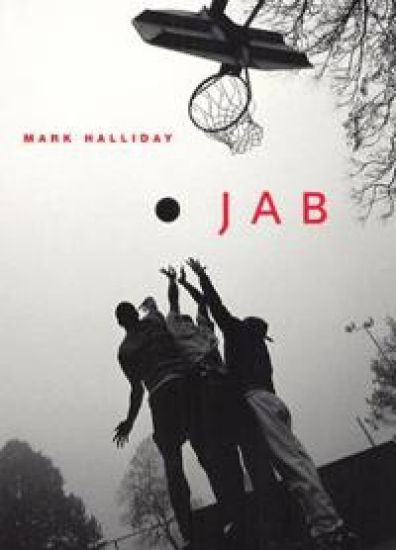
Jab

Jab

Mark Halliday

University of Chicago Press
2002
sidottu
Human, hunger, happiness, hope, heart and Halliday all start with "h", as does ham. Accident? Maybe! But seldom have the flour of the humanistic and the egg yolk of honesty mixed more swellingly with the yeast of desire and the salt of self-doubt -not to mention the olive paste of ambition. Halliday has whacked Death and Mustabilite before, but this time ...this time he whacks them again. After this "Jab", the world will never be the same. Or at least, a few hundred conversations, here and there, will be somewhat affected. Roll over Death, and tell Mutabilitie the news.
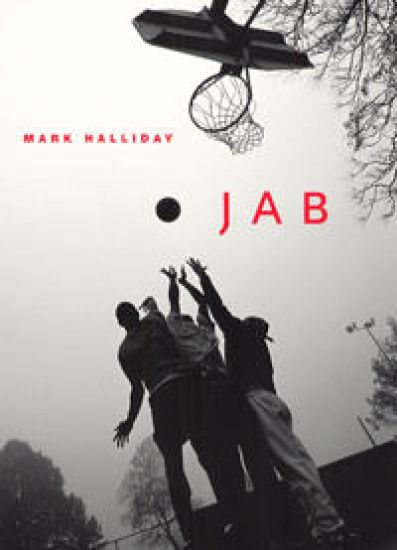
Jab

Jab

Mark Halliday

University of Chicago Press
2002
nidottu
Human, hunger, happiness, hope, heart and Halliday all start with "h", as does ham. Accident? Maybe! But seldom have the flour of the humanistic and the egg yolk of honesty mixed more swellingly with the yeast of desire and the salt of self-doubt -not to mention the olive paste of ambition. Halliday has whacked Death and Mustabilite before, but this time ...this time he whacks them again. After this "Jab", the world will never be the same. Or at least, a few hundred conversations, here and there, will be somewhat affected. Roll over Death, and tell Mutabilitie the news.
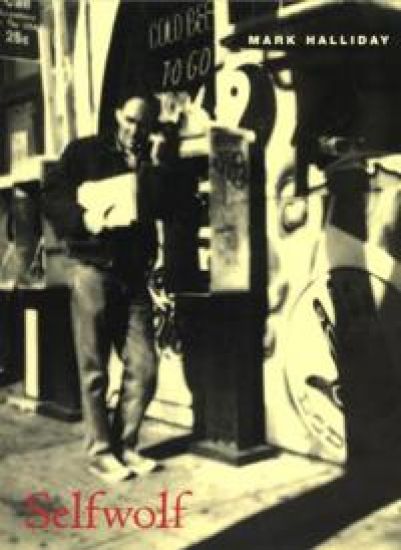
Selfwolf

Selfwolf

Mark Halliday

University of Chicago Press
1999
nidottu
In his third book of poems, Mark Halliday grapples with the endless struggle between self-concern and awareness of the rights of others. Through humor, ironic twists, and refreshing candor, these poems confront a variety of situations—death, divorce, artistic egotism and envy, personal relationships—where the very idea of self is under siege. "If Selfwolf were a pop music CD, it would be hailed as Mark Halliday's breakthrough album. . . . This third collection of poems teems with unsparing confessions of misdirected lust, lost faith, regret and a winningly goofy cheerfulness in the face of all that bad stuff. . . . The informal, conversational quality of Halliday's work almost hides its artfulness, which seems to be precisely his intention."—Ken Tucker, New York Times Book Review"With unflinching, often comic honesty about how 'ego-fetid, hostile, grasping' we are, Halliday exposes the self's wolfish hungers and weaknesses."—Andrew Epstein, Boston Review"Mark Halliday's new book offers more of his trademark riffs on self-consciousness. His subversive, surprising, hugely enjoyable poems will make you laugh out loud, squirm in uncomfortable recognition, and appreciate anew the comedy of our daily battles for self-preservation. . . reading Halliday is pure delight. . . . I love the daring and intelligence with which Halliday skates along the shifting boundary between self within and world outside. Selfwolf slows down our habitual negotiations between 'in here' and 'out there,' exposing the edgy comedy of how we survive."—Damaris Moore, Express Books
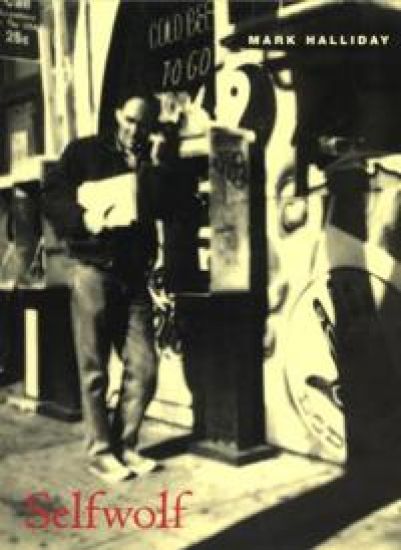
Selfwolf

Selfwolf

Mark Halliday

University of Chicago Press
1999
sidottu
In his third book of poems, Mark Halliday grapples with the endless struggle between self-concern and awareness of the rights of others. Through humor, ironic twists, and refreshing candor, these poems confront a variety of situations--death, divorce, artistic egotism and envy, personal relationships--where the very idea of self is under siege.