Kirjojen hintavertailu – 12 903 724 kirjaa ja 27 kauppaa

Kirjailija

Mark Harvey

Kirjat ja teokset yhdessä paikassa: 17 kirjaa, julkaisuja vuosilta 1999–2026, suosituimpiin kuuluu Exploring the Tomato. Vertaile teosten hintoja ja tarkista saatavuus suomalaisista kirjakaupoista.

17 kirjaa

Kirjojen julkaisuvuodet: 1999–2026.

Exploring the Tomato

Exploring the Tomato

Mark Harvey; Stephen Quilley; Huw Beynon

Edward Elgar Publishing Ltd
2004
nidottu
Exploring the Tomato engages with an apparently simple fruit in order to reveal major changes to society and economy. It treats the tomato as an object of fascination and as a probe into major historical changes in twentieth century capitalism. From first domestication to genetic modification, from Aztec salsa to supermarket pizza, the tomato has been continually transformed in the ways it has been produced, exchanged and consumed. This book explores what brings about a variety that is at once biological, historical and socio-economic. A conceptual framework of 'instituted economic process' demonstrates how different tomato forms are an expression of dynamic processes in capitalist economies and societies during the twentieth century. As both an early pioneer in mass production and a contemporary contributor to the creation of global cuisines, the tomato has been subject to intense innovation. Computerised total ecologies under glass, producing fresh tomatoes of all shapes, colours and sizes, compete with sun and southern climates across the world. To enter the variety of tomato worlds is to discover the variety of capitalism. Written in an accessible style, this book makes a major contribution to the emerging field of economic sociology and to our understanding of the innovation process. It should be read by anyone concerned with social science, particularly economists and sociologists, as well as those interested in food and the history of food.

Exploring the Tomato

Exploring the Tomato

Mark Harvey; Stephen Quilley; Huw Beynon

Edward Elgar Publishing Ltd
2002
sidottu
Exploring the Tomato engages with an apparently simple fruit in order to reveal major changes to society and economy. It treats the tomato as an object of fascination and as a probe into major historical changes in twentieth century capitalism. From first domestication to genetic modification, from Aztec salsa to supermarket pizza, the tomato has been continually transformed in the ways it has been produced, exchanged and consumed. This book explores what brings about a variety that is at once biological, historical and socio-economic. A conceptual framework of 'instituted economic process' demonstrates how different tomato forms are an expression of dynamic processes in capitalist economies and societies during the twentieth century. As both an early pioneer in mass production and a contemporary contributor to the creation of global cuisines, the tomato has been subject to intense innovation. Computerised total ecologies under glass, producing fresh tomatoes of all shapes, colours and sizes, compete with sun and southern climates across the world. To enter the variety of tomato worlds is to discover the variety of capitalism. Written in an accessible style, this book makes a major contribution to the emerging field of economic sociology and to our understanding of the innovation process. It should be read by anyone concerned with social science, particularly economists and sociologists, as well as those interested in food and the history of food.

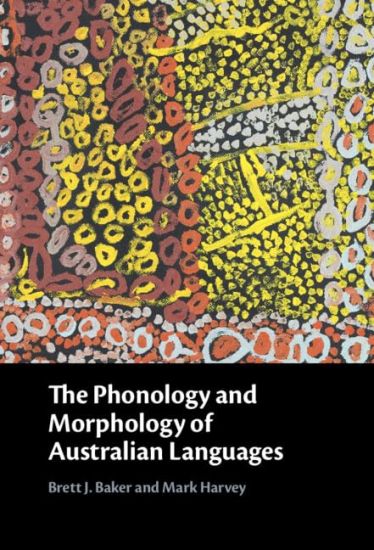
The Phonology and Morphology of Australian Languages

The Phonology and Morphology of Australian Languages

Brett J. Baker; Mark Harvey

Cambridge University Press
2025
sidottu
Australian languages form a large genetic group with many interesting and distinctive phonological and morphological properties. Written by two experts in the field, this is the first book-length treatment of this topic, providing an in-depth discussion of a wealth of little-known data on the sound systems and word structures of Australian Indigenous languages. It includes a critical evaluation of theoretical approaches from the 1950s up to the current day, including recent experimental, psycholinguistic and processing-based research. Each chapter addresses a major aspect of phonology, including the segmental inventories, complex phonotactic systems, alternations, prosodic phonology and morphology, the behaviour of phonological domains, and the unusual nature of sound change in Australia. The authors also add to this their own groundbreaking findings, and frame each chapter to inform future phonological research and theory. It is essential reading for scholars and students in phonology, phonetics, speech science, morphology, and language typology.
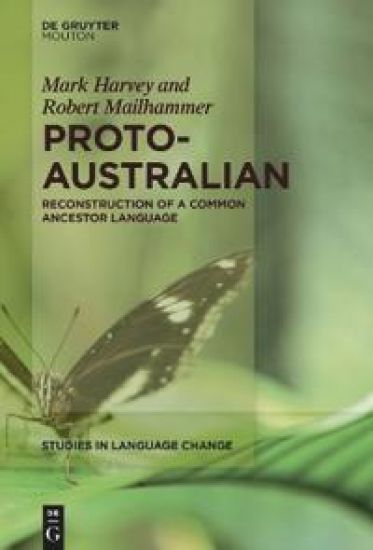
Proto-Australian

Proto-Australian

Mark Harvey; Robert Mailhammer

De Gruyter
2024
sidottu
This book is the first full evaluation of the Proto-Australian hypothesis, which proposes that most Australian languages have a common ancestor: Proto-Australian [PA]. Using the standard methodologies of historical linguistics, the authors show that nearly all Australian languages descend from PA. Given that PA was a single language, it was spoken only in a small area of Australia. Its descendants have spread across the continent. Current theories of language spread do not offer clear motivations for large-scale spread in hunter-gatherer economies. This raises significant questions for analyses of Australian prehistory and archaeology specifically, and more widely for general theories of hunter-gatherer prehistory and language spread.
Climate Emergency

Climate Emergency

Mark Harvey

Emerald Publishing Limited
2021
nidottu
The recognition that climate change is now a climate emergency has been endorsed by a wide range of scientists and the United Nations. Natural scientists focus on the aggregate impacts of human activity resulting from burning fossil fuels and producing food, and hence speak of anthropogenic climate change. Climate Emergency analyses the socio-economic and political forces driving the climate emergency, developing the complementary concept of 'sociogenic climate change' to show how societies both create the crisis and are challenged by it in different ways. Harvey demonstrates how societies inhabit different resource environments, whether for fossil fuel reserves, or for land, sun, and water, differences which condition their histories and cultures. In introducing the sociogenic approach to climate change, Harvey re-examines history through the lens of climate change, re-writing the climate impact of the British industrial revolution; US settler colonialism; slavery and Native American genocides; the electrification of societies and infrastructures for fossil-fuelled transportation; and changes in our eating habits. In the big historical picture, different societies and political economies have both created an unequal world and so continue to make an unequal contribution to climate change. This can only be understood by showing how societies have come to distinctively exploit planetary resources in different ways. Societies create the crisis and have to be politically involved in addressing the crisis.
So, What's the Deal with the Rapture?

So, What's the Deal with the Rapture?

Mark Harvey

Independently Published
2020
nidottu
Mal 4:5 Behold, I will send you Elijah the prophet before the coming of the great and dreadful day of the LORD: It appears the day spoken of in this verse is close. Very close. And there are things you must know before it gets here. This book was written to get you up to speed on the issue of the rapture of the Church. This book was also written to contest the currently most popular but questionable rapture theories. The real truth is in the Book of Truth, but lots of what is currently being taught is not. Elijah is probably walking among us right now, but he has a different name and probably doesn't even know who he is. It was that way when he came as John the Baptist. But he will burst on the scene when the time is right with all the information we need, probably including a date for that great and dreadful day. Unfortunately, our religious leadership has conditioned us not to accept his warnings. This book will help you recognize him and understand his message. If you purchase this book be prepared to check your preconceived notions at the front cover. Then you should check your man-contrived systematic theologies at the title page. Finally, check your comfortable but confusing denominational preferences at the table of contents. Those are all the things that have caused the confusion we find in this doctrine in the first place. In this book we are going to read our Bible and just accept what it says. We will just let the Word of God speak frankly to the Bride of Christ .1Co 2:12 Now we have received, not the spirit of the world, but the spirit which is of God; that we might know the things that are freely given to us of God.
Inequality and Democratic Egalitarianism

Inequality and Democratic Egalitarianism

Mark Harvey; Norman Geras

Manchester University Press
2019
nidottu
This book arose out of a friendship between a political philosopher and an economic sociologist, and their recognition of an urgent political need to address the extreme inequalities of wealth and power in contemporary societies. It provides a new analysis of what generates inequalities in rights to income, property and public goods in contemporary societies. By critiquing Marx’s foundational theory of exploitation, it moves beyond Marx, both in its analysis of inequality, and in its concept of just distribution. It points to the major historical transformations that create educational and knowledge inequalities, inequalities in rights to public goods that combine with those to private wealth. It argues that asymmetries of economic power are inherently gendered and racialized, and that forms of coercion and slavery are deeply embedded in the histories of capitalism. This book is relevant to United Nations Sustainable Development Goal 10, Reduced inequalities
Inequality and Democratic Egalitarianism

Inequality and Democratic Egalitarianism

Mark Harvey; Norman Geras

Manchester University Press
2018
sidottu
This book arose out of a friendship between a political philosopher and an economic sociologist, and their recognition of an urgent political need to address the extreme inequalities of wealth and power in contemporary societies. It provides a new analysis of what generates inequalities in rights to income, property and public goods in contemporary societies. By critiquing Marx’s foundational theory of exploitation, it moves beyond Marx, both in its analysis of inequality, and in its concept of just distribution. It points to the major historical transformations that create educational and knowledge inequalities, inequalities in rights to public goods that combine with those to private wealth. It argues that asymmetries of economic power are inherently gendered and racialized, and that forms of coercion and slavery are deeply embedded in the histories of capitalism. This book is relevant to United Nations Sustainable Development Goal 10, Reduced inequalities
Celebrity Influence

Celebrity Influence

Mark Harvey

University Press of Kansas
2018
sidottu
Why should we listen to celebrities like Bono or Angelina Jolie when they endorse a politician or take a position on an issue? Do we listen to them? Despite their lack of public policy experience, celebrities are certainly everywhere in the media, appealing on behalf of the oppressed, advocating policy change—even, in one spectacular case, leading the birther movement all the way to the White House. In this book Mark Harvey takes a close look into the phenomenon of celebrity advocacy in an attempt to determine the nature of celebrity influence, and the source and extent of its power. Focusing on two specific kinds of power—the ability to “spotlight” issues in the media and to persuade audiences—Harvey searches out the sources of celebrity influence and compares them directly to the sources of politicians’ influence. In a number of case studies—such as Jolie and Ben Affleck drawing media attention to the civil war in the Democratic Republic of Congo; Bob Marley uniting warring factions in Jamaica; John Lennon networking with the new left to oppose Richard Nixon’s re-election; Elvis Presley working with Nixon to counter anti-war activism—he details the role of celebrities working with advocacy groups and lobbying politicians to affect public opinion and influence policy. A series of psychological experiments demonstrate that celebrities can persuade people to accept their policy positions, even on national security issues. Harvey’s analysis of news sources reveals that when celebrities speak about issues of public importance, they get disproportionately more coverage than politicians. Further, his reading of surveys tells us that people find politicians no more or less credible than celebrities—except politicians from the opposing party, who are judged less credible. At a time when the distinctions between politicians and celebrities are increasingly blurred, the insights into celebrity influence presented in this volume are as relevant as they are compelling.
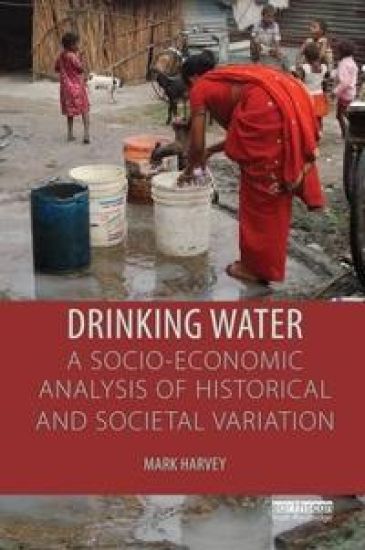
Drinking Water: A Socio-economic Analysis of Historical and Societal Variation
In this fascinating and challenging work, the author analyses the way water for drinking is produced, distributed, owned, acquired, and consumed in contrasting ways in different settings. From the taken-for-granted, all-purpose water, flowing out of taps in advanced economies to extreme inequalities of access to water of variable qualities, drinking water tells its own interesting story, but also reflects some of the centrally important characteristics of the state and economies of the different countries. From sparkling mineral water in Germany, to drinking water garages in Taiwan, from water tankers in Mexico City to street vendors in Delhi markets, comparisons are made to stretch our understanding of what we mean by ‘an economy’, quality, and property rights, of water. In addition, the study of socio-economics of drinking water provides a route into understanding interactions between polity, economy and nature. One of the major themes of the book is to analyse the ‘sociogenic’ nature of sustainability crises of economies of water in their environmental settings: epidemics, droughts, pollution, land subsidences and floods. Overall it develops an economic sociology, neo-Polanyian approach in a comparative and historical exploration of water for domestic consumption.
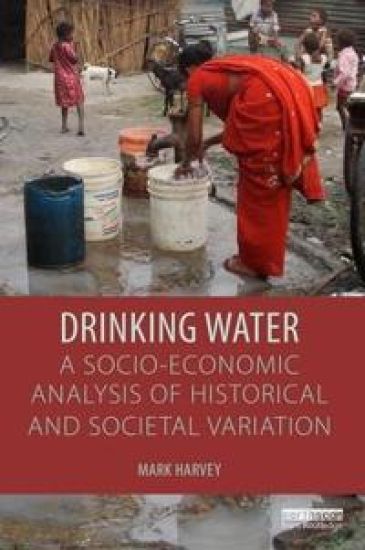
Drinking Water: A Socio-economic Analysis of Historical and Societal Variation
In this fascinating and challenging work, the author analyses the way water for drinking is produced, distributed, owned, acquired, and consumed in contrasting ways in different settings. From the taken-for-granted, all-purpose water, flowing out of taps in advanced economies to extreme inequalities of access to water of variable qualities, drinking water tells its own interesting story, but also reflects some of the centrally important characteristics of the state and economies of the different countries. From sparkling mineral water in Germany, to drinking water garages in Taiwan, from water tankers in Mexico City to street vendors in Delhi markets, comparisons are made to stretch our understanding of what we mean by ‘an economy’, quality, and property rights, of water. In addition, the study of socio-economics of drinking water provides a route into understanding interactions between polity, economy and nature. One of the major themes of the book is to analyse the ‘sociogenic’ nature of sustainability crises of economies of water in their environmental settings: epidemics, droughts, pollution, land subsidences and floods. Overall it develops an economic sociology, neo-Polanyian approach in a comparative and historical exploration of water for domestic consumption.
Images of the Past: The Miners' Strike

Images of the Past: The Miners' Strike

Mark Metcalf; Mark Harvey; Martin Jenkinson

Pen Sword Books Ltd
2014
nidottu
In addition to being the most bitter industrial dispute the coalminers' strike of 1984/5 was the longest national strike in British history. For a year over 100,000 members of the National Union of Mineworkers, their families and supporters, in hundreds of communities, battled to prevent the decimation of the coal industry on which their livelihoods and communities depended. Margaret Thatcher's government aimed to smash the most militant section of the British working class. She wanted to usher in a new era of greater management control at work and pave the way for a radical refashioning of society in favour of neo-liberal objectives that three decades later have crippled the world economy. Victory required draconian restrictions on picketing and the development of a militarised national police force that made widespread arrests as part of its criminalisation policy. The attacks on the miners also involved the use of the courts and anti-trade union laws, restrictions on welfare benefits, the secret financing by industrialists of working miners and the involvement of the security services. All of which was supported by a compliant mass media but resisted by the collective courage of miners and mining communities in which the role of Women against Pit Closures in combating poverty and starvation was heroic. Thus inspired by the struggle for jobs and communities an unparalleled movement of support groups right across Britain and in other parts of the world was born and helped bring about a situation where the miners long struggle came close on occasions to winning. At the heart of the conflict was the Yorkshire region, where even at the end in March 1985, 83 per cent of 56,000 miners were still out on strike. The official Yorkshire National Union of Mineworkers (NUM) area photographer in 1984-85 was the late Martin Jenkinson and this book of his photographs - some never previously seen before - serves as a unique social document on the dispute that changed the face of Britain.
Public or Private Economies of Knowledge?

Public or Private Economies of Knowledge?

Mark Harvey; Andrew McMeekin

Edward Elgar Publishing Ltd
2009
nidottu
The 'great divide' between public and private knowledge in capitalism is an unstable frontier at the core of contemporary economic transformations. Based on research in the USA, Europe and Brazil into the cutting edge of biological science and technology, this book presents a novel framework for understanding this historically shifting fault-line. Over the last quarter of a century, major controversies have accompanied the dramatic developments in biological science and technology. At critical points, leading commercial companies were poised to take ownership over the human genome and much new post-genomic knowledge. The software tools for analysing the deluge of data also appeared, as did expanding new markets for private enterprise. At the same time, huge new public programmes of biological research were accompanied by radical innovation in the institutions and organisation of public knowledge. Would private marketable knowledge dominate over the new public domain or vice versa? Surprisingly, the dynamism and expansion of the public domain, and new forms of differentiation and interdependence between public and private economies of knowledge, now characterise the landscape. This book presents an analytical framework for understanding the shifting 'great divide' in capitalist economies of knowledge. The authors develop a novel economic sociology of innovation, based on the 'instituted economic process' approach. By focusing on economies of knowledge, they seek to demonstrate that capitalism is multi-modal at its core, with interdependent growth of market and non-market modes of production, distribution, exchange and use. Public or Private Economies of Knowledge? will appeal to those with an interest in innovation studies, economic sociology and economic theory.
Public or Private Economies of Knowledge?

Public or Private Economies of Knowledge?

Mark Harvey; Andrew McMeekin

Edward Elgar Publishing Ltd
2007
sidottu
The 'great divide' between public and private knowledge in capitalism is an unstable frontier at the core of contemporary economic transformations. Based on research in the USA, Europe and Brazil into the cutting edge of biological science and technology, this book presents a novel framework for understanding this historically shifting fault-line. Over the last quarter of a century, major controversies have accompanied the dramatic developments in biological science and technology. At critical points, leading commercial companies were poised to take ownership over the human genome and much new post-genomic knowledge. The software tools for analysing the deluge of data also appeared, as did expanding new markets for private enterprise. At the same time, huge new public programmes of biological research were accompanied by radical innovation in the institutions and organisation of public knowledge. Would private marketable knowledge dominate over the new public domain or vice versa? Surprisingly, the dynamism and expansion of the public domain, and new forms of differentiation and interdependence between public and private economies of knowledge, now characterise the landscape. This book presents an analytical framework for understanding the shifting 'great divide' in capitalist economies of knowledge. The authors develop a novel economic sociology of innovation, based on the 'instituted economic process' approach. By focusing on economies of knowledge, they seek to demonstrate that capitalism is multi-modal at its core, with interdependent growth of market and non-market modes of production, distribution, exchange and use. Public or Private Economies of Knowledge? will appeal to those with an interest in innovation studies, economic sociology and economic theory.
A Grammar of Gaagudju

A Grammar of Gaagudju

Mark Harvey

De Gruyter Mouton
2002
sidottu
Gaagudju is a previously undescribed and now nearly extinct language of northern Australia. This grammar provides an overall description of the language. Australian languages generally show a high degree of structural similarity to one another. Gaagudju conforms to some of the common Australian patterns, yet diverges significantly from others. Thus while it has a standard Australian phonological inventory, its prosodic systems differ from those of most Australian languages, with stressed and unstressed syllables showing marked differences in realisation. Like many northern languages, it has complex systems of both prefixation and suffixation to nominals and verbs. Prefixation provides information about nominal classification (4 classes), mood, and pronominal cross-reference (Subjects, Objects, and Indirect Objects). Suffixation provides information about case, tense, and aspect. As in many languages, there is a clear distinction between productive and unproductive morphology. Gaagudju differs from most Australian languages in that a considerable amount of its morphology is unproductive, showing complex and irregular allomorphic variation. Gaagudju is like most Australian languages in that it may be described as a free word order language. However, word order is not totally free and strictly ordered phrasal compounding structures are significant (e.g. in the formation of denominal verbs).
The National Outdoor Leadership School's Wilderness Guide
The classic backpacker's handbook -- revised and updated -- providing expert guidelines for anyone who loves the outdoors. The "Wilderness Guide" brings the savvy of the world's most famous and respected outdoor organization to everyone -- from the 16 million backpacking Americans to the more than 265 million people, tenderfeet and trail-hardened hikers, who visit our national parks annually. It covers: Selecting equipment -- including discussions of the advantages and disadvantages of products such as the internal frame pack, lighter-weight boots, and freestanding tents The latest "leave no trace" camping techniques Traveling safely and sensibly -- including vital information on maps, compasses, and tips on crossing difficult terrain Backcountry cooking, with tips on building fires and tricks for making gourmet meals Search-and-rescue techniques, including how to organize a self-sufficient search group and when to call in professional rescue teams Illustrated throughout with instructional drawings and photos and featuring lists of equipment, the "Wilderness Guide" is a must-have for anyone planning to explore the great outdoors.