Kirjojen hintavertailu – 12 859 819 kirjaa ja 27 kauppaa
Kirjailija
Mark Hunter
Kirjat ja teokset yhdessä paikassa: 21 kirjaa, julkaisuja vuosilta 2001–2026, suosituimpiin kuuluu Ethnographies of Power. Vertaile teosten hintoja ja tarkista saatavuus suomalaisista kirjakaupoista.
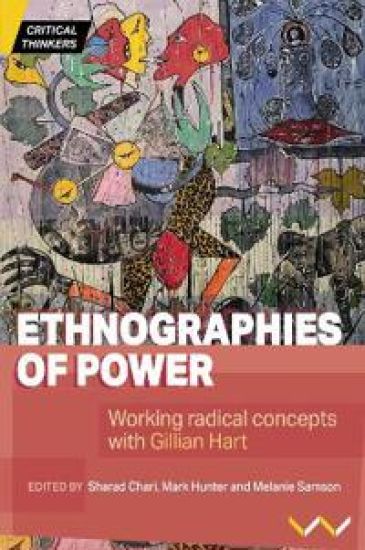
Sharad Chari; Mark Hunter; Melanie Samson; Jennifer A Devine; Michael Ekers; Jennifer Greenburg; Bridget Kenny; Stefan Kipfer; Zachary Levenson; Alex Loftus; Ahmed Veriava
Sharad Chari; Mark Hunter; Melanie Samson; Jennifer A Devine; Michael Ekers; Jennifer Greenburg; Bridget Kenny; Stefan Kipfer; Zachary Levenson; Alex Loftus; Ahmed Veriava
Working with key concepts from theorist and human geographer Gillian Hart, this book argues for an ethnographic and geographic approach to critically engage contemporary political-economic processes in the context of real world struggles.
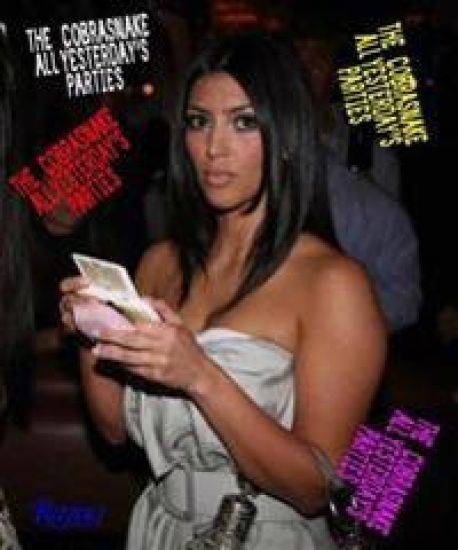
Under the moniker the Cobrasnake, the photographer Mark Hunter captured the party scenes of Los Angeles and New York during the hipster-glam heyday of the 2000s and in doing so defined the look of a generation. Armed with just a Polaroid and a primitive website, Cobrasnake captured pioneers of youth culture from Kanye West and Steve Aoki to Jeremy Scott, Katy Perry, and Lindsay Lohan icons of the indie pop world in the making. Intimately connected with the people around him and keyed-in to the edgier fringes of the fashion, music, and art worlds, Hunter photographed influencers before they were influencers, in the wild and at play from the streets of LA to NYC and beyond. Collected here for the first time are more than three hundred of Cobrasnake s favourite images alongside ephemera, from concert tickets and backstage passes to outtakes and unseen photographs from his many adventures. These photographs are records of the last generation of partiers to predate the livestreaming of culture afforded by today s social media capturing the energy and vibrancy of a time before Instagram.
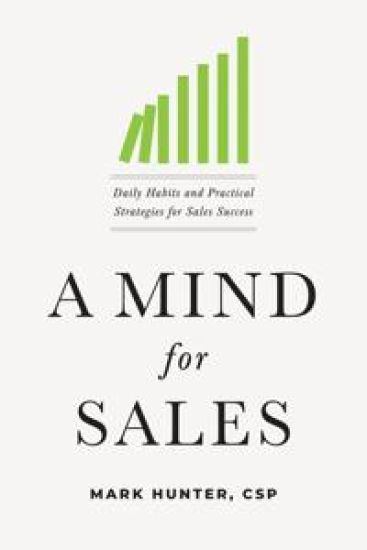
For salespeople feeling stressed and disappointed that their customers don’t want to hear from them, this guide is the key to developing the mindset and habits required to reach a new level of sales success. The world of sales can be tough, so it’s easy to get discouraged when the rejections start piling up and your customers stop answering the phone. This allows the wrong thought patterns to start developing, soon you aren’t making quotas and then you begin looking at job listings waiting for your next downfall. Sales expert Mark Hunter can relate as his start to sales was discouraging. The lessons he’s learned throughout his career are revealed in A Mind for Sales. He discovered that sales can be incredibly rewarding, such as customers calling you for advice, thanking you for improving their business, and referring you to colleagues. The difference is simply developing mindset and momentum habits. In A Mind for Sales, you’ll learn how to:Feel energized by renewed purpose and success in your sales role by following the success cycle approach. Receive practical strategies on how to change your mindset and succeed in sales. Learn the daily habits needed to maximize productivity and make hitting the ground running strategy #1. Gain real-world insights from Hunter’s vast experience as a successful sales professional and sales coach. Let this book inspire and prepare you to form the new habits you need to succeed and to realize the incredible rewards that a successful life in sales makes possible.
For salespeople feeling stressed and disappointed that their customers don’t want to hear from them, this guide is the key to developing the mindset and habits required to reach a new level of sales success. The world of sales can be tough, so it’s easy to get discouraged when the rejections start piling up and your customers stop answering the phone. This allows the wrong thought patterns to start developing, soon you aren’t making quotas and then you begin looking at job listings waiting for your next downfall. Sales expert Mark Hunter can relate as his start to sales was discouraging. The lessons he’s learned throughout his career are revealed in A Mind for Sales. He discovered that sales can be incredibly rewarding, such as customers calling you for advice, thanking you for improving their business, and referring you to colleagues. The difference is simply developing mindset and momentum habits. In A Mind for Sales, you’ll learn how to:Feel energized by renewed purpose and success in your sales role by following the success cycle approach. Receive practical strategies on how to change your mindset and succeed in sales. Learn the daily habits needed to maximize productivity and make hitting the ground running strategy #1. Gain real-world insights from Hunter’s vast experience as a successful sales professional and sales coach. Let this book inspire and prepare you to form the new habits you need to succeed and to realize the incredible rewards that a successful life in sales makes possible.
Following the end of apartheid in 1994, the ANC government placed education at the centre of its plans to build a nonracial and more equitable society. Yet, by the 2010s a wave of student protests voiced demands for decolonised and affordable education. By following families and schools in Durban for nearly a decade, Mark Hunter sheds new light on South Africa's political transition and the global phenomenon of education marketisation. He rejects simple descriptions of the country's move from 'race to class apartheid' and reveals how 'white' phenotypic traits like skin colour retain value in the schooling system even as the multiracial middle class embraces prestigious linguistic and embodied practices the book calls 'white tone'. By illuminating the actions and choices of both white and black parents, Hunter provides a unique view on race, class and gender in a country emerging from a notorious system of institutionalised racism.
Following the end of apartheid in 1994, the ANC government placed education at the centre of its plans to build a nonracial and more equitable society. Yet, by the 2010s a wave of student protests voiced demands for decolonised and affordable education. By following families and schools in Durban for nearly a decade, Mark Hunter sheds new light on South Africa's political transition and the global phenomenon of education marketisation. He rejects simple descriptions of the country's move from 'race to class apartheid' and reveals how 'white' phenotypic traits like skin colour retain value in the schooling system even as the multiracial middle class embraces prestigious linguistic and embodied practices the book calls 'white tone'. By illuminating the actions and choices of both white and black parents, Hunter provides a unique view on race, class and gender in a country emerging from a notorious system of institutionalised racism.
There are few one-size-fits-all solutions in sales. Context matters. Complex sales are different from one-call closes. B2B is different than B2C. Prospects, territories, products, industries, companies, and sales processes are all different. There is little black and white in the sales profession. Except for objections. There is democracy in objections. Every salesperson must endure many NOs in order to get to YES. Objections don’t care or consider: Who you areWhat you sellHow you sellIf you are new to sales or a veteranIf your sales cycle is long or short – complex or transactional For as long as salespeople have been asking buyers to make commitments, buyers have been throwing out objections. And, for as long as buyers have been saying no, salespeople have yearned for the secrets to getting past those NOs. Following in the footsteps of his blockbuster bestsellers Fanatical Prospecting and Sales EQ, Jeb Blount’s Objections is a comprehensive and contemporary guide that engages your heart and mind. In his signature right-to-the-point style, Jeb pulls no punches and slaps you in the face with the cold, hard truth about what’s really holding you back from closing sales and reaching your income goals. Then he pulls you in with examples, stories, and lessons that teach powerful human-influence frameworks for getting past NO - even with the most challenging objections. What you won’t find, though, is old school techniques straight out of the last century. No bait and switch schemes, no sycophantic tie-downs, no cheesy scripts, and none of the contrived closing techniques that leave you feeling like a phony, destroy relationships, and only serve to increase your buyers’ resistance. Instead, you’ll learn a new psychology for turning-around objections and proven techniques that work with today’s more informed, in control, and skeptical buyers. Inside the pages of Objections, you’ll gain deep insight into: How to get past the natural human fear of NO and become rejection proofThe science of resistance and why buyers throw out objectionsHuman influence frameworks that turn you into a master persuaderThe key to avoiding embarrassing red herrings that derail sales callsHow to leverage the “Magical Quarter of a Second” to instantly gain control of your emotions when you get hit with difficult objectionsProven objection turn-around frameworks that give you confidence and control in virtually every sales situationHow to easily skip past reflex responses on cold calls and when prospectingHow to move past brush-offs to get to the next step, increase pipeline velocity, and shorten the sales cycleThe 5 Step Process for Turning Around Buying Commitment Objections and closing the saleRapid Negotiation techniques that deliver better terms and higher prices As you dive into these powerful insights, and with each new chapter, you’ll gain greater and greater confidence in your ability to face and effectively handle objections in any selling situation. And, with this new-found confidence, your success and income will soar.
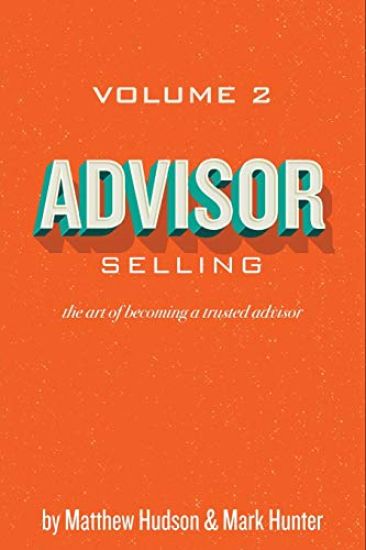
In this 2nd edition of the book, Matt focuses on the post-digital world driven by technology where power shifts to the buyer. Chances are when you arrive for the sales meeting, the prospect already knows more about you than you do about them. However, with technology comes opportunity. Today's buyer is overwhelmed with data and information and they need help - they need a trusted advisor. Trusted advisors: Get to "yes" faster Keep their products sold Stay embedded during the "budget" cuts Have more referrals Have higher customer satisfaction In this book, you will learn from the years of research, observation and personal experiences of Matthew Hudson and Mark Hunter. They have spent decades immersed in the sales industry and have taught the concepts in this book to companies with amazing results. If you follow the principles outlined here, you will get more than a sale. You also will get trusted advisor status.
Leadership is built not born, and it is not built in a vacuum. Great leaders are most powerfully created on the way toward a great endeavor, or in the face of a great challenge. The Brink is a leadership model that uses climbing a mountain as a metaphor for that challenge, and is a guide to creating and fostering that endeavor into reality for you and your leadership. Leadership is not built in comfortable, settled, and unchallenged people. There is nothing for it to feed and grow on in that emptiness. There is no reason or urgency to lead in the absence of a great challenge. Whether you have your own great challenge already or not, The Brink is the environment and the pathway to create and nurture that challenge in service of your leadership on purpose. On The Brink, you do not have to know "how" in order to start building leadership. You only need to know that you want to and are willing. This choice takes courage, and the rewards are dynamic and limitless-for you and the world around you that needs your leadership. The Brink speaks to you as an individual willing to take on your own leadership, guiding you to use your own great challenge as the stone upon which your leadership will be sharpened. You will be confronted and forever changed along the way, in some places that are familiar and many that are completely new to you. Designed for the executive, the entrepreneur, the dreamer, and the action junkie, The Brink is a revelatory philosophy of leadership distilled into clearly actionable steps. Leadership is invented and honed on the brink, and you will be changed forever by walking this path to leadership. Remember, anyone can be a leader. Not everyone chooses to. The world needs you to be a leader. There are so many reasons not to, and a few very good reasons to lead that you cannot afford to ignore any longer.
The Brink is a method for generating leadership in an individual leader and on a team. It is based on the simple assertion that leadership is created in the face of some great challenge or obstacle to overcome, rather than in a vacuum or in comfortable places with no adversity. The Brink model uses climbing a mountain as an analogy throughout for creating that big challenge or goal, and then demonstrates how to create a team to climb it with and outlines the way to create leadership in everyone involved in the process. This metaphor transfers to virtually any leadership position one holds and is organized into a clear list of ingredients essential to leadership.
In some parts of South Africa, more than one in three people are HIV positive. Love in the Time of AIDS explores transformations in notions of gender and intimacy to try to understand the roots of this virulent epidemic. By living in an informal settlement and collecting love letters, cell phone text messages, oral histories, and archival materials, Mark Hunter details the everyday social inequalities that have resulted in untimely deaths. Hunter shows how first apartheid and then chronic unemployment have become entangled with ideas about femininity, masculinity, love, and sex and have created an economy of exchange that perpetuates the transmission of HIV/AIDS. This sobering ethnography challenges conventional understandings of HIV/AIDS in South Africa.
In some parts of South Africa, more than one in three people are HIV positive. Love in the Time of AIDS explores transformations in notions of gender and intimacy to try to understand the roots of this virulent epidemic. By living in an informal settlement and collecting love letters, cell phone text messages, oral histories, and archival materials, Mark Hunter details the everyday social inequalities that have resulted in untimely deaths. Hunter shows how first apartheid and then chronic unemployment have become entangled with ideas about femininity, masculinity, love, and sex and have created an economy of exchange that perpetuates the transmission of HIV/AIDS. This sobering ethnography challenges conventional understandings of HIV/AIDS in South Africa.
A Society of Gentlemen is a social history of US naval officer education at Annapolis, Maryland from 1845 to 1861. By combing statistical and scholarly analysis based on original research, it reveals that through the Naval Academy, the US Navy exhibited signs of a professional organisation during the antebellum era. The Naval Academy, founded in 1845, indoctrinated potential officers into the navy through a more structured form of education than used previously as the navy assessed students on academic and practical seamanship skills. The Academy showed great concern for officer recruits taken directly from civilian life and established summer cruises and school ships to introduce them to naval life. Henceforth, Annapolis midshipmen went to sea under the supervision of Academy officials who taught them practical seamanship, navigation, and the command skills required of professional naval officers. The Civil War interrupted this process of educating officers, a large number of students failed to graduate. But those who remained were the professional officers who contributed to the navy’s exploits after the Civil War: men like Stephen Luce and Alfred Thayer Mahan. It is no surprise that such men later established the dynamics of a naval officer profession. This history is based on letters to Academy officials from students and the autobiographies of famous naval officers, to expand upon statistical data dealing with wider student backgrounds. About the Author Mark C. Hunter is a maritime and naval historian of the Atlantic world. Dr. Hunter received his PhD in history from the University of Hull. He lives in Grand Falls-Windsor, Newfoundland