Kirjojen hintavertailu – 12 859 827 kirjaa ja 27 kauppaa
Kirjailija
Mark J. Boda
Kirjat ja teokset yhdessä paikassa: 20 kirjaa, julkaisuja vuosilta 1999–2026, suosituimpiin kuuluu The NIV Application Commentary, Old Testament Set Two: Psalms-Malachi, 12-Volume Collection. Vertaile teosten hintoja ja tarkista saatavuus suomalaisista kirjakaupoista.
Gerald H. Wilson; Jr. Tucker; Jamie A. Grant; Iain Provan; Paul Koptak; John N. Oswalt; J. Andrew Dearman; Iain M. Duguid; Tremper Longman III; Gary V. Smith; David W. Baker; James Bruckner; Mark J. Boda
The NIV Application Commentary helps you communicate and apply biblical text effectively in today's context. To bring the ancient messages of the Bible into today's world, each passage is treated in three sections:Original Meaning. Concise exegesis to help readers understand the original meaning of the biblical text in its historical, literary, and cultural context. Bridging Contexts. A bridge between the world of the Bible and the world of today, built by discerning what is timeless in the timely pages of the Bible. Contemporary Significance. This section identifies comparable situations to those faced in the Bible and explores relevant application of the biblical messages. The author alerts the readers of problems they may encounter when seeking to apply the passage and helps them think through the issues involved. This unique, award-winning commentary is the ideal resource for today's preachers, teachers, and serious students of the Bible, giving them the tools, ideas, and insights they need to communicate God's Word with the same powerful impact it had when it was first written. Volumes and authors in The NIV Application Commentary, Old Testament Set Two: Psalms-Malachi, 12-Volume Collection include: (add bullet points & italicize titles)Psalms Volume 1 by Gerald H. WilsonPsalms, Volume 2 by W. Dennis Tucker Jr. and Jamie A. GrantEcclesiastes, Song of Songs by Iain ProvanProverbs by Paul E. KoptakIsaiah by John N. OswaltJeremiah, Lamentations by J. Andrew DearmanEzekiel by Iain M. DuguidDaniel by Tremper Longman IIIHosea, Amos, Micah by Gary V. SmithJoel, Obadiah, Malachi by David W. BakerJonah, Nahum, Habakkuk, Zephaniah by James BrucknerHaggai, Zechariah by Mark J. BodaThis set features newly designed covers for the volumes, updated from their original editions.
Gerald H. Wilson; Jr. Tucker; Jamie A. Grant; Iain Provan; Paul Koptak; John N. Oswalt; J. Andrew Dearman; Iain M. Duguid; Tremper Longman III; Gary V. Smith; David W. Baker; James Bruckner; Mark J. Boda
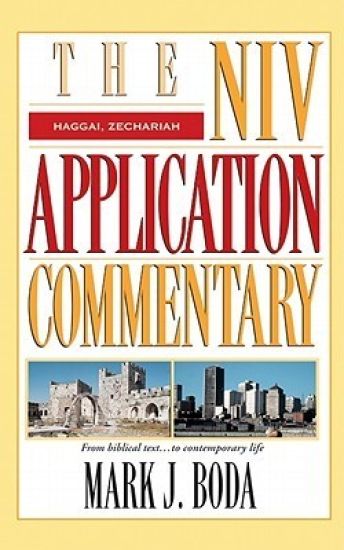
The NIV Application Commentary helps you communicate and apply biblical text effectively in today's context. To bring the ancient messages of the Bible into today's world, each passage is treated in three sections: Original Meaning. Concise exegesis to help readers understand the original meaning of the biblical text in its historical, literary, and cultural context. Bridging Contexts. A bridge between the world of the Bible and the world of today, built by discerning what is timeless in the timely pages of the Bible. Contemporary Significance. This section identifies comparable situations to those faced in the Bible and explores relevant application of the biblical messages. The author alerts the readers of problems they may encounter when seeking to apply the passage and helps them think through the issues involved. This unique, award-winning commentary is the ideal resource for today's preachers, teachers, and serious students of the Bible, giving them the tools, ideas, and insights they need to communicate God's Word with the same powerful impact it had when it was first written. Volumes and authors in The NIV Application Commentary, Old Testament Set Two: Psalms-Malachi, 12-Volume Collection include: (add bullet points & italicize titles) Psalms Volume 1 by Gerald H. Wilson Psalms, Volume 2 by W. Dennis Tucker Jr. and Jamie A. Grant Ecclesiastes, Song of Songs by Iain Provan Proverbs by Paul E. Koptak Isaiah by John N. Oswalt Jeremiah, Lamentations by J. Andrew Dearman Ezekiel by Iain M. Duguid Daniel by Tremper Longman III Hosea, Amos, Micah by Gary V. Smith Joel, Obadiah, Malachi by David W. Baker Jonah, Nahum, Habakkuk, Zephaniah by James Bruckner Haggai, Zechariah by Mark J. Boda
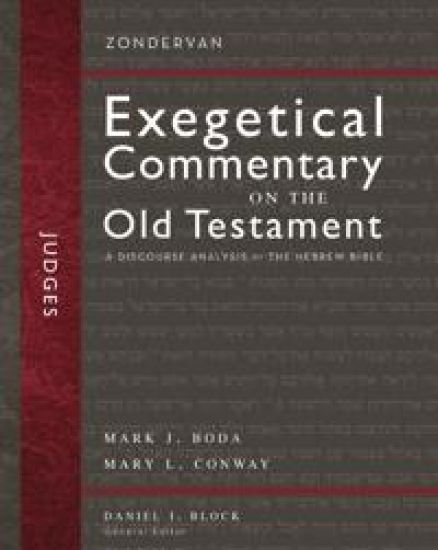
How a biblical author says something is just as important as what they say. Designed for the pastor and Bible teacher, the series carefully analyzes the discourse of each Old Testament book and shows how the main thrust of each passage contributes to the development of the whole composition in the original Hebrew. For each passage, the ZECOT provides:The main idea of the passage. Its literary context. The author’s original translation. Exegetical outline with Hebrew layout. Its structure and literary form. An explanation of the text. Its canonical and practical significance. While primarily designed for those with a basic knowledge of biblical Hebrew, Hebrew words are always explained so that anyone who desires to understand the Old Testament and communicate its message will benefit from the depth and accessibility these volumes offer.
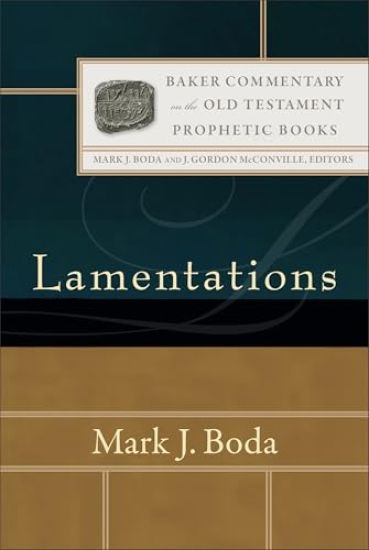
The book of Lamentations is disturbing, says highly regarded Old Testament scholar Mark J. Boda. It forces readers to encounter the honest pain of a community and to struggle with the various strategies employed for processing that pain. Its presence in the scriptural canon of all streams of Judaism and Christianity is testimony to its enduring value. This substantive and useful commentary on Lamentations is both critically engaged and sensitive to the theological contributions of the text. It is grounded in rigorous scholarship but accessible to those who preach and teach. In addition to paragraph-level commentary, all volumes of the Baker Commentary on the Old Testament (BCOT) series feature - a fresh translation of the Hebrew text; - incisive comments based on the author's translation; - linguistic, historical, and canonical insights; - concluding reflections; and - footnotes addressing technical matters. Lamentations is the fourth volume on the prophetic books in the BCOT series, following Hosea-Micah by John Goldingay, Isaiah by J. Gordon McConville, and Daniel by Stephen L. Cook. Series editors are Mark J. Boda (McMaster Divinity College) and J. Gordon McConville (University of Gloucestershire).
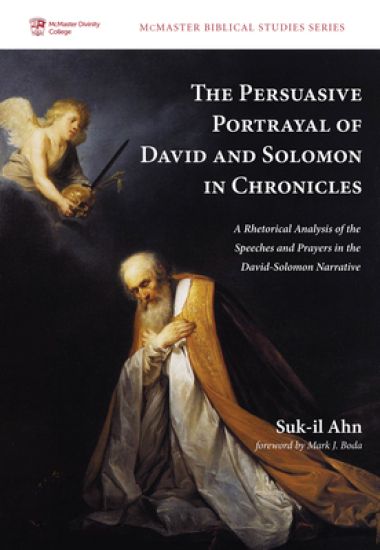
This study examines the speeches and prayers in the David-Solomon narrative in Chronicles and seeks to demonstrate that the Chronicler's portrayal of David and Solomon attempts to establish the Yehudite community's identity. Is the covenantal relationship still valid in the Persian period? The author asserts that as a commitment to YHWH involving the worship of YHWH through the Jerusalem temple, the covenantal relationship between YHWH and Israel continues even into the Persian period. This study employs Kennedy's rhetorical method with the new categories of the narrative situation and the Chronicler's situation being used to further delineate his concept of the narrative situation. The Chronicler's portrayal of David and Solomon through speeches and prayers serves to persuade his audience of the significance of the Jerusalem temple, reformulating the Yehudite community identity as a cultic community in the Persian period. Suk-il Ahn is a lecturer at Westminster Graduate School of Theology in South Korea. He is the author of ""Luther's and Calvin's Understanding of Isaiah 53"" in Reformation Faith: Exegesis and Theology in the Protestant Reformation (2014).
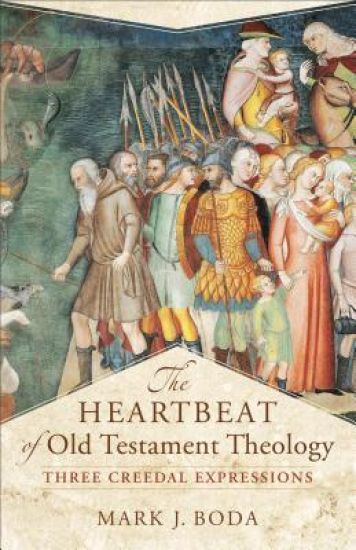
This volume explores the theological heartbeat of the Old Testament by examining three big ideas that communicate the Old Testament's redemptive theology. Highly respected scholar Mark Boda shows how three creedal expressions--the narrative, character, and relational creeds--recur throughout the Old Testament and express its core redemptive theology, in turn revealing how the redemptive pulse of God expands to all of creation. He also traces these redemptive and creational pulses into the New Testament and shows their relevance for today's Christian community.
Over the centuries, the prophetic book of Zechariah has suffered from accusations of obscurity and has frustrated readers seeking to unlock its treasures. This work by Mark Boda provides insightful commentary on Zechariah, with great sensitivity to its historical, literary, and theological dimensions. Including a fresh translation of Zechariah from the original Hebrew, Boda delivers deep and thorough reflection on a too-often-neglected book of the Old Testament.
"Return to me, says the LORD of hosts, and I will return to you," (Zech 1:3 ESV). Repentance concerns the repair of a relationship with God disrupted by human sin. All the major phases of church history have seen diversity and controversy over the doctrine. The first of Luther's famous ninety-five theses nailed to the church door in Wittenburg in 1517 stated that 'the entire life of believers should be one of repentance'. In recent times, two divisive debates within evangelicalism over 'lordship salvation" and "hypergrace" have had repentance at their core. The theme of repentance is evident in almost every Old and New Testament corpus. However, it has received little sustained attention over the past half-century of scholarship, which has been largely restricted to word studies or focused on a particular text or genre. Studies of the overall theology of the Bible have typically given the theme only passing mention. In response, Mark Boda offers a comprehensive overview of the theological witness of Scripture to the theme of repentance in this New Studies in Biblical Theology volume. The key to understanding is not simply to be found in word studies, but also in the broader meaning of texts as these communicate through a variety of words, images and stories. The importance of repentance in redemptive history is emphasized. It is fundamentally a return to intimate fellowship with the triune God, our Creator and redeemer. This relational return arises from the human heart and impacts attitudes, words and actions. Addressing key issues in biblical theology, the works comprising New Studies in Biblical Theology are creative attempts to help Christians better understand their Bibles. The NSBT series is edited by D. A. Carson, aiming to simultaneously instruct and to edify, to interact with current scholarship and to point the way ahead.
Return to me, says the LORD of hosts, and I will return to you ...' (Zech. 1:3 ESV). Repentance concerns the repair of a relationship with God disrupted by human sin. All the major phases of church history have seen diversity and controversy over the doctrine. The first of Luther's famous ninety-five theses nailed to the church door in Wittenburg in 1517 stated that 'the entire life of believers should be one of repentance'. In recent times, two divisive debates within evangelicalism - over 'lordship salvation' and 'hypergrace' - have had repentance at their core. The theme of repentance is evident in almost every Old and New Testament corpus. However, it has received little sustained attention over the past half-century of scholarship, which has been largely restricted to word studies or focused on a particular text or genre. Studies of the overall theology of the Bible have typically given the theme only passing mention. In response, Mark Boda offers a comprehensive overview of the theological witness of Scripture to the theme of repentance. The key to understanding is not simply to be found in word studies, but also in the broader meaning of texts as these communicate through a variety of words, images and stories. The importance of repentance in redemptive history is emphasized. It is fundamentally a return to intimate fellowship with the triune God, our Creator and Redeemer. This relational return arises from the human heart and impacts attitudes, words and actions.
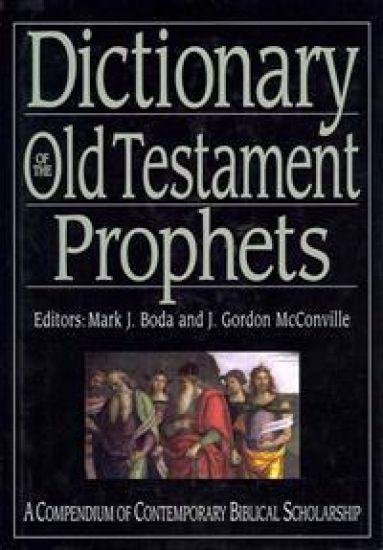
The writings of the prophets make up over a quarter of the Old Testament. But perhaps no other portion of the Old Testament is more misunderstood by readers today. For some, prophecy conjures up knotted enigmas, opaque oracles and terrifying visions of the future. For others it raises expectations of a plotted-out future to be reconstructed from disparate texts. And yet the prophets have imprinted the language of faith and imagination with some of its most sublime visions of the future - nations streaming to Zion, a lion lying with a lamb, and endlessly fruiting trees on the banks of a flowing river. We might view the prophets as stage directors for Israel's unfolding drama of redemption. Drawing inspiration from past acts in that drama and invoking fresh words from its divine author, these prophets speak a language of sinewed poetry, their words and images arresting the ear and detonating in the mind. For when Yahweh roars from Zion and thunders from Jerusalem, the pastures of the shepherds dry up, the crest of Carmel withers, and the prophetic word buffets those selling the needy for a pair of sandals. The Dictionary of the Old Testament: Prophets is the only reference book of its kind. Not only does it focus exclusively on the prophetic books; it also plumbs their imagery of mountains and wilderness, flora and fauna, temple and Zion. It maps and guides us through topics such as covenant and law, exile and deliverance, forgiveness and repentance, and the Day of the Lord. Here the nature of prophecy is searched out in its social, historical, literary and psychological dimensions as well as its synchronic spread of textual links and associations. And the formation of the prophetic books into their canonical collection, including the Book of the Twelve, is explored and weighed for its significance. Then too, contemporary approaches such as canonical criticism, conversation analysis, editorial/redaction criticism, feminist interpretation, literary approaches and rhetorical criticism are summed up and assayed. Even the afterlife of these great texts is explored in articles on the history of interpretation as well as on their impact in the New Testament.
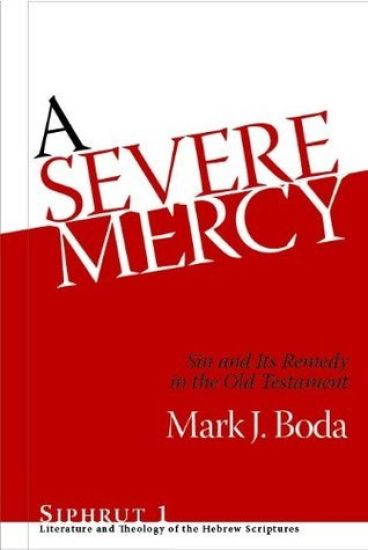
The biblical-theological approach Boda takes in this work is canonical-thematic, tracing the presentation of the theology of sin and its remedy in the canonical form and shape of the Old Testament. The hermeneutical foundations for this enterprise have been laid by others in past decades, especially by Brevard Childs in his groundbreaking work. But A Severe Mercy also reflects recent approaches to integrating biblical understanding with other methodologies in addition to Childs’s. Thus, it enters the imaginative space of the ancient canon of the Old Testament in order to highlight the “word views” and “literary shapes” of the “texts taken individually and as a whole collection.” For the literary shape of the individual texts, it places the “word views” of the dominant expressions and images, as well as various passages, in the larger context of the biblical books in which they are found. For the literary shape of the texts as a collection, it identifies key subthemes and traces their development through the Old Testament canon. The breadth of Boda’s study is both challenging and courageous, resulting in the first comprehensive examination of the topic in the 21st century.
The NIV Application Commentary helps you communicate and apply biblical text effectively in today's context. To bring the ancient messages of the Bible into today's world, each passage is treated in three sections:Original Meaning. Concise exegesis to help readers understand the original meaning of the biblical text in its historical, literary, and cultural context. Bridging Contexts. A bridge between the world of the Bible and the world of today, built by discerning what is timeless in the timely pages of the Bible. Contemporary Significance. This section identifies comparable situations to those faced in the Bible and explores relevant application of the biblical messages. The author alerts the readers of problems they may encounter when seeking to apply the passage and helps them think through the issues involved. This unique, award-winning commentary is the ideal resource for today's preachers, teachers, and serious students of the Bible, giving them the tools, ideas, and insights they need to communicate God's Word with the same powerful impact it had when it was first written. The book you receive may have a different cover design than shown on the website.
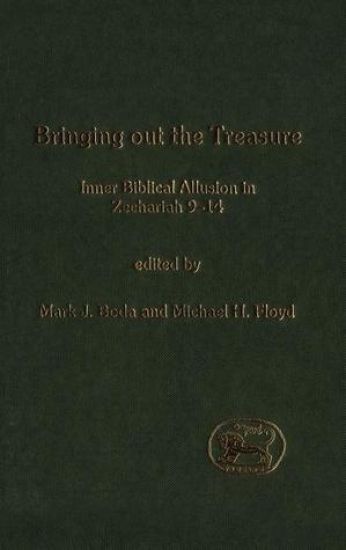
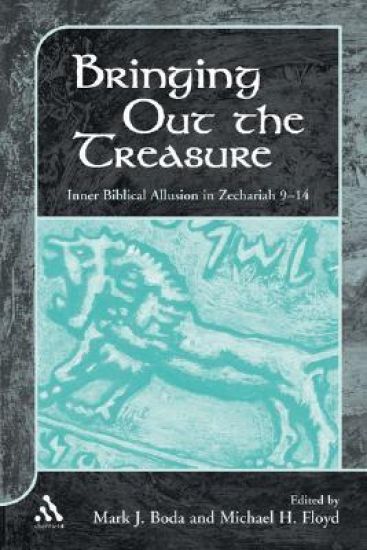
It is generally agreed within Hebrew Bible scholarship that Zechariah 9-14 is filled with allusions to other books within the Hebrew canon. Rex Mason's doctoral dissertation in the early 1970s contributed significantly to the foundation of this consensus. However, although Mason's thesis remains a seminal work for those studying Deutero-Zechariah, it has never been published. This volume contains the first publication of that work together with reflections from leading biblical scholars who have published onZechariah 9-14. The volume is rounded off with a response by Mason to these scholars and a reflection on his own contribution thirty years ago. Journal for the Study of the Old Testament Supplement series, Volume 370.