Kirjojen hintavertailu – 12 903 724 kirjaa ja 27 kauppaa

Kirjailija

Mark M. Lanier

Kirjat ja teokset yhdessä paikassa: 3 kirjaa, julkaisuja vuosilta 2001–2019, suosituimpiin kuuluu Introduction to Homeland Security. Vertaile teosten hintoja ja tarkista saatavuus suomalaisista kirjakaupoista.

3 kirjaa

Kirjojen julkaisuvuodet: 2001–2019.

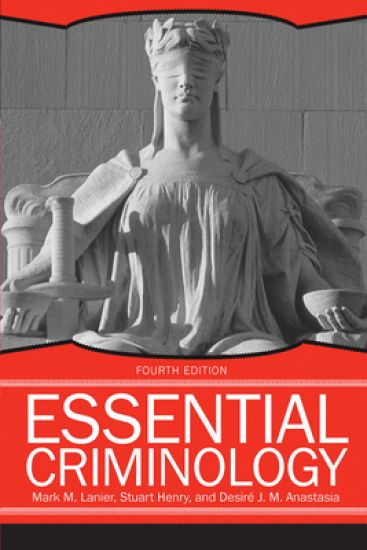
Essential Criminology

Essential Criminology

Mark M. Lanier; Stuart Henry; Desire' J.M. Anastasia

Routledge
2019
sidottu
In the fourth edition of Essential Criminology, authors Mark M. Lanier, Stuart Henry, and Desire . M. Anastasia build upon this best-selling critical review of criminology, which has become essential reading for students of criminology in the 21st century. Designed as an alternative to overly comprehensive, lengthy, and expensive introductory texts, Essential Criminology is, as its title implies, a concise overview of the field. The book guides students through the various definitions of crime and the different ways crime is measured. It then covers the major theories of crime, from individual-level, classical, and rational choice to biological, psychological, social learning, social control, and interactionist perspectives. In this latest edition, the authors explore the kind of criminology that is needed for the globally interdependent twenty-first century. With cutting-edge updates, illustrative real-world examples, and new study tools for students, this text is a necessity for both undergraduate and graduate courses in criminology.
Introduction to Homeland Security

Introduction to Homeland Security

Mark M. Lanier

Cognella Academic Publishing
2013
sidottu
The first comprehensive collection of readings on the topic, Introduction to Homeland Security provides students with the most recent research and policy related to homeland security in the United States. The text is divided into three parts. In Part 1, students become familiar with the genesis and mission of the Department of Homeland Security. Part 2 addresses threats to homeland security, and Part 3 explores responses to these threats. In addition to discussing recent developments in homeland security, the anthology also gives historical perspective and covers policy and operations. Appendices at the end of the text present information on initial homeland security presidential directives, how the structure of government changed after the creation of the Department of Homeland Security, the structure of the department, communication networking, and the cybersecurity chain of command. Informed by expertise in the areas of criminology and law enforcement, Introduction to Homeland Security gives readers a firm understanding of this new area of study. The book can be used in courses on law enforcement, criminal justice, criminology, political science, sociology, anthropology and psychology. Mark M. Lanier, Ph. D., received his interdisciplinary doctoral degree with a concentration in criminology, sociology, and psychology from Michigan State University. Dr. Lanier is a professor and Chair of the Department of Criminal Justice at the University of Alabama and is the university's McNair Fellow for 2013. He has over 60 scholarly publications, including Research Methods in Criminology: A Mixed Methods Approach, co-authored with Lisa Briggs, and Essential Criminology, co-authored with Stuart Henry. Currently, Dr. Lanier is developing epidemiological criminology as a bridge between public health, medical sociology, and criminal justice. Ted Sexton, recently appointed as Director of the Los Angeles Homeland Security Division, has taught courses in homeland security and criminal justice for the Department of Criminal Justice. A longtime Tuscaloosa County sheriff, in 2007 he was honored as the nation's Outstanding Sheriff of the Year.

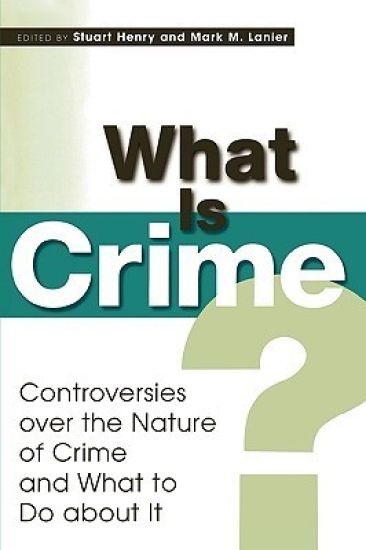
What Is Crime?

What Is Crime?

Stuart Henry; Mark M. Lanier

Rowman Littlefield
2001
nidottu
For decades, scholars have disagreed about what kinds of behavior count as crime. Is it simply a violation of the criminal law? Is it behavior that causes serious harm? Is the seriousness affected by how many people are harmed and does it make a difference who those people are? Are crimes less criminal if the victims are black, lower class, or foreigners? When corporations victimize workers is that a crime? What about when governments violate basic human rights of their citizens, and who then polices governments? In What Is Crime? the first book-length treatment of the topic, contributors debate the content of crime from diverse perspectives: consensus/moral, cultural/relative, conflict/power, anarchist/critical, feminist, racial/ethnic, postmodernist, and integrational. Henry and Lanier synthesize these perspectives and explore what each means for crime control policy.