Kirjojen hintavertailu – 12 903 725 kirjaa ja 27 kauppaa

Kirjailija

Mark M. Smith

Kirjat ja teokset yhdessä paikassa: 16 kirjaa, julkaisuja vuosilta 1998–2021, suosituimpiin kuuluu Sensory History. Vertaile teosten hintoja ja tarkista saatavuus suomalaisista kirjakaupoista.

Nimi esiintyy myös muodoissa: Mark M Smith

16 kirjaa

Kirjojen julkaisuvuodet: 1998–2021.

A Sensory History Manifesto

A Sensory History Manifesto

Mark M. Smith

Pennsylvania State University Press
2021
sidottu
A Sensory History Manifesto is a brief and timely meditation on the state of the field. It invites historians who are unfamiliar with sensory history to adopt some of its insights and practices, and it urges current practitioners to think in new ways about writing histories of the senses. Starting from the premise that the sensorium is a historical formation, Mark M. Smith traces the origins of historical work on the senses long before the emergence of the field now called “sensory history,” interrogating, exploring, and in some cases recovering pioneering work on the topic. Smith argues that we are at an important moment in the writing of the history of the senses, and he explains the potential that this field holds for the study of history generally. In addition to highlighting the strengths of current work in sensory history, Smith also identifies some of its shortcomings. If sensory history provides historians of all persuasions, times, and places a useful and incisive way to write about the past, it also challenges current practitioners to think more carefully about the historicity of the senses and the desirability—even the urgency—of engaged and sustained debate among themselves. In this way, A Sensory History Manifesto invites scholars to think about how their field needs to evolve if the real interpretive dividends of sensory history are to be realized. Concise and convincing, A Sensory History Manifesto is a must-read for historians of all specializations.

A Sensory History Manifesto

A Sensory History Manifesto

Mark M. Smith

Pennsylvania State University Press
2021
pokkari

Halvin toimitettuna 30,10 €

A Sensory History Manifesto is a brief and timely meditation on the state of the field. It invites historians who are unfamiliar with sensory history to adopt some of its insights and practices, and it urges current practitioners to think in new ways about writing histories of the senses. Starting from the premise that the sensorium is a historical formation, Mark M. Smith traces the origins of historical work on the senses long before the emergence of the field now called “sensory history,” interrogating, exploring, and in some cases recovering pioneering work on the topic. Smith argues that we are at an important moment in the writing of the history of the senses, and he explains the potential that this field holds for the study of history generally. In addition to highlighting the strengths of current work in sensory history, Smith also identifies some of its shortcomings. If sensory history provides historians of all persuasions, times, and places a useful and incisive way to write about the past, it also challenges current practitioners to think more carefully about the historicity of the senses and the desirability—even the urgency—of engaged and sustained debate among themselves. In this way, A Sensory History Manifesto invites scholars to think about how their field needs to evolve if the real interpretive dividends of sensory history are to be realized. Concise and convincing, A Sensory History Manifesto is a must-read for historians of all specializations.

Hurricane Katrina and the Forgotten Coast of Mississippi

Hurricane Katrina and the Forgotten Coast of Mississippi

Susan L. Cutter; Christopher T. Emrich; Jerry T. Mitchell; Walter W. Piegorsch; Mark M. Smith; Lynn Weber

Cambridge University Press
2018
pokkari
Hurricane Katrina slammed into the Gulf Coast in August 2005 with devastating consequences. Almost all analyses of the disaster have been dedicated to the way the hurricane affected New Orleans. This volume examines the impact of Katrina on southern Mississippi. While communities along Mississippi's Gulf Coast shared the impact, their socioeconomic and demographic compositions varied widely, leading to different types and rates of recovery. This volume furthers our understanding of the pace of recovery and its geographic extent, and explores the role of inequalities in the recovery process and those antecedent conditions that could give rise to a 'recovery divide'. It will be especially appealing to researchers and advanced students of natural disasters and policy makers dealing with disaster consequences and recovery.
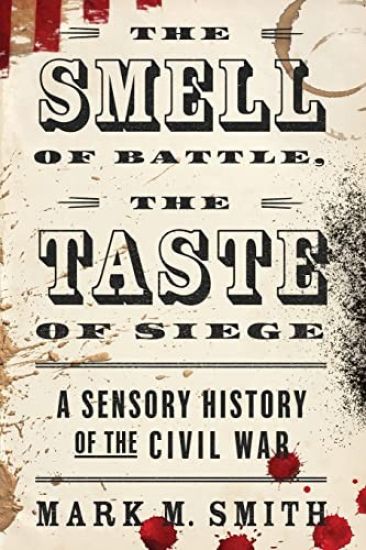
Smell of Battle, the Taste of Siege: A Sensory History of the Civil War
Historical accounts of major events have almost always relied upon what those who were there witnessed. Nowhere is this truer than in the nerve-shattering chaos of warfare, where sight seems to confer objective truth and acts as the basis of reconstruction. In The Smell of Battle, the Taste of Siege, historian Mark M. Smith considers how all five senses, including sight, shaped the experience of the Civil War and thus its memory, exploring its full sensory impact on everyone from the soldiers on the field to the civilians waiting at home. From the eardrum-shattering barrage of shells announcing the outbreak of war at Fort Sumter; to the stench produced by the corpses lying in the mid-summer sun at Gettysburg; to the siege of Vicksburg, once a center of Southern culinary aesthetics and starved into submission, Smith recreates how Civil War was felt and lived. Relying on first-hand accounts, Smith focuses on specific senses, one for each event, offering a wholly new perspective. At Bull Run, the similarities between the colors of the Union and Confederate uniforms created concern over what later would be called "friendly fire" and helped decide the outcome of the first major battle, simply because no one was quite sure they could believe their eyes. He evokes what it might have felt like to be in the HL Hunley submarine, in which eight men worked cheek by jowl in near-total darkness in a space 48 inches high, 42 inches wide. Often argued to be the first "total war," the Civil War overwhelmed the senses because of its unprecedented nature and scope, rendering sight less reliable and, Smith shows, forcefully engaging the nonvisual senses. Sherman's March was little less than a full-blown assault on Southern sense and sensibility, leaving nothing untouched and no one unaffected. Unique, compelling, and fascinating, The Smell of Battle, The Taste of Siege, offers readers way to experience the Civil War with fresh eyes.
The Smell of Battle, the Taste of Siege

The Smell of Battle, the Taste of Siege

Mark M. Smith

Oxford University Press Inc
2014
sidottu
Historical accounts of major events have almost always relied upon what those who were there witnessed. Nowhere is this truer than in the nerve-shattering chaos of warfare, where sight seems to confer objective truth and acts as the basis of reconstruction. In The Smell of Battle, the Taste of Siege, historian Mark M. Smith considers how all five senses, including sight, shaped the experience of the Civil War and thus its memory, exploring its full sensory impact on everyone from the soldiers on the field to the civilians waiting at home. From the eardrum-shattering barrage of shells announcing the outbreak of war at Fort Sumter; to the stench produced by the corpses lying in the mid-summer sun at Gettysburg; to the siege of Vicksburg, once a center of Southern culinary aesthetics and starved into submission, Smith recreates how Civil War was felt and lived. Relying on first-hand accounts, Smith focuses on specific senses, one for each event, offering a wholly new perspective. At Bull Run, the similarities between the colors of the Union and Confederate uniforms created concern over what later would be called "friendly fire" and helped decide the outcome of the first major battle, simply because no one was quite sure they could believe their eyes. He evokes what it might have felt like to be in the HL Hunley submarine, in which eight men worked cheek by jowl in near-total darkness in a space 48 inches high, 42 inches wide. Often argued to be the first "total war," the Civil War overwhelmed the senses because of its unprecedented nature and scope, rendering sight less reliable and, Smith shows, forcefully engaging the nonvisual senses. Sherman's March was little less than a full-blown assault on Southern sense and sensibility, leaving nothing untouched an no one unaffected. Unique, compelling, and fascinating, The Smell of Battle, The Taste of Siege, offers readers way to experience the Civil War with fresh eyes.
Hurricane Katrina and the Forgotten Coast of Mississippi

Hurricane Katrina and the Forgotten Coast of Mississippi

Susan L. Cutter; Christopher T. Emrich; Jerry T. Mitchell; Walter W. Piegorsch; Mark M. Smith; Lynn Weber

Cambridge University Press
2014
sidottu
Hurricane Katrina slammed into the Gulf Coast in August 2005 with devastating consequences. Almost all analyses of the disaster have been dedicated to the way the hurricane affected New Orleans. This volume examines the impact of Katrina on southern Mississippi. While communities along Mississippi's Gulf Coast shared the impact, their socioeconomic and demographic compositions varied widely, leading to different types and rates of recovery. This volume furthers our understanding of the pace of recovery and its geographic extent, and explores the role of inequalities in the recovery process and those antecedent conditions that could give rise to a 'recovery divide'. It will be especially appealing to researchers and advanced students of natural disasters and policy makers dealing with disaster consequences and recovery.
Camille, 1969

Camille, 1969

Mark M. Smith

University of Georgia Press
2011
sidottu
Thirty-six years before Hurricane Katrina ravaged New Orleans and southern Mississippi, the region was visited by one of the most powerful hurricanes ever to hit the United States: Camille. Mark M. Smith offers three highly original histories of the storm’s impact in southern Mississippi. In the first essay Smith examines the sensory experience and impact of the hurricane—how the storm rearranged and challenged residents’ senses of smell, sight, sound, touch, and taste. The second essay explains the way key federal officials linked the question of hurricane relief and the desegregation of Mississippi’s public schools. Smith concludes by considering the political economy of short- and long-term disaster recovery, returning to issues of race and class. Camille, 1969 offers stories of survival and experience, of the tenacity of social justice in the face of a natural disaster, and of how recovery from Camille worked for some but did not work for others. Throughout these essays are lessons about how we might learn from the past in planning for recovery from natural disasters in the future.
Slavery in North America Vol 3

Slavery in North America Vol 3

Mark M Smith; Peter S Carmichael; Timothy Lockley; Jonathan Daniel Wells

Routledge
2008
sidottu
From the founding of Jamestown to the American Civil War, slavery and abolition shaped American national, regional and racial identities. This four-volume reset edition draws together rare sources relating to American slavery systems.
Slavery in North America Vol 2

Slavery in North America Vol 2

Mark M Smith; Peter S Carmichael; Timothy Lockley; Jonathan Daniel Wells

Routledge
2008
sidottu
From the founding of Jamestown to the American Civil War, slavery and abolition shaped American national, regional and racial identities. This four-volume reset edition draws together rare sources relating to American slavery systems.
Slavery in North America Vol 4

Slavery in North America Vol 4

Mark M Smith; Peter S Carmichael; Timothy Lockley; Jonathan Daniel Wells

Routledge
2008
sidottu
From the founding of Jamestown to the American Civil War, slavery and abolition shaped American national, regional and racial identities. This four-volume reset edition draws together rare sources relating to American slavery systems.
Slavery in North America Vol 1

Slavery in North America Vol 1

Mark M Smith; Peter S Carmichael; Timothy Lockley; Jonathan Daniel Wells

Routledge
2008
sidottu
From the founding of Jamestown to the American Civil War, slavery and abolition shaped American national, regional and racial identities. This four-volume reset edition draws together rare sources relating to American slavery systems.
Sensory History

Sensory History

Mark M. Smith

Berg Publishers
2007
nidottu

Halvin toimitettuna 45,60 €

This book can be purchased by customers in the US or Canada from the University of California Press. Sensory History introduces a topic that is rapidly becoming of enormous interest to historians--incorporating the senses into our understanding of the past. The book defines 'sensory history,' stresses the importance of historicizing the senses, and considers each sense chapter by chapter. The author concludes by pondering future directions of the field. Drawing on examples from across the globe throughout time, Sensory History includes examinations of visual culture in Victorian Britain and South America, sound in nineteenth-century Australia and France, gender politics and touch in Early Modern Europe and among Native Americans, "race" and olfaction in the United States and scent in ancient Christianity, and the role of taste in shaping national identity in modern China and Early America. By attending carefully to the social history of the senses, Sensory History also reconsiders the value of paradigmatic explanatory models linking print, vision, and modernity and evaluates their relevance to the study of sensory history. Sensory History will be a key text for an emerging field.
Sensory History

Sensory History

Mark M. Smith

BLOOMSBURY PUBLISHING PLC
2007
sidottu
This book can be purchased by customers in the US or Canada from the University of California Press. Sensory History introduces a topic that is rapidly becoming of enormous interest to historians - incorporating the senses into our understanding of the past. The book defines "sensory history," stresses the importance of historicizing the senses, and considers each sense chapter by chapter. The author concludes by pondering future directions of the field. Drawing on examples from across the globe throughout time, Sensory History includes examinations of visual culture in Victorian Britain and South America, of sound in nineteenth-century Australia and France, and of gender politics and touch in Early Modern Europe and among Native Americans. It also discusses "race" and olfaction in the United States, scent in ancient Christianity, and the role of taste in shaping national identity in modern China and Early America. By attending carefully to the social history of the senses, Sensory History also reconsiders the value of paradigmatic explanatory models linking print, vision and modernity, and evaluates their relevance to the study of sensory history. Sensory History will be a key text for an emerging field.
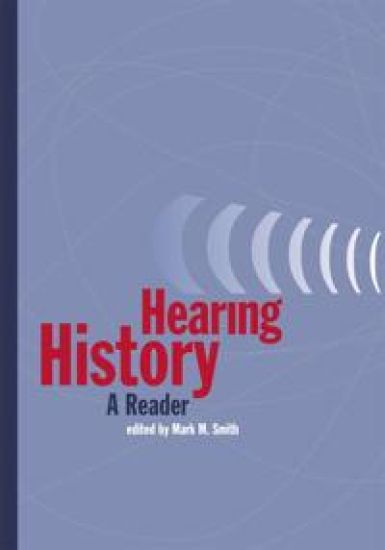
Hearing History

Hearing History

Mark M. Smith

University of Georgia Press
2004
pokkari
Hearing History is a long-needed introduction to the basic tenets of what is variously termed historical acoustemology, auditory culture, or aural history. Gathering twenty-one of the field’s most important writings, this volume will deepen and broaden our understanding of changing perceptions of sound and hearing and the ongoing education of our senses. The essays stimulate thinking on key questions: What is aural history? Why has vision tended to triumph over hearing in historical accounts? How might we begin to reclaim the sounds of the past? With theoretical and practical essays on the history of sound and hearing in Europe and the United States, the book draws on historical approaches ranging from empiricism to postmodernism. Some essays show the historian of technology at work, others highlight how military, social, intellectual, and cultural historians have tackled historical acoustemologies. Investigating soundscapes that include a Puritan meetinghouse in colonial New England, the belfries of a French village at the close of the Old Regime, the court hall of Elizabeth I, and a Civil War battlefield, the essays vary just as widely in their topics, which include noise as a marker of social and cultural differences, the privileging of music as the sound of art, the persistence of Aristotelian ideas of sound into the seventeenth century, developments in sound related to medical practice, the advent of sound-recording technology, and noise pollution. This important new anthology will help us to contextualize the past within the larger rubric of all of the senses and thus free mainstream historical writing from the powerful but blinding focus on vision alone.
Debating Slavery

Debating Slavery

Mark M. Smith

Cambridge University Press
1998
pokkari
Even while slavery existed, Americans debated slavery. Was it a profitable and healthy institution? If so, for whom? The abolition of slavery in 1865 did not end this debate. Similar questions concerning the profitability of slavery, its impact on masters, slaves, and nonslaveowners still inform modern historical debates. Is the slave South best characterized as a capitalist society? Or did its dogged adherence to non-wage labor render it precapitalist? Today, southern slavery is among the most hotly disputed topics in writing on American history. With the use of illustrative material and a critical bibliography, Dr Smith outlines the main contours of this complex debate, summarizes the contending viewpoints, and at the same time weighs up the relative importance, strengths and weaknesses of the various competing interpretations. This book introduces an important topic in American history in a manner which is accessible to students and undergraduates taking courses in American history.
Debating Slavery

Debating Slavery

Mark M. Smith

Cambridge University Press
1998
sidottu
Even while slavery existed, Americans debated slavery. Was it a profitable and healthy institution? If so, for whom? The abolition of slavery in 1865 did not end this debate. Similar questions concerning the profitability of slavery, its impact on masters, slaves, and nonslaveowners still inform modern historical debates. Is the slave South best characterized as a capitalist society? Or did its dogged adherence to non-wage labor render it precapitalist? Today, southern slavery is among the most hotly disputed topics in writing on American history. With the use of illustrative material and a critical bibliography, Dr Smith outlines the main contours of this complex debate, summarizes the contending viewpoints, and at the same time weighs up the relative importance, strengths and weaknesses of the various competing interpretations. This book introduces an important topic in American history in a manner which is accessible to students and undergraduates taking courses in American history.