
Kirjojen hintavertailu – 12 859 818 kirjaa ja 27 kauppaa

Kirjailija

Mark McKerracher

Kirjat ja teokset yhdessä paikassa: 2 kirjaa, julkaisuja vuosilta 2019–2025, suosituimpiin kuuluu Feeding Medieval England. Vertaile teosten hintoja ja tarkista saatavuus suomalaisista kirjakaupoista.

2 kirjaa

Kirjojen julkaisuvuodet: 2019–2025.

Feeding Medieval England

Feeding Medieval England

Helena Hamerow; Mark McKerracher; Amy Bogaard; Mike Charles; Emily Forster; Matilda Holmes; Christopher Bronk Ramsey; Elizabeth Stroud; Richard Thomas

Oxford University Press
2025
sidottu
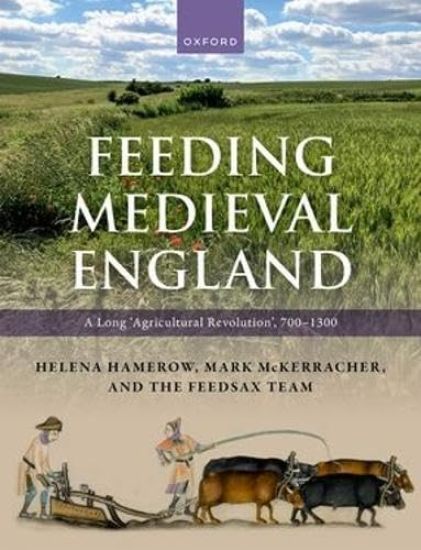
This is an open access title available under the terms of a CC BY-NC-ND 4.0 International license. It is free to read at on Oxford Academic and offered as a free PDF download from OUP and selected open access locations. The population of England grew steeply in the Middle Ages, especially between the tenth and thirteenth centuries. This volume investigates how medieval farmers managed to produce the large harvests needed to sustain this growth, growth that in turn fuelled a major expansion of towns and markets. New evidence is presented for the development of the medieval farming regimes that shaped the English landscape in ways still visible today. Medieval farming is a contentious topic, not least because of the different approaches taken by historians, archaeologists and geographers and no consensus has been reached about the cultivation regimes that underpinned medieval cereal production. This volume presents a new perspective on this question, based on the results of a project that analysed the remains of medieval crops, arable weeds, livestock and pollen from hundreds of excavations. The new evidence that this generated reveals the conditions in which medieval crops were grown and how land use changed between the late Roman period and the Black Death. The authors relate the results to archaeological and written evidence for farms and farming, bringing an ecological perspective to the debate about the so-called medieval 'agricultural revolution'. The 'cerealisation' of England emerges as a regionally varied process lasting several centuries, whose overall impact was nevertheless revolutionary.
Anglo-Saxon Crops and Weeds: A Case Study in Quantitative Archaeobotany
There is a growing recognition within Anglo-Saxon archaeology that farming practices underwent momentous transformations in the Mid Saxon period, between the seventh and ninth centuries AD: transformations which underpinned the growth of the Anglo-Saxon kingdoms and, arguably, set the trajectory for English agricultural development for centuries to come. Meanwhile, in the field of archaeobotany, a growing set of quantitative methods has been developed to facilitate the systematic investigation of agricultural change through the study of charred plant remains. This study applies a standardised set of repeatable quantitative analyses to the charred remains of Anglo-Saxon crops and weeds, to shed light on crucial developments in crop husbandry between the seventh and ninth centuries. The analyses demonstrate the significance of the Anglo-Saxon archaeobotanical record in elucidating how greater crop surpluses were attained through ecologically-sensitive diversification and specialisation strategies in this period. At the same time, assumptions, variables and key parameters are presented fully and explicitly to facilitate repetition of the work, thus also enabling the book to be used as a source of comparative data and a methodological handbook for similar research in other periods and places. It constitutes a specialist, data-driven companion volume to the author’s more general narrative account published as ‘Farming Transformed in Anglo-Saxon England’ (Windgather, 2018).