

Kirjailija
Mark Metcalf
Kirjat ja teokset yhdessä paikassa: 11 kirjaa, julkaisuja vuosilta 2011–2024, suosituimpiin kuuluu Tim Tim Timmy. Vertaile teosten hintoja ja tarkista saatavuus suomalaisista kirjakaupoista.
11 kirjaa
Kirjojen julkaisuvuodet: 2011–2024.

Erling Haaland
Mark Metcalf; Simon Mullock
PITCH PUBLISHING LTD
2023
nidottu
Halvin toimitettuna 23,70 €
The rip-roaring story of Manchester City's red-hot goalscoring hero Erling Haaland. Unlike his seafaring forefathers, Haaland arrived in England peacefully in 2022. But the result was the same with the Viking running riot before heading to European shores to rampage through even the most stubborn defences. Haaland helped sweep Manchester City to a record-equalling treble of Champions League, Premier League and FA Cup glory. The Striking Viking smashed home a record-breaking 36 Premier League goals and continued his incredible Champions League record to make it 35 in 29 games. This book is packed with exclusive unpublished material, including the story behind his transfer to England. It features the words of the great man himself, team-mates, opponents and Pep Guardiola. It explores his early career in Norway, and his later successes in Salzburg and Dortmund, before bringing us up to date with his Man City and international heroics. Want to know Haaland the player and the man? This is the book for you.
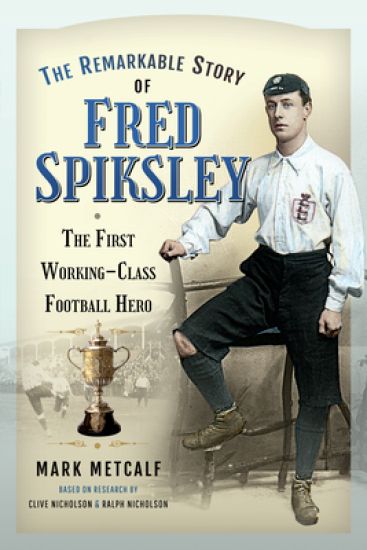
Gainsborough's Fred Spiksley was one of the first working class youngsters in 1887 to live 'the dream' of becoming a professional footballer, before later finding a role as a globe-trotting coach. He thus dodged the inevitability of industrial, poorly paid, dangerous labour. Lightning fast, Spiksley created and scored hundreds of goals including, to the great joy of the future Queen Mary who chased him down the touchline, three against Scotland in 1893\. The outside left scored both Sheffield Wednesday's goals in the 2-1 defeat of Wolves in the 1896 FA Cup Final at the Crystal palace. Forced by injury to stop playing at aged 36, Spiksley adventured out into the world. He acted with Charlie Chaplin, escaped from a German prison at the start of the First World War and later made the first 'talking' football training film for youngsters. As a coach/manager he won titles in Sweden, Mexico, the USA and Germany, becoming the last Englishman to coach a German title-winning team with 1FC Nuremburg in 1927\. He coached in Barcelona in 1932 and it was only after his involvement had exceeded 50 years, during which time, as this book explains, the game changed dramatically, did Spiksley's football career end. As an addicted gambler and womaniser, Spiksley had his problems away from football. However, he was beloved by his football fans, including Herbert Chapman, the greatest manager of that era in English football who, towards the end of his life, picked him in his finest XI.
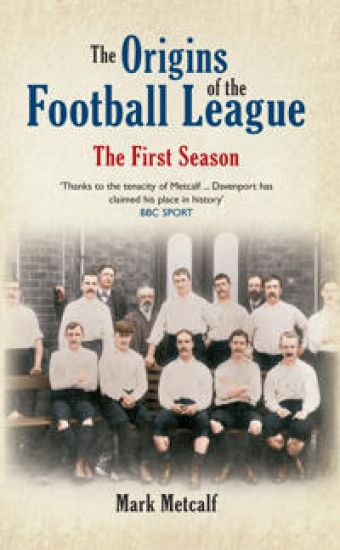
On Saturday 8 September 1888, League football kicked off. Twelve clubs had combined to play regular fixtures and the result was to revolutionise not only English football but virtually every nation and sport since then. In this book, the history of the Football League season 1888/89 is told in great depth, with reports on every match and profiles of all those who played – amateur and professional – during this thrilling historic season, in which Preston were ‘invincible’ and set the standards for other great teams to follow. Key players and their skills are highlighted. Doubts about who scored the first-ever League goal are ended. The standard of football, equipment used and the tactics adopted to win matches are all analysed. Controversial incidents that paved the way for the introduction of the goal net and penalty kick are brought back to life. The clubs, their pitches and grounds – and the fans that filled them – are explored within the economic circumstances and developments of the era. Illustrated with contemporary photographs and newspaper cuttings, this is the story of the 1888/89 Football League season.
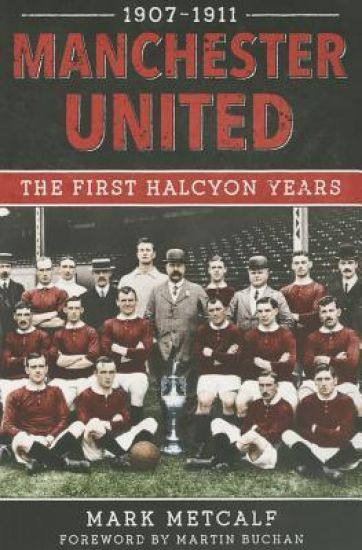
Manchester United may be world famous today, but back in 1907 the club had yet to win either the League Championship or the FA Cup. Things were to change dramatically over the following four seasons, during which time the club moved to Old Trafford under the management of Ernest Mangnall, and captured two League titles, two Charity Shields and a first FA Cup success. But how were these successes achieved? Who were the players that set the Manchester club on a path to greatness? Who were their opponents? Why did Manchester United move to Old Trafford? Find out more in Manchester United 1907-11: The First Halcyon Years, the first in-depth work on this truly great period in the illustrious history of the great Manchester United.
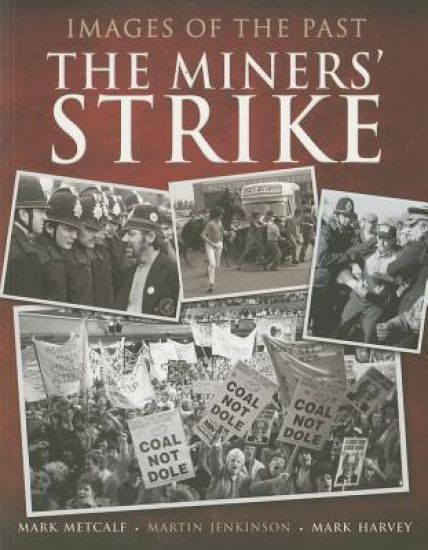
Images of the Past: The Miners' Strike
Mark Metcalf; Mark Harvey; Martin Jenkinson
Pen Sword Books Ltd
2014
nidottu
In addition to being the most bitter industrial dispute the coalminers' strike of 1984/5 was the longest national strike in British history. For a year over 100,000 members of the National Union of Mineworkers, their families and supporters, in hundreds of communities, battled to prevent the decimation of the coal industry on which their livelihoods and communities depended. Margaret Thatcher's government aimed to smash the most militant section of the British working class. She wanted to usher in a new era of greater management control at work and pave the way for a radical refashioning of society in favour of neo-liberal objectives that three decades later have crippled the world economy. Victory required draconian restrictions on picketing and the development of a militarised national police force that made widespread arrests as part of its criminalisation policy. The attacks on the miners also involved the use of the courts and anti-trade union laws, restrictions on welfare benefits, the secret financing by industrialists of working miners and the involvement of the security services. All of which was supported by a compliant mass media but resisted by the collective courage of miners and mining communities in which the role of Women against Pit Closures in combating poverty and starvation was heroic. Thus inspired by the struggle for jobs and communities an unparalleled movement of support groups right across Britain and in other parts of the world was born and helped bring about a situation where the miners long struggle came close on occasions to winning. At the heart of the conflict was the Yorkshire region, where even at the end in March 1985, 83 per cent of 56,000 miners were still out on strike. The official Yorkshire National Union of Mineworkers (NUM) area photographer in 1984-85 was the late Martin Jenkinson and this book of his photographs - some never previously seen before - serves as a unique social document on the dispute that changed the face of Britain.
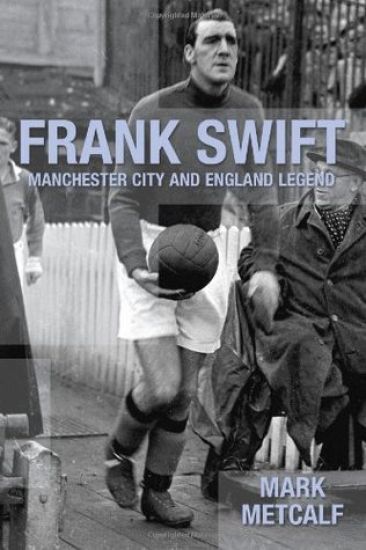
Frank Swift is one of the greatest English goalkeeper's of all time. A First and Second Division, FA Cup and Charity Shield winner with Manchester City, his only League club, he represented his country on 33 occasions between 1941 and 1949. This title tells his story.
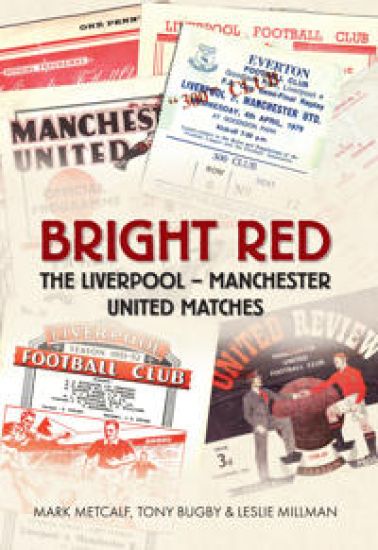
You would be mistaken in thinking the rivalry between Liverpool and Manchester United was only something that has existed in recent times. Obviously there was considerable hype as United equalled and then overtook Liverpool's previous record of 18 League titles, something the Merseyside club and its fans had cherished. And to lose it to your biggest rivals was something which was especially hard to palate. Liverpool fans, in turn counter by continually taunting United over the five European Cups they have won to United's three. This is the latest sequel to a rivalry which began in 1894 when the two teams met for the first time in a game as important as any which have subsequently taken place - and there have been some massive ones. It was a 'Test Match' which was to determine the status of both clubs. United, then Newton Heath had finished bottom of the First Division while Liverpool were champions of the Second Division having gone through the whole campaign unbeaten. Test Matches, which were more like today's play offs, were introduced when the Football League was expanded to two divisions. They featured the bottom three clubs in the top flight playing the top three in the second tier. Liverpool won the initial meeting 2-0 to gain promotion whilst Newton Heath were relegated. It was only the briefest stay, however, as the Merseysiders were immediately relegated as the two teams met for the first time in a League fixture in 1895. Those first two League matches, played within three weeks of one another, also underlined how unpredictable the form book was, something which has invariably still been the case more than a century later. Liverpool won the first League meeting 7-1 which still to this day remains the record margin of victory between the two teams. In the return three weeks later, Newton Heath were no-hopers yet pulled off a 5-2 win.
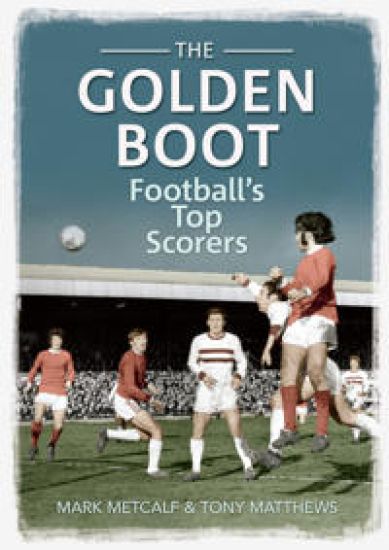
In 1888, Englands Football league came into being and ever since a player has been recognised each year for the highest number of goals scored in the league, First Division or Premier League. The first was John Goodall of Preston North End, with 21 goals, the most recent, Didier Drogba, with 29. The Football leagues top scorer was Dixie Dean of Everton, in 1927/28, with an impressive tally of 60 goals.
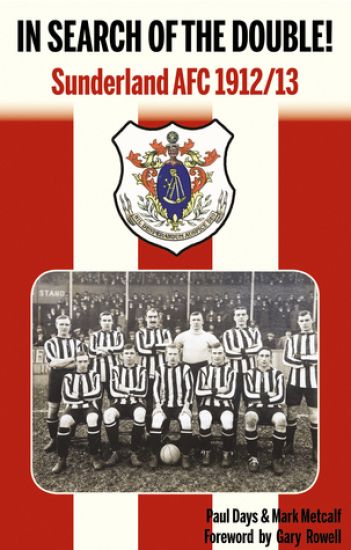
For most supporters of Sunderland AFC, the history of their club would probably be best represented by the names of the mid 1930s team, particularly Gurney and Carter, undoubted Wearside football legends. The name of Charlie Buchan also looms large even today in the tale of a football club whose history can be cut like a knife. Although Charlie Buchan might still be a revered figure on Wearside, his team mates aren't and yet the 1912/13 season, which is the subject of this book, produced arguably the fi nest Sunderland team ever to grace the famous red and white striped shirts. It came the closest the club has ever come to winning the double, almost became the first English football club to achieve it in the 20th century, yet the names of Albert Milton, Frank Cuggy, Jackie Mordue and the rest of Sunderland's league champions and FA Cup finalists that season have long since been cast into the annals of the club's history. Even the football club's near talismanic and perhaps finest ever captain Charlie Thomson is seemingly forgotten. The was team guided by Bob Kyle, Sunderland AFC's longest serving manager, he too also forgotten. This book looks at the matches and the characters that shaped an immensely successful 1912/13 season. Although they were crowned league champions, perhaps an enduring highlight, although it ultimately ended in defeat, was the now legendary FA Cup final which took place at The Crystal Palace in April 1913, before a world record crowd. For the first time in the 20th Century England's top two football teams contested for the most coveted domestic knockout cup competition in world football and what a tale it tells; an iconic match. Finally, to give the book a social context and a flavour of the times, we have captured the main news stories of the 1912/13 period which includes some momentous incidents such as the sinking of the Titanic; another iconic event.