Kirjojen hintavertailu – 12 859 818 kirjaa ja 27 kauppaa

Kirjailija

Mark Phythian

Kirjat ja teokset yhdessä paikassa: 17 kirjaa, julkaisuja vuosilta 2007–2028, suosituimpiin kuuluu The Business of Arms. Vertaile teosten hintoja ja tarkista saatavuus suomalaisista kirjakaupoista.

17 kirjaa

Kirjojen julkaisuvuodet: 2007–2028.

The Business of Arms

The Business of Arms

Mark Phythian

Routledge
2023
sidottu
Offering a concise, yet thorough, introduction to the illicit arms trade, the main theme of this significant volume confronts the complex reality that while it is proper to think of two separate trades in arms, legal and illegal, in practice there is a considerable overlap between the two. Although this overlap is sometimes distinguished by referring to 'black' (wholly illegal) and 'grey' (semi-legal) markets, this book situates all of these transactions along a continuum under the banner of the 'illicit arms trade'. Drawing on a wide range of primary sources, Mark Phythian argues that the lessons of the most important and extensive cases of the last fifteen to twenty years suggest that a significant element of the illicit trade in arms has in fact been sanctioned at some level of government, in the pursuit of broader security or geopolitical ends.
The Iraq War and Democratic Governance

The Iraq War and Democratic Governance

Judith Betts; Mark Phythian

Springer Nature Switzerland AG
2021
nidottu
This book examines the decisions by Tony Blair and John Howard to take their nations into the 2003 Iraq War, and the questions these decisions raise about democratic governance. It also explores the significance of the US alliance in UK and Australian decision-making, and the process for taking a nation to war. Relying on primary government documents and interviews, and bringing together various strands of literature that have so far been discussed in isolation (including historical accounts, party politics, prime ministerial leadership and intelligence studies), the authors provide a comprehensive and original view on the various post-war inquiries conducted in the UK, Australia.
The Iraq War and Democratic Governance

The Iraq War and Democratic Governance

Judith Betts; Mark Phythian

Springer Nature Switzerland AG
2020
sidottu
This book examines the decisions by Tony Blair and John Howard to take their nations into the 2003 Iraq War, and the questions these decisions raise about democratic governance. It also explores the significance of the US alliance in UK and Australian decision-making, and the process for taking a nation to war. Relying on primary government documents and interviews, and bringing together various strands of literature that have so far been discussed in isolation (including historical accounts, party politics, prime ministerial leadership and intelligence studies), the authors provide a comprehensive and original view on the various post-war inquiries conducted in the UK, Australia.
Ideologies of American Foreign Policy

Ideologies of American Foreign Policy

John Callaghan; Brendon O'Connor; Mark Phythian

Routledge
2019
nidottu
A comprehensive account of ideology and its role in the foreign policy of the United States of America, this book investigates the way United States foreign policy has been understood, debated and explained in the period since the US emerged as a global force, on its way to becoming the world power. Starting from the premise that ideologies facilitate understanding by providing explanatory patterns or frameworks from which meaning can be derived, the authors study the relationship between ideology and foreign policy, demonstrating the important role ideas have played in US foreign policy. Drawing on a range of US administrations, they consider key speeches and doctrines, as well as private conversations, and compare rhetoric to actions in order to demonstrate how particular sets of ideas – that is, ideologies – from anti-colonialism and anti-communism to neo-conservatism mattered during specific presidencies and how US foreign policy was projected, explained and sustained from one administration to another. Bringing a neglected dimension into the study of US foreign policy, this book will be of great interest to students and researchers of US foreign policy, ideology and politics.
Ideologies of American Foreign Policy

Ideologies of American Foreign Policy

John Callaghan; Brendon O'Connor; Mark Phythian

Routledge
2019
sidottu
A comprehensive account of ideology and its role in the foreign policy of the United States of America, this book investigates the way United States foreign policy has been understood, debated and explained in the period since the US emerged as a global force, on its way to becoming the world power. Starting from the premise that ideologies facilitate understanding by providing explanatory patterns or frameworks from which meaning can be derived, the authors study the relationship between ideology and foreign policy, demonstrating the important role ideas have played in US foreign policy. Drawing on a range of US administrations, they consider key speeches and doctrines, as well as private conversations, and compare rhetoric to actions in order to demonstrate how particular sets of ideas – that is, ideologies – from anti-colonialism and anti-communism to neo-conservatism mattered during specific presidencies and how US foreign policy was projected, explained and sustained from one administration to another. Bringing a neglected dimension into the study of US foreign policy, this book will be of great interest to students and researchers of US foreign policy, ideology and politics.
Intelligence in An Insecure World

Intelligence in An Insecure World

Peter Gill; Mark Phythian

Polity Press
2018
nidottu

Halvin toimitettuna 38,10 €

Security intelligence continues to be of central importance to the contemporary world: individuals, organizations and states all seek timely and actionable intelligence in order to increase their sense of security. But what exactly is intelligence? Who seeks to develop it and to what ends? How can we ensure that intelligence is not abused? In this third edition of their classic text, Peter Gill and Mark Phythian set out a comprehensive framework for the study of intelligence, discussing how states organize the collection and analysis of information in order to produce intelligence, how it is acted upon, why it may fail and how the process should be governed in order to uphold democratic rights. Fully revised and updated throughout, the book covers recent developments, including the impact of the Snowden leaks on the role of intelligence agencies in Internet and social media surveillance and in defensive and offensive cyber operations, and the legal and political arrangements for democratic control. The role of intelligence as part of ‘hybrid’ warfare in the case of Russia and Ukraine is also explored, and the problems facing intelligence in the realm of counterterrorism is considered in the context of the recent wave of attacks in Western Europe. Intelligence in an Insecure World is an authoritative and accessible guide to a rapidly expanding area of inquiry – one that everyone has an interest in understanding.
Intelligence in An Insecure World

Intelligence in An Insecure World

Peter Gill; Mark Phythian

Polity Press
2018
sidottu
Security intelligence continues to be of central importance to the contemporary world: individuals, organizations and states all seek timely and actionable intelligence in order to increase their sense of security. But what exactly is intelligence? Who seeks to develop it and to what ends? How can we ensure that intelligence is not abused? In this third edition of their classic text, Peter Gill and Mark Phythian set out a comprehensive framework for the study of intelligence, discussing how states organize the collection and analysis of information in order to produce intelligence, how it is acted upon, why it may fail and how the process should be governed in order to uphold democratic rights. Fully revised and updated throughout, the book covers recent developments, including the impact of the Snowden leaks on the role of intelligence agencies in Internet and social media surveillance and in defensive and offensive cyber operations, and the legal and political arrangements for democratic control. The role of intelligence as part of ‘hybrid’ warfare in the case of Russia and Ukraine is also explored, and the problems facing intelligence in the realm of counterterrorism is considered in the context of the recent wave of attacks in Western Europe. Intelligence in an Insecure World is an authoritative and accessible guide to a rapidly expanding area of inquiry – one that everyone has an interest in understanding.
Principled Spying

Principled Spying

David Omand; Mark Phythian

Oxford University Press
2018
sidottu
The question of how far a state should authorise its agents to go in seeking and using secret intelligence is one of the big unresolved issues of public policy for democracies today. The tension between security and privacy sits at the heart of broader debates concerning the relationship between the citizen and the state. The public needs-and wants-protection from the very serious threats posed by domestic and international terrorism, from serious criminality, to be safe in using cyberspace, and to have active foreign and aid policies to help resolve outstanding international problems. Secret intelligence is widely accepted to be essential to these tasks, and to be a legitimate function of the nation state, yet the historical record is that it also can pose significant ethical risks. Principled Spying lays out a framework for thinking about public policy in this area by clarifying the relationship between ethics and intelligence, both human and technical. In this book, intelligence expert Mark Phythian teams up with the former head of Britain's GCHQ signals and intelligence agency to try to resolve the knotty question of secret intelligence-and how far it should be allowed to go in a democratic society.
Principled Spying

Principled Spying

David Omand; Mark Phythian; David Omand

Georgetown University Press
2018
sidottu
Intelligence agencies provide critical information to national security and foreign policy decision makers, but spying also poses inherent dilemmas for liberty, privacy, human rights, and diplomacy. Principled Spying explores how to strike a balance between necessary intelligence activities and protecting democratic values by developing a new framework of ethics. David Omand and Mark Phythian structure this book as an engaging debate between a former national security practitioner and an intelligence scholar. Rather than simply presenting their positions, throughout the book they pose key questions to each other and to the reader and offer contrasting perspectives to stimulate further discussion. They demonstrate the value for both practitioners and the public of weighing the dilemmas of secret intelligence through ethics. The chapters in the book cover key areas including human intelligence, surveillance, acting on intelligence, and oversight and accountability. The authors disagree on some key questions, but in the course of their debate they demonstrate that it is possible to find a balance between liberty and security. This book is accessible reading for concerned citizens, but it also delivers the sophisticated insights of a high-ranking former practitioner and a distinguished scholar.
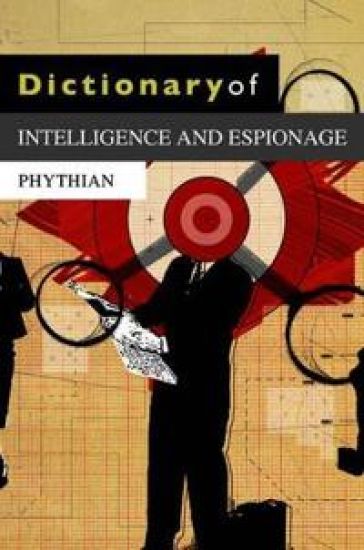
Dictionary of Intelligence and Espionage
The Dictionary of Intelligence and Espionage offers an accessible guide to a subject that, in the post-9/11 world, is both more central to our lives than at any previous time and is also a growing area of academic enquiry. A detailed Introduction provides an overview of the emergence, development and nature of Intelligence. This is followed by the Dictionary itself which comprises over 150 entries explaining key intelligence concepts and cases and provides an overview of the principle intelligence organisations. Entries range from accountability and agent-running, through devil's advocacy and extraordinary rendition, to surveillance and unmanned aerial vehicles. While the focus is contemporary, entries on key intelligence cases (ranging from the 9/11 Commission and Bay of Pigs invasion to UNSCOM and the Vietnam War), offer important historical context. Coverage of intelligence organisations is global, focusing not just on leading Western agencies, but also those in the developing world, often at the forefront of the 'war on terror' and concerns relating to the security-civil liberties trade-off. Each entry closes with suggestions for further reading, making this book an invaluable resource and research tool for students, academics, policy-makers and all those who seek a more informed understanding of a sphere of activity that is global and has the capacity to affect the lives of everyone.

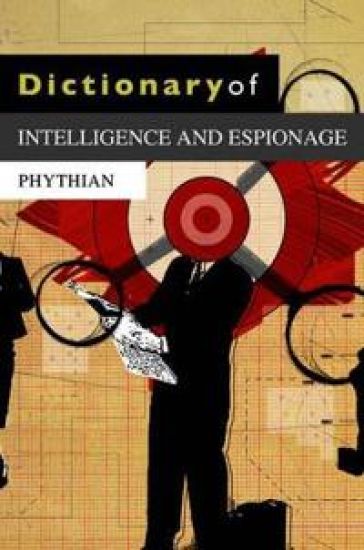
Dictionary of Intelligence and Espionage
The Dictionary of Intelligence and Espionage offers an accessible guide to a subject that, in the post-9/11 world, is both more central to our lives than at any previous time and is also a growing area of academic enquiry. A detailed Introduction provides an overview of the emergence, development and nature of Intelligence. This is followed by the Dictionary itself which comprises over 150 entries explaining key intelligence concepts and cases and provides an overview of the principle intelligence organisations. Entries range from accountability and agent-running, through devil's advocacy and extraordinary rendition, to surveillance and unmanned aerial vehicles. While the focus is contemporary, entries on key intelligence cases (ranging from the 9/11 Commission and Bay of Pigs invasion to UNSCOM and the Vietnam War), offer important historical context. Coverage of intelligence organisations is global, focusing not just on leading Western agencies, but also those in the developing world, often at the forefront of the 'war on terror' and concerns relating to the security-civil liberties trade-off. Each entry closes with suggestions for further reading, making this book an invaluable resource and research tool for students, academics, policy-makers and all those who seek a more informed understanding of a sphere of activity that is global and has the capacity to affect the lives of everyone.
Intelligence, Security and Policing Post-9/11

Intelligence, Security and Policing Post-9/11

Mark Phythian

Palgrave Macmillan
2008
sidottu
Discussing the UK experience in the 'war on terror', this book critically analyses the discourse of 'war' and ideas of the politics of panic, as well as forensically analyzing the effectiveness of counter-terrorist policies such as intelligence gathering and processing, counter-terrorist finance and public order.
Intelligence, Security and Policing Post-9/11

Intelligence, Security and Policing Post-9/11

Mark Phythian

Palgrave Macmillan
2008
nidottu
Discussing the UK experience in the 'war on terror', this book critically analyses the discourse of 'war' and ideas of the politics of panic, as well as forensically analyzing the effectiveness of counter-terrorist policies such as intelligence gathering and processing, counter-terrorist finance and public order.
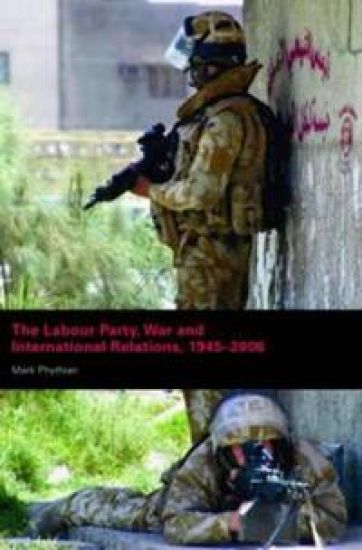
The Labour Party, War and International Relations, 1945-2006
Questions of war were not central to the founding of the Labour Party, yet questions of war – specifically, under what circumstances the party would support the dispatch of British military forces to fight abroad – have divided and damaged the party throughout its history more deeply than any other single issue. The Labour Party, War and International Relations, 1945-2006 opens by identifying and examining the factors that have influenced the party’s thinking about war, before considering the post-1945 Cold War context and analyzing a range of cases: the Korean Warthe party’s response to the 1956 Suez crisisthe Wilson government’s approach to the Vietnam WarLabour’s response to the 1982 invasion of the Falkland Islandsthe crisis over the August 1990 Iraqi invasion of Kuwait, culminating in the 1991 warthe wars of the 1990s over Bosnia and Kosovothe case for war in Iraq developed by the Blair government during 2002-03. This is a timely book that both illuminates approaches to past wars and helps us understand the basis of current military commitments. As such it will be of great interest to students across courses in politics, history, and war studies.