Kirjojen hintavertailu – 12 859 824 kirjaa ja 27 kauppaa

Kirjailija

Mark R. Scherer

Kirjat ja teokset yhdessä paikassa: 4 kirjaa, julkaisuja vuosilta 1999–2019, suosituimpiin kuuluu Echo of Its Time. Vertaile teosten hintoja ja tarkista saatavuus suomalaisista kirjakaupoista.

4 kirjaa

Kirjojen julkaisuvuodet: 1999–2019.

Echo of Its Time

Echo of Its Time

John R. Wunder; Mark R. Scherer

University of Nebraska Press
2019
sidottu
Throughout its existence the Federal District Court of Nebraska has echoed the dynamics of its time, reflecting the concerns, interests, and passions of the people who have made this state their home. Echo of Its Time explores the court’s development, from its inception in 1867 through 1933, tracing the careers of its first four judges: Elmer Dundy, William Munger, Thomas Munger (no relation), and Joseph Woodrough, whose rulings addressed an array of issues and controversies echoing macro-level developments within the state, nation, and world. Echo of Its Time both informs and entertains while using the court’s operations as a unique and accessible prism through which to explore broader themes in the history of the state and the nation. The book explores the inner workings of the court through Thomas Munger’s personal correspondence, as well as the court’s origins and growing influence under the direction of its legendary first judge, Elmer Dundy. Dundy handled many notable and controversial matters and made significant decisions in the field of Native American law, including Standing Bear v. Crook and Elk v. Wilkins. From the turn of the century through 1933 the court’s docket reflected the dramatic and rapid changes in state, regional, and national dynamics, including labor disputes and violence, political corruption and Progressive Era reform efforts, conflicts between cattle ranchers and homesteaders, wartime sedition and “slacker” prosecutions, criminal enterprises, and the endless battles between government agents and bootleggers during Prohibition.
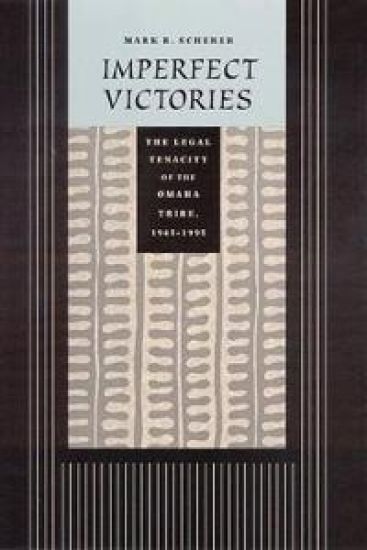
Imperfect Victories

Imperfect Victories

Mark R. Scherer

University of Nebraska Press
2009
pokkari
The Omaha Tribe of Nebraska has borne more than its fair share of the burden created by the federal government's wildly vacillating Indian policy. Mark R. Scherer's Imperfect Victories provides a detailed examination of the Omahas' tenacious efforts to overcome the damaging effects of shifting directions in federal policy during the last fifty years. The Omahas' struggles are particularly significant because the tribe often bore the initial impact of experimental legislation that would later be implemented nationally. Scherer details the disastrous consequences of postwar federal legislation that transferred control over Indian affairs to state authorities as a precursor to the wholesale termination of Indian tribalism. The legislation brought jurisdictional turmoil to the Omaha reservation and placed the Omahas in chronic conflict with local law enforcement agencies. As the tribe fought to become the first Indian group in the nation to escape the effects of that law through retrocession, they waged equally notable struggles for the redress of past wrongs with the Indian Claims Commission and in the federal courts. Scherer demonstrates that the Omahas' successes in those campaigns have been at best imperfect victories, coming only after years of hardship and failing to eliminate many underlying tensions and problems.
Rights in the Balance

Rights in the Balance

Mark R. Scherer; James W. Hewitt

Texas Tech Press,U.S.
2008
sidottu
On a horrific night in October 1975, Erwin Simants brutally murdered six members of the Henry Kellie family in tiny Sutherland, Nebraska. Massive media attention to the grisly story soon spawned a historic collision between two of the most cherished American constitutional protections - the First Amendment's guarantee of a free press and the Sixth Amendment's guarantee of a criminal defendants right to a fair trial before an impartial jury. ""Rights in the Balance"" is the story of the complex legal battles set in motion that tragic night on the western Nebraska plains. In juxtaposition to the criminal prosecution of Erwin Simants, Mark Scherer traces the Nebraska Press Associations battle to overturn a gag order imposed on the media by state court judges. Prohibited from publishing certain details about the crimes and the Simants prosecution, the association set its own arduous legal course that would lead ultimately to the U. S. Supreme Court and the landmark ruling issued in ""Nebraska Press Association v. Stuart"". The decision, one of the most closely followed in American constitutional history, remains one of the high courts most significant statements and controlling precedents on the troublesome and recurring conflict between the rights of free press and fair trial. Balancing the nuances of myriad legal considerations against the very human dimensions of both the constitutional litigations and the Simants prosecution, Scherer offers up a narrative accessible not only to communications and legal specialists and scholars but also the interested general public.
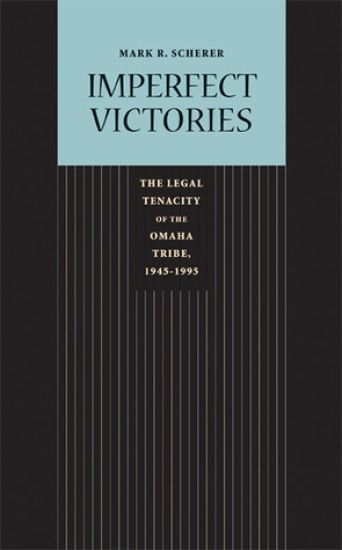
Imperfect Victories

Imperfect Victories

Mark R. Scherer

University of Nebraska Press
1999
sidottu
The Omaha Tribe of Nebraska has borne more than its fair share of the burden created by the federal government's wildly vacillating Indian policy. Mark R. Scherer's "Imperfect Victories" provides a detailed examination of the Omahas' tenacious efforts to overcome the damaging effects of shifting directions in federal policy during the last fifty years. The Omahas' struggles are particularly significant because the tribe often bore the initial impact of experimental legislation that would later be implemented nationally. Scherer details the disastrous consequences of postwar federal legislation that transferred control over Indian affairs to state authorities as a precursor to the wholesale termination of Indian tribalism. The legislation brought jurisdictional turmoil to the Omaha reservation and placed the Omahas in chronic conflict with local law enforcement agencies. As the tribe fought to become the first Indian group in the nation to escape the effects of that law through retrocession, they waged equally notable struggles for the redress of past wrongs with the Indian Claims Commission and in the federal courts. Scherer demonstrates that the Omahas' successes in those campaigns have been at best imperfect victories, coming only after years of hardship and failing to eliminate many underlying tensions and problems. Mark R. Scherer is an adjunct instructor of history at the University of Nebraska, an instructor of law at the College of Saint Mary, and a practicing attorney.