Kirjojen hintavertailu – 12 903 725 kirjaa ja 27 kauppaa

Kirjailija

Mark Redknap

Kirjat ja teokset yhdessä paikassa: 5 kirjaa, julkaisuja vuosilta 1984–2026, suosituimpiin kuuluu From Farm to Vikingage Trading Centre. Vertaile teosten hintoja ja tarkista saatavuus suomalaisista kirjakaupoista.

5 kirjaa

Kirjojen julkaisuvuodet: 1984–2026.

From Farm to Vikingage Trading Centre

From Farm to Vikingage Trading Centre

Mark Redknap

Casemate Publishers
2026
sidottu
The discovery of early medieval artefacts by metal detectorists at Glyn, Llanbedrgoch, Anglesey from the late 1980s led to a longterm programme of archaeological investigations by the National Museum of Wales (now Amgueddfa Cymru). Excavation revealed rich evidence for human activity from the Mesolithic period to the present, but its international recognition as a transformative site has been based on the remarkable early medieval evidence covering the 5th to 6thcentury transition up to the 11th century. The early medieval enclosed settlement has produced the richest archaeological record in preNorman Wales for this period of political and cultural transformation. The site provides a unique sequence of development from small farm and entrepôt to a developing regional centre from the 7th century. By the 10th century, Llanbedrgoch had become an important commercial centre for the kingdom of Gwynedd, while possibly functioning in the manner of an estate centre with protourban potential. The excavated evidence shows an influx of material culture that is mixed, vibrant and in tune with the data from other sites around the Irish Sea and the Continent. This publication integrates all the archaeological evidence discovered, including the first house plans from Vikingage Wales and details of objects made, cherished, consumed, destroyed and repaired. Eight early medieval burials provide data on personal appearance, health, diet and origins (including slavery), and four have facial reconstructions. New artefacts classifications and interpretations are provided, and corpora on dress accessories, hacksilver, household equipment and quernstones found in early medieval Wales presented. The social, economic and political contexts are discussed.
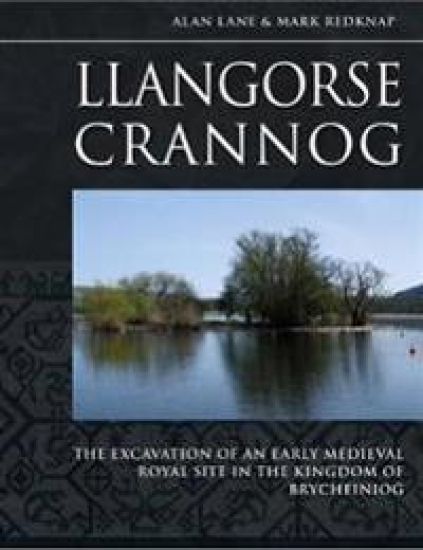
Llangorse Crannog

Llangorse Crannog

Alan Lane; Mark Redknap

Oxbow Books
2019
sidottu
The crannog on Llangorse Lake near Brecon in mid Wales was discovered in 1867 and first excavated in 1869 by two local antiquaries, Edgar and Henry Dumbleton, who published their findings over the next four years. In 1988 dendrochronological dates from submerged palisade planks established its construction in the ninth century, and a combined off- and on-shore investigation of the site was started as a joint project between Cardiff University and Amgueddfa Cymru - National Museum Wales. The subsequent surveys and excavation (1989-1994, 2004) resulted in the recovery of a remarkable time capsule of life in the late ninth and tenth century, on the only crannog yet identified in Wales. This publication re-examines the early investigations, describes in detail the anatomy of the crannog mound and its construction, and the material culture found. The crannog’s treasures include early medieval secular and religious metalwork, evidence for manufacture, the largest depository of early medieval carpentry in Wales and a remarkable richly embroidered silk and linen textile which is fully analysed and placed in context. The crannog’s place in Welsh history is explored, as a royal llys (‘court’) within the kingdom of Brycheiniog, as well as its subsequent significance of the crannog in local traditions and its post-medieval occupation during a riotous dispute in the reign Elizabeth I. The cultural affinities of the crannog and its material culture is assessed, as are their relationship to origin myths for the kingdom, and to probable links with early medieval Ireland. The folk tales associated with the lake are explored, in a book that brings together archaeology, history, myths and legends, underwater and terrestrial archaeology.
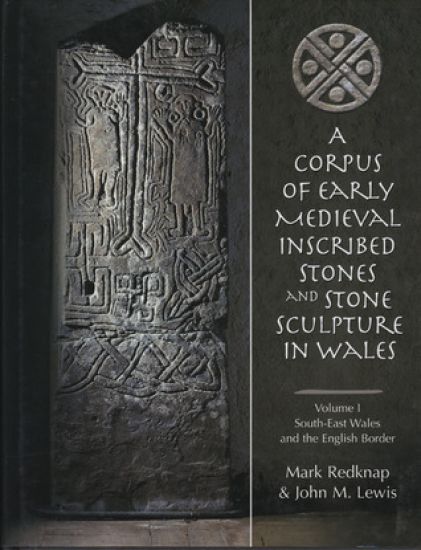
A Corpus of Early Medieval Inscribed Stones and Stone Sculpture in Wales

A Corpus of Early Medieval Inscribed Stones and Stone Sculpture in Wales

Mark Redknap; John Lewis; Nancy Edwards

University of Wales Press
2013
nidottu
All three regional volumes of A Corpus of Early Medieval Inscribed Stones and Stone Sculpture in Wales are available in this set. Volume I covers South-East Wales and the English Border (2007). Volume II and Volume III cover South-West Wales (2007) and North Wales (2013) respectively. Each volume consists of a full analytical introduction and a catalogue of individual monuments with discussions and numerous photographs and line-drawings. Volume II is a winner of the Cambrian Archaeological Association's G. T. Clark Prize. Around 550 early medieval inscribed stones and pieces of stone sculpture are now known from Wales and are of crucial importance to our understanding of the period between the end of Roman Britain and the coming of the Normans. For example, their archaeological context can help us to identify early burial and church sites and reveal much about the development of Christianity and the patronage of major monasteries. Equally, a study of the form, ornament and iconography of the monuments, as well as the inscriptions, their formulae, languages (both Latin and Celtic) and epigraphy (including ogam), can shed valuable light on the functions and dating of the stones and indicate Christian contacts, both between different parts of Wales, and further afield with the Continent, Ireland, Anglo-Saxon England, and the ‘Irish Sea Province’ in the Viking period.
A Corpus of Early Medieval Inscribed Stones and Stone Sculpture in Wales: v.1
A fully illustrated exploration of the inscribed medieval stones of Wales which commemorated the elite of Welsh society at the time, and are crucial to the understanding of the degree of continuity with preceding Roman culture, Irish settlement, and the development of the church; the book offers fresh aspects and new interpretations of inscriptions; 390 photographs/170 drawings.