Kirjojen hintavertailu – 12 903 725 kirjaa ja 27 kauppaa

Kirjailija

Mark Robert Waldman

Kirjat ja teokset yhdessä paikassa: 6 kirjaa, julkaisuja vuosilta 2008–2019, suosituimpiin kuuluu How Enlightenment Changes Your Brain. Vertaile teosten hintoja ja tarkista saatavuus suomalaisista kirjakaupoista.

6 kirjaa

Kirjojen julkaisuvuodet: 2008–2019.

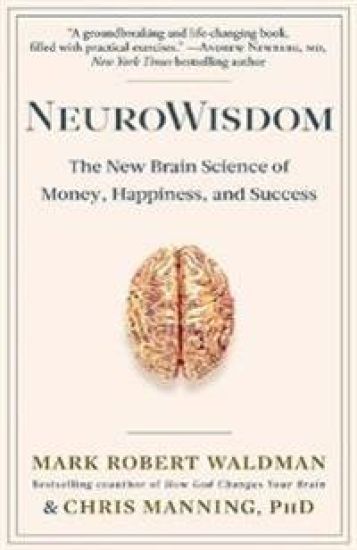
NeuroWisdom

NeuroWisdom

Mark Robert Waldman; Chris Manning

EverAfter Romance
2019
pokkari
Perfect for readers of How God Changes Your Brain, two researchers present over thirty brain exercises to help readers generate happiness and success, in business and in life. ”This remarkable book translates state-of-the art neuroscience into practical techniques that rapidly promote personal transformation. If you want to double your happiness and your income, start using these powerful brain-changing exercises today!” -John Assaraf, New York Times bestselling author and CEO of NeuroGym Adapted from a business school course they created for professionals, bestselling author Mark Waldman and Chris Manning present simple brain exercises, based on the latest neuroscience research, to guide readers to improvement in all parts of life, from work to home, from how we think to how we feel. Their promise is to help people create more "wealth" in their lives, defined as the combination of money, happiness, and success. Using the latest research studied by two experts in their field, the book presents both the scientific background and sets of “NeuroWisdom” exercises that will help people reduce neurological stress and increase happiness, motivation, and productivity. The “worry” centers of the brain are turned off and the optimism circuits are turned on. Work becomes more pleasurable and creativity is increased, enabling the brain to anticipate and solve problems more efficiently. From the cutting edge of brain science to real-world solutions, these exercises help readers gain the wisdom that leads to greater fulfillment.
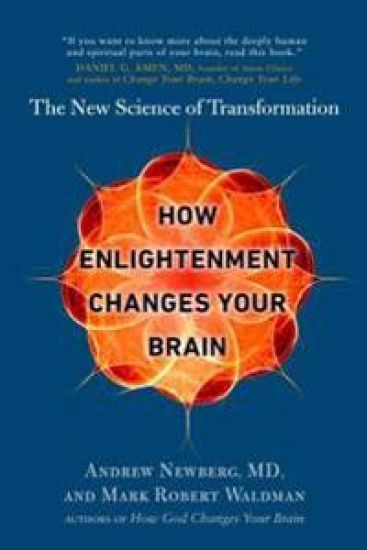
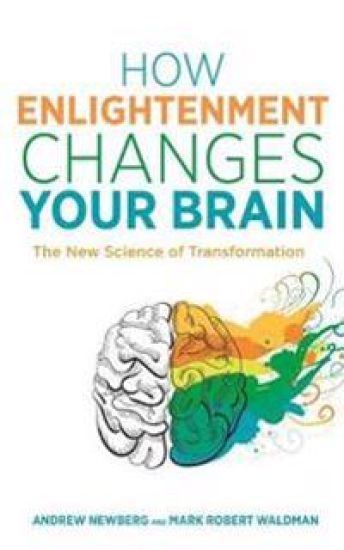
How Enlightenment Changes Your Brain: The New Science of Transformation

How Enlightenment Changes Your Brain: The New Science of Transformation

Andrew Newberg; Mark Robert Waldman

Penguin Publishing Group
2017
nidottu
The bestselling authors of How God Changes Your Brain reveal the neurological underpinnings of enlightenment, offering unique strategies to help readers experience its many benefits. In this original and groundbreaking book, Andrew Newberg, M. D., and Mark Robert Waldman turn their attention to the pinnacle of the human experience: enlightenment. Through his brain- scan studies on Brazilian psychic mediums, Sufi mystics, Buddhist meditators, Franciscan nuns, Pentecostals, and participants in secular spirituality rituals, Newberg has discovered the specific neurological mechanisms associated with the enlightenment experience--and how we might activate those circuits in our own brains. In his survey of more than one thousand people who have experienced enlightenment, Newberg has also discovered that in the aftermath they have had profound, positive life changes. Enlightenment offers us the possibility to become permanently less stress-prone, to break bad habits, to improve our collaboration and creativity skills, and to lead happier, more satisfying lives. Relaying the story of his own transformational experience as well as including the stories of others who try to describe an event that is truly indescribable, Newberg brings us a new paradigm for deep and lasting change.
How Enlightenment Changes Your Brain

How Enlightenment Changes Your Brain

Andrew Newberg; Mark Robert Waldman

Hay House UK Ltd
2016
nidottu
In this original and ground-breaking book, Dr Andrew Newberg and Mark Robert Waldman turn their attention to the pinnacle of the human experience: enlightenment. Through his brain-scan studies on Brazilian psychicmediums, Sufi mystics, Buddhist meditators, Franciscan nuns, Pentecostals and participants in secular spirituality rituals, Newberg has found the specific neurological mechanisms responsible for an enlightenment experience - and how we can activate those circuits in our own brains. In his survey of more than one thousand people who have experienced enlightenment, Newberg has also discovered that in the aftermath they have had profound, positive life changes. Enlightenment offers us the possibility to become permanently less stress-prone, to break bad habits, to improve our collaboration and creativity skills, and to lead happier, more satisfying lives. Relaying the story of his own transformational experience as well as including the stories of others who try to describe an event that is truly indescribable,Newberg brings us a new paradigm for deep and lasting change.
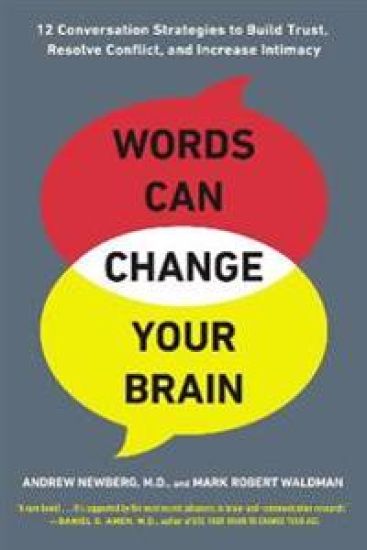
Words Can Change Your Brain

Words Can Change Your Brain

Andrew Newberg; Mark Robert Waldman

Penguin Books Ltd
2014
nidottu

Halvin toimitettuna 16,20 €

In our default state, our brains constantly get in the way of effective communication. They are lazy, angry, immature, and distracted. They can make a difficult conversation impossible. But Andrew Newberg, M. D., and Mark Waldman have discovered a powerful strategy called Compassionate Communication that allows two brains to work together as one. Using brainscans as well as data collected from workshops given to MBA students at Loyola MarymountUniversity, and clinical data from both couples in therapy and organizations helping caregivers cope with patient suffering, Newberg and Waldman have seen that Compassionate Communication can reposition a difficult conversation to lead to a satisfying conclusion. Whether you are negotiating with your boss or your spouse, the brain works the same way and responds to the same cues. The truth, though, is that you don't have to understand how Compassionate Communication works. You just have to do it. Some of the simple and effective takeaways in this book include:• Make sure you are relaxed; yawning several times before (not during) the meeting will do the trick• Never speak for more than 20-30 seconds at a time. After that they other person's window of attention closes.• Use positive speech; you will need at least three positives to overcome the effect of every negative used• Speak slowly; pause between words. This is critical, but really hard to do.• Respond to the other person; do not shift the conversation.• Remember that the brain can only hold onto about four ideas at one timeHighly effective across a wide range of settings, Compassionate Communication is an excellent tool for conflict resolution but also for simply getting your point across or delivering difficult news.
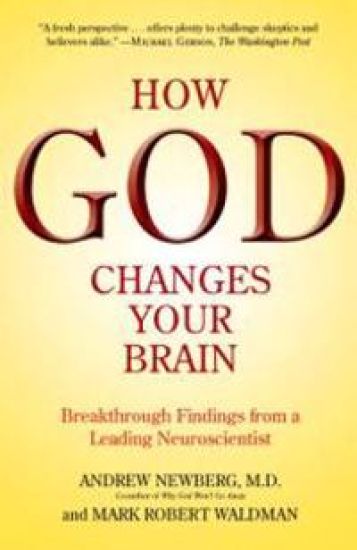
How God Changes Your Brain

How God Changes Your Brain

Andrew Newberg; Mark Robert Waldman

Ballantine Books Inc.
2010
pokkari

Halvin toimitettuna 22,00 €

God is great--for your mental, physical, and spiritual health. Based on new evidence culled from brain-scan studies, a wide-reaching survey of people's religious and spiritual experiences, and the authors' analyses of adult drawings of God, neuroscientist Andrew Newberg and therapist Mark Robert Waldman offer the following breakthrough discoveries: - Not only do prayer and spiritual practice reduce stress, but just twelve minutes of meditation per day may slow down the aging process.- Contemplating a loving God rather than a punitive God reduces anxiety and depression and increases feelings of security, compassion, and love.- Fundamentalism, in and of itself, can be personally beneficial, but the prejudice generated by extreme beliefs can permanently damage your brain.- Intense prayer and meditation permanently change numerous structures and functions in the brain, altering your values and the way you perceive reality. Both a revelatory work of modern science and a practical guide for readers to enhance their physical and emotional health, How God Changes Your Brain is a first-of-a-kind book about faith that is as credible as it is inspiring.
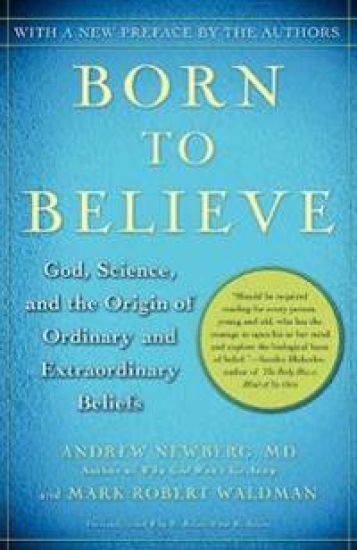
Born to Believe

Born to Believe

Andrew Newberg; Mark Robert Waldman

Atria Books
2008
pokkari
Born to Believeis accessible, entertaining popular science, the first to explore human beliefs, from the ordinary to the extraordinary. It presents the controversial argument that we human beings are biologically hardwired to create and maintain a system of beliefs. And it demonstrates that even our perception of reality is nothing more than a constructed belief filled with inaccuracies, assumptions, conjectures, and confabulations. Even our childhood memories are filled with beliefs about events that never occurred.