Kirjojen hintavertailu – 12 903 725 kirjaa ja 27 kauppaa

Kirjailija

Mark S. Weiner

Kirjat ja teokset yhdessä paikassa: 6 kirjaa, julkaisuja vuosilta 2006–2019, suosituimpiin kuuluu Klanvälde : från stamsamhälle till rättsstat. Vertaile teosten hintoja ja tarkista saatavuus suomalaisista kirjakaupoista.

Nimi esiintyy myös muodoissa: Mark S Weiner

6 kirjaa

Kirjojen julkaisuvuodet: 2006–2019.

Klanen:Klanen : Individ, klan och samhälle från antikens Grekland till

Klanen:Klanen : Individ, klan och samhälle från antikens Grekland till

Per Brinkemo; Nathan Shachar; Lars Trädgårdh; Tomas Lappalainen; Johan Lundberg; Joanne M Ferraro; Jens Stillhoff Sörensen; Anosh Ghasri; Dennis Avorin; Mark S Weiner; Abdi-Noor Mohammed; Richard Swartz

Timbro
2019
pokkari
Är klanen ett hot mot individens rättigheter? Är det liberalt att tillåta klanbaserade enklaver? Klanen: Individ, klan och samhälle från antikens Grekland till dagens Sverige beskriver klansamhällen från antikens Grekland till dagens Sverige. En genomgående insikt är att den liberala demokratin utgår från individens rättigheter medan klansamhället bygger på att individen underkastas gemenskapen. Kan två så skilda ordningar någonsin förenas i samma stat? Redaktörer: Per Brinkemo och Johan Lundberg Texter av: Dennis Avorin, Per Brinkemo, Joanne M Ferraro, Anosh Ghasri, Tomas Lappalainen, Johan Lundberg, Abdi-Noor Mohamed, Nathan Shachar, Jens S Sörensen, Richard Swartz, Lars Trägårdh och Mark S Weiner. Om redaktörernaJohan Lundberg är litteraturhistoriker och författare, hans senaste bok är Europas skugga: Om Henry James och frihetens väsen (Timbro förlag 2017). 2019 gavs hans bok Ljusets fiender ut i ny upplaga med nyskrivet efter ord (Timbro förlag). Per Brinkemo är journalist och författare, hans senaste bok är Mellan klan och stat: Somalier i Sverige (Timbro förlag 2014).
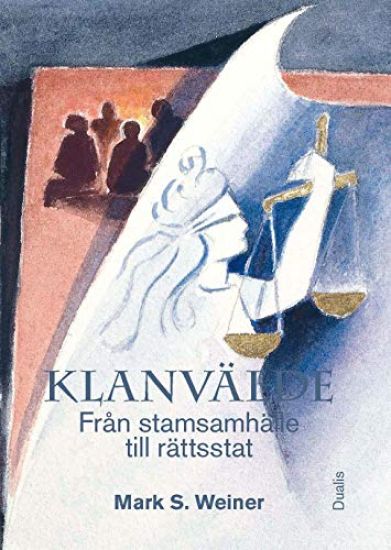
Klanvälde : från stamsamhälle till rättsstat
Klanvälde handlar om hur människan under historiens gång och i nutid har organiserat sina samhällen. Den visar att det västerländska samhällssystemet, byggt på rättsstatens principer och individens frihet, inte är det normala. Under historien och i modern tid världen över har istället klansamhällets värderingar och regelsystem do-minerat. Författaren förklarar hur stamsamhällen fungerar från
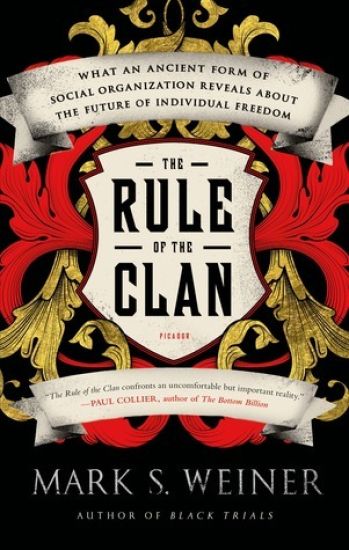
Rule of the Clan

Rule of the Clan

Mark S Weiner

Picador USA
2014
pokkari
Winner of the Grawemeyer Award For Ideas Improving World Order A lively, wide-ranging meditation on human development that offers surprising lessons for the future of modern individualism, The Rule of the Clan examines the constitutional principles and cultural institutions of kin-based societies, from medieval Iceland to modern Pakistan. Mark S. Weiner, an expert in constitutional law and legal history, shows us that true individual freedom depends on the existence of a robust state dedicated to the public interest. In the absence of a healthy state, he explains, humans naturally tend to create legal structures centered not on individuals but rather on extended family groups. The modern liberal state makes individualism possible by keeping this powerful drive in check--and we ignore the continuing threat to liberal values and institutions at our peril. At the same time, for modern individualism to survive, liberals must also acknowledge the profound social and psychological benefits the rule of the clan provides and recognize the loss humanity sustains in its transition to modernity. Masterfully argued and filled with rich historical detail, Weiner's investigation speaks both to modern liberal societies and to developing nations riven by "clannism," including Muslim societies in the wake of the Arab Spring.
Americans Without Law

Americans Without Law

Mark S. Weiner

New York University Press
2008
pokkari
Americans Without Law shows how the racial boundaries of civic life are based on widespread perceptions about the relative capacity of minority groups for legal behavior, which Mark S. Weiner calls "juridical racialism." The book follows the history of this civic discourse by examining the legal status of four minority groups in four successive historical periods: American Indians in the 1880s, Filipinos after the Spanish-American War, Japanese immigrants in the 1920s, and African Americans in the 1940s and 1950s. Weiner reveals the significance of juridical racialism for each group and, in turn, Americans as a whole by examining the work of anthropological social scientists who developed distinctive ways of understanding racial and legal identity, and through decisions of the U. S. Supreme Court that put these ethno-legal views into practice. Combining history, anthropology, and legal analysis, the book argues that the story of juridical racialism shows how race and citizenship served as a nexus for the professionalization of the social sciences, the growth of national state power, economic modernization, and modern practices of the self.
Americans Without Law

Americans Without Law

Mark S. Weiner

New York University Press
2006
sidottu
Americans Without Law shows how the racial boundaries of civic life are based on widespread perceptions about the relative capacity of minority groups for legal behavior, which Mark S. Weiner calls "juridical racialism." The book follows the history of this civic discourse by examining the legal status of four minority groups in four successive historical periods: American Indians in the 1880s, Filipinos after the Spanish-American War, Japanese immigrants in the 1920s, and African Americans in the 1940s and 1950s. Weiner reveals the significance of juridical racialism for each group and, in turn, Americans as a whole by examining the work of anthropological social scientists who developed distinctive ways of understanding racial and legal identity, and through decisions of the U. S. Supreme Court that put these ethno-legal views into practice. Combining history, anthropology, and legal analysis, the book argues that the story of juridical racialism shows how race and citizenship served as a nexus for the professionalization of the social sciences, the growth of national state power, economic modernization, and modern practices of the self.
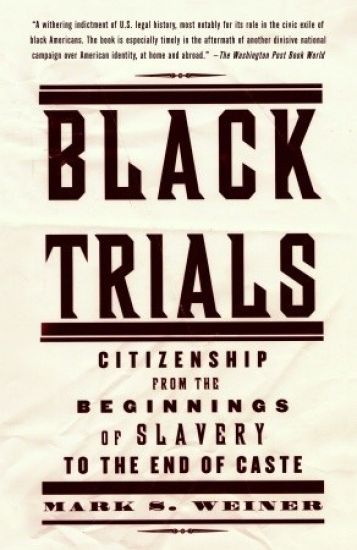
Black Trials: Citizenship from the Beginnings of Slavery to the End of Caste
From a brilliant young legal scholar comes this sweeping history of American ideas of belonging and citizenship, told through the stories of fourteen legal cases that helped to shape our nation. Spanning three centuries, Black Trials details the legal challenges and struggles that helped define the ever-shifting identity of blacks in America. From the well-known cases of Plessy v. Ferguson and the Clarence Thomas confirmation hearings to the more obscure trial of Joseph Hanno, an eighteenth-century free black man accused of murdering his wife and bringing smallpox to Boston, Weiner recounts the essential dramas of American identity--illuminating where our conception of minority rights has come from and where it might go. Significant and enthralling, these are the cases that forced the courts and the country to reconsider what it means to be black in America, and Mark Weiner demonstrates their lasting importance for our society.