Kirjojen hintavertailu – 12 903 725 kirjaa ja 27 kauppaa

Kirjailija

Mark Silk

Kirjat ja teokset yhdessä paikassa: 5 kirjaa, julkaisuja vuosilta 1989–2011, suosituimpiin kuuluu Making Capitalism Work. Vertaile teosten hintoja ja tarkista saatavuus suomalaisista kirjakaupoista.

5 kirjaa

Kirjojen julkaisuvuodet: 1989–2011.

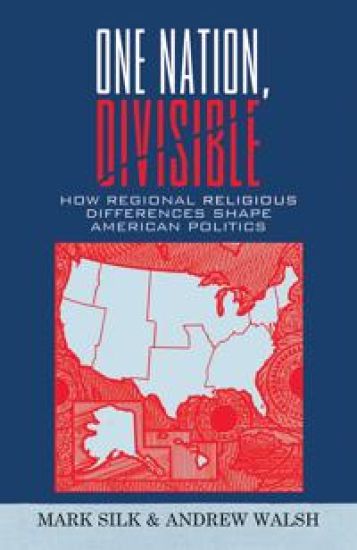
One Nation, Divisible

One Nation, Divisible

Mark Silk; Andrew Walsh

Rowman Littlefield Publishers
2011
nidottu
From the evangelical South to Catholic New England to the 'unchurched' Pacific Northwest, regional religious differences have a dramatic impact on public life not only in the regions themselves but also in the United States as a whole. As the interplay between religion and politics continues to dominate public discussion, understanding regional similarities and differences is key to understanding the debate around such national issues as health care, immigration, and the environment. For the first time, One Nation, Divisible shows how geographical religious diversity has shaped public culture in eight distinctive regions of the country and how regional differences influence national politics. Examining each region in turn, Mark Silk and Andrew Walsh provide historical context, stories that reveal the current cultural dynamics, and analyses of current politics to create rounded portraits of each region. They then present a compelling new account of the evolution of national religious politics since World War II. In doing so, they suggest that the regional religious forces that have fueled recent culture wars may be giving way to a less confrontational style rooted in different regional realities. The paperback edition features new material on regional religious differences in the 2008 election, the 2010 mid-terms, and during Barack Obama’s presidency.
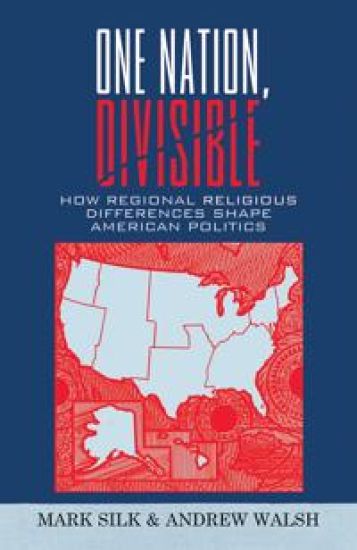
One Nation, Divisible

One Nation, Divisible

Mark Silk; Andrew Walsh

Rowman Littlefield Publishers
2008
sidottu
From the evangelical South to Catholic New England to the 'unchurched' Pacific Northwest, regional religious differences have a dramatic impact on public life not only in the regions themselves but also in the United States as a whole. As the interplay between religion and politics continues to dominate public discussion, understanding regional similarities and differences is key to understanding the debate around such national issues as health care, immigration, and the environment. For the first time, One Nation, Divisible shows how geographical religious diversity has shaped public culture in eight distinctive regions of the country and how regional differences influence national politics. Examining each region in turn, Mark Silk and Andrew Walsh provide historical context, stories that reveal the current cultural dynamics, and analyses of current politics to create rounded portraits of each region. They then present a compelling new account of the evolution of national religious politics since World War II. In doing so, they suggest that the regional religious forces that have fueled recent culture wars may be giving way to a less confrontational style rooted in different regional realities.
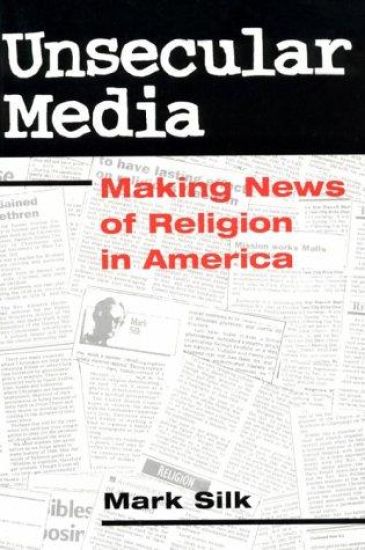
Unsecular Media

Unsecular Media

Mark Silk

University of Illinois Press
1998
nidottu
Writing in the New York Times Magazine, Max Frankel characterized Unsecular Media as a book that "leaves you thinking about the saintly role that religion has acquired in our allegedly irreligious media." Mark Silk's book is the first to offer a comprehensive description and analysis of how American news media cover religion.
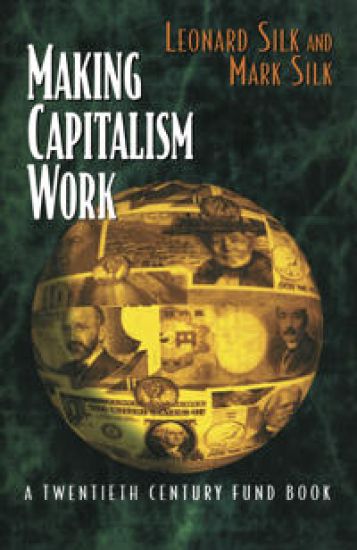
Making Capitalism Work

Making Capitalism Work

Leonard Silk; Mark Silk

New York University Press
1996
sidottu
In 1995, Republicans came to power in the United States with an ambitious program proposing to embrace a degree of laissez- faire economics unknown for generations anywhere in the industrialized world. Simultaneously, politicians, entrepreneurs, and economists championed the new bastions of unregulated capitalism that sprung up in such unfamiliar precincts as Beijing and Moscow. Yet to date many free-market economic policies, be it in Prague or here in America, have not lived up to their initial promises. In fact, it has become a common joke in Russia that capitalism has succeeded in making communism look good, a feat unaccomplished by the Kremlin in its 70 year reign. In Making Capitalism Work, Leonard and Mark Silk analyze the failures and successes of capitalism as seen most recently in the former Soviet Bloc, Japan, China, the European Community and the United States. While recognizing that capitalism has been successful in a number of countries, the authors point out that overly simplistic policies advocating an unfettered capitalism ignore too large a range of issues central to the formation of any moral economic system. Viewing capitalism as simply one of a number of economic systems, Leonard and Mark Silk address such issues as the obligation of the rich to the poor, the responsibility of the state to insulate its citizens from market fluctuations, the responsibility of present generations to provide for future ones, and whether economic systems can set the proper extent and limits of individual rights and freedoms. An important, concise, thought-provoking book this is the last book Leonard Silk wrote before his death late last year and has been completed here by his son, Mark.