Kirjojen hintavertailu – 12 903 724 kirjaa ja 27 kauppaa

Kirjailija

Mark Tushnet

Kirjat ja teokset yhdessä paikassa: 31 kirjaa, julkaisuja vuosilta 1990–2026, suosituimpiin kuuluu Comparative Constitutional Law. Vertaile teosten hintoja ja tarkista saatavuus suomalaisista kirjakaupoista.

31 kirjaa

Kirjojen julkaisuvuodet: 1990–2026.

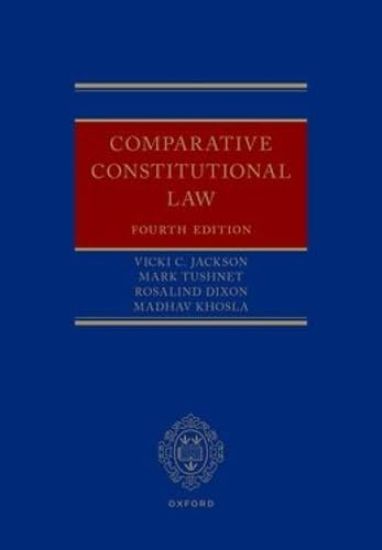
Comparative Constitutional Law

Comparative Constitutional Law

Mark Tushnet; Vicki C. Jackson; Rosalind Dixon; Madhav Khosla

OXFORD UNIVERSITY PRESS INC
2026
sidottu
Designed for use in law school courses, Comparative Constitutional Law introduces fundamental debates on the nature of constitutions, constitutional comparison, and the relationships between constitutions and constitutionalism in its various forms. The book explores how constitutions are made and changed, including recent applications of "unconstitutional constitutional amendment" doctrines, and the role of different institutions - legislatures, executives, publics, as well as courts - in constitutional interpretation and constitutional change. Following a detailed study of the structure and interpretive approaches of national apex courts that decide constitutional questions, the book goes on to consider six subject areas of importance in contemporary constitutionalism: separation of powers and emergencies; federalism and related consociational constitutional arrangements; equality and pluralism; religion; free expression; and positive rights or duties. Including excerpts of cases and scholarly material from the Global South, Europe, and North America, this volume emphasizes the need to understand the broader sociolegal contexts in which constitutional design and decisions occur. In response to growing trends of democratic retrogression in courts around the world, this new edition provides expanded coverage of abusive constitutionalism, authoritarianism, and illiberalism. It additionally offers insightful discussions on constitutional actors' responses to the COVID-19 pandemic; gender and LGBTQ+ equality issues; and indigenous peoples' rights and environmental rights. Providing an overview of constitutional law that is both comprehensive and accessible, the fourth edition of Comparative Constitutional Law is an invaluable resource for law students and academics.
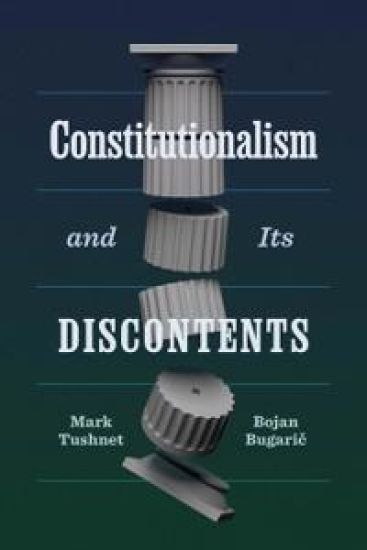
Constitutionalism and Its Discontents

Constitutionalism and Its Discontents

Mark Tushnet; Bojan Bugaric

THE UNIVERSITY OF CHICAGO PRESS
2026
nidottu
A thoughtful and provocative meditation on both the potential and limits of constitutionalism. In the early twenty-first century, constitutionalism confronts numerous pressures and critiques. Some prominent critics are concerned that constitutionalism’s modern form, in which high courts play a large role, limits popular self-governance. By committing their nations to detailed social and economic policies—from neoliberal requirements for balanced budgets to constitutionalized social welfare and environmental rights—many modern constitutions might make promises they cannot keep and be unduly rigid in the face of changing social, economic, and environmental conditions. Meanwhile, the rise of proto-authoritarian elected leaders around the world shows that constitutions are vulnerable to, and may even enable, democratic backsliding. Mark Tushnet and Bojan Bugaric argue that addressing each of these serious concerns through constitutional design and innovation is potentially valuable, but paradoxically, every remedy also carries with it the possibility that it will intensify the very conditions it seeks to ameliorate. Instead, Tushnet and Bugaric propose a “thin” idea of constitutionalism and suggest that we should scale back our expectations for what constitutionalism can achieve. Political mobilization, led by people attuned to the economic and cultural causes of democratic backsliding, is a better bet.
Constitutionalism and Its Discontents

Constitutionalism and Its Discontents

Mark Tushnet; Bojan Bugaric

THE UNIVERSITY OF CHICAGO PRESS
2026
sidottu
A thoughtful and provocative meditation on both the potential and limits of constitutionalism. In the early twenty-first century, constitutionalism confronts numerous pressures and critiques. Some prominent critics are concerned that constitutionalism’s modern form, in which high courts play a large role, limits popular self-governance. By committing their nations to detailed social and economic policies—from neoliberal requirements for balanced budgets to constitutionalized social welfare and environmental rights—many modern constitutions might make promises they cannot keep and be unduly rigid in the face of changing social, economic, and environmental conditions. Meanwhile, the rise of proto-authoritarian elected leaders around the world shows that constitutions are vulnerable to, and may even enable, democratic backsliding. Mark Tushnet and Bojan Bugaric argue that addressing each of these serious concerns through constitutional design and innovation is potentially valuable, but paradoxically, every remedy also carries with it the possibility that it will intensify the very conditions it seeks to ameliorate. Instead, Tushnet and Bugaric propose a “thin” idea of constitutionalism and suggest that we should scale back our expectations for what constitutionalism can achieve. Political mobilization, led by people attuned to the economic and cultural causes of democratic backsliding, is a better bet.
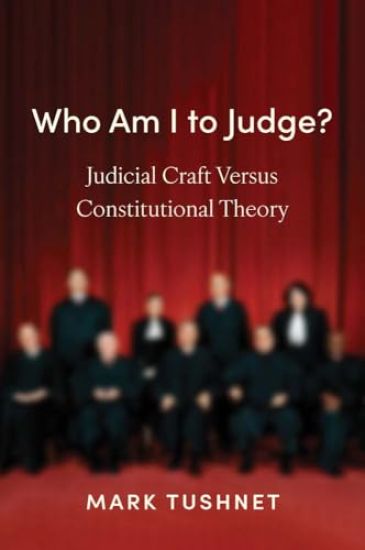
Who Am I to Judge?

Who Am I to Judge?

Mark Tushnet

YALE UNIVERSITY PRESS
2025
sidottu
A leading legal scholar asks a fundamental question: Do we need a theory of constitutional interpretation? Do we need a theory of constitutional interpretation? It is a common argument among originalists that however objectionable you may find their theory, at least they have one, whereas their opponents do not have any theory at all. But as Mark Tushnet argues, for most of the Supreme Court’s history, including some of its most exceptional periods, the Court operated without a theory. In this book, Tushnet shows us what a constitutional theory actually is; what judges need from it and why they probably can’t get what they need; and the great harm that results when judges allow theory to dictate bad policy. It is not theory that matters, Tushnet argues. The vitally important, indispensable quality in a judge is good judgment.
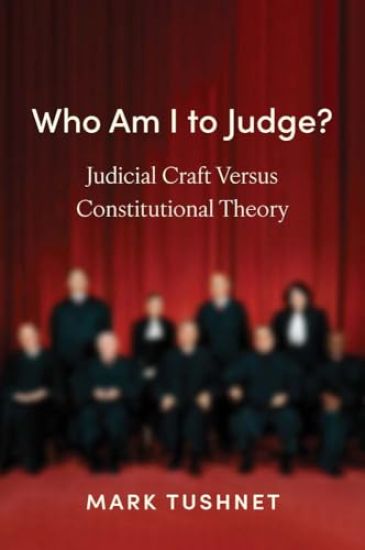
Who Am I to Judge?

Who Am I to Judge?

Mark Tushnet

YALE UNIVERSITY PRESS
2025
pokkari
A leading legal scholar asks a fundamental question: Do we need a theory of constitutional interpretation? Do we need a theory of constitutional interpretation? It is a common argument among originalists that however objectionable you may find their theory, at least they have one, whereas their opponents do not have any theory at all. But as Mark Tushnet argues, for most of the Supreme Court’s history, including some of its most exceptional periods, the Court operated without a theory. In this book, Tushnet shows us what a constitutional theory actually is; what judges need from it and why they probably can’t get what they need; and the great harm that results when judges allow theory to dictate bad policy. It is not theory that matters, Tushnet argues. The vitally important, indispensable quality in a judge is good judgment.
Power to the People

Power to the People

Mark Tushnet; Bojan Bugaric

OXFORD UNIVERSITY PRESS INC
2022
sidottu
Self-described populist leaders around the world are dismantling their nation's constitutions. This has led to a widespread view that populism as such is inconsistent with constitutionalism. This book proposes that some forms of populism are inconsistent with constitutionalism, while others aren't. Context and detail matter. Power to the People offers a thin definition of constitutionalism that people from the progressive left to the conservative right should be able to agree on even if they would supplement the thin definition within other more partisan ideas. This is followed by a similarly basic definition of populism. Comparing the two, this book argues that one facet of populism -its suspicion of institutions that are strongly entrenched against change by political majorities-is sometimes inconsistent with constitutionalism's thinly understood definition. The book provides a series of case studies, some organized by nation, others by topic, to identify, more precisely, when and how populist programs are inconsistent with constitutionalism-and, importantly, when and how they are not. Concluding with a discussion of the possibilities for a deeper, populist democracy, the book examines recent challenges to the idea that democracy is a good form of government by exploring possibilities for new, albeit revisable, institutions that can determine and implement a majority's views without always threatening constitutionalism.
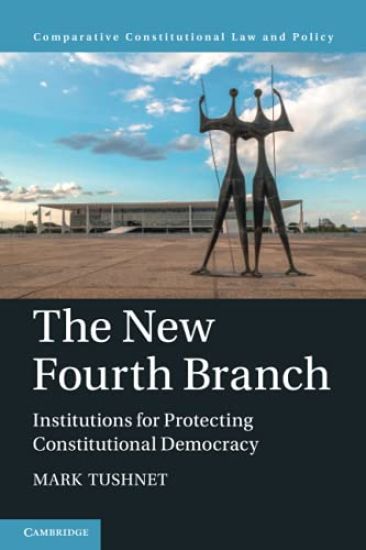
The New Fourth Branch

The New Fourth Branch

Mark Tushnet

Cambridge University Press
2021
pokkari
Twenty-first-century constitutions now typically include a new 'fourth branch' of government, a group of institutions charged with protecting constitutional democracy, including electoral management bodies, anticorruption agencies, and ombuds offices. This book offers the first general theory of the fourth branch; in a world where governance is exercised through political parties, we cannot be confident that the traditional three branches are enough to preserve constitutional democracy. The fourth branch institutions can, by concentrating within themselves distinctive forms of expertise, deploy that expertise more effectively than the traditional branches are capable of doing. However, several case studies of anticorruption efforts, electoral management bodies, and audit bureaus show that the fourth branch institutions do not always succeed in protecting constitutional democracy, and indeed sometimes undermine it. The book concludes with some cautionary notes about placing too much hope in these – or, indeed, in any – institutions as the guarantors of constitutional democracy.
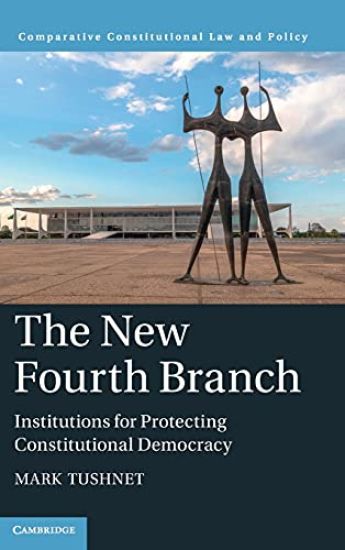
The New Fourth Branch

The New Fourth Branch

Mark Tushnet

Cambridge University Press
2021
sidottu
Twenty-first-century constitutions now typically include a new 'fourth branch' of government, a group of institutions charged with protecting constitutional democracy, including electoral management bodies, anticorruption agencies, and ombuds offices. This book offers the first general theory of the fourth branch; in a world where governance is exercised through political parties, we cannot be confident that the traditional three branches are enough to preserve constitutional democracy. The fourth branch institutions can, by concentrating within themselves distinctive forms of expertise, deploy that expertise more effectively than the traditional branches are capable of doing. However, several case studies of anticorruption efforts, electoral management bodies, and audit bureaus show that the fourth branch institutions do not always succeed in protecting constitutional democracy, and indeed sometimes undermine it. The book concludes with some cautionary notes about placing too much hope in these – or, indeed, in any – institutions as the guarantors of constitutional democracy.
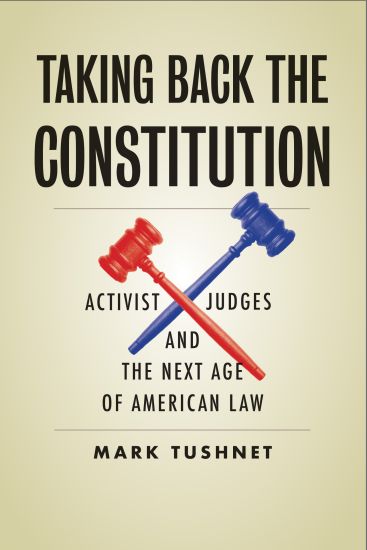
Taking Back the Constitution

Taking Back the Constitution

Mark Tushnet

Yale University Press
2020
sidottu
How the Supreme Court’s move to the right has distorted both logic and the Constitution What Supreme Court justices do is far more than just “calling balls and strikes.” The Court has never simply evaluated laws and arguments in light of permanent and immutable constitutional meanings. Social, moral, and yes, political ideas have always played into the justices’ impressions of how they think a case should be decided. Mark Tushnet traces the ways constitutional thought has evolved, from the liberalism of the New Deal and the Great Society to the Reagan conservatism that has been dominant since the 1980s. Looking at the current crossroads in the constitutional order, Tushnet explores the possibilities of either a Trumpian entrenchment of the most extreme ideas of the Reagan philosophy, or a dramatic and destabilizing move to the left. Wary of either outcome, he offers a passionate and informed argument for replacing judicial supremacy with popular constitutionalism—a move that would restore to the other branches of government a role in deciding constitutional questions.
Legal Scholarship and Education

Legal Scholarship and Education

Mark Tushnet

Routledge
2019
nidottu
This book collects Mark Tushnet's essays on legal scholarship and legal education written between the 1970s and the end of the twentieth century. The essays deal with the development of critical legal studies and its current state, with persistent questions about the intellectual status of legal scholarship, with interdisciplinary legal scholarship (including law and economics), and with selected topics in legal pedagogy. Taken as a whole, the essays provide a good overview of Professor Tushnet's contributions to the intellectual history of legal scholarship and education in the United States.
The American Law of Slavery, 1810-1860

The American Law of Slavery, 1810-1860

Mark Tushnet

PRINCETON UNIVERSITY PRESS
2019
sidottu
In an examination of Southern slave law between 1810 and 1860, Mark Tushnet reveals a structured dichotomy between slave labor systems and bourgeois systems of production. Whereas the former rest on the total dominion of the master over the slave and necessitate a concern for the slave's humanity, the latter rest of the purchase by the capitalist of a worker's labor power only and are concerned primarily with economic interest. Focusing on a wide range of issues that include contract and accident law as well as criminal law and the law of manumission, he shows how Southern slave law had to respond to the competing pressures of humanity and interest. Beginning with a critical evaluation of slave law, the author develops the conceptual framework for his own perspective on the legal system, drawing on the works of Marx and Weber. He then examines four appellate court cases decided in three different states, from civil-law Louisiana to commonlaw North Carolina, at widely separated times, from 1818 to 1858. Professor Tushnet finds that the cases display a continuing but never wholly successful attempt at distinguish between law and sentiment as modes of regulating social interactions involving slaves. Also, the cases show that the primary method of accommodating law and sentiment was an attempt to use rigid categories to confine the law of slavery to what was thought its proper sphere. Mark Tushnet is Professor of Law at the University of Wisconsin. Originally published in 1981. The Princeton Legacy Library uses the latest print-on-demand technology to again make available previously out-of-print books from the distinguished backlist of Princeton University Press. These editions preserve the original texts of these important books while presenting them in durable paperback and hardcover editions. The goal of the Princeton Legacy Library is to vastly increase access to the rich scholarly heritage found in the thousands of books published by Princeton University Press since its founding in 1905.
The American Law of Slavery, 1810-1860

The American Law of Slavery, 1810-1860

Mark Tushnet

Princeton University Press
2019
pokkari
In an examination of Southern slave law between 1810 and 1860, Mark Tushnet reveals a structured dichotomy between slave labor systems and bourgeois systems of production. Whereas the former rest on the total dominion of the master over the slave and necessitate a concern for the slave's humanity, the latter rest of the purchase by the capitalist of a worker's labor power only and are concerned primarily with economic interest. Focusing on a wide range of issues that include contract and accident law as well as criminal law and the law of manumission, he shows how Southern slave law had to respond to the competing pressures of humanity and interest. Beginning with a critical evaluation of slave law, the author develops the conceptual framework for his own perspective on the legal system, drawing on the works of Marx and Weber. He then examines four appellate court cases decided in three different states, from civil-law Louisiana to commonlaw North Carolina, at widely separated times, from 1818 to 1858. Professor Tushnet finds that the cases display a continuing but never wholly successful attempt at distinguish between law and sentiment as modes of regulating social interactions involving slaves. Also, the cases show that the primary method of accommodating law and sentiment was an attempt to use rigid categories to confine the law of slavery to what was thought its proper sphere. Mark Tushnet is Professor of Law at the University of Wisconsin. Originally published in 1981. The Princeton Legacy Library uses the latest print-on-demand technology to again make available previously out-of-print books from the distinguished backlist of Princeton University Press. These editions preserve the original texts of these important books while presenting them in durable paperback and hardcover editions. The goal of the Princeton Legacy Library is to vastly increase access to the rich scholarly heritage found in the thousands of books published by Princeton University Press since its founding in 1905.
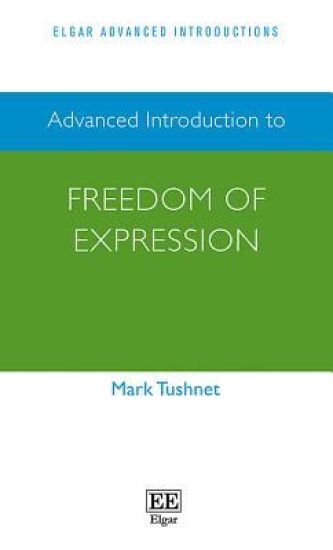
Advanced Introduction to Freedom of Expression

Advanced Introduction to Freedom of Expression

Mark Tushnet

Edward Elgar Publishing Ltd
2018
nidottu
Mark Tushnet presents a concise yet comprehensive overview of free expression law, understood as a form of constitutional law. Confronting the major issues of free expression - speech critical of government, libel law, hate speech regulation, and the emerging challenges posed by new technologies - he evaluates the key questions and potential difficulties for future generations. Contrasting the United States with current law in Europe and elsewhere, Tushnet argues that freedom of expression around the world should reflect deference to legislative judgements, unless those judgements reflect inadequate deliberation or bias, and that much of the existing free expression law is consistent with this view. Key features include: Comprehensible for both students of law and non-specialist readers interested in freedom of expression from a legal perspectiveViewpoints from multiple legal systems including analysis of decisions made by the US Supreme Court and the European Court of Human RightsExplains the two legal doctrinal structures: categorical, rule-bound approaches and standards-based approachesList of key references for further reading, allowing readers to extend their knowledge of the topic past the advanced introduction. This Advanced Introduction will be an essential foundational text for students of law, as well as those from a political science background who can view freedom of expression from a legal perspective.
Advanced Introduction to Freedom of Expression

Advanced Introduction to Freedom of Expression

Mark Tushnet

Edward Elgar Publishing Ltd
2018
sidottu
Mark Tushnet presents a concise yet comprehensive overview of free expression law, understood as a form of constitutional law. Confronting the major issues of free expression - speech critical of government, libel law, hate speech regulation, and the emerging challenges posed by new technologies - he evaluates the key questions and potential difficulties for future generations. Contrasting the United States with current law in Europe and elsewhere, Tushnet argues that freedom of expression around the world should reflect deference to legislative judgements, unless those judgements reflect inadequate deliberation or bias, and that much of the existing free expression law is consistent with this view. Key features include: Comprehensible for both students of law and non-specialist readers interested in freedom of expression from a legal perspectiveViewpoints from multiple legal systems including analysis of decisions made by the US Supreme Court and the European Court of Human RightsExplains the two legal doctrinal structures: categorical, rule-bound approaches and standards-based approachesList of key references for further reading, allowing readers to extend their knowledge of the topic past the advanced introduction. This Advanced Introduction will be an essential foundational text for students of law, as well as those from a political science background who can view freedom of expression from a legal perspective.
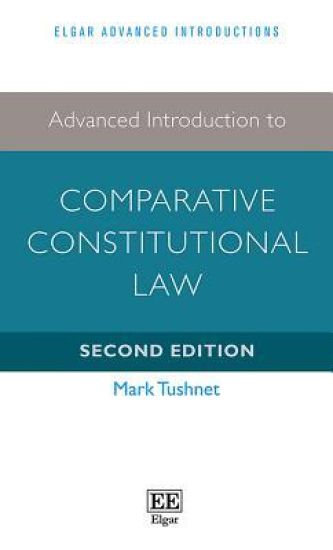
Advanced Introduction to Comparative Constitutional Law

Advanced Introduction to Comparative Constitutional Law

Mark Tushnet

Edward Elgar Publishing Ltd
2018
nidottu

Halvin toimitettuna 32,80 €

Elgar Advanced Introductions are stimulating and thoughtful introductions to major fields in the social sciences and law, expertly written by the world’s leading scholars. Designed to be accessible yet rigorous, they offer concise and lucid surveys of the substantive and policy issues associated with discrete subject areas. Mark Tushnet, a world-renowned scholar of constitutional law, has excelled in extending and revising his essential introduction to comparative constitutional law. Through an analysis of topics at the cutting edge of contemporary scholarship, this authoritative study investigates constitution making, forms of constitutional review, proportionality analysis and its alternatives, and the development of a new ‘transparency’ branch in constitutions around the world. Throughout, the book draws upon examples from a wide range of nations, demonstrating that the field of comparative constitutional law now truly encompasses the world. New to this revised and enlarged second edition: • Updated and extended material to encompass the developments in practice and scholarship since the original edition’s publication back in 2014•With substantial additional attention, Tushnet analyses abusive constitutionalism, the idea of the constituent power, eternity clauses and unconstitutional amendmentsRecent developments in weak- and strong-form constitutional review are given fresh analysis, as well as an expanded consideration of third generation rights. Addressing the key issues of constitutional design and structure, this second edition will serve as an excellent up-to-date resource for students and scholars of comparative constitutional law.
Advanced Introduction to Comparative Constitutional Law

Advanced Introduction to Comparative Constitutional Law

Mark Tushnet

Edward Elgar Publishing Ltd
2018
sidottu
Elgar Advanced Introductions are stimulating and thoughtful introductions to major fields in the social sciences and law, expertly written by the world’s leading scholars. Designed to be accessible yet rigorous, they offer concise and lucid surveys of the substantive and policy issues associated with discrete subject areas. Mark Tushnet, a world-renowned scholar of constitutional law, has excelled in extending and revising his essential introduction to comparative constitutional law. Through an analysis of topics at the cutting edge of contemporary scholarship, this authoritative study investigates constitution making, forms of constitutional review, proportionality analysis and its alternatives, and the development of a new ‘transparency’ branch in constitutions around the world. Throughout, the book draws upon examples from a wide range of nations, demonstrating that the field of comparative constitutional law now truly encompasses the world. New to this revised and enlarged second edition: • Updated and extended material to encompass the developments in practice and scholarship since the original edition’s publication back in 2014•With substantial additional attention, Tushnet analyses abusive constitutionalism, the idea of the constituent power, eternity clauses and unconstitutional amendmentsRecent developments in weak- and strong-form constitutional review are given fresh analysis, as well as an expanded consideration of third generation rights. Addressing the key issues of constitutional design and structure, this second edition will serve as an excellent up-to-date resource for students and scholars of comparative constitutional law.
The Arab Spring

The Arab Spring

Antoni Abat i Ninet; Mark Tushnet

Edward Elgar Publishing Ltd
2015
sidottu
Approaching the concept of Islamic constitutionalism from a comparative perspective, this thought-provoking study by Antoni Abat i Ninet and Mark Tushnet uses traditional Western political theory as a lens to develop a framework for analyzing the events known as the 'Arab Spring'. Writing with clarity and insight, the authors place Western and Arabic traditions into a constructive dialogue. They focus on whether we can develop a 'theory of revolutions' that helps us understand events occurring at divergent times at geographically separate locations. This question is meticulously analyzed through the detailed examination of specific developments relevant to the ideas of revolution and constitutionalism in several nations affected by the Arab Spring. Case studies focus on Morocco and Libya as examples of unsuccessful revolutions, as well as Tunisia and Egypt. These lead the authors to consider the nature of constitutionalism itself and the concept of illiberal but non-authoritarian constitutions: a particularly pressing concern given the prominent contemporary discussions of the role of shari'a in post-Arab Spring constitutions. The Arab Spring will offer new insights to scholars, researchers and students of law and the political sciences, in particular those focusing on theories of revolution, democracy, constitutional law, Islamic constitutionalism and legal theory.
The Constitution of the United States of America
This is the second edition of Professor Tushnet’s short critical introduction to the history and current meaning of the United States’ Constitution. It is organised around wo themes: first, the US Constitution is old, short, and difficult to amend. Second, the Constitution creates a structure of political opportunities that allows political actors, icluding political parties, to pursue the preferred policy goals even to the point of altering the very structure of politics. Deploying these themes to examine the structure f the national government, federalism, judicial review, and individual rights, the book provides basic information about, and deeper insights into, the way he US constitutional system has developed and what it means today.
Red, White, and Blue

Red, White, and Blue

Mark Tushnet; Sanford Levinson

University Press of Kansas
2015
nidottu
The first paperback edition of a classic of American constitutional theory. The book is divided into two parts. In Part I Professor Tushnet appraises the five major competing “grand theories” of constitutional law and interpretation, and, argues that none of them satisfy their own requirements for coherence and judicial constraint. In Part II the author offers a descriptive sociology of constitutional doctrine and raises critical questions as to whether a grand theory is necessary, is it possible to construct a coherent, useful grand theory, and is construction of an uncontroversial grand theory possible? Professor Tushnet’s new Afterword is organized in parallel fashion to the original text. Part I offers a new survey of the contemporary terrain of constitutional interpretation. Part II provides an extended discussion of the most prominent of contemporary efforts to provide an external analysis of constitutional law, the idea of regime politics. This includes discussion of major court decisions, including Bush v. Gore and Citizens United.