Kirjojen hintavertailu – 12 903 725 kirjaa ja 27 kauppaa

Kirjailija

Markus Carabas

Kirjat ja teokset yhdessä paikassa: 25 kirjaa, julkaisuja vuosilta 2016–2019, suosituimpiin kuuluu Osiris: la historia y el legado del antiguo dios egipcio de los muertos. Vertaile teosten hintoja ja tarkista saatavuus suomalaisista kirjakaupoista.

25 kirjaa

Kirjojen julkaisuvuodet: 2016–2019.

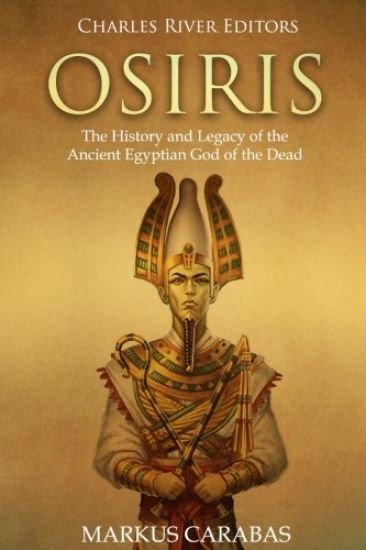
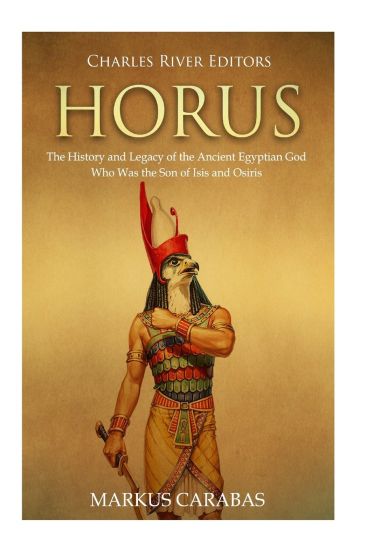
Horus: The History and Legacy of the Ancient Egyptian God Who Was the Son of Isis and Osiris

Horus: The History and Legacy of the Ancient Egyptian God Who Was the Son of Isis and Osiris

Markus Carabas; Charles River

Createspace Independent Publishing Platform
2018
nidottu
*Includes pictures *Includes ancient accounts *Includes online resources and a bibliography for further reading Africa may have given rise to the first human beings, and Egypt probably gave rise to the first great civilizations, which continue to fascinate modern societies across the globe nearly 5,000 years later. From the Library and Lighthouse of Alexandria to the Great Pyramid at Giza, the Ancient Egyptians produced several wonders of the world, revolutionized architecture and construction, created some of the world's first systems of mathematics and medicine, and established language and art that spread across the known world. With world-famous leaders like King Tut and Cleopatra, it's no wonder that today's world has so many Egyptologists. To the ancient Egyptians, as was the case with any society made up of inquiring humans, the world was a confusing and often terrifying place of destruction, death and unexplained phenomena. In order to make sense of such an existence, they resorted to teleological stories. Giving a phenomenon a story made it less horrifying, and it also helped them make sense of the world around them. Unsurprisingly, then, the ancient Egyptian gods permeated every aspect of existence. There are few characters in Egyptian myth whose image and name are more widely known than Horus. His name most probably means "the Distant One;" as the celestial falcon, his wings were believed to span the length of the distant sky and his eyes were the sun and the moon. This name betrays the connection Horus shared with Re, the "all powerful" sun god, and also hints at his earlier incarnation as one of the earliest celestial gods in Egyptian religious belief. One of the earliest images from ancient Egypt is that of a falcon residing in the famous "sun-Barque" of Re, which the ancient Egyptians believed traversed the sky during the day and crossed the dangerous land of the dead during the night. Horus' place in the sun-barque probably represents Horus as a 'star or planet crossing the Winding Waterway of the sky," since the ancient Egyptians were famous for their complex astronomical system that incorporated many mythical elements, but his position there is much more than being just another of the sun-god's divine entourage. Horus' mythological lineage places him as the direct descendant of the Ennead, the nine gods and goddesses who were formed from the earlier abstract concepts in the primordial waters of "Nun". This places him at an interesting crossroads in terms of his relationships with the greater pantheon. Not being one of the Ennead weakens Horus' claim to the divine right of kingship, in contrast to Seth, his uncle, who could claim primacy as one of the Ennead himself. The result of this contention made for a fascinating power struggle and a myth that would have real-world ramifications throughout the vast expanse of Egyptian history. Horus would eventually ascend the throne of his father, Osiris, and for this reason he held a deep connection with the throne of united Egypt. The earliest kings were shown as hawks (long considered part of the "Falconidae Family") preying on their enemies, the reason for which lies in the mythological foundation of Horus' life and also in the real world understanding of the "history" of the royal line of kings. Integral to Horus' myths is the notion of royal inheritance. Born of the murdered god Osiris and the magical goddess Isis, Horus' - the younger, at least - life was defined by his establishment of the royal line of Egyptian kings. To the modern Western reader, this notion of gods being mortal and inheriting the power of their fathers may seem a little strange, but, to the ancient Egyptians, stories about feuding mortal deities were par for the rather strange course, and an understanding of the nuances of Egyptian religious belief can go some way towards dispelling that confusion.
Osiris: The History and Legacy of the Ancient Egyptian God of the Dead

Osiris: The History and Legacy of the Ancient Egyptian God of the Dead

Markus Carabas; Charles River

Createspace Independent Publishing Platform
2018
nidottu
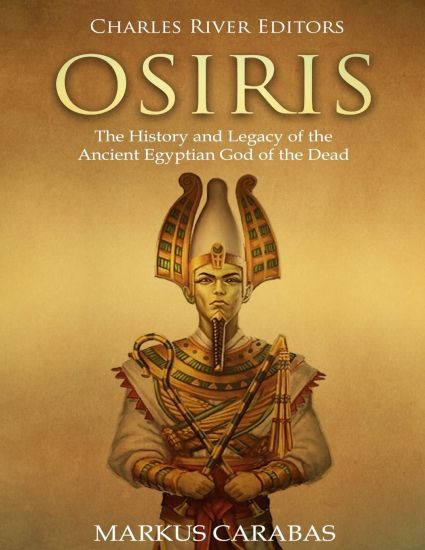
*Includes pictures *Includes ancient accounts *Includes online resources and a bibliography for further reading To the ancient Egyptians, as was the case with any society made up of inquiring humans, the world was a confusing and often terrifying place of destruction, death and unexplained phenomena. In order to make sense of such an existence, they resorted to teleological stories. Giving a phenomenon a story made it less horrifying, and it also helped them make sense of the world around them. Unsurprisingly, then, the ancient Egyptian gods permeated every aspect of existence. Given the abundance of funerary artifacts that have been found within the sands of Egypt, it sometimes seems as though the Ancient Egyptians were more concerned with the matters of the afterlife than they were with matters of the life they experienced from day to day. This is underscored most prominently by the pyramids, which have captured the world's imagination for centuries. Thus, it's little surprise that Osiris was one of the most important gods in the Egyptian pantheon, and he could well be the most famous of the Egyptian gods today. Aside from the ubiquity of the sun-god Re in much of modern popular culture, it is Osiris who captivates the minds of modern readers most. His story is both familiar and strangely alien. He is the god of the dead, but he became so by the very fact of his mortality. All the gods of ancient Egypt were capable of dying, but Osiris was also a symbol of resurrection, not unlike Christ in Christian theology. Osiris was betrayed by somebody close to him (in this case, his brother Seth) and was murdered and reborn, but here is where Osiris and Christ part ways. Osiris's death is brutal, and his resurrection is the product of his wife Isis's love for him. Furthermore, Osiris was associated with the kings of Egypt because the Egyptians believed he was a king himself. The ancient Egyptians could trace their kings back, one by one, to a time when the gods were believed to have ruled the land in person. Osiris was the third or fourth successor to the Egyptian throne after creation, and the Egyptians believed that Osiris's connection with kingship is what allowed their kings to be reborn in a way themselves. He was also said to be physically enormous - almost 15 and a half feet according to some sources - which was said to have aided him in his military campaigns. Despite his grotesque appearance - it's likely that his green and black skin coloration was an early attempt at depicting putrefaction - Osiris was the epitome of hope and renewal. His skin later came to represent the lush green of the crops around the Nile and the fertile black land they grew out of nearby. He was often shown as a mummified king sitting on a throne with the flail of a pharaoh and the crook of a shepherd, since he was the shepherd of people to the land of the dead, Duat. In fact, although Osiris was said to be capable of sending "demons" to the world of the living, he was generally considered to be a benevolent king of the underworld. Depending on the phenomenon or feeling the ancient Egyptians experienced, there was a corresponding deity and a story to explain the connection. Acclaimed Egyptologist Garry Shaw described this ethos an "an endless repetition of creations, destructions and rebirths, entangled in a net of divine interactions ... each person living] as the hero of his own mythic narrative each day." In this way, the ancient Egyptian would "assimilate" themselves with the corresponding deity that defined their situation at any given time. Osiris: The History and Legacy of the Ancient Egyptian God of the Dead looks at the mythology surrounding one of antiquity's most famous deities. Along with pictures depicting important people, places, and events, you will learn about Osiris like never before.
Osiris: The History and Legacy of the Ancient Egyptian God of the Dead

Osiris: The History and Legacy of the Ancient Egyptian God of the Dead

Markus Carabas; Charles River

Createspace Independent Publishing Platform
2018
nidottu
*Includes pictures*Includes ancient accounts*Includes online resources and a bibliography for further readingTo the ancient Egyptians, as was the case with any society made up of inquiring humans, the world was a confusing and often terrifying place of destruction, death and unexplained phenomena. In order to make sense of such an existence, they resorted to teleological stories. Giving a phenomenon a story made it less horrifying, and it also helped them make sense of the world around them. Unsurprisingly, then, the ancient Egyptian gods permeated every aspect of existence. Given the abundance of funerary artifacts that have been found within the sands of Egypt, it sometimes seems as though the Ancient Egyptians were more concerned with the matters of the afterlife than they were with matters of the life they experienced from day to day. This is underscored most prominently by the pyramids, which have captured the world's imagination for centuries. Thus, it's little surprise that Osiris was one of the most important gods in the Egyptian pantheon, and he could well be the most famous of the Egyptian gods today. Aside from the ubiquity of the sun-god Re in much of modern popular culture, it is Osiris who captivates the minds of modern readers most. His story is both familiar and strangely alien. He is the god of the dead, but he became so by the very fact of his mortality. All the gods of ancient Egypt were capable of dying, but Osiris was also a symbol of resurrection, not unlike Christ in Christian theology. Osiris was betrayed by somebody close to him (in this case, his brother Seth) and was murdered and reborn, but here is where Osiris and Christ part ways. Osiris's death is brutal, and his resurrection is the product of his wife Isis's love for him. Furthermore, Osiris was associated with the kings of Egypt because the Egyptians believed he was a king himself. The ancient Egyptians could trace their kings back, one by one, to a time when the gods were believed to have ruled the land in person. Osiris was the third or fourth successor to the Egyptian throne after creation, and the Egyptians believed that Osiris's connection with kingship is what allowed their kings to be reborn in a way themselves. He was also said to be physically enormous - almost 15 and a half feet according to some sources - which was said to have aided him in his military campaigns. Despite his grotesque appearance - it's likely that his green and black skin coloration was an early attempt at depicting putrefaction - Osiris was the epitome of hope and renewal. His skin later came to represent the lush green of the crops around the Nile and the fertile black land they grew out of nearby. He was often shown as a mummified king sitting on a throne with the flail of a pharaoh and the crook of a shepherd, since he was the shepherd of people to the land of the dead, Duat. In fact, although Osiris was said to be capable of sending "demons" to the world of the living, he was generally considered to be a benevolent king of the underworld. Depending on the phenomenon or feeling the ancient Egyptians experienced, there was a corresponding deity and a story to explain the connection. Acclaimed Egyptologist Garry Shaw described this ethos an "an endless repetition of creations, destructions and rebirths, entangled in a net of divine interactions ... each person living] as the hero of his own mythic narrative each day." In this way, the ancient Egyptian would "assimilate" themselves with the corresponding deity that defined their situation at any given time. Osiris: The History and Legacy of the Ancient Egyptian God of the Dead looks at the mythology surrounding one of antiquity's most famous deities. Along with pictures depicting important people, places, and events, you will learn about Osiris like never before.
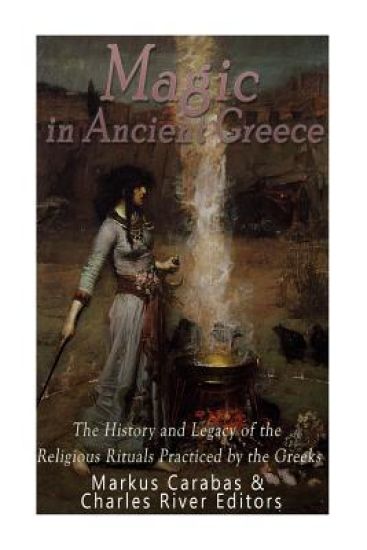
Magic in Ancient Greece: The History and Legacy of the Religious Rituals Practiced by the Greeks

Magic in Ancient Greece: The History and Legacy of the Religious Rituals Practiced by the Greeks

Markus Carabas; Charles River

Createspace Independent Publishing Platform
2018
nidottu
*includes pictures *Includes ancient descriptions of magicians and magical practices *Includes online resources and a bibliography for further reading "Whether true or not, men had trusted in and believed these things." - Strabo Magic today is the stuff of fairy tales and illusionists, something to titillate and perplex perhaps. But the prospect of "taking magic seriously" - despite the best efforts of occult movements in recent years, from the O. T. O. to the Chaos magicians in the 1980s - is still a very difficult pill for most people to swallow in the 21st century. This is not to say to disparage nor denigrate the efforts made by illusionists such as Penn & Teller or Derren Brown, who openly declare that what they do is to perform tricks, utilizing psychology and misdirection in order to entertain a willing crowd. These "magical practitioners" are artists well deserving of the name. In this case, taking magic seriously meant to actually believe in magic and take it at its word, outlined best in Owen Davies" summary of the anthropologist Max Weber"s thoughts on the matter: " Magic] promised to give humans control over a natural world governed by spirits." This view of Weber"s could be (and has been) seen as some kind of definition of what "magic" is, or at least what it was to the ancient Greeks. Many scholars have tried and failed to isolate a clear definition of what "magic" is or was. Magic - as opposed to religion, personal or otherwise - is a notoriously difficult concept to pin down. In ancient Greece, "magic was not distinct from religion, rather an unwelcome, improper expression of it." In other words, it's important not to think of it as a different definition of magic but to instead understand how the ancient Greeks believed certain aspects of magic functioned in their world. Since there are no surviving accounts of any full, contemporary hypothesis of what magic was, creating a picture of their belief in magic requires exploring what cultural factors shaped their beliefs. Often, the best surviving evidence of those beliefs comes from magic's biggest critics. Most sources hail from the Archaic and Classical Periods of ancient Greece. It is in the Archaic Period that the ancient Greek culture, as people today know it, formed itself from the broken shards of the Mycenaean Palace Period scattered across the country after its collapse some 400 years earlier. Out of this formation came some early attempts at defining magic and magical practitioners as the liminal folk who were able to transgress the boundaries of the natural world in order to bring prized knowledge back to their mundane communities. In the same vein, it's worth analyzing the main critics of contemporary magic, namely the philosophers and medical practitioners of the time, since those individuals were not above "in-house" rivalries. The writings of philosophers like Plato indicate how magical terminology gained some of the pejorative connotations associated with it, and how those connotations were levied at rivals who, at least to the casual observer, appear to have conducted their business in a very similar way to their critics. Magic in Ancient Greece: The History and Legacy of the Religious Rituals Practiced by the Greeks looks at the various people, places, and rituals performed over the centuries in ancient Greece. It offers a picture of an almost impossibly foggy aspect of ancient Greek scholarship. Along with pictures depicting important people, places, and events, you will learn about magic in Greece like never before.