

Kirjailija
Markus Gabriel
Kirjat ja teokset yhdessä paikassa: 55 kirjaa, julkaisuja vuosilta 2006–2026, suosituimpiin kuuluu Sentido, sinsentido y subjetividad. Vertaile teosten hintoja ja tarkista saatavuus suomalaisista kirjakaupoista.
55 kirjaa
Kirjojen julkaisuvuodet: 2006–2026.
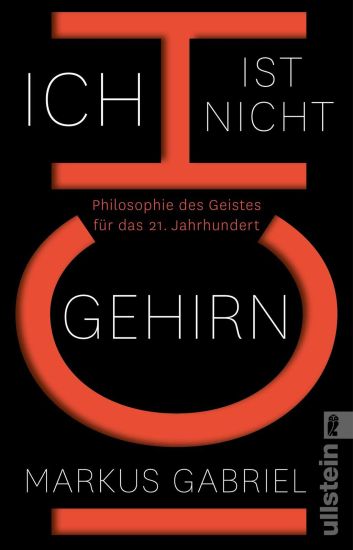
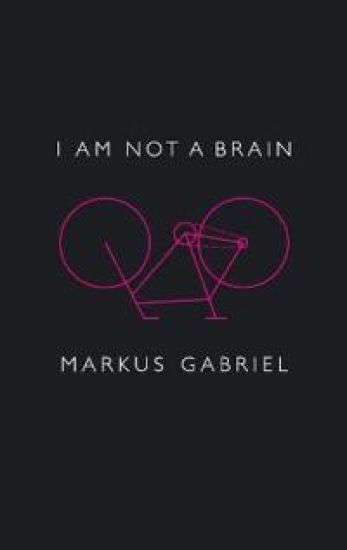
Many consider the nature of human consciousness to be one of the last great unsolved mysteries. Why should the light turn on, so to speak, in human beings at all? And how is the electrical storm of neurons under our skull connected with our consciousness? Is the self only our brain’s user interface, a kind of stage on which a show is performed that we cannot freely direct? In this book, philosopher Markus Gabriel challenges an increasing trend in the sciences towards neurocentrism, a notion which rests on the assumption that the self is identical to the brain. Gabriel raises serious doubts as to whether we can know ourselves in this way. In a sharp critique of this approach, he presents a new defense of the free will and provides a timely introduction to philosophical thought about the self – all with verve, humor, and surprising insights. Gabriel criticizes the scientific image of the world and takes us on an eclectic journey of self-reflection by way of such concepts as self, consciousness, and freedom, with the aid of Kant, Schopenhauer, and Nagel but also Dr. Who, The Walking Dead, and Fargo.
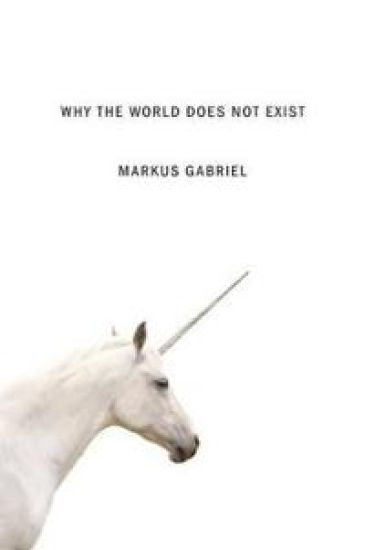
Where do we come from? Are we merely a cluster of elementary particles in a gigantic world receptacle? And what does it all mean? In this highly original new book, the philosopher Markus Gabriel challenges our notion of what exists and what it means to exist. He questions the idea that there is a world that encompasses everything like a container life, the universe, and everything else. This all-inclusive being does not exist and cannot exist. For the world itself is not found in the world. And even when we think about the world, the world about which we think is obviously not identical with the world in which we think. For, as we are thinking about the world, this is only a very small event in the world. Besides this, there are still innumerable other objects and events: rain showers, toothaches and the World Cup. Drawing on the recent history of philosophy, Gabriel asserts that the world cannot exist at all, because it is not found in the world. Yet with the exception of the world, everything else exists; even unicorns on the far side of the moon wearing police uniforms. Revelling in witty thought experiments, word play, and the courage of provocation, Markus Gabriel demonstrates the necessity of a questioning mind and the role that humour can play in coming to terms with the abyss of human existence.
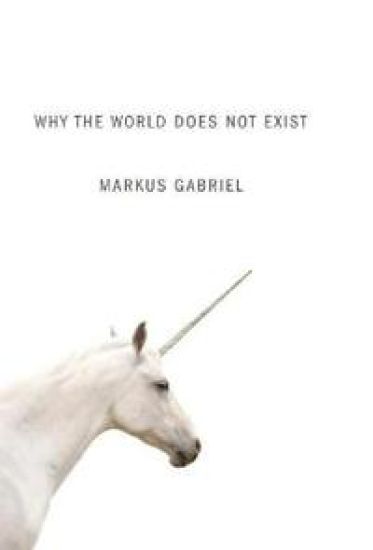
Where do we come from? Are we merely a cluster of elementary particles in a gigantic world receptacle? And what does it all mean? In this highly original new book, the philosopher Markus Gabriel challenges our notion of what exists and what it means to exist. He questions the idea that there is a world that encompasses everything like a container life, the universe, and everything else. This all-inclusive being does not exist and cannot exist. For the world itself is not found in the world. And even when we think about the world, the world about which we think is obviously not identical with the world in which we think. For, as we are thinking about the world, this is only a very small event in the world. Besides this, there are still innumerable other objects and events: rain showers, toothaches and the World Cup. Drawing on the recent history of philosophy, Gabriel asserts that the world cannot exist at all, because it is not found in the world. Yet with the exception of the world, everything else exists; even unicorns on the far side of the moon wearing police uniforms. Revelling in witty thought experiments, word play, and the courage of provocation, Markus Gabriel demonstrates the necessity of a questioning mind and the role that humour can play in coming to terms with the abyss of human existence.
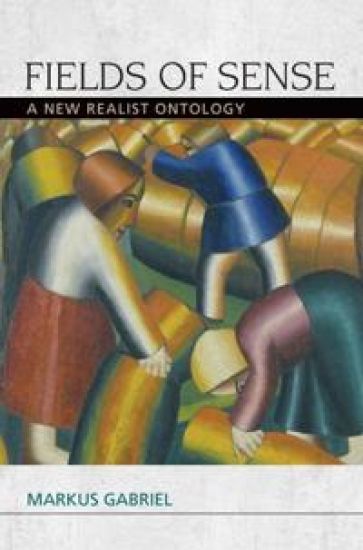
It is still a widespread assumption that metaphysics and ontology deal with roughly the same questions. They are supposed to be concerned with the fundamental nature of reality and to give an account of the meaning of 'existence' or 'being' in line with the broadest possible metaphysical assumptions. Against this, Markus Gabriel proposes a radical form of ontological pluralism that divorces ontology from metaphysics, understood as the most fundamental theory of absolutely everything (the world). He argues that the concept of existence is incompatible with the existence of the world and therefore proposes his innovative no-world-view. In the context of recent debates surrounding new realism and speculative realism, Gabriel also develops the outlines of a realist epistemological pluralism. His idea here is that there are different forms of knowledge that correspond to the plurality of fields of sense that must be acknowledged in order to avoid the trap of metaphysics.
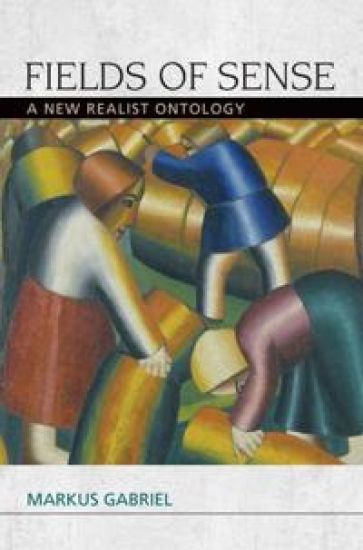
Presents a new realist ontology based on the concept of fields of sense. Markus Gabriel presents us with an innovative answer to one of the central questions of philosophy: what is the meaning of 'being' - or, rather, 'existence' - and how does that concept relate to the totality of what there is? This ontology hinges on Gabriel's concept of fields of sense, which shows that he fundamentally opposes the idea that mathematics or the natural sciences could ever replace a richer philosophical understanding of what there is and how we know about it. The first contribution to a speculative epistemology on the basis of an ontology first method and develops a new realist ontology as well as outlining a realist epistemology grounded in ontology.
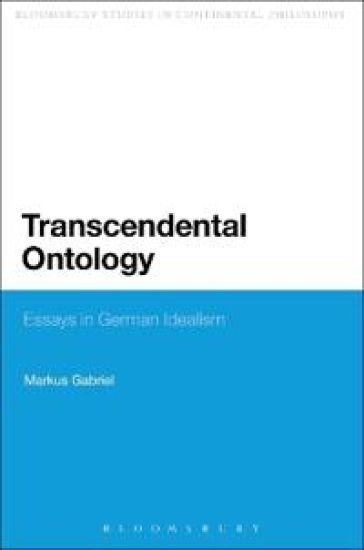
Transcendental Ontology in German Idealism: Schelling and Hegel sheds remarkable light on a question central to post-Kantian philosophy: after the Copernican Revolution in philosophy, what can philosophy say about the world or reality as such? What remains of ontology's task after Kant? This is a question often overlooked in contemporary scholarship on German Idealism. Markus Gabriel offers a refreshing reinvigoration of a range of questions concerning scepticism, corporeality, freedom, the question of being, the absolute and the modal status of our determinations and judgments, all crucial to our understanding of the truly radical nature of post-Kantian philosophy. Gabriel's assessment of the experiments undertaken in post-Kantian ontology reaffirms Schelling's and Hegel's place at the heart of contemporary metaphysics. The book shows how far we still have to go in mining the thought of Hegel and Schelling and how exciting, as a result, we can expect twenty-first century philosophy to be.
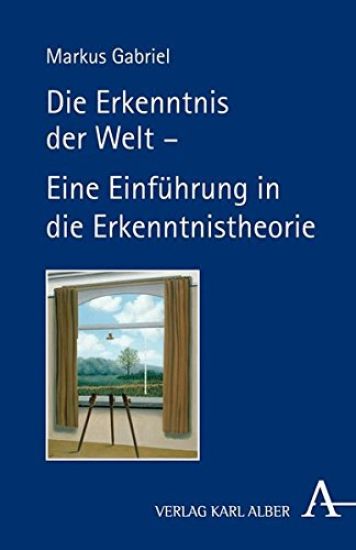
Die Erkenntnis Der Welt - Eine Einfuhrung in Die Erkenntnistheorie
Markus Gabriel
Karl-Alber-Verlag
2012
sidottu
In seiner Einfuhrung in die Erkenntnistheorie geht es nicht nur um die einfuhrende Darstellung von offensichtlichen Grundbegriffen der Erkenntnistheorie wie 'Erkenntnis', 'Grunde', 'Rechtfertigung', sondern auch um die Frage, wie Erkenntnis bzw. Wissen sich uberhaupt in der Welt ereignet. Erkenntnis und Wissensanspruche gehoren zu einer sozialen Umwelt, die ihrerseits zur Welt insgesamt gehort. Vor dem Hintergrund dieser Einbettung von Erkenntnis in das Weltganze geht es um das Verhaltnis von Erkenntnis und Welt. Denn jede Welterkenntnis ist auch ein Ereignis in der Welt. Entsprechend kann man Erkenntnistheorie auch gar nicht vollig ausserhalb des Kontextes anderer philosophischer Fragestellungen betreiben. Themen aus der neuzeitlichen und gegenwartigen Theorie der Intentionalitat und der Ontologie werden dementsprechend ebenfalls zu Rate gezogen, um die Frage, was Erkenntnis ist und wo ihre Grenzen liegen, in einem grosseren Zusammenhang zu erortern. Denn Erkenntnis ist ebenso wenig vom Rest der Welt isoliert wie irgendeine andere Tatsache oder irgendein anderes Ereignis. Erkenntnis steht der Welt nicht gegenuber, sondern findet sich in ihr vor.
Markus Gabriel re-assesses the contributions of Hegel and Schelling to post-Kantian metaphysics and the contributions of these great German Idealist thinkers to contemporary thought. "Transcendental Ontology in German Idealism: Schelling and Hegel" sheds remarkable light on a question central to post-Kantian philosophy: after the Copernican Revolution in philosophy, what can philosophy say about the world or reality as such? What remains of ontology's task after Kant? This is a question often overlooked in contemporary scholarship on German Idealism. Markus Gabriel offers a refreshing reinvigoration of a range of questions concerning scepticism, corporeality, freedom, the question of being, the absolute and the modal status of our determinations and judgments, all crucial to our understanding of the truly radical nature of post-Kantian philosophy. Gabriel's assessment of the experiments undertaken in post-Kantian ontology reaffirms Schelling's and Hegel's place at the heart of contemporary metaphysics. This book shows how far we still have to go in mining the thought of Hegel and Schelling and how exciting, as a result, we can expect twenty-first century philosophy to be. Continuum Studies in Philosophy presents cutting-edge scholarship in all the major areas of research and study. The wholly original arguments, perspectives and research findings in titles in this series make it an important and stimulating resource for students and academics from a range of disciplines across the humanities and social sciences.
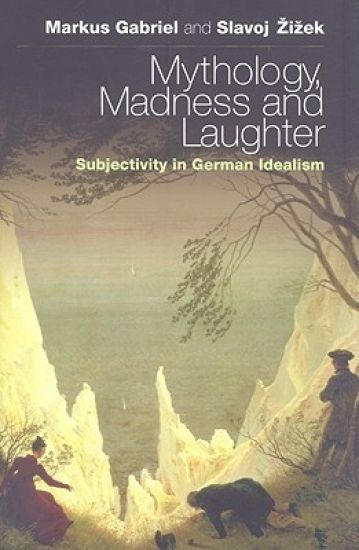
Mythology, Madness, and Laughter
Markus Gabriel; Slavoj Žižek
Continuum Publishing Corporation
2009
sidottu
Halvin toimitettuna 94,70 €
This is a hugely important book that rediscovers three crucial, but long overlooked themes in German idealism: mythology, madness and laughter. "Mythology, Madness and Laughter: Subjectivity in German Idealism" explores some long neglected but crucial themes in German idealism. Markus Gabriel, one of the most exciting young voices in contemporary philosophy, and Slavoj Zizek, the celebrated contemporary philosopher and cultural critic, show how these themes impact on the problematic relations between being and appearance, reflection and the absolute, insight and ideology, contingency and necessity, subjectivity, truth, habit and freedom. Engaging with three central figures of the German idealist movement, Hegel, Schelling and Fichte, Gabriel and Zizek, who here shows himself to be one of the most erudite and important scholars of German idealism, ask how is it possible for Being to appear in reflection without falling back into traditional metaphysics. By applying idealistic theories of reflection and concrete subjectivity, including the problem of madness and everydayness in Hegel, this hugely important book aims to reinvigorate a philosophy of finitude and contingency, topics at the forefront of contemporary European philosophy.
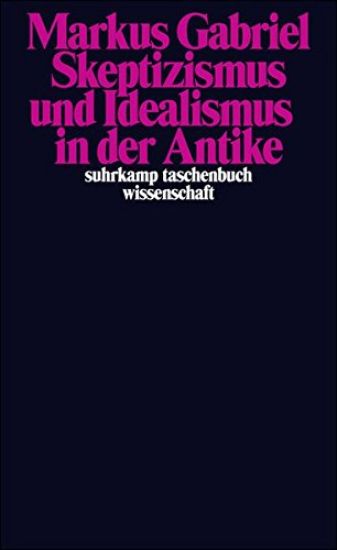
Es gilt inzwischen als ausgemacht, daß die neuzeitliche Erkenntnistheorie das Problem des Solipsismus entdeckt habe. Die antike Philosophie hingegen habe - ausgehend von einem ?gesunden? Realismus - die Existenz einer nichtmentalen Außenwelt niemals in Frage gestellt. Diese Auffassung ist falsch, wie Markus Gabriel in seiner originellen Studie zeigt. Die antike Skepsis, so seine These, hat das Außenweltproblem auf eine ungleich radikalere Weise als die Frühe Neuzeit durchdacht. Im Durchgang durch die skeptische Antiphilosophie des Sextus Empiricus und durch Plotins idealistische Metaphysik sowie vor dem Hintergrund der Gegenwartsphilosophie macht er sichtbar, daß die antike Skepsis eine Lebensform zur Debatte stellt, die aus den Paradoxien der zeitgenössischen Erkenntnistheorie hinausführt.
The series, founded in 1970, publishes works that combine philosophical-historical studies with a systematic approach or systematic studies with philosophical-historical reconstructions. It accepts monographs both in German and in English. A condition for inclusion in the series is a positive peer review process. The series is open for open access publications. Current editors are: Michael Quante (Westfälische Wilhelms-Universität Münster) and Dominik Perler (Humboldt-Universität zu Berlin). Founding editors are: Erhard Scheibe (editor until 1991), Günther Patzig (until 1999) and Wolfgang Wieland (until 2003). From 1990 to 2007 the series was co-edited by Jürgen Mittelstraß and from 2005 to 2020 by Jens Halfwassen.