Kirjojen hintavertailu – 12 859 818 kirjaa ja 27 kauppaa

Kirjailija

Marlene Dumas

Kirjat ja teokset yhdessä paikassa: 4 kirjaa, julkaisuja vuosilta 2014–2022, suosituimpiin kuuluu Levende linjer. Vertaile teosten hintoja ja tarkista saatavuus suomalaisista kirjakaupoista.

4 kirjaa

Kirjojen julkaisuvuodet: 2014–2022.

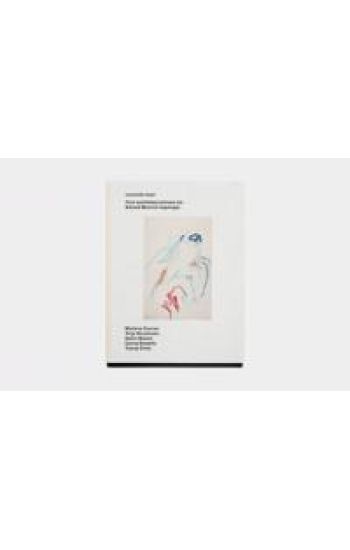
Levende linjer

Levende linjer

Mieke Bal; Magne Bruteig; Halvor Haugen; Marlene Dumas; Terje Nicolaisen; Nalini Malani; Georg Baselitz; Tracey Emin

Oslo kommune Munchmuseet
2022
Sidottu
I denne boken har de fem markante samtidskunstnere Marlene Dumas, Terje Nicolaisen, Nalini Malani, Georg Baselitz og Tracey Emin satt sammen hvert sitt utvalg av Edvard Munchs tegninger. Munch tegnet mer eller mindre daglig gjennom et langt liv og etterlot seg rundt 7700 tegninger. Hvert av de fem utvalgene gir en unik inngang til dette rike materialet og presenteres sammen med et intervju, der kunstnerne reflekterer rundt Munchs tegninger og sitt eget kunstnerskap.
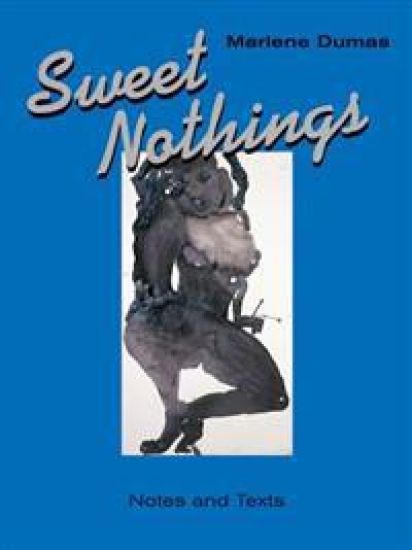
Sweet Nothings: Notes and Texts 1982-2014

Sweet Nothings: Notes and Texts 1982-2014

Marlene Dumas

Distributed Art Publishers (DAP)
2015
nidottu
Published with Walther K nig, K ln. From the beginning, language has played an important role in the work of Marlene Dumas. Her earliest collages make use of text, and she often writes poetical monikers or captions directly onto her drawings, such as "The Eyes of the Night Creatures" or "Miss Interpreted." Over the last 30 years, the artist has written texts ranging from aphorisms, statements and short poetic pieces to longer analytical essays. Her writing focuses on her own work, discussing its subject matter, its politics, background and source material, as well as its critical reception and her own cultural position as an artist. "I am always 'not from here, '" she writes in one text (a poem), "even though I try to know / or understand 'what's going on' and / what the rules are and how they / keep on changing and what that means. / When looking at images I'm not lost, / but I'm uneasy." Sweet Nothings, originally published in a long out-of-print (and rare) Dutch edition in 1998 and now revised and expanded, provides a selection of her best and most representative writings from 1982-2014. Marlene Dumas (born 1953) is a South African artist who works in a range of media including painting, collage and prints. She moved to Amsterdam for her studies in 1976 and continues to live and work there. She often strips her subjects of their original contexts, working with--while often transgressing and deconstructing--traditional Western modes of representation. She represented the Netherlands in 1995 at the 46th Venice Biennale, and has enjoyed numerous solo museum exhibitions and retrospectives devoted to her work around the world since then.
Marlene Dumas

Marlene Dumas

Marlene Dumas

David Zwirner
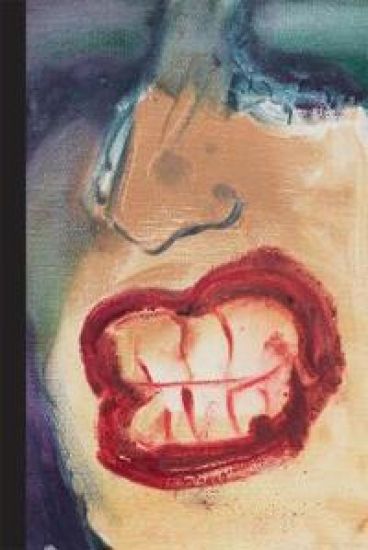
2014
sidottu
Newly reprinted, Against the Wall includes large-scale works primarily based on media imagery and newspaper clippings documenting the conflict between Israel and Palestine, exploring the tension between the photographic documentation of reality and the constructed, imaginary space of painting. Originally published in 2010 on the occasion of Against the Wall, Dumas’s first solo presentation at David Zwirner in New York, this much sought-after exhibition catalogue—which sold out shortly after publication—has been reprinted to coincide with the artist’s 2014–2015 European retrospective exhibition The Image as Burden, organized by Tate Modern, London in collaboration with the Stedelijk Museum, Amsterdam and the Fondation Beyeler, Basel. Described by Deborah Solomon in a New York Times profile as “one of contemporary art’s most compelling painters,” Marlene Dumas has continuously explored the complex range of human emotions, often probing questions of gender, race, sexuality, and economic inequality through her dramatic and at times haunting figural compositions. Throughout her career, the internationally renowned artist has continually created lyrically charged compositions that eulogize the frailties of the human body, probing issues of love and melancholy. At times her subjects are more topical, merging socio-political themes with personal experience and art-historical antecedents to reflect unique perspectives on the most salient and controversial issues facing contemporary society. The large-scale works included in Against the Wall are primarily based on media imagery and newspaper clippings documenting the conflict between Israel and Palestine, exploring the tension between the photographic documentation of reality and the constructed, imaginary space of painting. The Wall, the painting that began the series, at first appears to present a scene at the Western Wall (also known as the Wailing Wall), an important site of religious pilgrimage located in Jerusalem. However, this work is based upon a photograph from a newspaper that portrayed a group of Orthodox Jews on their way to pray at Rachel’s Tomb in Bethlehem. Through her delicate treatment of every scene, Dumas destabilizes preconceived notions about what, in fact, is being pictured—engaging the often ambiguous nature of ideas like truth or justice. “In a sense they are my first landscape paintings,” Dumas further notes in the catalogue, “or should I say ‘territory paintings.’ That is why they are so big.” The somber color plates reproduced in the publication are given context by Dumas’s own musings, a text framed as a letter to David Zwirner in which she tries to tell him “about the ‘why’ ” of this powerful series.