Kirjojen hintavertailu – 12 859 824 kirjaa ja 27 kauppaa

Kirjailija

Marlene Laruelle

Kirjat ja teokset yhdessä paikassa: 27 kirjaa, julkaisuja vuosilta 2008–2027, suosituimpiin kuuluu Is Russia Fascist?. Vertaile teosten hintoja ja tarkista saatavuus suomalaisista kirjakaupoista.

Nimi esiintyy myös muodoissa: Marlène Laruelle

27 kirjaa

Kirjojen julkaisuvuodet: 2008–2027.

Is Russia Fascist?

Is Russia Fascist?

Marlene Laruelle

Cornell University Press
2021
sidottu
In Is Russia Fascist?, Marlene Laruelle argues that the charge of "fascism" has become a strategic narrative of the current world order. Vladimir Putin's regime has increasingly been accused of embracing fascism, supposedly evidenced by Russia's annexation of Crimea, its historical revisionism, attacks on liberal democratic values, and its support for far-right movements in Europe. But at the same time Russia has branded itself as the world's preeminent antifascist power because of its sacrifices during the Second World War while it has also emphasized how opponents to the Soviet Union in Central and Eastern Europe collaborated with Nazi Germany. Laruelle closely analyzes accusations of fascism toward Russia, soberly assessing both their origins and their accuracy. By labeling ideological opponents as fascist, regardless of their actual values or actions, geopolitical rivals are able to frame their own vision of the world and claim the moral high ground. Through a detailed examination of the Russian domestic scene and the Kremlin's foreign policy rationales, Laruelle disentangles the foundation for, meaning, and validity of accusations of fascism in and around Russia. Is Russia Fascist? shows that the efforts to label opponents as fascist is ultimately an attempt to determine the role of Russia in Europe's future.
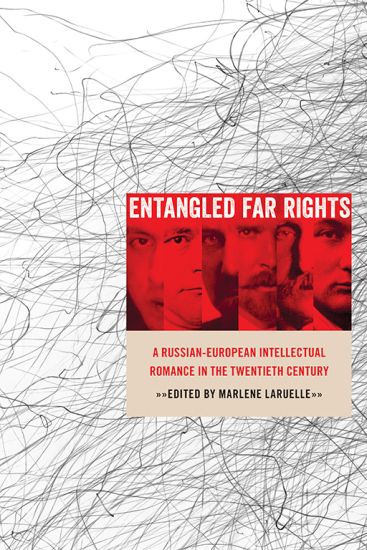
Entangled Far Rights

Entangled Far Rights

Marlene Laruelle

University of Pittsburgh Press
2018
nidottu
Since the Ukrainian crisis in 2014, Russia’s support to the European far right—and to a variety of populist leaders more globally—has become a cornerstone of the West’s perception of Moscow as a “spoiler” on the international scene. The fact that Russia’s most fervent supporters are now to be found on the right of the ideological spectrum should not be a surprise. The European far right has always had Russophile tendencies, but these were obscured during the Cold War, when rightist politics were most of all anti-Communist. Entangled Far Rights traces the “intellectual romance” that existed between European far right groups and their Russian-Soviet counterparts during the twentieth century and accounts for their recent re-emergence.
Russia’s Arctic

Russia’s Arctic

Marlene Laruelle; Jean Radvanyi

BLOOMSBURY PUBLISHING PLC
2026
sidottu
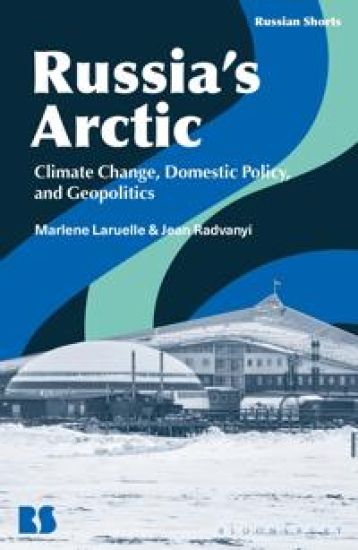
This book provides a comprehensive overview of Russia’s Arctic policies since the 2022 war with Ukraine began. Covering geopolitical transformations, domestic evolutions and the role of climate change, it traces how, for around two decades, Russia has renewed its strategic interest in the Arctic region. It reflects on how, with more than half of the circumpolar territories, Russia’s Arctic regions generate between 10 and 15% of Russia's GDP and a quarter of its exports, with the yet-to-be-explored reserves of the Arctic continental shelf also offering immense potential. Russia’s Arctic analyses the growth of hydrocarbon deposits in the far north of Siberia and nearby offshore areas and how this has contributed to the rapid development of the Northern Sea Route. Marlene Laruelle and Jean Radvanyi examine the tremendous long-term importance of the region for Russia, regardless of internal political developments and the state of relations with the West. Long a place for science diplomacy and transborder dialogue, the region has once again become a hotspot for geostrategic tensions and a new interface between an expanded NATO and Russia. While the West is imposing increasingly broad sanctions specifically targeting Arctic hydrocarbon development projects, the Russian government is striving to circumvent or mitigate their effects with countermeasures by relying on their allies, most of whom are Asian. Laruelle and Radvanyi convincingly contend that Russian Arctic development policy must take into account the economic needs of the Russian budget and the geopolitical realities of decoupling from the West and pivoting towards the so-called ‘Global South’. Additionally, it must consider the heavy legacies of the past in terms of population, infrastructure, and pollution, as well as future projections regarding the impact of climate change.
Russia’s Arctic

Russia’s Arctic

Marlene Laruelle; Jean Radvanyi

BLOOMSBURY PUBLISHING PLC
2026
nidottu

Halvin toimitettuna 30,80 €

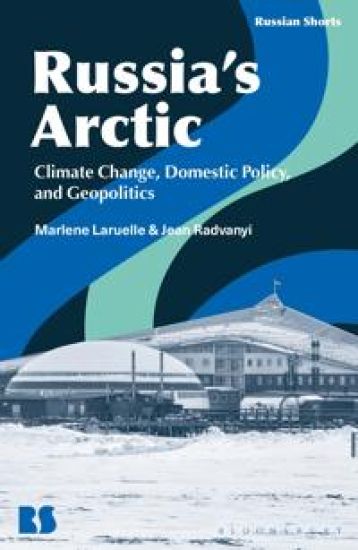
This book provides a comprehensive overview of Russia’s Arctic policies since the 2022 war with Ukraine began. Covering geopolitical transformations, domestic evolutions and the role of climate change, it traces how, for around two decades, Russia has renewed its strategic interest in the Arctic region. It reflects on how, with more than half of the circumpolar territories, Russia’s Arctic regions generate between 10 and 15% of Russia's GDP and a quarter of its exports, with the yet-to-be-explored reserves of the Arctic continental shelf also offering immense potential. Russia’s Arctic analyses the growth of hydrocarbon deposits in the far north of Siberia and nearby offshore areas and how this has contributed to the rapid development of the Northern Sea Route. Marlene Laruelle and Jean Radvanyi examine the tremendous long-term importance of the region for Russia, regardless of internal political developments and the state of relations with the West. Long a place for science diplomacy and transborder dialogue, the region has once again become a hotspot for geostrategic tensions and a new interface between an expanded NATO and Russia. While the West is imposing increasingly broad sanctions specifically targeting Arctic hydrocarbon development projects, the Russian government is striving to circumvent or mitigate their effects with countermeasures by relying on their allies, most of whom are Asian. Laruelle and Radvanyi convincingly contend that Russian Arctic development policy must take into account the economic needs of the Russian budget and the geopolitical realities of decoupling from the West and pivoting towards the so-called ‘Global South’. Additionally, it must consider the heavy legacies of the past in terms of population, infrastructure, and pollution, as well as future projections regarding the impact of climate change.
Ideology and Meaning-Making Under the Putin Regime

Ideology and Meaning-Making Under the Putin Regime

Marlene Laruelle

STANFORD UNIVERSITY PRESS
2025
sidottu
Much has been written to try to understand the ideological characteristics of the current Russian government, as well as what is happening inside the mind of Vladimir Putin. Refusing pundits' clichés that depict the Russian regime as either a cynical kleptocracy or the product of Putin's grand Machiavellian designs, Ideology and Meaning-Making under the Putin Regime offers a critical genealogy of ideology in Russia today. Marlene Laruelle provides an innovative, multi-method analysis of the Russian regime's ideological production process and the ways it is operationalized in both domestic and foreign policies. Ideology and Meaning-Making under the Putin Regime reclaims the study of ideology as an unavoidable component of the tools we use to render the world intelligible and represents a significant contribution to the scholarly debate on the interaction between ideas and policy decisions. By placing the current Russian regime into a broader context of different strains of strategic culture, ideological interest groups, and intellectual history, this book gives readers key insights into how the Russo-Ukrainian War became possible and the role ideology played in enabling it.
Ideology and Meaning-Making Under the Putin Regime

Ideology and Meaning-Making Under the Putin Regime

Marlene Laruelle

STANFORD UNIVERSITY PRESS
2025
pokkari

Halvin toimitettuna 38,20 €

Much has been written to try to understand the ideological characteristics of the current Russian government, as well as what is happening inside the mind of Vladimir Putin. Refusing pundits' clichés that depict the Russian regime as either a cynical kleptocracy or the product of Putin's grand Machiavellian designs, Ideology and Meaning-Making under the Putin Regime offers a critical genealogy of ideology in Russia today. Marlene Laruelle provides an innovative, multi-method analysis of the Russian regime's ideological production process and the ways it is operationalized in both domestic and foreign policies. Ideology and Meaning-Making under the Putin Regime reclaims the study of ideology as an unavoidable component of the tools we use to render the world intelligible and represents a significant contribution to the scholarly debate on the interaction between ideas and policy decisions. By placing the current Russian regime into a broader context of different strains of strategic culture, ideological interest groups, and intellectual history, this book gives readers key insights into how the Russo-Ukrainian War became possible and the role ideology played in enabling it.
Russia

Russia

Marlene Laruelle; Jean Radvanyi

BLOOMSBURY PUBLISHING PLC
2023
nidottu
Russia inspires fear. For decades, American presidents viewed the Soviet Union as an “evil empire,” and now, the Ukrainian crisis has added a new chapter to this narrative inherited from the Cold War. Russia’s behavior is regarded with distrust and its “nuisance power” arouses frustration. The country’s image has not been so negative since the collapse of the Soviet Union. But at the same time—and this is a key point of this book—Russia is fearful, too. Thirty years after the end of the Soviet Union, multiple ghosts haunt the country, its elites, and its society, from concern over demographic and economic decline to worry about the country’s vulnerability to external intervention, reviving the old notion of Russia as a “besieged fortress.” Opened up practically overnight under President Boris Yeltsin, the country had to deal with a rapid and violent globalization. Faced with both a West that emerged victorious from the Cold War and a shockingly dynamic China, Russia constantly questions its identity and the notion that its fate is to bridge East and West. Vacillating between reformist aspirations and a fear of liberal society, which is often portrayed as amoral and perverse, the country, and certainly its leader Vladamir Putin, sometimes seems tempted to take refuge in a new isolation. This book is more than timely: no other book offers a comprehensive overview of Russia’s fears and challenges that could help the American public to understand how the country deals with its own issues and how this influences Russia’s foreign policy, including the ongoing war in Ukraine. This in-out aspect is critical to understand the country’s international stance and therefore directly US policy and security.
Russia

Russia

Marlene Laruelle; Jean Radvanyi

BLOOMSBURY PUBLISHING PLC
2023
sidottu
Russia inspires fear. For decades, American presidents viewed the Soviet Union as an “evil empire,” and now, the Ukrainian crisis has added a new chapter to this narrative inherited from the Cold War. Russia’s behavior is regarded with distrust and its “nuisance power” arouses frustration. The country’s image has not been so negative since the collapse of the Soviet Union. But at the same time—and this is a key point of this book—Russia is fearful, too. Thirty years after the end of the Soviet Union, multiple ghosts haunt the country, its elites, and its society, from concern over demographic and economic decline to worry about the country’s vulnerability to external intervention, reviving the old notion of Russia as a “besieged fortress.” Opened up practically overnight under President Boris Yeltsin, the country had to deal with a rapid and violent globalization. Faced with both a West that emerged victorious from the Cold War and a shockingly dynamic China, Russia constantly questions its identity and the notion that its fate is to bridge East and West. Vacillating between reformist aspirations and a fear of liberal society, which is often portrayed as amoral and perverse, the country, and certainly its leader Vladamir Putin, sometimes seems tempted to take refuge in a new isolation. This book is more than timely: no other book offers a comprehensive overview of Russia’s fears and challenges that could help the American public to understand how the country deals with its own issues and how this influences Russia’s foreign policy, including the ongoing war in Ukraine. This in-out aspect is critical to understand the country’s international stance and therefore directly US policy and security.
Memory Politics and the Russian Civil War

Memory Politics and the Russian Civil War

Marlene Laruelle; Margarita Karnysheva

Bloomsbury Academic
2020
sidottu
In examining the re-emergence of Russia's White Movement, Memory Politics and the Russian Civil War gets to the heart of the rich 20th-century memory debates going on in Putin’s Russia today. The Kremlin has been giving preference to a Soviet-lite nostalgia that denounces the 1917 Bolshevik revolution but celebrates the birth of a powerful Soviet Union able to bring the country to the forefront of the international scene after the victory in World War II. Yet in parallel, another historical narrative has gradually consolidated on the Russian public scene, one that favours the opposite camp, namely the White movement and the pro-tsarist groups defeated in the early 1920s. This book offers the first comprehensive exploration of this ‘White Revenge’, looking at the different actors who promote a White and pro-Romanov rehabilitation agenda in the political, ideological and cultural arenas and what this historical agenda might mean for Russia, both today and tomorrow.
Memory Politics and the Russian Civil War

Memory Politics and the Russian Civil War

Marlene Laruelle; Margarita Karnysheva

Bloomsbury Academic
2020
nidottu
In examining the re-emergence of Russia's White Movement, Memory Politics and the Russian Civil War gets to the heart of the rich 20th-century memory debates going on in Putin’s Russia today. The Kremlin has been giving preference to a Soviet-lite nostalgia that denounces the 1917 Bolshevik revolution but celebrates the birth of a powerful Soviet Union able to bring the country to the forefront of the international scene after the victory in World War II. Yet in parallel, another historical narrative has gradually consolidated on the Russian public scene, one that favours the opposite camp, namely the White movement and the pro-tsarist groups defeated in the early 1920s. This book offers the first comprehensive exploration of this ‘White Revenge’, looking at the different actors who promote a White and pro-Romanov rehabilitation agenda in the political, ideological and cultural arenas and what this historical agenda might mean for Russia, both today and tomorrow.
Russian Nationalism

Russian Nationalism

Marlene Laruelle

Routledge
2020
nidottu
This book, by one of the foremost authorities on the subject, explores the complex nature of Russian nationalism. It examines nationalism as a multilayered and multifaceted repertoire displayed by a myriad of actors. It considers nationalism as various concepts and ideas emphasizing Russia’s distinctive national character, based on the country’s geography, history, Orthodoxy, and Soviet technological advances. It analyzes the ideologies of Russia’s ultra-nationalist and far-right groups, explores the use of nationalism in the conflict with Ukraine and the annexation of Crimea, and discusses how Putin’s political opponents, including Alexei Navalny, make use of nationalism. Overall the book provides a rich analysis of a key force which is profoundly affecting political and societal developments both inside Russia and beyond.
Russian Nationalism

Russian Nationalism

Marlene Laruelle

Routledge
2018
sidottu
This book, by one of the foremost authorities on the subject, explores the complex nature of Russian nationalism. It examines nationalism as a multilayered and multifaceted repertoire displayed by a myriad of actors. It considers nationalism as various concepts and ideas emphasizing Russia’s distinctive national character, based on the country’s geography, history, Orthodoxy, and Soviet technological advances. It analyzes the ideologies of Russia’s ultra-nationalist and far-right groups, explores the use of nationalism in the conflict with Ukraine and the annexation of Crimea, and discusses how Putin’s political opponents, including Alexei Navalny, make use of nationalism. Overall the book provides a rich analysis of a key force which is profoundly affecting political and societal developments both inside Russia and beyond.
Understanding Russia

Understanding Russia

Marlene Laruelle; Jean Radvanyi

Rowman Littlefield
2018
sidottu
This timely book provides a balanced and comprehensive overview of the geographical, historical, political, cultural, and geostrategic factors that drive Russia today. Russia has long inspired fear in the West, but as the authors argue, Russia is fearful as well. Three decades after the transformations launched by perestroika, multiple ghosts haunt both Russian elites and ordinary citizens, ranging from concerns about territorial challenges, societal transformations, and economic decline to worries about the country’s vulnerability to external intervention. Faced with a West that emerged victorious from the Cold War, a shockingly dynamic China, and former Soviet republics claiming their right to emancipate themselves from Moscow’s stranglehold, Russia is constantly questioning its identity, its development path, and its role on the international scene. The country hesitates between two strategies: take refuge in a new isolation and revive the old notion of being a “besieged fortress,” or replay the messianic myth of a Third Rome, the last bastion of Christian values in the face of a decadent West. Explaining Russia’s perspective, Marlene Laruelle and Jean Radvanyi offers a much-needed analysis that will help readers understand how the country deals with its domestic issues and how these influence Russian foreign policy.
Understanding Russia

Understanding Russia

Marlene Laruelle; Jean Radvanyi

Rowman Littlefield
2018
nidottu
This timely book provides a balanced and comprehensive overview of the geographical, historical, political, cultural, and geostrategic factors that drive Russia today. Russia has long inspired fear in the West, but as the authors argue, Russia is fearful as well. Three decades after the transformations launched by perestroika, multiple ghosts haunt both Russian elites and ordinary citizens, ranging from concerns about territorial challenges, societal transformations, and economic decline to worries about the country’s vulnerability to external intervention. Faced with a West that emerged victorious from the Cold War, a shockingly dynamic China, and former Soviet republics claiming their right to emancipate themselves from Moscow’s stranglehold, Russia is constantly questioning its identity, its development path, and its role on the international scene. The country hesitates between two strategies: take refuge in a new isolation and revive the old notion of being a “besieged fortress,” or replay the messianic myth of a Third Rome, the last bastion of Christian values in the face of a decadent West. Explaining Russia’s perspective, Marlene Laruelle and Jean Radvanyi offers a much-needed analysis that will help readers understand how the country deals with its domestic issues and how these influence Russian foreign policy.
Mass Media in the Post-Soviet World

Mass Media in the Post-Soviet World

Marlene Laruelle; Peter Rollberg

ibidem-Verlag, Jessica Haunschild u Christian Schon
2018
nidottu
This collection covers the major trends of the media environment of the post-Communist world and their recent development, with special focus on Russia and the post-Soviet space. The term 'media environment' covers not just traditional print and electronic media, but new media as well, and ranges from the political to entertainment and various artistic spheres. What role do market forces play in the process of media democratization, and how do state structures regulate, suppress, or use capitalism toward their own gain? What degree of informational pluralism has been achieved in the newly independent republics? What are the prospects for transparency and the participation of civil society in Russian and Eurasian media? To what degree do trends in post-Communist media reflect global trends? Is there a worldwide convergence with regard to both media formats and political messaging? Western observers usually pay their keenest attention to the role of media in Russia and Eurasia during national elections. While this is a valid focus, the present volume, with contributions by Luca Anceschi, Jonathan Becker, Lee B. Becker, Michael Cecire, Marta Dyczok, Nicola Ying Fry, Navbahor Imamova, Azamat Junisbai, Barbara Junisbai, Kornely Kakachia, Maria Lipman, Oleg Manaev, Marintha Miles, Olena Nikolayenko, Sarah Oates, Tamara Pataraia, Elisabeth Schimpfossl, Abdulfattoh Shafiev, Jack Snyder, Tudor Vlad, and Ilya Yablokov, aims at understanding the deeper overall 'media philosophies' that characterize post-Soviet media systems and environments, and the type of identity formation that they are promoting.
The European Union in a Reconnecting Eurasia

The European Union in a Reconnecting Eurasia

Marlene Laruelle

Centre for Strategic International Studies,U.S.
2016
nidottu
The European Union in a Reconnecting Eurasia examines the full scope of EU interests in the South Caucasus and Central Asia and analyzes the broad outlines of EU engagement over the coming years. It is part of a six-part CSIS series, “Eurasia from the Outside In,” which includes studies focusing on Turkey, the European Union, Iran, India, Russia, and China.