Kirjojen hintavertailu – 12 859 828 kirjaa ja 27 kauppaa

Kirjailija

Marta Harnecker

Kirjat ja teokset yhdessä paikassa: 4 kirjaa, julkaisuja vuosilta 2005–2019, suosituimpiin kuuluu Planning from Below. Vertaile teosten hintoja ja tarkista saatavuus suomalaisista kirjakaupoista.

4 kirjaa

Kirjojen julkaisuvuodet: 2005–2019.

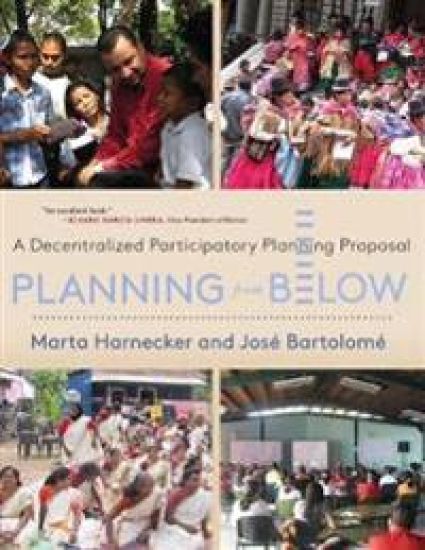
Planning from Below

Planning from Below

Marta Harnecker; Jose Bartolome

Monthly Review Press,U.S.
2019
pokkari
A simple and revolutionary toolbox to help any group create an actual and functioning democracy In this book, Marta Harnecker, with Spanish economist Jose Bartolome, shares some of her wisdom on how communities everywhere can gain empowerment. For, when impoverished people became involved in the planning process, they no longer feel like beggars demanding solutions from the state; they become the creators of their own destiny. Set out in two parts; this book first demonstrates the importance of community participants working outside a hierarchy, to allow as much decentralization as possible. The second part of the book centers on the methodology of this process: the various tasks taken on by participants and how, in planning processes over years, they are carried out.

Planning from Below

Planning from Below

Marta Harnecker; Jose Bartolome

Monthly Review Press,U.S.
2019
sidottu
A simple and revolutionary toolbox to help any group create an actual and functioning democracyIn this book, Marta Harnecker, with Spanish economist Jose Bartolome, shares some of her wisdom on how communities everywhere can gain empowerment. For, when impoverished people became involved in the planning process, they no longer feel like beggars demanding solutions from the state; they become the creators of their own destiny. Set out in two parts; this book first demonstrates the importance of community participants working outside a hierarchy, to allow as much decentralization as possible. The second part of the book centers on the methodology of this process: the various tasks taken on by participants and how, in planning processes over years, they are carried out.

A World to Build

A World to Build

Marta Harnecker

Monthly Review Press,U.S.
2015
sidottu
Over the last few decades Marta Harnecker has emerged as one of Latin America's most incisive socialist thinkers. In A World to Build, she grapples with the question that has bedeviled every movement for radical social change: how do you construct a new world within the framework of the old? Harnecker draws on lessons from socialist movements in Latin America, especially Venezuela, where she served as an advisor to the Chavez administration and was a director of the Centro Internacional Miranda. A World to Build begins with the struggle for socialism today. Harnecker offers a useful overview of the changing political map in Latin America, examining the trajectories of several progressive Latin American governments as they work to develop alternative models to capitalism. She combines analysis of concrete events with a refined theoretical understanding of grassroots democracy, the state, and the barriers imposed by capital. For Harnecker, twenty-first century socialism is a historical process as well as a theoretical project, one that requires imagination no less than courage. She is a lucid guide to the movements that are fighting, right now, to build a better world, and an important voice for those who wish to follow that path.
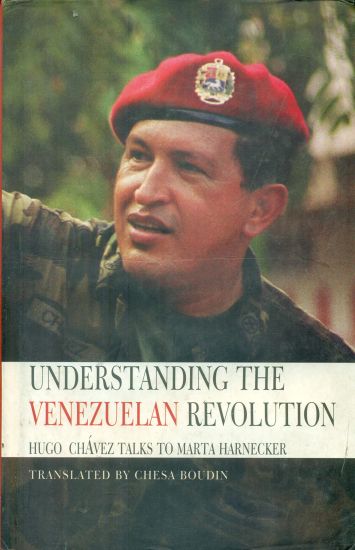
Understanding the Venezuelan Revolution

Understanding the Venezuelan Revolution

Hugo Chavez; Marta Harnecker

MONTHLY REVIEW PRESS,U.S.
2005
sidottu
Marta Harnecker's interviews with Hugo Chavez began soon after one of the most dramatic moments of Chavez's presidency--the failed coup of April 2002, which ended with Chavez restored to power by a massive popular movement of protest and resistance. In the aftermath of the failed coup, Chavez talks to Harnecker about the formation of his political ideas, his aspirations for Venezuela, its domestic and international policies, problems of political organization, relations with social movements in other countries, and more, constantly relating these to concrete events and to strategies for change. The exchange between Harnecker and Chavez--sometimes reflective, sometimes anecdotal, always characterized by their passionate commitment to the struggles of the oppressed--brings to light the process of thought and action behind the public pronouncements and policies of state. The interviews are supplemented by extracts from Chavez's most recent pronouncements on the ongoing transformation in Venezuela and Latin America, an analysis by Harnecker of the role of the military, and a chronology. Chavez has become a symbol of defiance of U. S. imperialism throughout Latin America. His importance for the future of the region makes this book essential reading.