Kirjojen hintavertailu – 12 859 829 kirjaa ja 27 kauppaa

Kirjailija

Martha K. Huggins

Kirjat ja teokset yhdessä paikassa: 3 kirjaa, julkaisuja vuosilta 1998–2002, suosituimpiin kuuluu Political Policing. Vertaile teosten hintoja ja tarkista saatavuus suomalaisista kirjakaupoista.

3 kirjaa

Kirjojen julkaisuvuodet: 1998–2002.

Violence Workers

Violence Workers

Martha K. Huggins; Mika Haritos-Fatouros; Philip G. Zimbardo

University of California Press
2002
pokkari
Of the twenty-three Brazilian policemen interviewed in depth for this landmark study, fourteen were direct perpetrators of torture and murder during the three decades that included the 1964-1985 military regime. These "violence workers" and the other group of "atrocity facilitators" who had not, or claimed they had not, participated directly in the violence, help answer questions that haunt today's world: Why and how are ordinary men transformed into state torturers and murderers? How do atrocity perpetrators explain and justify their violence? What is the impact of their murderous deeds--on them, on their victims, and on society? What memories of their atrocities do they admit and which become public history?

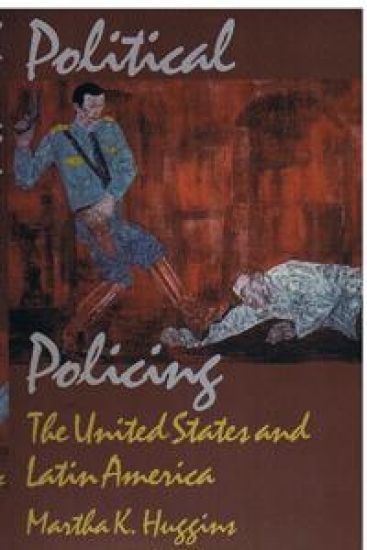
Political Policing

Political Policing

Martha K. Huggins

Duke University Press
1998
sidottu
Reconstructing eighty years of history, Political Policing examines the nature and consequences of U. S. police training in Brazil and other Latin American countries. With data from a wide range of primary sources, including previously classified U. S. and Brazilian government documents, Martha K. Huggins uncovers how U. S. strategies to gain political control through police assistance-in the name of hemispheric and national security-has spawned torture, murder, and death squads in Latin America. After a historical review of policing in the United States and Europe over the past century, Huggins reveals how the United States, in order to protect and strengthen its position in the world system, has used police assistance to establish intelligence and other social control infrastructures in foreign countries. The U. S.-encouraged centralization of Latin American internal security systems, Huggins claims, has led to the militarization of the police and, in turn, to an increase in state-sanctioned violence. Furthermore, Political Policing shows how a domestic police force-when trained by another government-can lose its power over legitimate crime as it becomes a tool for the international interests of the nation that trains it. Pointing to U. S. responsibility for violations of human rights by foreign security forces, Political Policing will provoke discussion among those interested in international relations, criminal justice, human rights, and the sociology of policing.
Political Policing

Political Policing

Martha K. Huggins

Duke University Press
1998
pokkari
Reconstructing eighty years of history, Political Policing examines the nature and consequences of U. S. police training in Brazil and other Latin American countries. With data from a wide range of primary sources, including previously classified U. S. and Brazilian government documents, Martha K. Huggins uncovers how U. S. strategies to gain political control through police assistance-in the name of hemispheric and national security-has spawned torture, murder, and death squads in Latin America. After a historical review of policing in the United States and Europe over the past century, Huggins reveals how the United States, in order to protect and strengthen its position in the world system, has used police assistance to establish intelligence and other social control infrastructures in foreign countries. The U. S.-encouraged centralization of Latin American internal security systems, Huggins claims, has led to the militarization of the police and, in turn, to an increase in state-sanctioned violence. Furthermore, Political Policing shows how a domestic police force-when trained by another government-can lose its power over legitimate crime as it becomes a tool for the international interests of the nation that trains it. Pointing to U. S. responsibility for violations of human rights by foreign security forces, Political Policing will provoke discussion among those interested in international relations, criminal justice, human rights, and the sociology of policing.