Kirjojen hintavertailu – 12 903 725 kirjaa ja 27 kauppaa

Kirjailija

Marthe Hesselmans

Kirjat ja teokset yhdessä paikassa: 4 kirjaa, julkaisuja vuosilta 2017–2025, suosituimpiin kuuluu Racial Integration in the Church of Apartheid. Vertaile teosten hintoja ja tarkista saatavuus suomalaisista kirjakaupoista.

4 kirjaa

Kirjojen julkaisuvuodet: 2017–2025.

Good Business

Good Business

Marthe Hesselmans; Bart Stellinga; Ramy El-Dardiry; Danique François; Catrien Bijleveld

Springer International Publishing AG
2025
sidottu
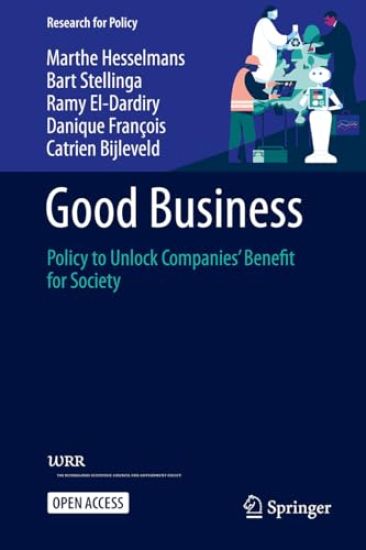
This open access book shows how governments can motivate companies to make a positive impact on society and why this is necessary in light of today’s pressing social, economic and environmental challenges and transitions. It shows obstacles companies face in conducting socially responsible business. Focusing on government-business relations in the Netherlands, the book also exposes key policy bottlenecks: the tendency of the Dutch government to hold on to the status quo and shield incumbent firms through tax breaks and lax enforcement. There is a real risk of policies that pamper business: it hampers companies that offer societal innovations for instance for health, education or the labour market. We also show how policies can better capitalise on the innovative qualities of entrepreneurship. Effective government policy makes it worthwhile for companies to alter their business model so that their products, services and production processes benefit society. Our recommendations address the role of government, consumers, financiers and companies themselves. While this work focuses on the Netherlands, it tackles questions that countries face worldwide on how to minimise harmful business conduct and maximise good business solutions. This makes the book broadly relevant to policy makers, business leaders and researchers grappling with the impact of business on society today.
Racial Integration in the Church of Apartheid
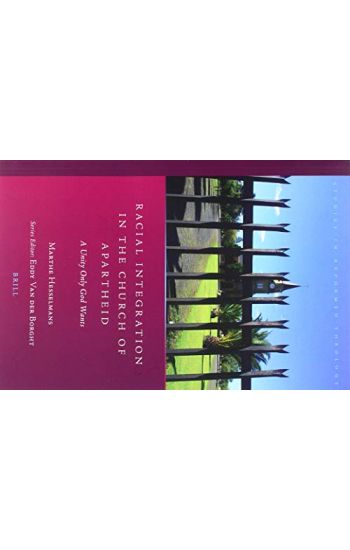
In Racial Integration in the Church of Apartheid Marthe Hesselmans uncovers the post-apartheid transformation of South Africa’s Dutch Reformed Church. This church once constituted the religious pillar of the Afrikaner apartheid regime (1948-1994). Today, it seeks to unite the communities it long segregated into one multiracial institution. Few believe this will succeed. A close look inside congregations reveals unexpected stories of reconciliation though. Where South Africans realize they need each other to survive, faith offers common ground – albeit a feeble one. They show the potential, but also the limits of faith communities untangling entrenched national and racial affiliations. Linking South Africa’s post-apartheid transition to religious-nationalist movements worldwide, Hesselmans offers a unique perspective on religion as source of division and healing.
A Theology of Liberation

A Theology of Liberation

Marthe Hesselmans

Macat International Limited
2017
sidottu
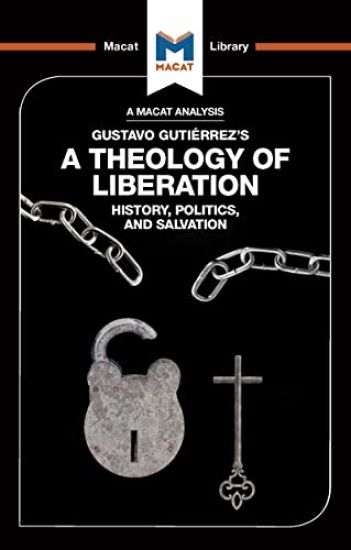
Peruvian priest Gustavo Gutiérrez wanted to solve the problem of how the church could conduct itself to improve the lives of the poor, while consistently positioning itself as politically neutral. Despite being a deeply religious man, Gutiérrez was extremely troubled by the lukewarm way in which Christians in general, and the Catholic Church in particular, acknowledged and supported the poor. In A Theology of Liberation, he asked what he knew was an awkward question, and came to an awkward answer: the Church cannot separate itself from economic and political realities. Jesus showed his love for the poor in practical ways – healing the sick, feeding the hungry, liberating the oppressed. His example showed Gutierrez that economic, political, social and spiritual development are all deeply connected. His problem-solving prowess then led him to conclude that the church had to become politically active if it was to confront poverty and oppression across the world. For Gutierrez, the lives of the poor and oppressed directly reflect the divine life of God.
An Analysis of Gustavo Gutiérrez's A Theology of Liberation

An Analysis of Gustavo Gutiérrez's A Theology of Liberation

Marthe Hesselmans

Macat International Limited
2017
nidottu
Peruvian priest Gustavo Gutiérrez wanted to solve the problem of how the church could conduct itself to improve the lives of the poor, while consistently positioning itself as politically neutral. Despite being a deeply religious man, Gutiérrez was extremely troubled by the lukewarm way in which Christians in general, and the Catholic Church in particular, acknowledged and supported the poor. In A Theology of Liberation, he asked what he knew was an awkward question, and came to an awkward answer: the Church cannot separate itself from economic and political realities. Jesus showed his love for the poor in practical ways – healing the sick, feeding the hungry, liberating the oppressed. His example showed Gutierrez that economic, political, social and spiritual development are all deeply connected. His problem-solving prowess then led him to conclude that the church had to become politically active if it was to confront poverty and oppression across the world. For Gutierrez, the lives of the poor and oppressed directly reflect the divine life of God.