Kirjojen hintavertailu – 12 903 725 kirjaa ja 27 kauppaa

Kirjailija

Martijn Konings

Kirjat ja teokset yhdessä paikassa: 13 kirjaa, julkaisuja vuosilta 2011–2024, suosituimpiin kuuluu Capital and Time. Vertaile teosten hintoja ja tarkista saatavuus suomalaisista kirjakaupoista.

13 kirjaa

Kirjojen julkaisuvuodet: 2011–2024.

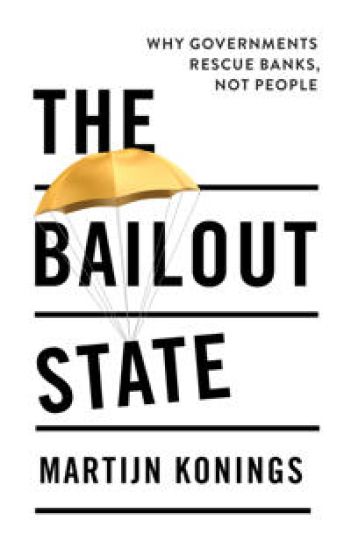
The Bailout State

The Bailout State

Martijn Konings

JOHN WILEY AND SONS LTD
2024
nidottu
How did we end up in a world where social programs are routinely cut in the name of market discipline and fiscal austerity, yet large banks get bailed out whenever they get into trouble? In The Bailout State, Martijn Konings exposes the inner workings of this sprawling infrastructure of government guarantees. Backstopping financial markets and securing banks’ balance sheets, this contemporary Leviathan manages the inflationary pressures that its generosity produces by tightening the financial screws on the rest of the population. To a large extent, the bailout state was built by progressives seeking to buttress the institutions of the early postwar period. The resulting tide of capital gains fostered an asset-centered politics that experienced its heyday in the nineties. But ever since the financial crisis of 2007-08, promises of inclusive economic growth have looked increasingly thin. A colossus locked in place, the bailout state disburses its benefits to a rapidly shrinking group of property owners. Against the backdrop of a ferocious post-pandemic turn to anti-inflationary policy, the only remaining way to exit the logic of the bailout, Konings argues, is to challenge the monetary drivers at the heart of capitalist society.
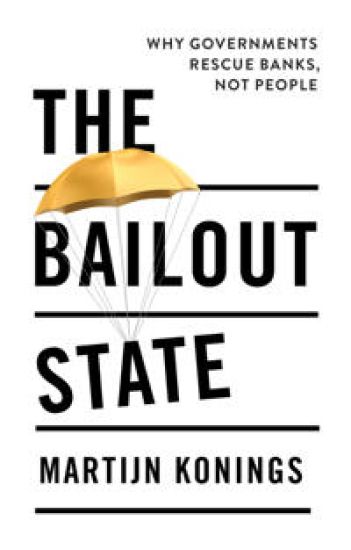
The Bailout State

The Bailout State

Martijn Konings

JOHN WILEY AND SONS LTD
2024
sidottu
How did we end up in a world where social programs are routinely cut in the name of market discipline and fiscal austerity, yet large banks get bailed out whenever they get into trouble? In The Bailout State, Martijn Konings exposes the inner workings of this sprawling infrastructure of government guarantees. Backstopping financial markets and securing banks’ balance sheets, this contemporary Leviathan manages the inflationary pressures that its generosity produces by tightening the financial screws on the rest of the population. To a large extent, the bailout state was built by progressives seeking to buttress the institutions of the early postwar period. The resulting tide of capital gains fostered an asset-centered politics that experienced its heyday in the nineties. But ever since the financial crisis of 2007-08, promises of inclusive economic growth have looked increasingly thin. A colossus locked in place, the bailout state disburses its benefits to a rapidly shrinking group of property owners. Against the backdrop of a ferocious post-pandemic turn to anti-inflationary policy, the only remaining way to exit the logic of the bailout, Konings argues, is to challenge the monetary drivers at the heart of capitalist society.
The Asset Economy

The Asset Economy

Lisa Adkins; Melinda Cooper; Martijn Konings

Polity Press
2020
nidottu
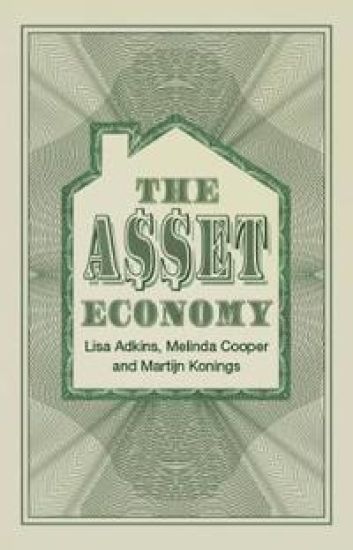
Rising inequality is the defining feature of our age. With the lion’s share of wealth growth going to the top, for a growing percentage of society a middle-class existence is out of reach. What exactly are the economic shifts that have driven the social transformations taking place in Anglo-capitalist societies? In this timely book, Lisa Adkins, Melinda Cooper and Martijn Konings argue that the rise of the asset economy has produced a new logic of inequality. Several decades of property inflation have seen asset ownership overshadow employment as a determinant of class position. Exploring the impact of generational dynamics in this new class landscape, the book advances an original perspective on a range of phenomena that are widely debated but poorly understood – including the growth of wealth inequalities and precarity, the dynamics of urban property inflation, changes in fiscal and monetary policy and the predicament of the “millennial” generation. Despite widespread awareness of the harmful effects of Quantitative Easing and similar asset-supporting measures, we appear to have entered an era of policy “lock-in” that is responsible for a growing disconnect between popular expectations and institutional priorities. The resulting polarization underlies many of the volatile dynamics and rapidly shifting alliances that dominate today’s headlines.
The Asset Economy

The Asset Economy

Lisa Adkins; Melinda Cooper; Martijn Konings

Polity Press
2020
sidottu
Rising inequality is the defining feature of our age. With the lion’s share of wealth growth going to the top, for a growing percentage of society a middle-class existence is out of reach. What exactly are the economic shifts that have driven the social transformations taking place in Anglo-capitalist societies? In this timely book, Lisa Adkins, Melinda Cooper and Martijn Konings argue that the rise of the asset economy has produced a new logic of inequality. Several decades of property inflation have seen asset ownership overshadow employment as a determinant of class position. Exploring the impact of generational dynamics in this new class landscape, the book advances an original perspective on a range of phenomena that are widely debated but poorly understood – including the growth of wealth inequalities and precarity, the dynamics of urban property inflation, changes in fiscal and monetary policy and the predicament of the “millennial” generation. Despite widespread awareness of the harmful effects of Quantitative Easing and similar asset-supporting measures, we appear to have entered an era of policy “lock-in” that is responsible for a growing disconnect between popular expectations and institutional priorities. The resulting polarization underlies many of the volatile dynamics and rapidly shifting alliances that dominate today’s headlines.
Capital and Time

Capital and Time

Martijn Konings

STANFORD UNIVERSITY PRESS
2018
sidottu
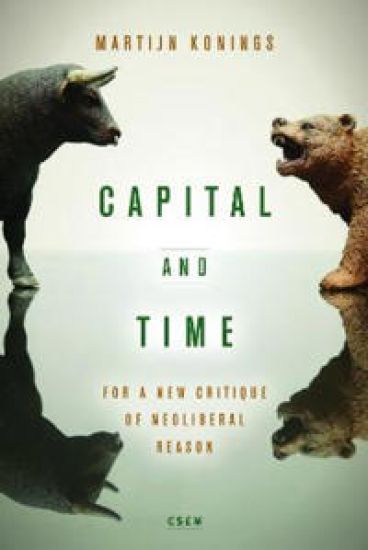
Critics of capitalist finance tend to focus on its speculative character. Our financial markets, they lament, encourage irresponsible bets on the future that reflect no real underlying value. Why is it, then, that opportunities for speculative investment continue to proliferate in the wake of major economic crises? To make sense of this, Capital and Time advances an understanding of economy as a process whereby patterns of order emerge out of the interaction of speculative investments. Progressive critics have assumed that the state occupies a neutral, external position from which it can step in to constrain speculative behaviors. On the contrary, Martijn Konings argues, the state has always been deeply implicated in the speculative dynamics of economic life. Through these insights, he offers a new interpretation of both the economic problems that emerged during the 1970s and the way that neoliberalism responded to them. Neoliberalism's strength derives from its intuition that there is no position that transcends the secular logic of risk, and from its insistence that individuals actively engage that logic. Not only is the critique of speculation misleading as a general approach; it is also incapable of recognizing how American capitalism has come to embrace speculation and has thus been able to generate new kinds of order and governance.
Capital and Time

Capital and Time

Martijn Konings

Stanford University Press
2018
pokkari
Critics of capitalist finance tend to focus on its speculative character. Our financial markets, they lament, encourage irresponsible bets on the future that reflect no real underlying value. Why is it, then, that opportunities for speculative investment continue to proliferate in the wake of major economic crises? To make sense of this, Capital and Time advances an understanding of economy as a process whereby patterns of order emerge out of the interaction of speculative investments. Progressive critics have assumed that the state occupies a neutral, external position from which it can step in to constrain speculative behaviors. On the contrary, Martijn Konings argues, the state has always been deeply implicated in the speculative dynamics of economic life. Through these insights, he offers a new interpretation of both the economic problems that emerged during the 1970s and the way that neoliberalism responded to them. Neoliberalism's strength derives from its intuition that there is no position that transcends the secular logic of risk, and from its insistence that individuals actively engage that logic. Not only is the critique of speculation misleading as a general approach; it is also incapable of recognizing how American capitalism has come to embrace speculation and has thus been able to generate new kinds of order and governance.
Neoliberalism

Neoliberalism

Damien Cahill; Martijn Konings

Polity Press
2017
nidottu
For over three decades neoliberalism has been the dominant economic ideology. While it may have emerged relatively unscathed from the global financial crisis of 2007-8, neoliberalism is now - more than ever - under scrutiny from critics who argue that it has failed to live up to its promises, creating instead an increasingly unequal and insecure world. This book offers a nuanced and probing analysis of the meaning and practical application of neoliberalism today, separating myth from reality. Drawing on examples such as the growth of finance, the role of corporate power and the rise of workfare, the book advances a balanced but distinctive perspective on neoliberalism as involving the interaction of ideas, material economic change and political transformations. It interrogates claims about the impending death of neoliberalism and considers the sources of its resilience in the current climate of political disenchantment and economic austerity. Clearly and accessibly written, this book will be a valuable resource for students and scholars across the social sciences.
Neoliberalism

Neoliberalism

Damien Cahill; Martijn Konings

Polity Press
2017
sidottu
For over three decades neoliberalism has been the dominant economic ideology. While it may have emerged relatively unscathed from the global financial crisis of 2007-8, neoliberalism is now - more than ever - under scrutiny from critics who argue that it has failed to live up to its promises, creating instead an increasingly unequal and insecure world. This book offers a nuanced and probing analysis of the meaning and practical application of neoliberalism today, separating myth from reality. Drawing on examples such as the growth of finance, the role of corporate power and the rise of workfare, the book advances a balanced but distinctive perspective on neoliberalism as involving the interaction of ideas, material economic change and political transformations. It interrogates claims about the impending death of neoliberalism and considers the sources of its resilience in the current climate of political disenchantment and economic austerity. Clearly and accessibly written, this book will be a valuable resource for students and scholars across the social sciences.
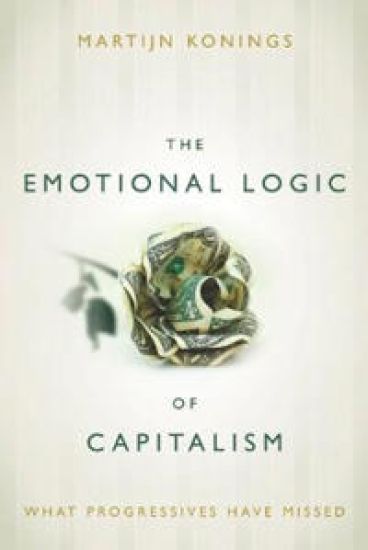
The Emotional Logic of Capitalism

The Emotional Logic of Capitalism

Martijn Konings

Stanford University Press
2015
sidottu
The capitalist market, progressives bemoan, is a cold monster: it disrupts social bonds, erodes emotional attachments, and imposes an abstract utilitarian rationality. But what if such hallowed critiques are completely misleading? This book argues that the production of new sources of faith and enchantment is crucial to the dynamics of the capitalist economy. Distinctively secular patterns of attraction and attachment give modern institutions a binding force that was not available to more traditional forms of rule. Elaborating his alternative approach through an engagement with the semiotics of money and the genealogy of economy, Martijn Konings uncovers capitalism's emotional and theological content in order to understand the paradoxical sources of cohesion and legitimacy that it commands. In developing this perspective, he draws on pragmatist thought to rework and revitalize the Marxist critique of capitalism.
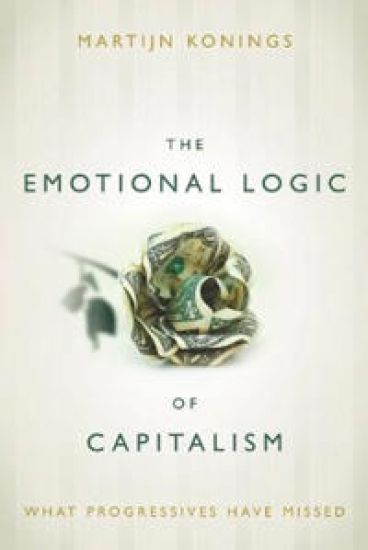
The Emotional Logic of Capitalism

The Emotional Logic of Capitalism

Martijn Konings

Stanford University Press
2015
pokkari
The capitalist market, progressives bemoan, is a cold monster: it disrupts social bonds, erodes emotional attachments, and imposes an abstract utilitarian rationality. But what if such hallowed critiques are completely misleading? This book argues that the production of new sources of faith and enchantment is crucial to the dynamics of the capitalist economy. Distinctively secular patterns of attraction and attachment give modern institutions a binding force that was not available to more traditional forms of rule. Elaborating his alternative approach through an engagement with the semiotics of money and the genealogy of economy, Martijn Konings uncovers capitalism's emotional and theological content in order to understand the paradoxical sources of cohesion and legitimacy that it commands. In developing this perspective, he draws on pragmatist thought to rework and revitalize the Marxist critique of capitalism.
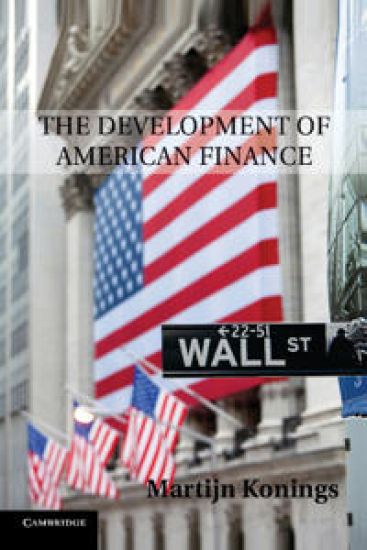
The Development of American Finance

The Development of American Finance

Martijn Konings

Cambridge University Press
2014
pokkari
Since the 1960s, scholars and other commentators have frequently announced the imminent decline of American financial power: excessive speculation and debt are believed to have undermined the long-term basis of a stable US-led financial order. But the American financial system has repeatedly shown itself to be more resilient than such assessments suggest. This book argues that there is considerable coherence to American finance: far from being a house of cards, it is a proper edifice, built on institutional foundations with points of both strength and weakness. The book examines these foundations through a historical account of their construction: it shows how institutional transformations in the late nineteenth century created a distinctive infrastructure of financial relations and proceeds to trace the contradiction-ridden expansion of this system during the twentieth century as well as its institutional consolidation during the neoliberal era. It concludes with a discussion of the forces of instability that hit at the start of the twenty-first century.
The Development of American Finance

The Development of American Finance

Martijn Konings

Cambridge University Press
2011
sidottu
Since the 1960s, scholars and other commentators have frequently announced the imminent decline of American financial power: excessive speculation and debt are believed to have undermined the long-term basis of a stable US-led financial order. But the American financial system has repeatedly shown itself to be more resilient than such assessments suggest. This book argues that there is considerable coherence to American finance: far from being a house of cards, it is a proper edifice, built on institutional foundations with points of both strength and weakness. The book examines these foundations through a historical account of their construction: it shows how institutional transformations in the late nineteenth century created a distinctive infrastructure of financial relations and proceeds to trace the contradiction-ridden expansion of this system during the twentieth century as well as its institutional consolidation during the neoliberal era. It concludes with a discussion of the forces of instability that hit at the start of the twenty-first century.