Kirjojen hintavertailu – 12 859 819 kirjaa ja 27 kauppaa

Kirjailija

Martin Åberg

Kirjat ja teokset yhdessä paikassa: 4 kirjaa, julkaisuja vuosilta 2003–2023, suosituimpiin kuuluu Swedish & German Liberalism. Vertaile teosten hintoja ja tarkista saatavuus suomalaisista kirjakaupoista.

4 kirjaa

Kirjojen julkaisuvuodet: 2003–2023.

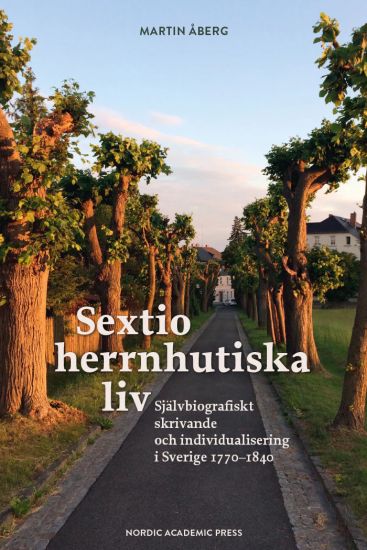
Sextio herrnhutiska liv : självbiografiskt skrivande och individualisering i Sverige 1770–1840
Skomakardottern Helena Appelgren växte upp i frihetstidens Stockholm. Vid slutet av 1760-talet hade hon tjänst i köket hos en av Stockholms herrskapsfamiljer. I det levnadslopp, det vill säga den självbiografi, som hon senare skrev ner kan vi läsa hur hon rycktes med i den herrnhutiska väckelserörelsen Brödraförsamlingen som alltsedan 1730-talet verkat i Sverige. Brödraförsamlingen hade kommit till Sverige från orten Herrnhut i Sachsen, därav benämningen på anhängarna. Väckelsen berörde städernas småfolk och mellanskikt men också landsbygdens befolkningsgrupper och medlemmar ur aristokratin och prästeståndet. De troende hade som praktik att skriva eller diktera sina egna levnadslopp. Texterna som Helena och andra herrnhutare efterlämnat beskriver huvudpersonernas andliga upplevelser och livserfarenheter. Den personligt tillägnade tron spelar en central roll. Levnadsloppen och Brödraförsamlingens människoideal kan emellertid sättas in i ett bredare social- och kulturhistoriskt sammanhang, och herrnhutismen blir därmed möjlig att förstå inte bara som en tidstypisk religiös väckelse. Tillsammans med andra idéströmningar bidrog den till det moderna samhället och till förutsättningarna för vår egen tids individualism.

Social Capital and Democratisation

Social Capital and Democratisation

Martin Åberg; Mikael Sandberg

Routledge
2017
nidottu
Contributing an impressive historical basis for path dependency analysis and the role of social capital in newly established democracies, this book offers a fascinating and ground-breaking analysis of the role of social capital in the democratic context of Eastern Europe. Focusing on Poland and Ukraine, this book fills the literature gaps for integrated empirical and theoretical research with respect to post-Communist democratization, social capital vs. democratization theory, and the case study area of Central and Eastern Europe. Suitable for students from graduate level upwards in Central and Eastern European studies, political theory and history.
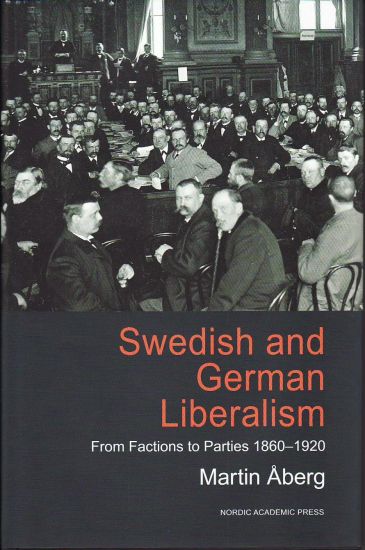
Swedish & German Liberalism

Swedish & German Liberalism

Martin Åberg

Nordic Academic Press
2011
sidottu
At the start of the twentieth century, political parties had the potential to focus grass-roots interest in the development of modern, democratic nation-states. Yet all the new parties were met with suspicion across Europe, particularly among liberals. These popular misgivings and the way the liberals nevertheless managed to build a party are the subject of this book. In this book, historian Martin Åberg argues that because of liberalism's individualistic traits, which left liberals less susceptible to political organisation on a mass basis, party members had to come to an uneasy compromise between individual and collective action. Åberg compares two regions -- Värmland in Sweden and Schleswig-Holstein in Germany -- which historically both had a significant liberal presence. Despite its organisational shortcomings, liberalism in Sweden paved the way for the peaceful democratisation of the state. In Germany, however, liberalism turned conservative, foreshadowing the extreme nationalism and Nazism that was to come. Åberg argues that the peculiarities of organisational behaviour go some way to explain the very different outcomes.
Social Capital and Democratisation

Social Capital and Democratisation

Martin Åberg; Mikael Sandberg

Ashgate Publishing Limited
2003
sidottu
Contributing an impressive historical basis for path dependency analysis and the role of social capital in newly established democracies, this book offers a fascinating and ground-breaking analysis of the role of social capital in the democratic context of Eastern Europe. Focusing on Poland and Ukraine, this book fills the literature gaps for integrated empirical and theoretical research with respect to post-Communist democratization, social capital vs. democratization theory, and the case study area of Central and Eastern Europe. Suitable for students from graduate level upwards in Central and Eastern European studies, political theory and history.