Kirjojen hintavertailu – 12 859 829 kirjaa ja 27 kauppaa

Kirjailija

Martin Caraher

Kirjat ja teokset yhdessä paikassa: 6 kirjaa, julkaisuja vuosilta 2009–2025, suosituimpiin kuuluu UK Food Policy History. Vertaile teosten hintoja ja tarkista saatavuus suomalaisista kirjakaupoista.

6 kirjaa

Kirjojen julkaisuvuodet: 2009–2025.

UK Food Policy History

UK Food Policy History

Martin Caraher; Sinéad Furey

TAYLOR FRANCIS LTD
2025
sidottu
This book provides an overview of the history of food policy in the UK, tracing economic, social and political influences from the 1840s to present day. In order to understand current food policies and the current food system, it is necessary to acknowledge the past influences that have led us to the present. Seeing food policy as a complex web of influences, this book traces food policy development from the period of public health reform during the 1840s, the impact of two world wars, the era of new food choices in the 1950s and 1960s, the beginnings of alternative food movement in the 1970s, 1980s and 1990s, to the modern and postmodern ages of consumer ethics and fair trade. It critically identifies the key influences across the different eras, both direct and indirect and formal and informal, as well as the key actors, and showcases how understanding the socio-political contexts supports our comprehension of food policy development and its adaptation to modern times. Following this roadmap, the book sets out the challenges ahead and discusses ways forward for a pragmatic and effective UK food policy that learns the lessons of the past. This book provides an important introduction to the history of UK food and agricultural policy for students, scholars, policymakers and professionals, as well as those interested in food systems, public health and social policy more widely
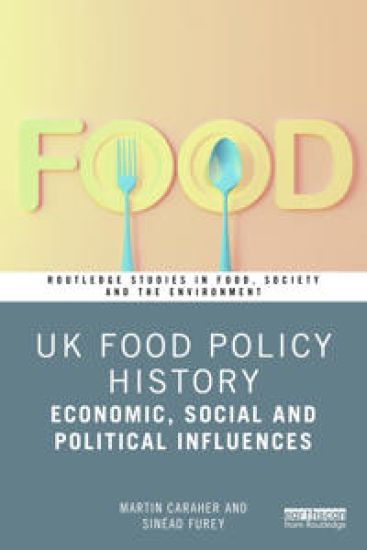
UK Food Policy History

UK Food Policy History

Martin Caraher; Sinéad Furey

TAYLOR FRANCIS LTD
2025
nidottu
This book provides an overview of the history of food policy in the UK, tracing economic, social and political influences from the 1840s to present day. In order to understand current food policies and the current food system, it is necessary to acknowledge the past influences that have led us to the present. Seeing food policy as a complex web of influences, this book traces food policy development from the period of public health reform during the 1840s, the impact of two world wars, the era of new food choices in the 1950s and 1960s, the beginnings of alternative food movement in the 1970s, 1980s and 1990s, to the modern and postmodern ages of consumer ethics and fair trade. It critically identifies the key influences across the different eras, both direct and indirect and formal and informal, as well as the key actors, and showcases how understanding the socio-political contexts supports our comprehension of food policy development and its adaptation to modern times. Following this roadmap, the book sets out the challenges ahead and discusses ways forward for a pragmatic and effective UK food policy that learns the lessons of the past. This book provides an important introduction to the history of UK food and agricultural policy for students, scholars, policymakers and professionals, as well as those interested in food systems, public health and social policy more widely
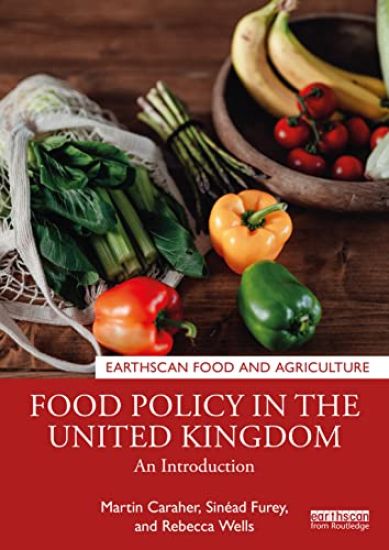
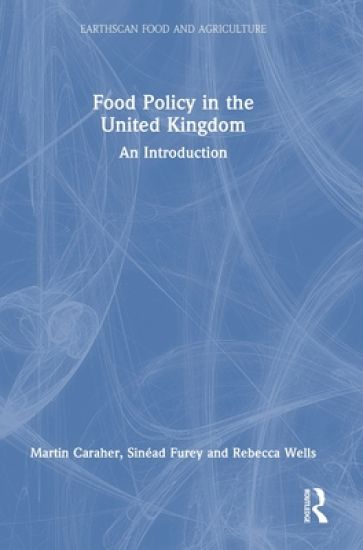
Food Policy in the United Kingdom

Food Policy in the United Kingdom

Martin Caraher; Sinéad Furey; Rebecca Wells

TAYLOR FRANCIS LTD
2023
nidottu
This book provides an introduction to food policy in the United Kingdom, examining policy development, implementation, influences and current issues. The book begins by providing a wide-ranging introduction to food policy in the UK, situating it within wider global debates and establishing key drivers, such as issues related to global citizenship, trade and finance. The use of food control as a policy lever is also discussed and contrasted with alternative approaches based on behaviour change. The book presents an overview of the history of UK food policy, from which there is much to be learned, before moving onto current challenges posed by political instability, both at home and abroad, global pandemics and cost of living crises. Foremost is the need to manage public health, including both malnutrition and obesity, while promoting sustainable and healthy diets, as well as the broader issues around addressing food security and food poverty. The book also examines public sector food initiatives, such as school food and early childhood provisions, and food regulation. As a part of food regulation, chapters examine food scares and food fraud, from chalk in flour to "horsegate". The role of media, marketing and advertising is also considered within a policy perspective. Taking a wider lens, the book also discusses the impact of global food trade and the financialisation of food on food policy in the UK and vice versa. The book is supported by instructor eResources on the Routledge website designed to support student learning as well as provide regular updates on UK food policy developments. The eResources include student activities, group exercises and links to further reading and additional resources. This book serves as a key introduction to UK food and agricultural policy for students, scholars, policymakers and professionals, as well as those interested in food systems, public health and social policy more widely.
Food Policy in the United Kingdom

Food Policy in the United Kingdom

Martin Caraher; Sinéad Furey; Rebecca Wells

TAYLOR FRANCIS LTD
2023
sidottu
This book provides an introduction to food policy in the United Kingdom, examining policy development, implementation, influences and current issues. The book begins by providing a wide-ranging introduction to food policy in the UK, situating it within wider global debates and establishing key drivers, such as issues related to global citizenship, trade and finance. The use of food control as a policy lever is also discussed and contrasted with alternative approaches based on behaviour change. The book presents an overview of the history of UK food policy, from which there is much to be learned, before moving onto current challenges posed by political instability, both at home and abroad, global pandemics and cost of living crises. Foremost is the need to manage public health, including both malnutrition and obesity, while promoting sustainable and healthy diets, as well as the broader issues around addressing food security and food poverty. The book also examines public sector food initiatives, such as school food and early childhood provisions, and food regulation. As a part of food regulation, chapters examine food scares and food fraud, from chalk in flour to "horsegate". The role of media, marketing and advertising is also considered within a policy perspective. Taking a wider lens, the book also discusses the impact of global food trade and the financialisation of food on food policy in the UK and vice versa. The book is supported by instructor eResources on the Routledge website designed to support student learning as well as provide regular updates on UK food policy developments. The eResources include student activities, group exercises and links to further reading and additional resources. This book serves as a key introduction to UK food and agricultural policy for students, scholars, policymakers and professionals, as well as those interested in food systems, public health and social policy more widely.
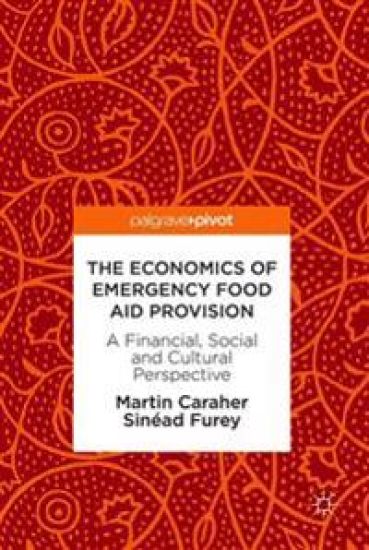
The Economics of Emergency Food Aid Provision

The Economics of Emergency Food Aid Provision

Martin Caraher; Sinéad Furey

Birkhauser Verlag AG
2018
sidottu
This short book reviews the provision of food bank and other emergency food aid provision with a specific focus on the UK, whilst drawing lessons from North America, Brazil and Europe. The authors look at the historical positioning of food aid and the growth of the food aid sector in the UK following the period of austerity 2007-2012, before addressing the causes of food insecurity and concluding that food banks are a symptom of austerity and government inaction which fail to tackle the underlying causes of food poverty. The research is timely, and considers a range of disciplines and practices. This book will appeal to researchers, policy makers and practitioners food economics, welfare economics, public policy, public health, food studies, nutrition, and the wider social sciences.
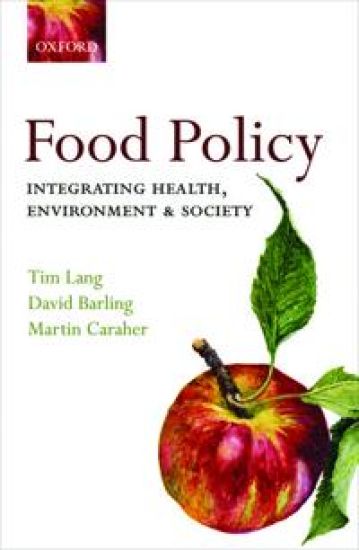
Food Policy

Food Policy

Tim Lang; David Barling; Martin Caraher

Oxford University Press
2009
nidottu
For over half a century, food policy has mapped a path for progress based upon a belief that the right mix of investment, scientific input, and human skills could unleash a surge in productive capacity which would resolve humanity's food-related health and welfare problems. It assumed that more food would yield greater health and happiness by driving down prices, increasing availability, and feeding more mouths. In the 21st century, this policy mix is quietly becoming unstuck. In a world marred by obesity alongside malnutrition, climate change alongside fuel and energy crises, water stress alongside more mouths to feed, and social inequalities alongside unprecedented accumulation of wealth, the old rubric of food policy needs re-evaluation. This book explores the enormity of what the new policy mix must address, taking the approach that food policy must be inextricably linked with public health, environmental damage, and social inequalities to be effective. Written by three authors with differing backgrounds, one in political science, another in environmental health and health promotion, and the third in social psychology, this book reflects the myriad of perspectives essential to a comprehensive view of modern food policy. It attempts to make sense of what is meant by food policy; explores whether the term has any currency in current policy discourse; assesses whether current policies help or hinder what happens; judges whether consensus can triumph in the face of competing bids for understanding; looks at all levels of governance, across the range of actors in the food system, from companies and the state to civil society and science; considers what direction food policies are taking, not just in the UK but internationally; assesses who (and what) gains or loses in the making of these food policies; and identifies a modern framework for judging how good or limited processes of policy-making are. This book provides a major comprehensive review of current and past food policy, thinking and proposing the need for what the authors call an ecological public health approach to food policy. Nothing less will be fit for the 21st century.