Kirjojen hintavertailu – 12 859 819 kirjaa ja 27 kauppaa
Kirjailija
Martin D. Schwartz
Kirjat ja teokset yhdessä paikassa: 11 kirjaa, julkaisuja vuosilta 1997–2026, suosituimpiin kuuluu Skating on Thin Ice. Vertaile teosten hintoja ja tarkista saatavuus suomalaisista kirjakaupoista.
Skating on Thin Ice exposes the culture of toxic masculinity in professional hockey and suggests how sport and society can change the narrative on sexual assault and violence. Why is it that professional sports, and notably hockey, remain a bastion for rape culture and violence against women? What are the conditions that allow a culture of toxic masculinity to persist despite awakenings elsewhere in society? What is the path forward, and how do we make officials, coaches, and athletes accountable? Drawing on decades of award-winning sociological research and sports journalism, Walter S. DeKeseredy, Martin D. Schwartz, and veteran sportswriter Stu Cowan find answers to these questions in Skating on Thin Ice. The book examines the abusive, misogynistic, racist, and homophobic behaviors found in professional hockey and explains the larger societal forces that perpetuate and legitimate these harms. Confirming a recent federal government inquiry into Hockey Canada’s handling of sexual assault allegations, the book reveals that young men enter the NHL and other revenue-generating hockey leagues already trained and primed to treat women as objects – and often to commit violent acts against them. Rooted in the authors’ work in the sports world as well as their work with activists and governments, Skating on Thin Ice doesn’t just highlight the problem of hockey and rape culture, it also provides collaborative solutions for fixing it.
Sport and Violence Against Women offers an incisive examination of violence against women in the world of athletics. Drawing on decades of award-winning sociological research, authors Walter S. DeKeseredy, Martin D. Schwartz, and Leah Oldham provide an accessible yet rigorous analysis that bridges empirical evidence, theoretical frameworks, and policy considerations. The book confronts urgent questions, exploring why elite, amateur, and professional sports often serve as strongholds for rape culture, misogyny, and abuse; the roles of male athletes, coaches, and authority figures in perpetuating physical, sexual, psychological, and economic violence against women and girls; and how a culture of toxic masculinity persists in sports, even as other sectors of society make strides toward greater gender equity. By exploring the political, economic, and organizational factors that sustain these harmful dynamics, the authors illuminate the broader social forces at play and challenge readers to consider what can be done to address these pressing issues. Impactful and relevant, Sport and Violence Against Women is essential reading for scholars, policymakers, journalists, athletics enthusiasts, and laypeople alike – sparking debate and demanding action in the ongoing fight against violence toward women in sport.
Abusive Endings offers a thorough analysis of the social-science literature on one of the most significant threats to the health and well-being of women today-abuse at the hands of their male partners. The authors provide a moving description of why and how men abuse women in myriad ways during and after a separation or divorce. The material is punctuated with the stories and voices of both perpetrators and survivors of abuse, as told to the authors over many years of fieldwork. Written in a highly readable fashion, this book will be a useful resource for researchers, practitioners, activists, and policy makers.
Abusive Endings offers a thorough analysis of the social-science literature on one of the most significant threats to the health and well-being of women today-abuse at the hands of their male partners. The authors provide a moving description of why and how men abuse women in myriad ways during and after a separation or divorce. The material is punctuated with the stories and voices of both perpetrators and survivors of abuse, as told to the authors over many years of fieldwork. Written in a highly readable fashion, this book will be a useful resource for researchers, practitioners, activists, and policy makers.
Under Siege is one of the first books of its kind. It vividly describes the devastating consequences of living in a public housing community damaged by the disappearance of manufacturing jobs, government cutbacks, and other alarming structural transformations that currently plague the United States and Canada. Walter DeKeseredy and his colleagues build on the rich theoretical perspectives developed by feminist scholars—as well as those constructed by Jock Young, Robert Sampson, and William Julius Wilson—as they present both the qualitative and quantitative results of a case study of six public housing estates located in an impoverished urban area. This groundbreaking book provides an in-depth analysis of predatory crime victimization, intimate partner victimization, public racial and sexual harassment, and the relationship of all these harms to the residents' perceptions of their neighborhood social disorganization/collective efficacy. Under Siege is uniquely valuable both for its rich theoretical basis and for its transparent presentation of the authors' research methodology. It is a thought-provoking sociological contribution that offers progressive strategies for ameliorating both poverty and crime in North American public housing complexes.
Under Siege is one of the first books of its kind. It vividly describes the devastating consequences of living in a public housing community damaged by the disappearance of manufacturing jobs, government cutbacks, and other alarming structural transformations that currently plague the United States and Canada. Walter DeKeseredy and his colleagues build on the rich theoretical perspectives developed by feminist scholars—as well as those constructed by Jock Young, Robert Sampson, and William Julius Wilson—as they present both the qualitative and quantitative results of a case study of six public housing estates located in an impoverished urban area. This groundbreaking book provides an in-depth analysis of predatory crime victimization, intimate partner victimization, public racial and sexual harassment, and the relationship of all these harms to the residents' perceptions of their neighborhood social disorganization/collective efficacy. Under Siege is uniquely valuable both for its rich theoretical basis and for its transparent presentation of the authors' research methodology. It is a thought-provoking sociological contribution that offers progressive strategies for ameliorating both poverty and crime in North American public housing complexes.
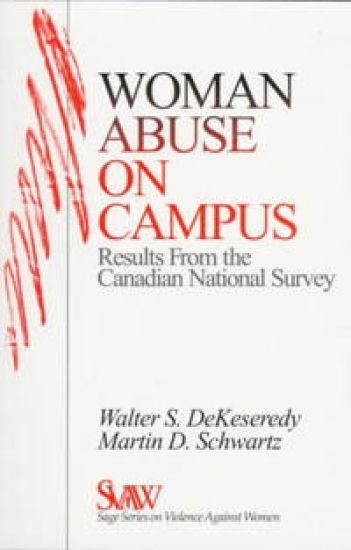
The disturbing prevalence of campus sexual assault shatters any illusion that post-secondary schools anywhere in North America are sanctuaries from the real world. Through an accessible overview of the recent Canadian National Survey on Woman Abuse in Dating Relationships, authors Walter S. DeKeseredy and Martin D. Schwartz expose a "hidden campus curriculum" that exists to maintain gender inequalities. Sexist messages, both subtle and implicit, not only foster an atmosphere of fear and insecurity but also serve as a powerful means of social control. Providing a wake-up call to North American college campuses, Woman Abuse on Campus opens up the doors for change by examining the incidence and prevalence of woman abuse in courtship, the reaction against women's use of self-defense, factors that increase the risk of dating abuse, and education and awareness programs that respond to the problem. In order to influence policy changes, students, faculty, and administrators as well as other professionals will need to work together to inform not only themselves but others about the problem. As a tool to increase awareness and provide critical study findings, The Hidden Curriculum is an ideal supplementary text for courses in gender studies, criminology/criminal justice, sociology, social work, counseling/clinical psychology, family studies, education, and public health.
The disturbing prevalence of campus sexual assault shatters any illusion that post-secondary schools anywhere in North America are sanctuaries from the real world. Through an accessible overview of the recent Canadian National Survey on Woman Abuse in Dating Relationships, authors Walter S. DeKeseredy and Martin D. Schwartz expose a "hidden campus curriculum" that exists to maintain gender inequalities. Sexist messages, both subtle and implicit, not only foster an atmosphere of fear and insecurity but also serve as a powerful means of social control. Providing a wake-up call to North American college campuses, Woman Abuse on Campus opens up the doors for change by examining the incidence and prevalence of woman abuse in courtship, the reaction against women's use of self-defense, factors that increase the risk of dating abuse, and education and awareness programs that respond to the problem. In order to influence policy changes, students, faculty, and administrators as well as other professionals will need to work together to inform not only themselves but others about the problem. As a tool to increase awareness and provide critical study findings, The Hidden Curriculum is an ideal supplementary text for courses in gender studies, criminology/criminal justice, sociology, social work, counseling/clinical psychology, family studies, education, and public health.
"I can't imagine anyone living or working with adolescents and young adults without being aware of the material in this book. A must read for educators, health providers, student personnel, administrators, the clergy, campus security, and even parents." --Mary P. Koss, The Arizona Prevention Center, University of Arizona "My overall response to this book is highly positive. I think the authors make an important contribution to the field of violence against women by focusing on male peer support for sexual violence. I think that this book fills a real void in the literature. Sanday's book, Fraternity Gang Rape, offers a rich theoretical analysis of rape on campus, and this book takes us another step in understanding sexual violence on campus by focusing on a variety of other issues related to campus rape such as alcohol and sports. . . . I think this book could (and should) be recommended reading for every college student in the U. S. and Canada. . . . The arguments . . . are clearly stated and they provide a powerful analysis of this serious problem--the material is fascinating and easy to read." --Raquel Kennedy Bergen, Sociology Department, St. Joseph's University, Philadelphia, Pennsylvania "This book speaks to me on several different levels. . . . The loose pages of the manuscript that I have are now well marked with red ink; some are tea-stained and others are dog-eared. From my experience as a teacher, researcher, editor, and activist, this is usually the sign of a very good book--good not because it makes an interesting read but, more important, because it is useful. . . . As a researcher, I was struck by the book's utility in . . . the authors' attention to methodology . . . [and the book's] contribution to theory building. . . . As an educator, I am impressed by the accessibility of the analysis, which makes the book useful as a text in many different courses. It is an interesting read; in fact, I predict that most students will report that they liked reading it. At the same time, however, it contains a wealth of information that carries not only the credibility stamp of science but also speaks directly to the students' experience. . . . This book is also a valuable resource for faculty and administrators willing to scrutinize their personal attitudes and behavior as well as the policies and practices of their institutions. . . . One more level on which this book spoke to me [is] a more personal level. . . . We must make a commitment to what the authors call ''newsmaking'': reaching out beyond our own circles to get alternative messages heard by as many people as possible. . . . And therein lies, I suppose, the book's ultimate value: what we have here is a testament to the fact that the personal is political. That old feminist adage has been quoted so often and is on so many bumper stickers that the words sound hollow much of the time. I want to take this opportunity to thank Martin D. Schwartz and Walter S. DeKeseredy for reinvigorating it--and me." --from the Foreword by Claire M. Renzetti, St. Joseph's University, Philadelphia For many coeds, the college campus life experience is marred by traumatic experiences of sexual assault. While there are many social determinants of rape and attempted rape, Sexual Assault on the College Campus examines the pivotal role of male peer support in legitimizing woman abuse. Written in an approachable style and completely grounded in the scientific research literature, this book provides enlightening discussions on the relationship of sexual assault to factors such as alcohol, deterrence, and fraternities. Authors Martin D. Schwartz and Walter S. DeKeseredy advance an original theory on male peer support and its role in supporting sexual assault using extensive prior studies and investigations they've conducted, including a national representative study and local campus victimization surveys. Combining a firm political stand with important research findings in a highly readable format, Sexual Assault on the College Campus provides essential reading for academics, researchers, criminologists, social workers, mental health professionals, and college administrators. It will also educate students in courses that wish to make the connection between their college environment and sociology, criminology, criminal justice, women's studies, psychology, family studies, and counseling.
"I can't imagine anyone living or working with adolescents and young adults without being aware of the material in this book. A must read for educators, health providers, student personnel, administrators, the clergy, campus security, and even parents." --Mary P. Koss, The Arizona Prevention Center, University of Arizona "My overall response to this book is highly positive. I think the authors make an important contribution to the field of violence against women by focusing on male peer support for sexual violence. I think that this book fills a real void in the literature. Sanday's book, Fraternity Gang Rape, offers a rich theoretical analysis of rape on campus, and this book takes us another step in understanding sexual violence on campus by focusing on a variety of other issues related to campus rape such as alcohol and sports. . . . I think this book could (and should) be recommended reading for every college student in the U. S. and Canada. . . . The arguments . . . are clearly stated and they provide a powerful analysis of this serious problem--the material is fascinating and easy to read." --Raquel Kennedy Bergen, Sociology Department, St. Joseph's University, Philadelphia, Pennsylvania "This book speaks to me on several different levels. . . . The loose pages of the manuscript that I have are now well marked with red ink; some are tea-stained and others are dog-eared. From my experience as a teacher, researcher, editor, and activist, this is usually the sign of a very good book--good not because it makes an interesting read but, more important, because it is useful. . . . As a researcher, I was struck by the book's utility in . . . the authors' attention to methodology . . . [and the book's] contribution to theory building. . . . As an educator, I am impressed by the accessibility of the analysis, which makes the book useful as a text in many different courses. It is an interesting read; in fact, I predict that most students will report that they liked reading it. At the same time, however, it contains a wealth of information that carries not only the credibility stamp of science but also speaks directly to the students' experience. . . . This book is also a valuable resource for faculty and administrators willing to scrutinize their personal attitudes and behavior as well as the policies and practices of their institutions. . . . One more level on which this book spoke to me [is] a more personal level. . . . We must make a commitment to what the authors call ''newsmaking'': reaching out beyond our own circles to get alternative messages heard by as many people as possible. . . . And therein lies, I suppose, the book's ultimate value: what we have here is a testament to the fact that the personal is political. That old feminist adage has been quoted so often and is on so many bumper stickers that the words sound hollow much of the time. I want to take this opportunity to thank Martin D. Schwartz and Walter S. DeKeseredy for reinvigorating it--and me." --from the Foreword by Claire M. Renzetti, St. Joseph's University, Philadelphia For many coeds, the college campus life experience is marred by traumatic experiences of sexual assault. While there are many social determinants of rape and attempted rape, Sexual Assault on the College Campus examines the pivotal role of male peer support in legitimizing woman abuse. Written in an approachable style and completely grounded in the scientific research literature, this book provides enlightening discussions on the relationship of sexual assault to factors such as alcohol, deterrence, and fraternities. Authors Martin D. Schwartz and Walter S. DeKeseredy advance an original theory on male peer support and its role in supporting sexual assault using extensive prior studies and investigations they've conducted, including a national representative study and local campus victimization surveys. Combining a firm political stand with important research findings in a highly readable format, Sexual Assault on the College Campus provides essential reading for academics, researchers, criminologists, social workers, mental health professionals, and college administrators. It will also educate students in courses that wish to make the connection between their college environment and sociology, criminology, criminal justice, women's studies, psychology, family studies, and counseling.