Kirjojen hintavertailu – 12 903 725 kirjaa ja 27 kauppaa

Kirjailija

Martin Davies

Kirjat ja teokset yhdessä paikassa: 47 kirjaa, julkaisuja vuosilta 1994–2026, suosituimpiin kuuluu Small Group Research. Vertaile teosten hintoja ja tarkista saatavuus suomalaisista kirjakaupoista.

47 kirjaa

Kirjojen julkaisuvuodet: 1994–2026.

Mrs Hudson and The Christmas Canary
Old lies, new threats. The chickens have come home to roost…December in London, and Maximilian Cortado, the world famous violinist, has disappeared, the only clue being the unexpected delivery to his townhouse of a basket containing a live hen. When it emerges that a number of other notable members of society have been receiving similarly unexplained fowl, the deliveries begin to appear more sinister. Sherlock Holmes, however, seems more intrigued by a trivial incident in Sussex, where someone has been damaging Christmas trees intended for a local stately home. So when he is asked by the wife of a famous artist to investigate a robbery carried out twenty-three years before, Mrs Hudson sees an opportunity to assist. At the centre of that mystery is the Christmas Canary, a solid gold decoration of mesmerising beauty, hand-crafted for the fifth Lord Empingham. For years it had graced the top of the Christmas tree at Frawling Hall – until its mystifying disappearance broke the seventh Lord's heart. Fowl deeds are afoot, but can Mrs Hudson restore the canary to its perch before it’s too late? A wonderfully evocative caper based in the legend of Sherlock Holmes, perfect for fans of M. R. C. Kasasian and M. C. Beaton.
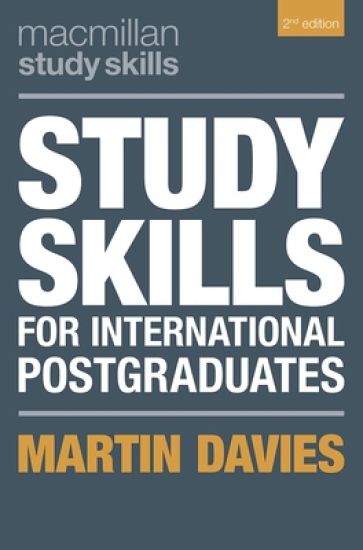
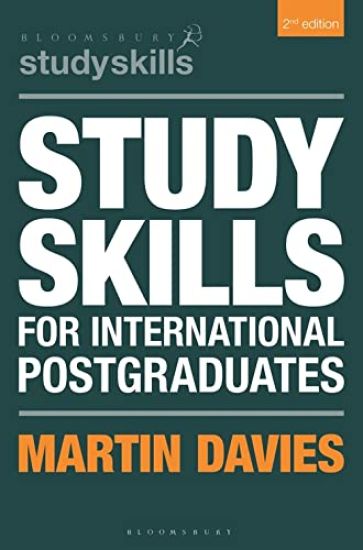
Study Skills for International Postgraduates

Study Skills for International Postgraduates

Martin Davies

BLOOMSBURY PUBLISHING PLC
2022
nidottu
This is the definitive guide to successful study as an international postgraduate student. Chapters cover all the core academic skills, including time management, reading, referencing, critical thinking, doing research, and writing and speaking for assessment. The book features a wealth of examples, activities and checklists to help students hone their skills. The 2nd edition features:- New content on writing critical reviews and case study reports, managing digital sources and using electronic databases- Additional activities on referencing and critical thinking- Practical pointers to help students hit the ground running and quickly get to grips with the expectations and conventions of postgraduate study
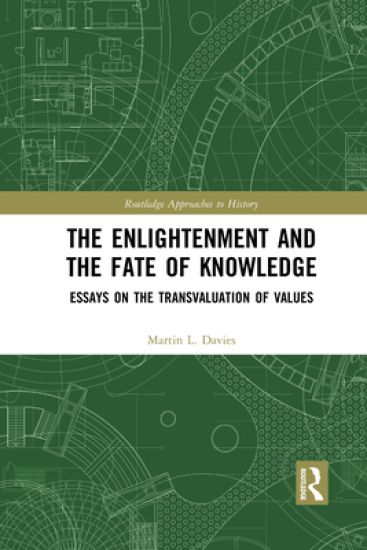
The Enlightenment and the Fate of Knowledge

The Enlightenment and the Fate of Knowledge

Martin Davies

Taylor Francis Ltd
2021
nidottu
The Enlightenment is generally painted as a movement of ideas and society lasting from the late seventeenth to the early nineteenth century, but this book argues that the Enlightenment is an essential component of modernity itself. In the course of the study, Martin Davies offers an original world-view and a critique of some recent interpretations of the Enlightenment.
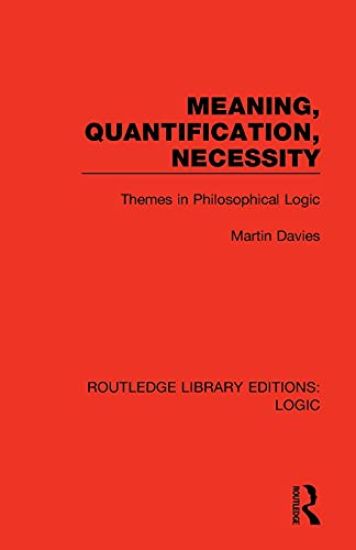
Meaning, Quantification, Necessity

Meaning, Quantification, Necessity

Martin Davies

Routledge
2021
nidottu

Halvin toimitettuna 46,30 €

Originally published in 1981. This is a book for the final year undergraduate or first year graduate who intends to proceed with serious research in philosophical logic. It will be welcomed by both lecturers and students for its careful consideration of main themes ranging from Gricean accounts of meaning to two dimensional modal logic. The first part of the book is concerned with the nature of the semantic theorist’s project, and particularly with the crucial concepts of meaning, truth, and semantic structure. The second and third parts deal with various constructions that are found in natural languages: names, quantifiers, definite descriptions, and modal operators. Throughout, while assuming some familiarity with philosophical logic and elementary formal logic, the text provides a clear exposition. It brings together related ideas, and in some places refines and improves upon existing accounts.
The Enlightenment and the Fate of Knowledge
The Enlightenment is generally painted as a movement of ideas and society lasting from the late seventeenth to the early nineteenth century, but this book argues that the Enlightenment is an essential component of modernity itself. In the course of the study, Martin Davies offers an original world-view and a critique of some recent interpretations of the Enlightenment.
Meaning, Quantification, Necessity

Meaning, Quantification, Necessity

Martin Davies

Routledge
2019
sidottu
Originally published in 1981. This is a book for the final year undergraduate or first year graduate who intends to proceed with serious research in philosophical logic. It will be welcomed by both lecturers and students for its careful consideration of main themes ranging from Gricean accounts of meaning to two dimensional modal logic. The first part of the book is concerned with the nature of the semantic theorist’s project, and particularly with the crucial concepts of meaning, truth, and semantic structure. The second and third parts deal with various constructions that are found in natural languages: names, quantifiers, definite descriptions, and modal operators. Throughout, while assuming some familiarity with philosophical logic and elementary formal logic, the text provides a clear exposition. It brings together related ideas, and in some places refines and improves upon existing accounts.
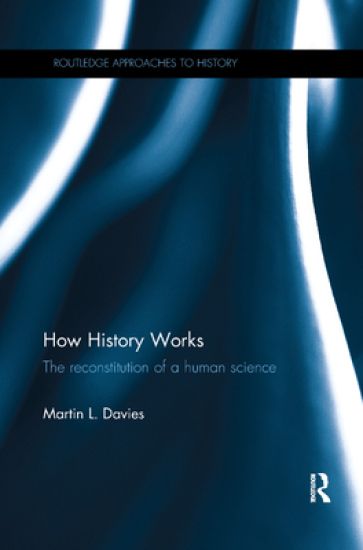
How History Works

How History Works

Martin Davies

Routledge
2019
nidottu
How History Works assesses the social function of academic knowledge in the humanities, exemplified by history, and offers a critique of the validity of historical knowledge. The book focusses on history’s academic, disciplinary ethos to offer a reconception of the discipline of history, arguing that it is an existential liability: if critical analysis reveals the sense that history offers to the world to be illusory, what stops historical scholarship from becoming a disguise for pessimism or nihilism? History is routinely invoked in all kinds of cultural, political, economic, psychological situations to provide a reliable account or justification of what is happening. Moreover, it addresses a world already receptive to comprehensive historical explanations: since everyone has some knowledge of history, everyone can be manipulated by it. This book analyses the relationship between specialized knowledge and everyday experience, taking phenomenology (Husserl) and pragmatism (James) as methodological guides. It is informed by a wide literature sceptical of the sense academic historical expertise produces and of the work history does, represented by thinkers such as Schopenhauer, Nietzsche, Valéry, Anders and Cioran. How History Works discusses how history makes sense of the world even if what happens is senseless, arguing that behind the smoke-screen of historical scholarship looms a chaotic world-dynamic indifferent to human existence. It is valuable reading for anyone interested in historiography and historical theory.
Understanding the STRESS VIRUS: Stress is a virus - you can CATCH it - there are CARRIERS!
The STRESS VIRUS has been identified by scientists There is no other book that captures the virus, and it's friends, in full illustrated detail. The author is a mental health professional and a well published cartoonist. Understand the virus, how it turns into a plague and how to immunise yourself. A cartoon romp, but based on real science. Stress, burnout, anxiety, depression and all the ways to build resilience....but in easy-to-read cartoons. A visual and human journey through pressure and beyond. This book boldly goes where no book has gone before
How History Works

How History Works

Martin Davies

Routledge
2015
sidottu
How History Works assesses the social function of academic knowledge in the humanities, exemplified by history, and offers a critique of the validity of historical knowledge. The book focusses on history’s academic, disciplinary ethos to offer a reconception of the discipline of history, arguing that it is an existential liability: if critical analysis reveals the sense that history offers to the world to be illusory, what stops historical scholarship from becoming a disguise for pessimism or nihilism? History is routinely invoked in all kinds of cultural, political, economic, psychological situations to provide a reliable account or justification of what is happening. Moreover, it addresses a world already receptive to comprehensive historical explanations: since everyone has some knowledge of history, everyone can be manipulated by it. This book analyses the relationship between specialized knowledge and everyday experience, taking phenomenology (Husserl) and pragmatism (James) as methodological guides. It is informed by a wide literature sceptical of the sense academic historical expertise produces and of the work history does, represented by thinkers such as Schopenhauer, Nietzsche, Valéry, Anders and Cioran. How History Works discusses how history makes sense of the world even if what happens is senseless, arguing that behind the smoke-screen of historical scholarship looms a chaotic world-dynamic indifferent to human existence. It is valuable reading for anyone interested in historiography and historical theory.
Havana Sleeping

Havana Sleeping

Martin Davies

Hodder Paperback
2015
pokkari
Havana in the 1850s is a city as dangerous as it is exotic. The murder of a humble night watchman at the British Consulate seems to worry neither the Consul nor the police. But one person cared for the old man. The enigmatic courtesan Leonarda will not rest until she understands the mystery of his death. In wintry England, George Backhouse is plucked from obscurity in the Foreign Office and given an unexpected promotion. His task: to travel to Cuba and take a stand against the illegal slave trade still flourishing there. But Havana is a tinderbox of intrigue. As the great powers of the region conspire against each other with increasing ruthlessness for control of the island, Backhouse comes to see that the most innocent of actions could spark a devastating war. To protect their interests, the powers-that-be in Whitehall are prepared to turn a blind eye to many things. Leonarda will not. But what of George Backhouse?
International Transactions in Goods

International Transactions in Goods

Martin Davies; David V. Snyder

Oxford University Press Inc
2014
sidottu
International Transactions in Goods: Global Sales in Comparative Context explains the complex transactional structures common in international sales, from both an international and a domestic legal perspective. In a straightforward, accessible style, this course book sets out typical business models and commercial practices, including sample legal and commercial documents, and outlining the laws that govern them. Closely attuned to practice, this course book covers transactions on a commercial scale and gives full treatment not only to legal topics, but also payment, security, carriage, and insurance, addressing both traditional topics such as letters of credit, bills of lading, and the Incoterms, as well as modern practices like electronic funds transfers, and waybills. Martin Davies and David V. Snyder emphasize the strategic questions that lawyers and businesses face when negotiating and documenting deals, and when litigating transactions that have gone awry. As many of the strategies revolve around choice of governing law, the book treats not only international law, particularly the UN Convention on the International Sales of Goods (CISG), but also exemplary domestic laws from both common law and civil law jurisdictions, including the US Uniform Commercial Code (UCC), English law, French law, and German law. This book is designed to be accessible to students and readers of all levels, whether from common law or civil law backgrounds, by providing basic explanations of fundamental theories and attitudes in international law, common law, civil law, and international business. The format includes the methods of different traditions, with extensive text familiar to civil law readers, case excerpts familiar to common law readers, and a large array of problems-based on real cases and transactions-to demonstrate the concepts and to practice and evaluate what has been learned. The book also tackles current ethical and moral issues in international transactions, particularly the relation of law and contracting to environmental protection, workers' rights, and similar matters.
The Year After

The Year After

Martin Davies

Hodder Paperback
2012
pokkari
DECEMBER 1919. Tom Allen, uncomfortable in London after five years in uniform, receives an invitation to spend Christmas at Hannesford Court. It's almost as if nothing has changed. Cards in the library after dinner. The Boxing Day shoot. The New Year ball. Margot. But Tom hasn't forgotten the professor. A strange meeting in Germany has raised a question in his mind: in all his visits to Hannesford before the War, all those years observing the glittering life of its owners, how much did he ever really see?
Imprisoned by History

Imprisoned by History

Martin Davies

Routledge
2012
nidottu
Imprisoned by History: Aspects of Historicized Life offers a controversial analysis, grounded both in philosophical argument and empirical evidence, of what history does in contemporary culture. It endorses and extends the argument that contemporary society is, in historical terms, already historicized, shaped by history – and thus history loses sight of the world, seeing it only as a reflection of its own self-image. By focusing on history as a way of thinking about the world, as a thought-style, this volume delivers a major, decisive, thought-provoking critique of a crucial aspect contemporary culture and the public sphere. By illustrating the ways in which history enforces socially coercive attitudes and forms of behaviour, Martin Davies argues that history is therefore in itself ideological and exists as an instrument of political power. Contending that this ideological function is the "normal" function of professional academic history, he repudiates entirely the conventional view that only biased or "bad" history is ideological. By finding history projecting onto the world and getting reflected back at it the exacting, history-focused thinking and behaviour on which the discipline and the subject rely, he concludes that history’s very "normality" and "objectivity" are inherently compromised and that history works only in terms of its own self-interest.
Study Skills for International Postgraduates
Destined to become a life saver for international students everywhere, this book provides clear, comprehensive guidance for students embarking on postgraduate study at a western university. Helping to maximise your chances of academic success, topics include challenges such as critical thinking, research, writing and speaking skills.
Imprisoned by History

Imprisoned by History

Martin Davies

Routledge
2009
sidottu
Imprisoned by History: Aspects of Historicized Life offers a controversial analysis, grounded both in philosophical argument and empirical evidence, of what history does in contemporary culture. It endorses and extends the argument that contemporary society is, in historical terms, already historicized, shaped by history – and thus history loses sight of the world, seeing it only as a reflection of its own self-image. By focusing on history as a way of thinking about the world, as a thought-style, this volume delivers a major, decisive, thought-provoking critique of a crucial aspect contemporary culture and the public sphere. By illustrating the ways in which history enforces socially coercive attitudes and forms of behaviour, Martin Davies argues that history is therefore in itself ideological and exists as an instrument of political power. Contending that this ideological function is the "normal" function of professional academic history, he repudiates entirely the conventional view that only biased or "bad" history is ideological. By finding history projecting onto the world and getting reflected back at it the exacting, history-focused thinking and behaviour on which the discipline and the subject rely, he concludes that history’s very "normality" and "objectivity" are inherently compromised and that history works only in terms of its own self-interest.
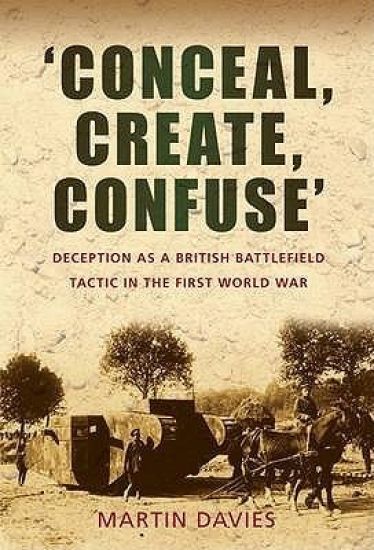
'Conceal, Create, Confuse'

'Conceal, Create, Confuse'

Martin Davies

The History Press Ltd
2009
nidottu
This is the story of the British Army's endeavours during the Great War to deceive the enemy and trick him into weakening his defences and redeploying his reserves. In this year-by-year account, Martin Davies shows how Sir John French and Sir Douglas Haig actively encouraged their Army commanders to employ trickery so that all attacks should come as a 'complete surprise' to the enemy. The methods of concealment of real military artefacts and the creation of dummy ones were ingenious enough but the real art lay in the development of geographically dispersed deception plans which disguised the real time and place of attack and forced the enemy to defend areas threatened by fake operations. Some of these plans, such as disguising mules as tanks and creating dummy airfields bordered on the farcical but were often amazingly effective. The driving force behind the deception plans was GHQ and the Army commanders, further dispelling the myth of 'Lions led by Donkeys'. Evidence shows that the British Army employed deception to advantage in all their theatres of operation.
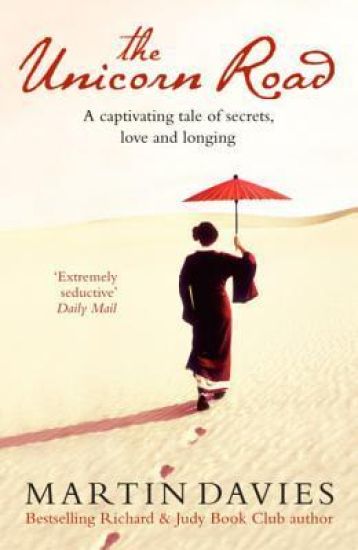
The Unicorn Road

The Unicorn Road

Martin Davies

Hodder Paperback
2009
pokkari
Richard and Judy bestselling author returns with a story of love and honour, greed and cruelty, and a magical journey into the unknown. A young woman leaves her home, summoned to the emperor`s court and a husband she barely knows. On the other side of the world, a famous scholar is sent to find and collect the mysterious beasts of legend in the unknown lands of the East. He takes with him an interpreter, Venn, famous for his special gift with language. The two groups of travellers are destined to cross paths, revealing the secret motives and hidden passions of those who are brought together. Reviews 'Intricate and imaginative' The Times 'Davies' writing is extremely seductive, his bustling medieval world alive with self-seekers, double-dealers and papal spies, and his highly original story one of marvels.' Daily Mail 'The storytelling is masterly. Just as you notice a loose end, the author deftly ties it . . . Loss is stacked upon loss, and yet this novel leaves you oddly uplifted; for all the suffering the characters endure, their courage never deserts them, nor, in the end, do their hopes betray them.' Independent on Sunday