Kirjojen hintavertailu – 12 859 819 kirjaa ja 27 kauppaa
Kirjailija
Martin Gayford
Kirjat ja teokset yhdessä paikassa: 41 kirjaa, julkaisuja vuosilta 2007–2026, suosituimpiin kuuluu Lucian Freud. Vertaile teosten hintoja ja tarkista saatavuus suomalaisista kirjakaupoista.
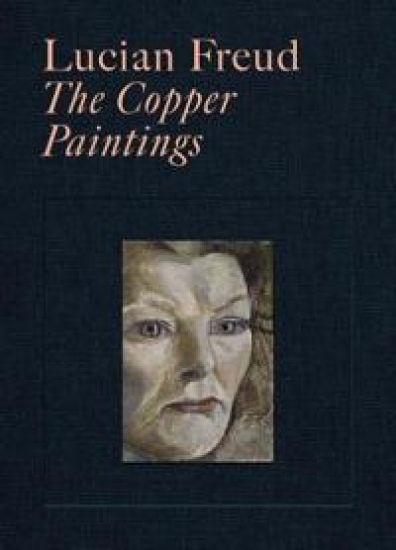
Brings together, for the first time, Lucian Freud's oil on copper paintings, including his lost portrait of Francis Bacon and two works that have never been reproduced before In the early 1950s, Lucian Freud produced several works in oil paint on copper, a technique favored by 17th-century artists such as Rembrandt and Frans Hals, but unusual for a 20th-century painter. Originally thought to be only a handful, Freud in fact painted more than a dozen copper works—all small-scale, enamel-smooth and astonishingly intense. Based on a decade of research, this book, for the first time, brings together all of Freud’s “coppers,” including two works that have never been reproduced before. Among these paintings is Freud’s famous portrait of Francis Bacon, labeled by Nicholas Serota as "the most important portrait of the 20th century." The work was stolen in 1988—its whereabouts still unknown—but during research for the book a rare photograph was discovered that shows the work just minutes before the theft, and it is published here for the first time. Distributed for Less Publishing
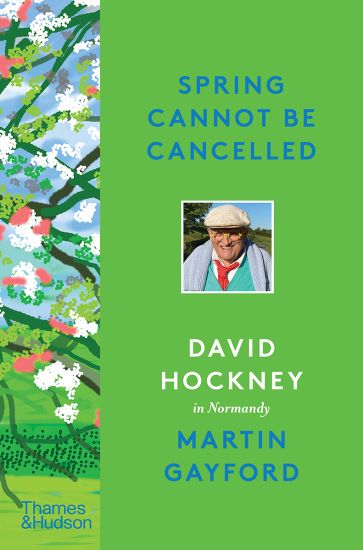
A SUNDAY TIMES BESTSELLER‘We have lost touch with nature, rather foolishly as we are a part of it, not outside it. This will in time be over and then what? What have we learned?... The only real things in life are food and love, in that order, just like [for] our little dog Ruby... and the source of art is love. I love life.’ DAVID HOCKNEY Praise for Spring Cannot be Cancelled: 'This book is not so much a celebration of spring as a springboard for ideas about art, space, time and light. It is scholarly, thoughtful and provoking' The Times 'Lavishly illustrated… Gayford is a thoughtfully attentive critic with a capacious frame of reference' Guardian 'Hockney and Gayford’s exchanges are infused with their deep knowledge of the history of art … This is a charming book, and ideal for lockdown because it teaches you to look harder at the things around you’ Lynn Barber,The Spectator 'Designed to underscore [Hockney’s] original message of hope, and to further explore how art can gladden and invigorate ... meanders amiably from Rembrandt, to the pleasure principle, andouillette sausages and, naturally, to spring' Daily Telegraph On turning eighty, David Hockney sought out rustic tranquillity for the first time: a place to watch the sunset and the change of the seasons; a place to keep the madness of the world at bay. So when Covid-19 and lockdown struck, it made little difference to life at La Grande Cour, the centuries-old Normandy farmhouse where Hockney set up a studio a year before, in time to paint the arrival of spring. In fact, he relished the enforced isolation as an opportunity for even greater devotion to his art. Spring Cannot be Cancelled is an uplifting manifesto that affirms art’s capacity to divert and inspire. It is based on a wealth of new conversations and correspondence between Hockney and the art critic Martin Gayford, his long-time friend and collaborator. Their exchanges are illustrated by a selection of Hockney’s new, unpublished Normandy iPad drawings and paintings alongside works by van Gogh, Monet, Bruegel, and others. We see how Hockney is propelled ever forward by his infectious enthusiasms and sense of wonder. A lifelong contrarian, he has been in the public eye for sixty years, yet remains entirely unconcerned by the view of critics or even history. He is utterly absorbed by his four acres of northern France and by the themes that have fascinated him for decades: light, colour, space, perception, water, trees. He has much to teach us, not only about how to see... but about how to live. With 142 illustrations in colour
A compact edition of David Hockney and Martin Gayford's brilliant book, A History of Pictures: From the Cave to the Computer Screen features updated material and pieces of art original to this volume. Informed and energized by a lifetime of painting, drawing, and making images with cameras, David Hockney, in collaboration with art critic Martin Gayford, explores how and why pictures have been made across the millennia. Juxtaposing a rich variety of images--a still from a Disney cartoon with a Japanese woodblock print by Hiroshige, a scene from an Eisenstein film with a Vel zquez painting--the authors cross the normal boundaries between high culture and popular entertainment, and argue that film, photography, painting, and drawing are deeply interconnected. Featuring a revised final chapter with additional works by Hockney, this compact edition of A History of Pictures remains a significant contribution to the discussion of how artists represent reality.
‘I won't read a more interesting book all year... utterly fascinating' A. N. Wilson, Sunday Times ‘Enormously good-humoured and entertaining… Hockney asks big questions about the nature of picture-making and the relationship between painters and photography in a way that no other contemporary artist seems to.’ Andrew Marr, New Statesman A new, compact edition of David Hockney and Martin Gayford’s brilliantly original book, with a revised final chapter and three entirely new Hockney artworks Informed and energized by a lifetime of painting, drawing and making images with cameras, David Hockney, in collaboration with the art critic Martin Gayford, explores how and why pictures have been made across the millennia. What makes marks on a flat surface interesting? How do you show movement in a still picture, and how, conversely, do films and television connect with old masters? Juxtaposing a rich variety of images – a still from a Disney cartoon with a Japanese woodblock print by Hiroshige, a scene from an Eisenstein film with a Velázquez painting – the authors cross the normal boundaries between high culture and popular entertainment, and make unexpected connections across time and media. Building on Hockney’s groundbreaking book Secret Knowledge, they argue that film, photography, painting and drawing are deeply interconnected. Insightful and thought provoking, A History of Pictures is an important contribution to our appreciation of how we represent our reality. This new edition has a revised final chapter with some of Hockney’s latest works, including the stained-glass window in Westminster Abbey.
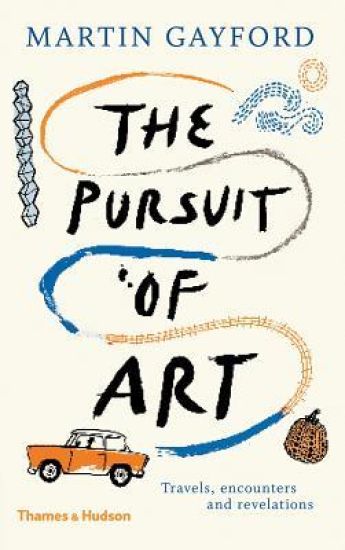
In the course of a career thinking and writing about art, Martin Gayford has travelled all over the world both to see works of art and to meet artists. Gayford’s journeys, often to fairly inaccessible places, involve frustrations and complications, but also serendipitous encounters and outcomes, which he makes as much a part of the story as the final destination. Entertaining and informative, Gayford includes trips to see Brancusi’s Endless Column in Romania, prehistoric cave art in France, the museum island of Naoshima in Japan, the Judd Foundation in Marfa, Texas, and a Roni Horn work in Iceland. Interwoven with these accounts are journeys to meet artists – Robert Rauschenberg in New York, Marina Abramovic in Venice, Henri Cartier-Bresson in Paris – or travels with artists, such as a trip to Beijing with Gilbert & George. These encounters not only provide insights into the way artists approach and think about their art but also reveal the importance of their personal environments. And in the process, Gayford discusses how these meetings have impacted on his own evolving ideas and tastes.
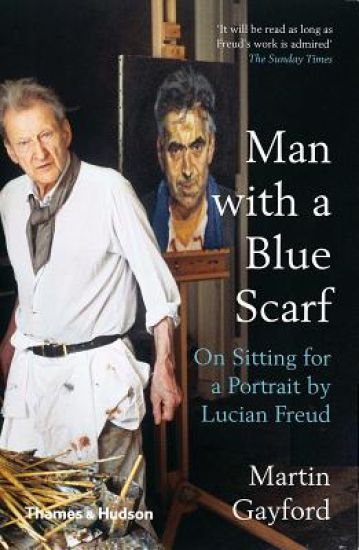
Lucian Freud (1922–2011), widely regarded as the greatest figurative painter of our time, spent seven months painting a portrait of the art critic Martin Gayford. The daily narrative of their encounters takes us into that most private place, the artist’s studio, and to the heart of the working methods of this modern master – both technical and subtly psychological. From this emerges an understanding of what a portrait is, but something else is also built up: a portrait, in words, of Freud himself. Full of wry and revealing observations, this is a book not quite like any other: the inside story of how it feels to pose for a remarkable artist, and be transformed into a work of art.
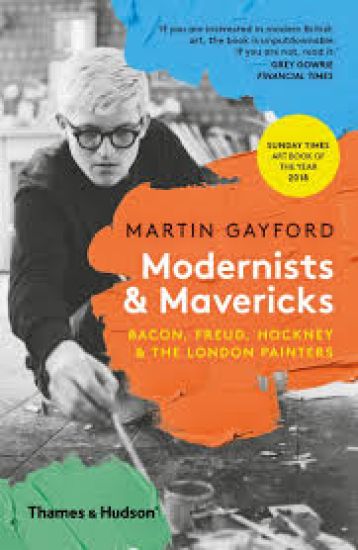
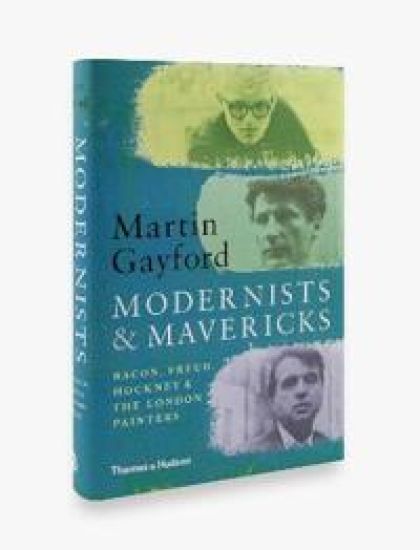
Sunday Times Art Book of the Year 2018'If you are interested in modern British art, the book is unputdownable. If you are not, read it.' - Grey Gowrie, Financial Times 'All the good stories, and more, are here … this is a genuinely encyclopaedic work, unlike anything else I have come across on the topic, informed by a deep love and understanding of modern painting. Everybody interested in the subject should read it.' - Andrew Marr, Sunday Times A masterfully narrated account of painting in London from the Second World War to the 1970s, illustrated throughout with documentary photographs and works of art The development of painting in London from the Second World War to the 1970s is the story of interlinking friendships, shared experiences and artistic concerns among a number of acclaimed artists, including Francis Bacon, Lucian Freud, Frank Auerbach, David Hockney, Bridget Riley, Gillian Ayres, Frank Bowling and Howard Hodgkin. Drawing on extensive first-hand interviews, many previously unpublished, with important witnesses and participants, the art critic Martin Gayford teases out the thread connecting these individual lives, and demonstrates how painting thrived in London against the backdrop of Soho bohemia in the 1940s and 1950s and ‘Swinging London’ in the 1960s. He shows how, influenced by such different teachers as David Bomberg and William Coldstream, and aware of the work of contemporaries such as Jackson Pollock as well as the traditions of Western art from Piero della Francesca to Picasso and Matisse, the postwar painters were allied in their confidence that this ancient medium, in opposition to photography and other media, could do fresh and marvellous things. They asked the question ‘what can painting do?’ and explored in their diverse ways, but with equal passion, the possibilities of paint.
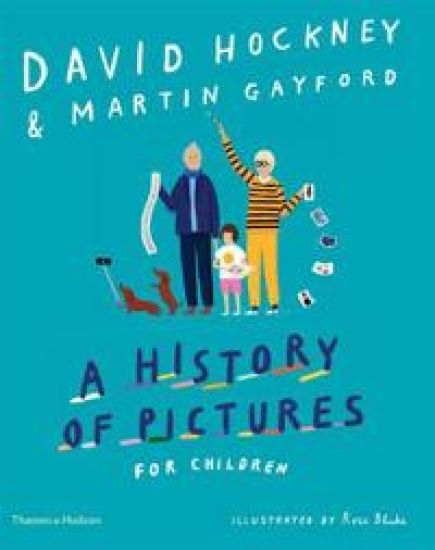
A History of Pictures for Children takes young readers on an adventure through art history. From cave paintings to video games, this book shows how and why pictures have been made, linking art to the human experience. David Hockney and Martin Gayford explain each piece of art in the book, helping young minds to grasp difficult concepts. The book tracks the many twists and turns toward artistic invention, allowing readers to fully appreciate how and why art has changed and includes an illustrated timeline of inventions. Original illustrations by Rose Blake add a personal perspective on a wide variety of images. A History of Pictures for Children will inspire creative minds and help them to understand the legacy of the pictures we see today. The book also includes a bibliography and index. "A brilliant, knockout collaboration--one that will continue to excite, provoke, and engage kids and their grown-ups." --Kirkus Reviews (Starred Review)
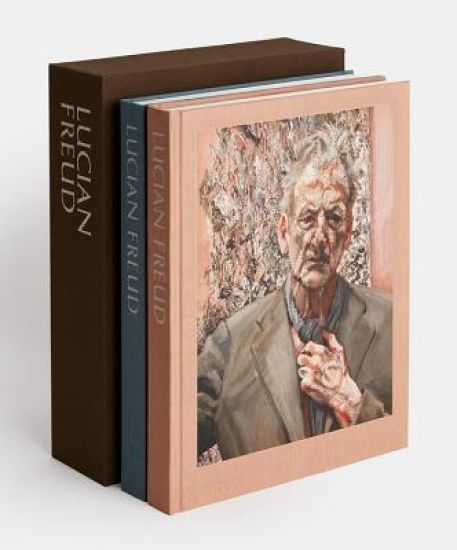
With more than 480 illustrations, this is the most comprehensive publication to date on one of the greatest painters of the twentieth and early twenty-first centuries, Lucian Freud Created in collaboration with the Lucian Freud Archive and David Dawson, Director of the Archive, and edited by Mark Holborn, this sumptuous, two-volume, slipcased publication celebrates Freud's work from the 1930s to his death in 2011, and includes hundreds of paintings, drawings and sketches, and etchings - even illustrated private letters. Nearly all the artworks included have been newly photographed by celebrated British photographer John Riddy. This is both a vital contribution to art scholarship and a gorgeous addition to the bookshelves of art lovers around the world. Published by Phaidon, the global publisher of books on art, architecture, photography, design, performing arts, decorative arts, fashion, film, travel, and contemporary culture, as well as cookbooks and children's books.
Winner of the prestigious BolognaRagazzi New Horizons Award 2019A History of Pictures for Children takes readers on a journey through art history, from early art drawn on cave walls to the images we make today on our computers and phone cameras. Based on the bestselling book for adults, this children’s edition of A History of Pictures is told through conversations between the artist David Hockney and the author Martin Gayford, who talk about art with inspiring simplicity and clarity. Rose Blake’s illustrations illuminate the narratives of both authors to bring the history of art alive for a young audience.
Sunday Times Art Book of the Year 2018 'If you are interested in modern British art, the book is unputdownable. If you are not, read it.' - Grey Gowrie, Financial Times 'All the good stories, and more, are here … this is a genuinely encyclopaedic work, unlike anything else I have come across on the topic, informed by a deep love and understanding of modern painting. Everybody interested in the subject should read it.' - Andrew Marr, Sunday Times A masterfully narrated account of painting in London from the Second World War to the 1970s, illustrated throughout with documentary photographs and works of art The development of painting in London from the Second World War to the 1970s is the story of interlinking friendships, shared experiences and artistic concerns among a number of acclaimed artists, including Francis Bacon, Lucian Freud, Frank Auerbach, David Hockney, Bridget Riley, Gillian Ayres, Frank Bowling and Howard Hodgkin. Drawing on extensive first-hand interviews, many previously unpublished, with important witnesses and participants, the art critic Martin Gayford teases out the thread connecting these individual lives, and demonstrates how painting thrived in London against the backdrop of Soho bohemia in the 1940s and 1950s and ‘Swinging London’ in the 1960s. He shows how, influenced by such different teachers as David Bomberg and William Coldstream, and aware of the work of contemporaries such as Jackson Pollock as well as the traditions of Western art from Piero della Francesca to Picasso and Matisse, the postwar painters were allied in their confidence that this ancient medium, in opposition to photography and other media, could do fresh and marvellous things. They asked the question ‘what can painting do?’ and explored in their diverse ways, but with equal passion, the possibilities of paint.
Ved at sætte et righoldigt billedmateriale i spil – et stillfoto fra en Disney tegnefilm konfronteret med et japansk træsnit af Hiroshige, en scene fra en film af Eisenstein med et maleri af Velázquez – overskrider forfatterne de grænser, der normalt er stukket ud imellem finkultur og populær underholdning, og skaber uventede forbindelser henover forskelle i tid og medierne imellem. David Hockney hævder, at hvad enten billeder er skabt med en pensel, et kamera eller et digitalt program, og uafhængigt af, om de befinder sig på væggene i huler eller på computerskærmene, så er de først og fremmest billeder. Og for at vi kan se verden omkring os – og derved os selv – har vi brug for billedernes historie.
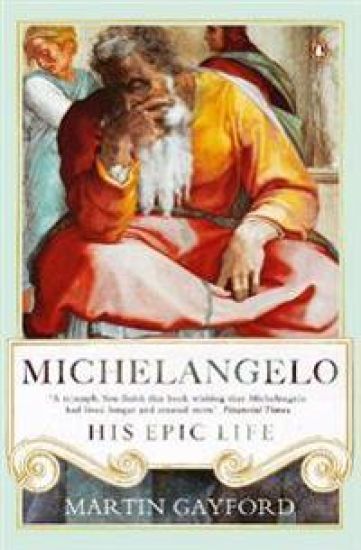
'An absorbing book, beautifully told and with the writer fully in command of a huge body of research' Philip Hensher, Mail on Sunday There was an epic sweep to Michelangelo's life. At 31 he was considered the finest artist in Italy, perhaps the world; long before he died at almost 90 he was widely believed to be the greatest sculptor or painter who had ever lived (and, by his enemies, to be an arrogant, uncouth, swindling miser). For decade after decade, he worked near the dynamic centre of events: the vortex at which European history was changing from Renaissance to Counter Reformation. Few of his works - including the huge frescoes of the Sistine Chapel Ceiling, the marble giant David and The Last Judgment - were small or easy to accomplish. Like a hero of classical mythology - such as Hercules, whose statue Michelangelo carved in his youth - he was subject to constant trials and labours. In Michelangelo Martin Gayford describes what it felt like to be Michelangelo Buonarroti, and how he transformed forever our notion of what an artist could be.'It is a measure of [Michelangelo's] magnitude, and Gayford's skill in capturing it, that you finish this book wishing that Michelangelo had lived longer and created more' Rachel Spence, FT 'One of our most distinguished writers on what makes modern artists tick . . . It is very difficult to cut through the thicket of generations of scholarship and say anything new about David, the Sistine Chapel, The Last Judgement, the Basilica of St Peter's or many of Michelangelo's other masterpieces, but Gayford manages to do so by encouraging us to think - and look - at both the obvious and the overlooked' Sunday Telegraph'Only the most ambitious biographer can take on the talent of Michelangelo Buonarroti' The Times
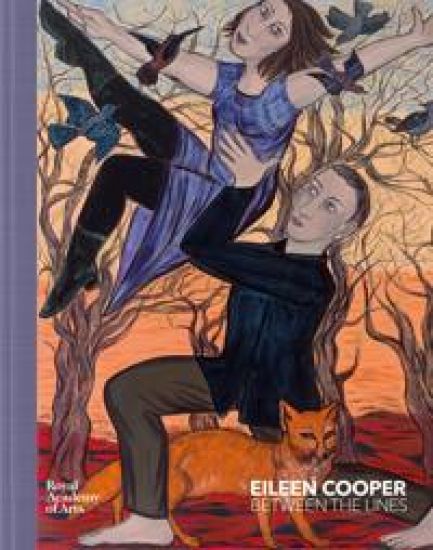
This long-overdue publication on Eileen Cooper RA spans the entire breadth of her career, from her early days as a singular figurative voice in British art, and her exploration of ideas of feminism and femininity in painting, to her current mature work, characterized by uninhibited colours bursting with energy, contained by her expressive use of line. This comprehensive book places Cooper in the context of British art over the last three decades a period during which she has attracted attention from critics, collectors and museums around the world. In a substantial and wide-ranging essay, Martin Gayford resumes his ongoing investigation of Coopers work, aided by extracts from a recent series of interviews with the artist. In addition, an essay by the artists - print specialist Sara Lee covers Coopers significant contribution to contemporary printmaking practice, an area of Cooper's work that played a significant part in her teaching career until her appointment as Keeper of the Royal Academy of Arts in 2011.
The making of pictures has a history going back perhaps 100,000 years to an African shell used as a paint palette. In this book, each chapter addresses an important question: What happens when we try to express reality in two dimensions? Why is the 'Mona Lisa' beautiful and why are shadows so rarely found in Chinese, Japanese and Persian painting?
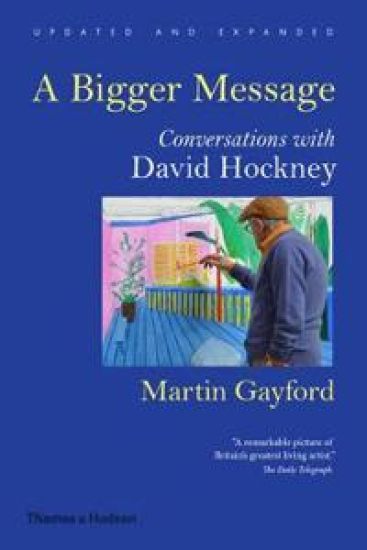
David Hockney is possibly the world’s most popular living painter, but he is also something else: an incisive and original thinker on art. Here are the fruits of his lifelong meditations on the problems and paradoxes of representing a three-dimensional world on a flat surface. How does drawing make one `see things clearer, and clearer, and clearer still’, as Hockney suggests? What significance do different media – from a Lascaux cave wall to an iPad – have for the way we see? What is the relationship between the images we make and the reality around us? How have changes in technology affected the way artists depict the world? The conversations are punctuated by wise and witty observations from both parties on numerous other artists – Van Gogh or Vermeer, Caravaggio, Monet, Picasso – and enlivened by shrewd insights into the contrasting social and physical landscapes of California, where Hockney lives, and Yorkshire, his birthplace. Some of the people he has encountered along the way – from Henri Cartier-Bresson to Billy Wilder – make entertaining appearances in the dialogue.
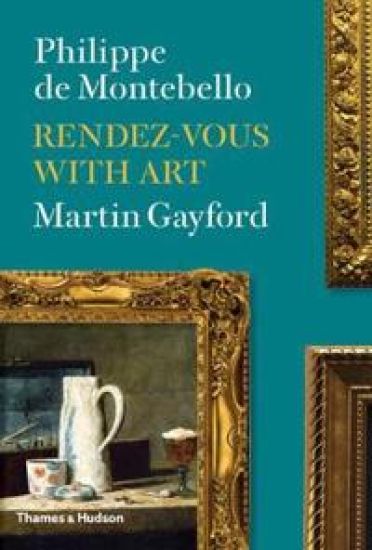
This book is about how we experience art, how we look at it, how we think about it. It is structured in the form of a series of conversations in some of the best-known museums in the world, but also outside the museums, where we often look upon art in a completely different way. The two protagonists are Philippe de Montebello, Director of the Metropolitan Museum of Art in New York for 31 years to 2008, and the art critic Martin Gayford. In the process, both men convey, with subtlety and brilliance, the delights and significance of their subject matter.
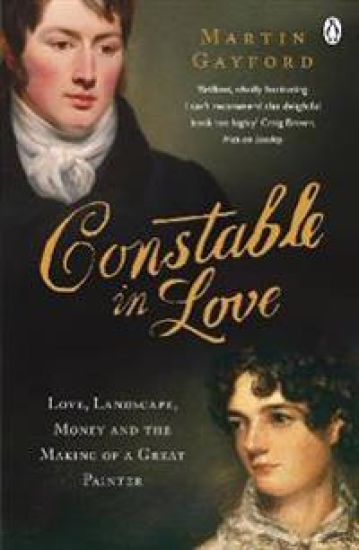
Art critic Martin Gayford, author of The Yellow House, brings the Regency period to life in Constable in Love: Love, Landscape and the Making of a Great Painter his account of the life of English Romantic painter John Constable. Love, not landscape, was the making of Constable. . . John Constable and Maria Bicknell might have been in love but their marriage was a most unlikely prospect. Constable was a penniless painter who would not sacrifice his art for anything, while Maria's family frowned on such a penurious union. For seven long years the couple were forced to correspond and meet clandestinely. But it was during this period of longing that Constable developed as a painter. And by the time they'd overcome all obstacles to their marriage, he was on the verge of being recognised as a genius. Martin Gayford brings alive the time of Jane Austen in telling the tremendous story of Constable's formative years, as well as this love affair's tragic conclusion which haunted the artist's final paintings.'Delightful...a small drama of love, frustration and despair played itself out with massive repercussions for the history of painting' Financial Times'Gayford's nuanced narrative throws much-needed fresh light, as well as real understanding, on both Constable's painting and his love life' Sunday Telegraph'A scrupulously observed tragical-comical tale' Evening StandardMartin Gayford is a celebrated art critic and journalist who has written for the Spectator and the Sunday Telegraph and is the current Chief European Art Critic for Bloomberg. In his other book The Yellow House: Van Gogh, Gauguin and Nine Turbulent Weeks in Arles Gayford depicts the period in which artistic geniuses van Gogh and Gauguin shared a house in the small French town of Arles.