Kirjojen hintavertailu – 12 903 724 kirjaa ja 27 kauppaa

Kirjailija

Martin Gilbert

Kirjat ja teokset yhdessä paikassa: 50 kirjaa, julkaisuja vuosilta 1994–2024, suosituimpiin kuuluu The Will of the People. Vertaile teosten hintoja ja tarkista saatavuus suomalaisista kirjakaupoista.

50 kirjaa

Kirjojen julkaisuvuodet: 1994–2024.

The Routledge Atlas of American History
The Routledge Atlas of American History presents a series of 163 clear and detailed maps, accompanied by informative captions, facts and figures. The complete history of America is unravelled through vivid representations of all the significant landmarks, including: Politics – from the struggle against slavery and the battle for black voting rights to the present day, including the results of the 2008 Presidential election Military Events – from the War of Independence to the conflicts in Korea, Vietnam and the Gulf, including additional new maps covering the war in Iraq and the American campaign in Afghanistan. Social History – including the fate of the American Indians, the growth of female emancipation, and recent population movements and immigrationTransport – from nineteenth-century railroads and canals to the growth of air travel and recent ventures into space Economics – from early farming and industry to urbanisation and the ecological struggles of the present dayThis revised edition is fully updated to cover the 2008 presidential election, and also addresses President Obama’s healthcare policy and first overseas travels. New maps have been drawn which detail the problem of pollution, as well as the most recent developments in US relations with Iran, Iraq and Afghanistan.
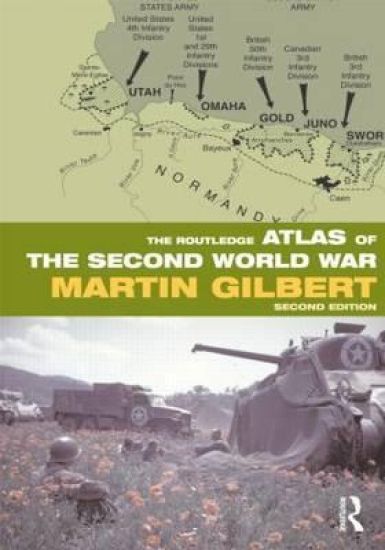
The Routledge Atlas of the Second World War
In The Routledge Atlas of the Second World War, Martin Gilbert graphically charts the war’s political, military, economic and social history through 257 illuminating maps. The atlas covers all the major events from the German invasion of Poland in September 1939 to the defeat of Japan in August 1945. Focusing on the human – and inhuman – aspects of the war, The Routledge Atlas of the Second World War includes examination of: military, naval and air campaigns on all the war fronts the war on land, at sea and in the air the economic and social aspects of the war the global nature of the war, in armed combat and in suffering the impact of the war on civilians, both under occupation, and as deportees and refugees the aftermath of the war: post-war political and national boundaries; war graves; and the human cost of the war on every continent. This paperback edition includes several updates to existing maps, as well as ten new maps, specially drawn for this edition. The new maps include examinations of Japanese- American and African- American soldiers serving with the United States Army, British women special agents, Belgium at War, and the German occupation of the Channel Islands.
The Routledge Atlas of the Holocaust
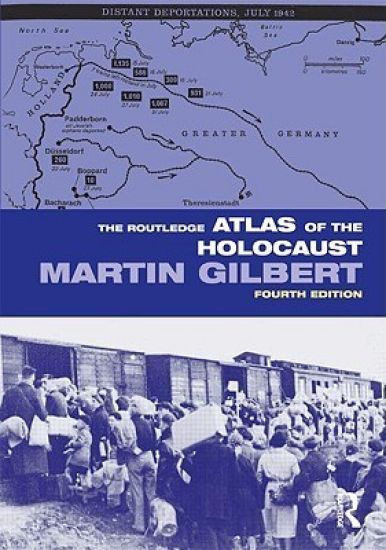
The graphic history of the Nazi attempt to destroy the Jews of Europe during the Second World War is illustrated in this series of 333 detailed maps. The maps, and the text and photographs that accompany them, powerfully depict the fate of the Jews between 1933 and 1945, while also setting the chronological story in the wider context of the war itself. The maps include: historical background – from the effects of anti-Jewish violence between 1880 and 1933 to the geography of the existing Jewish communities before the advent of the Nazis the beginning of the violence – from the destruction of the synagogues in November 1938 to Jewish migrations and deportations, the ghettos, and the establishment of the concentration camps and death camps throughout German-dominated Europe the spread of Nazi rule – the fate of the Jews throughout Europe including Germany, Austria, Poland, Greece, Yugoslavia, Bulgaria, Russia, Denmark, Norway, France, Holland, Belgium, Italy, and the Baltic States Jewish revolts and resistance – acts of armed resistance, fighting in the forests, individual acts of courageJews in hiding – escape routes, Christians who helped Jewsthe death marches – the advance of the Allies and the liberation of the camps, the survivors, and the final death toll. This revised edition includes a new section which gives an insight into the layout and organization of some of the most significant places of the Holocaust, including Auschwitz, Treblinka and the Warsaw ghetto, maps that will be especially useful to those visiting the sites.
The Routledge Atlas of the Holocaust
The graphic history of the Nazi attempt to destroy the Jews of Europe during the Second World War is illustrated in this series of 333 detailed maps. The maps, and the text and photographs that accompany them, powerfully depict the fate of the Jews between 1933 and 1945, while also setting the chronological story in the wider context of the war itself. The maps include: historical background – from the effects of anti-Jewish violence between 1880 and 1933 to the geography of the existing Jewish communities before the advent of the Nazis the beginning of the violence – from the destruction of the synagogues in November 1938 to Jewish migrations and deportations, the ghettos, and the establishment of the concentration camps and death camps throughout German-dominated Europe the spread of Nazi rule – the fate of the Jews throughout Europe including Germany, Austria, Poland, Greece, Yugoslavia, Bulgaria, Russia, Denmark, Norway, France, Holland, Belgium, Italy, and the Baltic States Jewish revolts and resistance – acts of armed resistance, fighting in the forests, individual acts of courageJews in hiding – escape routes, Christians who helped Jewsthe death marches – the advance of the Allies and the liberation of the camps, the survivors, and the final death toll. This revised edition includes a new section which gives an insight into the layout and organization of some of the most significant places of the Holocaust, including Auschwitz, Treblinka and the Warsaw ghetto, maps that will be especially useful to those visiting the sites.
The Routledge Atlas of the First World War
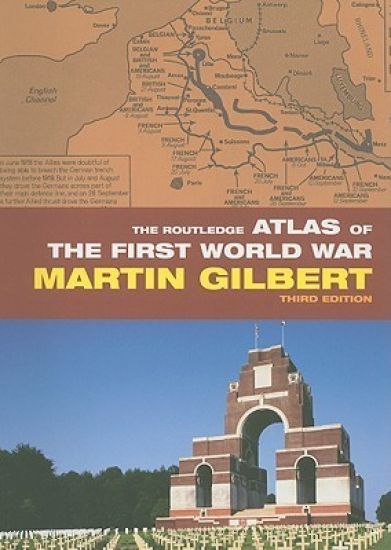
From its origins to its terrible legacy, the tortuous course of the Great War is vividly set out in a series of 174 fascinating maps. Together the maps form a comprehensive and compelling picture of the war that shattered Europe, and illustrate its military, social, political and economic aspects. Beginning with the tensions that already existed, the atlas covers: the early months of the war: from the fall of Belgium to the fierce fighting at Ypres and Tannenberg: the developing war in Europe: from Gallipoli to the horrors of the Somme and Verdun life at the front: from living underground, the trench system and the mud of Passchendaele to the war graves technology and the new horrors: from phosgene gas attacks to submarines, tanks and mines the home fronts: from German food riots to the air defence of Britain, the Russian Revolution and the collapse of Austria-Hungary the aftermath: from war debts and war deaths to the new map of Europe. This third edition contains an entirely new section depicting the visual remembrance of the war; a fascinating visitors' guide to the memorials that commemorate the tragedy of the Somme.
Churchill and the Jews: A Lifelong Friendship

Churchill and the Jews: A Lifelong Friendship

Martin Gilbert

Holt Paperbacks
2008
nidottu

Halvin toimitettuna 27,50 €

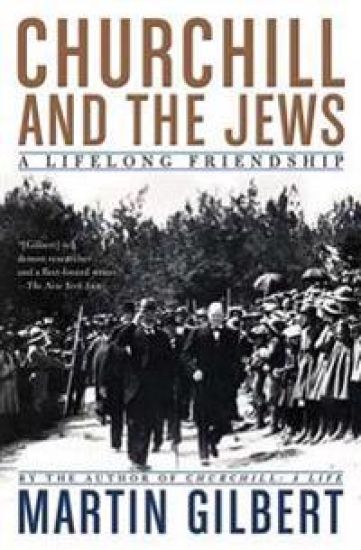
An insightful history of Churchill's lifelong commitment--both public and private--to the Jews and Zionism, and of his outspoken opposition to anti-Semitism Winston Churchill's commitment to Jewish rights, to Zionism, and ultimately to the State of Israel never wavered. In 1922, he established on the bedrock of international law the right of Jews to emigrate to Palestine. During his meeting with David Ben-Gurion in 1960, Churchill presented the Israeli prime minister with an article he had written about Moses, praising the patriarch. In between these events he fought harder and more effectively for the Jewish people than the world has ever realized. Drawing on a wide range of archives and private papers, speeches, newspaper coverage, and wartime correspondence, Churchill's official biographer, Sir Martin Gilbert, explores the origins, implications, and results of Churchill's determined commitment to Jewish rights, opening a window on an underappreciated and heroic aspect of the brilliant politician's life and career.
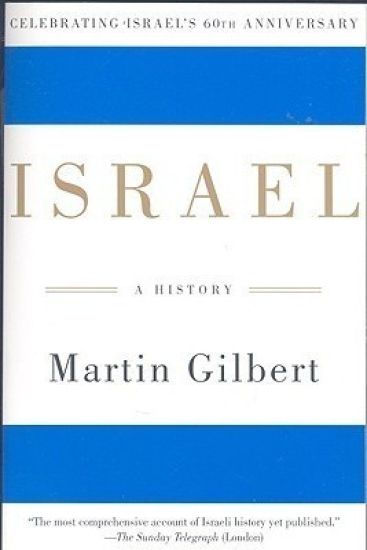
Israel: A History

Israel: A History

Martin Gilbert

Mariner Books
2008
nidottu

Halvin toimitettuna 25,20 €

"The most comprehensive account of Israeli history yet published." -- The Sunday Telegraph"An epic history . . . a picture of an Israel that persevered and prevailed, that was determined to survive and was unwilling to trust its independence to others but sought peace whenever possible." -- Foreign AffairsIsrael is a small and relatively young country, but since the day of its creation more than half a century ago, its turbulent history has placed it squarely at the center of the world stage. For two millennia the Jews, dispersed all over the world, prayed for a return to Zion. Until the nineteenth century, that dream seemed a fantasy, but then a secular Zionist movement was born and soon the initial trickle of Jewish immigrants to Palestine turned into a flood as Jews fled persecution in Europe. From these beginnings, preeminent historian Martin Gilbert traces the events and personalities that would lead to the sudden, dramatic declaration of Statehood in May 1948. From that point on, Israel's history has been dominated by conflict: Suez, the Six Day War, the Yom Kippur War, the Lebanon and the Intifada. Using contemporary documents and eyewitness accounts, and drawing on his own intimate knowledge of the country and its people, Martin Gilbert weaves together a riveting, page-turning history of a powerful and proud nation, from the struggles of its pioneers in the nineteenth century up to the present day.
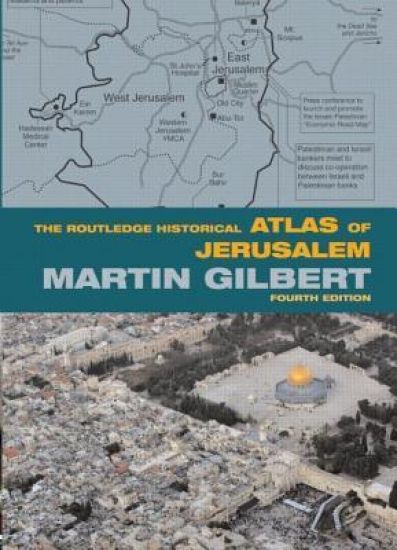
The Routledge Historical Atlas of Jerusalem
This unique Atlas traces the history of Jerusalem from biblical times to the present day. Each map is illustrated by a facing page of prints or photographs, to give a complete pictorial and cartographic overview of this fascinating city of the Middle East. Coverage begins in ancient times, showing the impact of the Jews, Christians, Muslims, Romans and Crusaders on the development of this holy city. Special emphasis is placed on the last 150 years, during which Jerusalem grew from a remote and impoverished town of the Ottoman Empire to a flourishing capital city. Up-to-date maps and figures show the recent expansion of suburbs and settlements, the Wall and new urban and political developments. An extensive bibliography provides a rich source of information on further reading.
The Routledge Historical Atlas of Jerusalem
This unique Atlas traces the history of Jerusalem from biblical times to the present day. Each map is illustrated by a facing page of prints or photographs, to give a complete pictorial and cartographic overview of this fascinating city of the Middle East. Coverage begins in ancient times, showing the impact of the Jews, Christians, Muslims, Romans and Crusaders on the development of this holy city. Special emphasis is placed on the last 150 years, during which Jerusalem grew from a remote and impoverished town of the Ottoman Empire to a flourishing capital city. Up-to-date maps and figures show the recent expansion of suburbs and settlements, the Wall and new urban and political developments. An extensive bibliography provides a rich source of information on further reading.
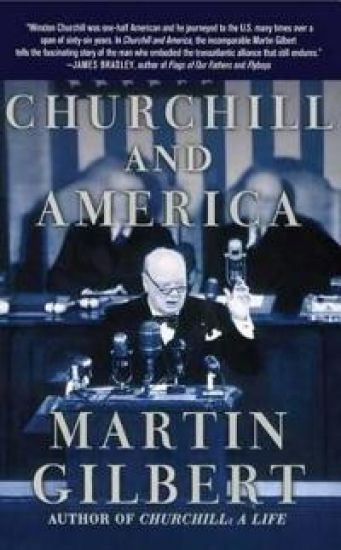
Churchill and America

Churchill and America

Martin Gilbert

The Free Press
2008
pokkari
Named Churchill's official biographer in 1968, renowned historian Sir Martin Gilbert has amassed exclusive archival and personal documentation to explore the statesman's famed affinity for and relationship with the United States. "Churchill and America" tells the intensely personal story of Winston Churchill's profound connection to America, which resulted in an Anglo-American alliance that has stood at the center of international relations for more than a century. Drawing on this extensive store of Churchill's own words -- his private letters, his articles and speeches, and press conferences and interviews given to American journalists on his journeys throughout the United States -- Gilbert paints a rich portrait of the Anglo-American relationship, illuminated by its most famous proponent.
Kristallnacht

Kristallnacht

Martin Gilbert

HARPERCOLLINS PUBLISHERS
2007
nidottu
One of our most eminent historians presents a powerful look at the buildup to and aftermath of one of the most decisive moments of World War II – Kristallnacht – not only for the Jewish population suddenly identified as a group to be destroyed, but also in terms of the international response it inspired and its larger implications. In ‘Kristallnacht’, Martin Gilbert seamlessly combines a moving account of the suffering of the victims of the Nazi regime with a sophisticated analysis of the gradual process which made the horrors of the Third Reich possible. Broadening his canvas, Gilbert also powerfully depicts how the rest of the world failed Europe’s increasingly desperate Jewish population: in the aftermath to Kristallnacht almost every country was asked to help; most would not do so, despite the transport of a staggering 10,000 German Jewish children to Britain. This international indifference had direct implications for future German policy, while the events of Kristallnacht went on to radically influence the attitudes of governments – and people – outside Germany towards Nazism.
The Somme: Heroism and Horror in the First World War

The Somme: Heroism and Horror in the First World War

Martin Gilbert

Holt Paperbacks
2007
nidottu

Halvin toimitettuna 26,90 €

"Gilbert has unearthed fascinating details of the campaign . . . An unforgettable read."--The Philadelphia Inquirer At 7:30 a.m. on July 1, 1916, the first Allied soldiers climbed out of their trenches along the Somme River in France and charged into no-man's-land, toward the barbed wire and machine guns at the German front lines. In the months that followed, the fifteen-mile-long territory erupted into the epicenter of the Great War, marking a pivotal moment in both the war and military history as tanks first appeared on the battlefield and air war emerged as a devastating and decisive factor in battle. All told, there were more than one million casualties, with 310,000 men dead in just 138 days. In this vivid account of one of history's most destructive battles, distinguished historian Martin Gilbert tracks the experiences of foot soldiers, generals, and everyone in between. With new photographs, journal entries, original maps, and military planning documents, The Somme is the most authoritative and affecting account of this bloody turning point in the Great War.
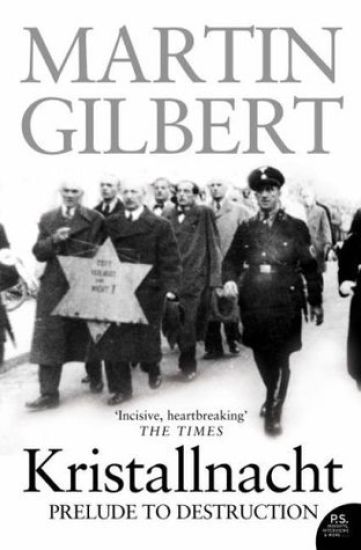
Kristallnacht: Prelude to Destruction

Kristallnacht: Prelude to Destruction

Martin Gilbert

HARPER PERENNIAL
2007
nidottu
In the early hours of November 10, 1938, Nazi storm troopers and Hitler Youth rampaged through Jewish neighborhoods across Germany, leaving behind them a horrifying trail of terror and destruction. More than a thousand synagogues and many thousands of Jewish shops were destroyed, while thirty thousand Jews were rounded up and sent to concentration camps. Kristallnacht--the Night of Broken Glass--was a decisive stage in the systematic eradication of a people who traced their origins in Germany to Roman times and was a sinister forewarning of the Holocaust. With rare insight and acumen, Martin Gilbert examines this night and day of terror, presenting readers with a meticulously researched, masterfully written, and eye-opening study of one of the darkest chapters in human history.
Somme

Somme

Martin Gilbert

John Murray Publishers Ltd
2007
pokkari
The Battle of the Somme, fought between July and November 1916, was among the bloodiest conflicts of all time. The aim was to end the stalemate on the Western Front - the result was carnage. In a total of just over a hundred days of fighting, the death toll reached 310,459. Half the bodies were never recovered. At the close of the battle, the British and French forces had not even reached the line they set themselves for the first day. Yet, despite its horrific destruction, the fighting at the Somme was characterised by incredible individual bravery. In commemoration of the 90th anniversary of the battle, Martin Gilbert, one of Britain's most distinguished historians, graphically recreates the tragedy. He interweaves individual stories, wartime documents, letters and poetry in a deeply moving, succinct narrative. From gripping descriptions of struggles on the battlefield to poignant evocations of the memorials and cemeteries that stand there today, this is a definitive guide to the Somme. It is a story of unparalleled folly and heroism, from which, as it unfolds, there emerge deep implications that are shared by all wars.
The Routledge Atlas of Russian History
The complex and often turbulent history of Russia over the course of 2,000 years is brought to life in a series of 176 maps by one of the most prolific and successful historian authors today. This fourth edition of The Routledge Atlas of Russian History covers not only the wars and expansion of Russia but also a wealth of less conspicuous details of its history, from famine and anarchism to the growth of naval strength and the strengths of the river systems. From 800 BC to the fall of the Soviet Union, this indispensable guide to Russian history covers:war and conflict: from the triumph of the Goths between 200 and 400 BC to the defeat of Germany at the end of the Second World War and the end of the Cold Warpolitics: from the rise of Moscow in the Middle Ages to revolution, the fall of the monarchy and the collapse of communismindustry, economics and transport: from the Trans-Siberian Railway between 1891 and 1917 to the Virgin Lands Campaign and the growth of heavy industrysociety, trade and culture: from the growth of monasticism to peasant discontent, Labour Camps and the geographical distribution of ethnic Russians. Now bringing new material to view, and including seven new maps, this popular atlas will more than readily gain a place on the bookshelves of anyone interested in the history of Russia.
The Routledge Atlas of Russian History
The complex and often turbulent history of Russia over the course of 2,000 years is brought to life in a series of 176 maps by one of the most prolific and successful historian authors today. This fourth edition of The Routledge Atlas of Russian History covers not only the wars and expansion of Russia but also a wealth of less conspicuous details of its history, from famine and anarchism to the growth of naval strength and the strengths of the river systems. From 800 BC to the fall of the Soviet Union, this indispensable guide to Russian history covers:war and conflict: from the triumph of the Goths between 200 and 400 BC to the defeat of Germany at the end of the Second World War and the end of the Cold Warpolitics: from the rise of Moscow in the Middle Ages to revolution, the fall of the monarchy and the collapse of communismindustry, economics and transport: from the Trans-Siberian Railway between 1891 and 1917 to the Virgin Lands Campaign and the growth of heavy industrysociety, trade and culture: from the growth of monasticism to peasant discontent, Labour Camps and the geographical distribution of ethnic Russians. Now bringing new material to view, and including seven new maps, this popular atlas will more than readily gain a place on the bookshelves of anyone interested in the history of Russia.
The Will of the People

The Will of the People

Martin Gilbert

Random House USA Inc
2006
Nidottu
The Will of the People is an incisive, in-depth look at Winston Churchill’s lifelong commitment to parliamentary democracy. First elected at twenty-five, Churchill was still in the House of Commons sixty-four years later. By far the largest part of his life – of his working days and nights – was spent in the cut and thrust of debate in the service of the people, whose instrument he believed Parliament to be. “I am a child of the House of Commons,” he told a joint session of the US Congress in December 1941. “I was brought up in my father’s house to believe in democracy. Trust the people – that was his message….” Throughout his career, Churchill did his utmost to ensure that Parliament was effective and that it was not undermined by either adversarial party politics or by elected members who sought to manipulate it. Even the defeat of the Conservative Party in the General Election of 1945, which ended his wartime premiership, in no way altered his faith in parliamentary democracy. “It is the will of the people,” he told a small gathering of friends and family the day after the results were announced. And he meant it. Reflecting on the importance of the Second World War as a means of restoring democracy, Churchill told the House of Commons: “At the bottom of all the tributes paid to democracy is the little man, walking into the little booth, with a little pencil, making a little cross on a little bit of paper – no amount of rhetoric or voluminous discussion can possibly diminish the overwhelming importance of that point.” Today’s readers will readily compare Churchill’s regard for democracy and the importance of that “little man” with the attitudes of contemporary leaders, and of those who seek leadership.
The Second World War: A Complete History

The Second World War: A Complete History

Martin Gilbert

Holt Paperbacks
2004
nidottu
Martin Gilbert's presents A "magisterial" (New York Times) single-volume history of the Second World War. It began with the German invasion of Poland on September 1, 1939. By the time it came to an end on V-J Day-August 14, 1945 -it had involved every major power and become global in its reach. In the final accounting, it would turn out to be, in both human terms and material resources, the costliest war in history, taking the lives of thirty million people. In one brilliant volume, eminent historian Martin Gilbert offers the complete history of WWII. With unparalleled scholarship and breadth of vision, Gilbert, the official biographer of Winston Churchill as well as one of the leading experts on the Holocaust, weaves together political, military, diplomatic, and civilian elements to provide a global perspective on the war, in a work that is both a treasure trove of information and a gripping, dramatic narrative. "In his transmission of the horror of the war, Martin Gilbert has achieved something no other historian but he could. There is indeed a relentless force about chronology when it is used as a tool by an historian of the stature of Martin Gilbert." -The Sunday Telegraph "Gilbert's flowing narrative is spiced with anecdotal details culled from diaries, memoirs, and official documents. He is especially skillful at interweaving summaries of military strategy with vignettes of civilian suffering." -Newsweek
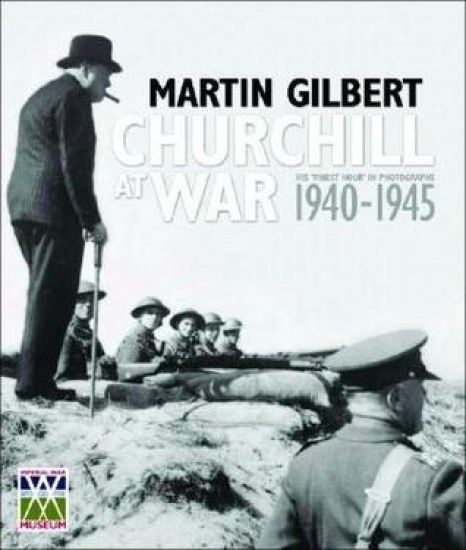
Churchill at War: His Finest Hour in Photographs 1940-1945
Churchill at War combines official Churchill biographer Sir Martin Gilbert's authoritative text with almost 200 photographs from the remarkable archive of London's Imperial War Museum to create an unprecedented portrait of Churchill throughout World War II. Whether deep in conversation with world leaders, sharing a joke with dock workers, inspecting bomb-damaged cities, rallying his troops in the theaters of war, picnicking with his generals on the banks of the Rhine, visiting the ruins of Berlin, or celebrating the victory over Germany, Churchill's charisma, strength of character, sense of humor, sensitivity, and love for his country shine out from these images. Churchill at War is an insightful glimpse into the wartime life of the man whose friendship with Franklin D. Roosevelt led to the closest-ever Anglo-American relationship, and whose tireless commitment to defeating Nazism was to prove an inspiration for millions over the decades both at home and abroad. 196 b/w photographs.