Kirjojen hintavertailu – 12 903 735 kirjaa ja 27 kauppaa

Kirjailija

Martin Green

Kirjat ja teokset yhdessä paikassa: 32 kirjaa, julkaisuja vuosilta 1967–2026, suosituimpiin kuuluu The English Novel in the Twentieth Century. Vertaile teosten hintoja ja tarkista saatavuus suomalaisista kirjakaupoista.

32 kirjaa

Kirjojen julkaisuvuodet: 1967–2026.

The Other Jerome K Jerome

The Other Jerome K Jerome

Martin Green

Nonsuch Publishing
2009
nidottu
Jerome K Jerome is without doubt best known today for his comic masterpiece Three Men in a Boat. More than a century after its first publication it is still making people laugh. But Jerome was very much more than a one-book wonder, writing plays, essays, short stories, sketches and other novels. The Other Jerome K Jerome is, in effect, a jerome 'reader', providing a carefully chosen selection from his other works demonstrative of the variety and brilliance of his writing. Including excerpts from On the Stage-and Off, The Passing of the Third Floor Back and Diary of a Pilgrimate, amongst others, and with an introduction by Martin Green, this is an ideal companion for fans of 'Three Men in a Boat' who want to find out more about is author's other works.
A Marriage of Destiny

A Marriage of Destiny

Robyn Green; Martin Green

Booklocker Inc.,US
2004
pokkari
Is God helping you search for your true mate? God can communicate who your spiritual mate is! The Greens tell an amazing and funny story of their union, teaching about hearing God, prophetic direction, divorce and remarriage in the process.
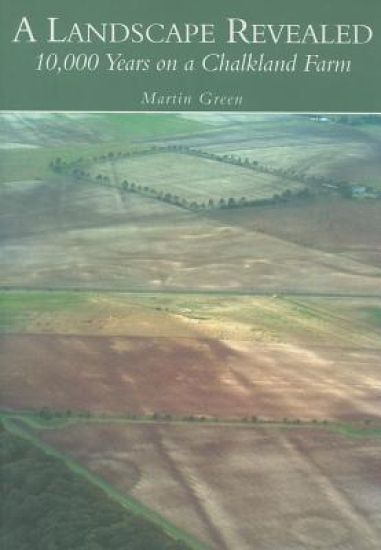
A Landscape Revealed

A Landscape Revealed

Martin Green

The History Press Ltd
2000
nidottu
The Down Farm Landscape (where the author's family has farmed for generations) is one of the most carefully studied areas in Western Europe. Much of this work has been carried out by the author himself - who in 1992 won the Pitt Rivers award for independent archaeology. His work has involved five universities and one of the major field units were recently featured in a BBC 2 'Meet the Ancestors' programme. The farm is part of Cranborne Chase, just south of Salisbury (where, coincidentally, the famous General Pitt Rivers began his pioneering work in the 1880s). It not only contains the Neolithic Dorset Cursus, numerous long barrows and Hambledon Hill, but over the last 30 years henges, shafts, plastered houses, land divisions, enclosures and cemeteries have been identified and excavated. The farm has its own museum and for the book the author provided a unique range of illustrations (including full colour reconstructions).
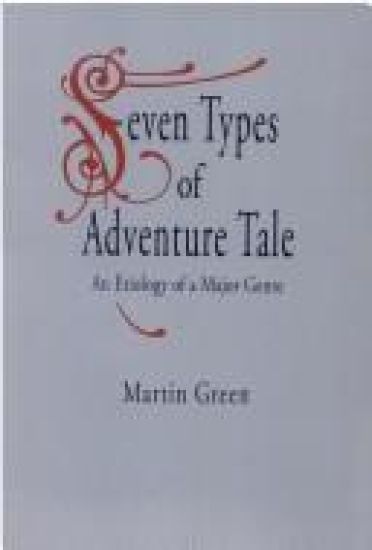
Seven Types of Adventure Tale

Seven Types of Adventure Tale

Martin Green

Pennsylvania State University Press
1991
pokkari
From Alexandre Dumas to Raymond Chandler, Martin Green examines adventure stories and their role in spreading the ideology of the modern nation-state. Seven Types of Adventure Tale studies widely read and influential adventure tales of the eighteenth through the twentieth centuries in the respectable literary forms. Some of the authors considered are Dumas, Scott, Defoe, Cooper, Verne, Buchan, Kipling, Twain, and Chandler. These stories, though adapted and copied innumerable times and read in their native languages and in translation throughout the Western world, have been largely neglected by literary theorists. Green offers a way to take the adventure tale seriously by positioning these stories within a new theoretical framework. Green places the tales in seven categories organized according to the type of central character in each story. The first category is the Robinson Crusoe story, which portrays the myth of entrepreneurial capitalism and "modern" or postfeudal politics. This story has appeared in one hundred well-known versions, including The Swiss Family Robinson and Lord of the Flies, since Defoe published his version. The second category is the Three Musketeers story, mythifying the birth of the French state and, by extension, the birth of other nation-states. The third is the Frontiersman story, originally about American history but a powerful myth far beyond U. S. borders. The fourth, the Avenger story, is tied to the myth of an avenging return by Napoleon to France, but more generally to a threat to the bourgeois ruling classes of the nineteenth-century Europe. The fifth is the Wanderer story, which relates to escaping from social discipline but also to spying and disguises and crossing frontiers of all kinds. The sixth, the Saga story, is a revision of the Icelandic and Teutonic sagas and reflects the myth of resurgent Germany after its unification in 1870. And the seventh category, more specific to the twentieth century, is the Hunted Man story, in which an individual hero is pitted against social juggernaut, such as the state, the Mafia, or a giant corporation. Seven Types of Adventure Tale is the second volume of a three-volume study of adventure by Green that began with The Robinson Crusoe Story.

Seven Types of Adventure Tale

Seven Types of Adventure Tale

Martin Green

Pennsylvania State University Press
1991
sidottu
From Alexandre Dumas to Raymond Chandler, Martin Green examines adventure stories and their role in spreading the ideology of the modern nation-state. Seven Types of Adventure Tale studies widely read and influential adventure tales of the eighteenth through the twentieth centuries in the respectable literary forms. Some of the authors considered are Dumas, Scott, Defoe, Cooper, Verne, Buchan, Kipling, Twain, and Chandler. These stories, though adapted and copied innumerable times and read in their native languages and in translation throughout the Western world, have been largely neglected by literary theorists. Green offers a way to take the adventure tale seriously by positioning these stories within a new theoretical framework. Green places the tales in seven categories organized according to the type of central character in each story. The first category is the Robinson Crusoe story, which portrays the myth of entrepreneurial capitalism and "modern" or postfeudal politics. This story has appeared in one hundred well-known versions, including The Swiss Family Robinson and Lord of the Flies, since Defoe published his version. The second category is the Three Musketeers story, mythifying the birth of the French state and, by extension, the birth of other nation-states. The third is the Frontiersman story, originally about American history but a powerful myth far beyond U. S. borders. The fourth, the Avenger story, is tied to the myth of an avenging return by Napoleon to France, but more generally to a threat to the bourgeois ruling classes of the nineteenth-century Europe. The fifth is the Wanderer story, which relates to escaping from social discipline but also to spying and disguises and crossing frontiers of all kinds. The sixth, the Saga story, is a revision of the Icelandic and Teutonic sagas and reflects the myth of resurgent Germany after its unification in 1870. And the seventh category, more specific to the twentieth century, is the Hunted Man story, in which an individual hero is pitted against social juggernaut, such as the state, the Mafia, or a giant corporation. Seven Types of Adventure Tale is the second volume of a three-volume study of adventure by Green that began with The Robinson Crusoe Story.

The Kingdom of God Is Within You

The Kingdom of God Is Within You

Leo Tolstoy; Martin Green

University of Nebraska Press
1984
pokkari

Halvin toimitettuna 26,50 €

First published in Germany in 1894, after being banned in Russia, The Kingdom of God Is within You reveals Tolstoy's world outlook after his conversion to Christianity. He argues that the kingdom of God is within reach of all. The core of the book deals with his nonresistance to evil, a principle Tolstoy passionately advocated. Gandhi was won over by the book. Tolstoy clearly describes the hazards that bullying governments and false beliefs produced. "The situation of the Christian part of humanity—with its prisons, forced labor, gallows, saloons, brothels, constantly increasing armaments, and millions of confused people ready like trained hounds to attack anyone against whom their masters set them—this situation would be terrible if it were the product of coercion, but it is above all the product of public opinion." Abhorring the violence of revolution, Tolstoy calls on Christians to remember that the only guide for their actions is to be found in the divine principle dwelling within them, which in no sense can be checked or governed by anyone or anything else.