Kirjojen hintavertailu – 12 859 819 kirjaa ja 27 kauppaa

Kirjailija

Martin Hewitt

Kirjat ja teokset yhdessä paikassa: 7 kirjaa, julkaisuja vuosilta 1992–2023, suosituimpiin kuuluu Aircraft Fuel Systems. Vertaile teosten hintoja ja tarkista saatavuus suomalaisista kirjakaupoista.

7 kirjaa

Kirjojen julkaisuvuodet: 1992–2023.

Aircraft Fuel Systems

Aircraft Fuel Systems

Roy Langton; Chuck Clark; Martin Hewitt; Lonnie Richards; Ian Moir; Allan Seabridge

John Wiley Sons Inc
2009
sidottu
All aspects of fuel products and systems including fuel handling, quantity gauging and management functions for both commercial (civil) and military applications. The fuel systems on board modern aircraft are multi-functional, fully integrated complex networks. They are designed to provide a proper and reliable management of fuel resources throughout all phases of operation, notwithstanding changes in altitude or speed, as well as to monitor system functionality and advise the flight crew of any operational anomalies that may develop. Collates together a wealth of information on fuel system design that is currently disseminated throughout the literature. Authored by leading industry experts from Airbus and Parker Aerospace. Includes chapters on basic system functions, features and functions unique to military aircraft, fuel handling, fuel quantity gauging and management, fuel systems safety and fuel systems design and development. Accompanied by a companion website housing a MATLAB/SIMULINK model of a modern aircraft fuel system that allows the user to set up flight conditions, investigate the effects of equipment failures and virtually fly preset missions. Aircraft Fuel Systems provides a timely and invaluable resource for engineers, project and programme managers in the equipment supply and application communities, as well as for graduate and postgraduate students of mechanical and aerospace engineering. It constitutes an invaluable addition to the established Wiley Aerospace Series.
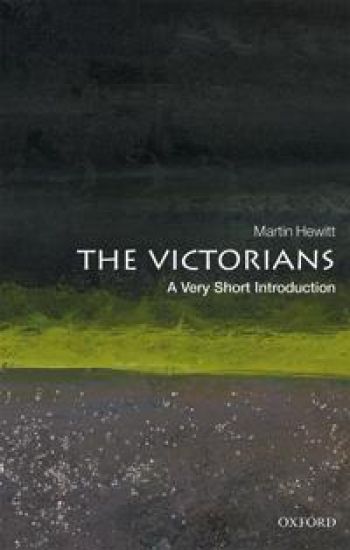
The Victorians

The Victorians

Martin Hewitt

Oxford University Press
2023
nidottu
Very Short Introductions: Brilliant, Sharp, Inspiring The Victorian period may have come to an end over 120 years ago, but the Victorians continue to be a vital presence in the modern world. Contemporary Britain is still in large part Victorian in its transport networks, sewage systems, streets, and houses. Victorian cultural legacies, especially in art, science, and literature, are still celebrated. The first to have to grapple with many of the challenges of modern urban society, we continue to look to the Victorians for inspiration and solace. And we are increasingly aware of the ways their global actions shaped, often for ill, the world around us. Much mythologised, inexhaustibly controversial, the Victorians are an inescapable reference point for understanding the modern histories not just of Britain and its empire, but of the world. In The Victorians: A Very Short Introduction Martin Hewitt offers a guide through the thickets of judgement and debate which have grown around the period and its people, to offer a historical overview of the Victorians and their legacies. He seeks to answer five crucial questions. Why have the Victorians continued occupy such a prominent place in the cultures of not just the anglophone world? How far does it make sense to think of a 64-year period arbitrarily given an identity by the longevity of the Queen as an identifiable historical period in a general sense? How justified are the value-laden versions of the Victorians which argue for the existence of a particular world view called 'Victorianism'? Beyond ideology, what was Victorian Britain actually like – and in particular, what was distinctive about it? Who were the Victorians – not just the eminent few, but the population as a whole? And finally, how far and with what results did the Victorians and their culture spread across the globe? In answering these questions, Hewitt cautions against some long-held orthodoxies, throws a light on some less well-known aspects of the period, and urges the importance of understanding the Victorians on their own terms if we are to effectively engage with their legacies. ABOUT THE SERIES: The Very Short Introductions series from Oxford University Press contains hundreds of titles in almost every subject area. These pocket-sized books are the perfect way to get ahead in a new subject quickly. Our expert authors combine facts, analysis, perspective, new ideas, and enthusiasm to make interesting and challenging topics highly readable.
Making Social Knowledge in the Victorian City
This study explores the ‘ecology of knowledge’ of urban Britain in the Victorian period and seeks to examine the way in which Victorians comprehended the nature of their urban society, through an exploration of the history of Victorian Manchester, and two specific case studies on the fiction of Elizabeth Gaskell and the campaigns for educational extension which emerged out of the city. It argues that crucial to the Victorians’ approaches was the ‘visiting mode’ as a particular discursive formation, including its institutional foundations, its characteristic modes and assumptions, and the texts which exemplify it. Recognition of the importance of the visiting mode, it is argued, offers a fundamental challenge to established Foucauldian interpretations of nineteenthcentury society and culture and provides an important corrective to recent scholarship of nineteenth-century technologies of knowing.
The Dawn of the Cheap Press in Victorian Britain

The Dawn of the Cheap Press in Victorian Britain

Martin Hewitt

Bloomsbury Academic
2015
nidottu
The Dawn of the Cheap Press provides the first detailed study of the mid-Victorian campaign for the repeal of the taxes on knowledge for over a hundred years. Using the recently discovered papers of the Association for the Promotion of the Repeal of the Taxes on Knowledge and taking advantage of new forms of research made possible by the digitisation of nineteenth century newspapers, it assesses the impact of the removal of the last surviving legal disabilities on the newspaper industry, the nature of journalism, and the cultures and practices of newspaper reading. The book demonstrates that the campaign against the taxes on knowledge retained broad popular appeal, and played an important role in the politics of mid-Victorian budgets. It not only makes a seminal contribution to the history of the nineteenth century press and print culture, but also illuminates the culture and politics of mid-Victorian Britain, offers an important re-reading of the history of extra-parliamentary pressure group politics and provides new insights into the origins of Gladstonian Liberalism.
The Emergence of Stability in the Industrial City
The rapid eclipse of Chartism, and the relative tranquility of the period 1848-67 has been one of the most enduring puzzles of nineteenth-century British history. This book takes a fresh look at this conundrum, treating the period between the Reform Acts of 1832 and 1867 as a coherent whole for the first time. It suggests that previous depictions of 1848 as a watershed in British history have both exaggerated the nature of the transitions which occurred at mid-century, and have over-estimated both the collapse of radical attitudes and the fading of working-class resentment. The experiences of the Manchester working class show that poverty, unemployment and hardship persisted through the mid-Victorian boom. While some workers may have taken advantage of economic opportunities and the various movements of social and moral reform promoted by the middle class to acquire respectability, in general, attempts at middle-class ’moral imperialism’ brought only marginal changes to popular culture and attitudes. Instead, it is argued, the roots of the radical collapse and of political stability lie elsewhere: in the initial failure of radical leaders to sustain a firm consensus on effective strategies of reform, and in changes in the political culture of the mid-century city which closed off spaces in which independent working-class politics could continue to function. In the context of the most important industrial city of the era, this study provides a wide-ranging analysis of the complex forces which forged the uneasy compromise on which mid-nineteenth century stability rested.
Welfare, Ideology and Need

Welfare, Ideology and Need

Martin Hewitt

Barnes Noble Books-Imports, Div of Rowman Littlefield Pubs., Inc
1992
sidottu
Welfare, Ideology and Need examines the ideological conflict that emerged in the 1970s and 1980s between Social Democracy and the New Right over the welfare state. Writing from a critical theory perspective, Martin Hewitt asks whether the foundations of a new ideological consensus on the welfare state have been established for the 1990s, and, if not, when and under what circumstances such a consensus might eventually emerge, and what form it would take. Part I examines the strengths and weaknesses of these two political ideologies and their respective policy programs in addressing the welfare needs and aspirations of citizens. In addition it seeks to identify the intellectual resources of Social Democratic welfare theory capable of withstanding the ideological assault of the Right. In Parts II and III, the book draws on Marxist and discourse theories of ideology, developed by writers such as Althusser, Foucault, Laclau, Habermas and Lacan. In particular, in examining the distinct contributions of Habermas and Lacan, it seeks to develop an understanding of the nature of human need and how welfare ideology might be positively used to accommodate this in the welfare politics of the 1990s. The book provides a timely and insightful analysis of recent developments in welfare policy which is invaluable reading for students and researchers of social policy, welfare ideology, social and political theory and cultural studies.