Kirjojen hintavertailu – 12 859 818 kirjaa ja 27 kauppaa

Kirjailija

Martin Holbraad

Kirjat ja teokset yhdessä paikassa: 9 kirjaa, julkaisuja vuosilta 2012–2025, suosituimpiin kuuluu Shapes in Revolution. Vertaile teosten hintoja ja tarkista saatavuus suomalaisista kirjakaupoista.

9 kirjaa

Kirjojen julkaisuvuodet: 2012–2025.

Shapes in Revolution

Shapes in Revolution

Martin Holbraad

Cambridge University Press
2025
sidottu
Revolutions are cosmogonic. More than any other modern political form, their deliberate goal is to precipitate change as a total, all-embracing project: not just a radically new political order but one that reaches deep into the fabric of social relationships, seeking to transform people at their very core, recasting the horizons that give their lives shape and meaning. Combining ethnographic and historiographic research, Shapes in Revolution tells the story of this radical process of life-formation, with all of its rugged contradictions and ambiguities, as it has unfolded in Cuba. As well as a novel anthropological perspective on revolutions, the upshot is a fresh approach to the study of political forms and their power to format people and their relationships into particular shapes. Articulating politics through the shapes it gives to people and their lives, the work proposes relational morphology as a new departure for political anthropology.
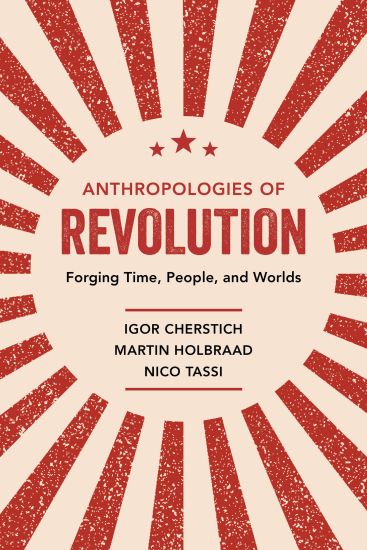
Anthropologies of Revolution

Anthropologies of Revolution

Igor Cherstich; Martin Holbraad; Nico Tassi

University of California Press
2020
pokkari
A free open access ebook is available upon publication. Learn more at www.luminosoa.org. What can anthropological thinking contribute to the study of revolutions? The first book-length attempt to develop an anthropological approach to revolutions, Anthropologies of Revolution proposes that revolutions should be seen as concerted attempts to radically reconstitute the worlds people inhabit. Viewing revolutions as all-embracing, world-creating projects, the authors ask readers to move beyond the idea of revolutions as acts of violent political rupture, and instead view them as processes of societal transformation that penetrate deeply into the fabric of people’s lives, unfolding and refolding the coordinates of human existence.
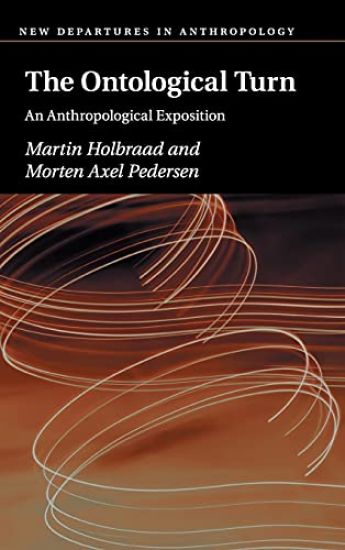
The Ontological Turn

The Ontological Turn

Martin Holbraad; Morten Axel Pedersen

Cambridge University Press
2017
sidottu
A new and often controversial theoretical orientation that resonates strongly with wider developments in contemporary philosophy and social theory, the so-called 'ontological turn' is receiving a great deal of attention in anthropology and cognate disciplines at present. This book provides the first anthropological exposition of this recent intellectual development. It traces the roots of the ontological turn in the history of anthropology and elucidates its emergence as a distinct theoretical orientation over the past few decades, showing how it has emerged in the work of Roy Wagner, Marilyn Strathern and Viveiros de Castro, as well a number of younger scholars. Distinguishing this trajectory of thinking from related attempts to put questions of ontology at the heart of anthropological research, the book articulates critically the key methodological and theoretical tenets of the ontological turn, its prime epistemological and political implications, and locates it in the broader intellectual landscape of contemporary social theory.
The Ontological Turn

The Ontological Turn

Martin Holbraad; Morten Axel Pedersen

Cambridge University Press
2017
pokkari

Halvin toimitettuna 36,30 €

A new and often controversial theoretical orientation that resonates strongly with wider developments in contemporary philosophy and social theory, the so-called 'ontological turn' is receiving a great deal of attention in anthropology and cognate disciplines at present. This book provides the first anthropological exposition of this recent intellectual development. It traces the roots of the ontological turn in the history of anthropology and elucidates its emergence as a distinct theoretical orientation over the past few decades, showing how it has emerged in the work of Roy Wagner, Marilyn Strathern and Viveiros de Castro, as well a number of younger scholars. Distinguishing this trajectory of thinking from related attempts to put questions of ontology at the heart of anthropological research, the book articulates critically the key methodological and theoretical tenets of the ontological turn, its prime epistemological and political implications, and locates it in the broader intellectual landscape of contemporary social theory.
The Relative Native – Essays on Indigenous Conceptual Worlds

The Relative Native – Essays on Indigenous Conceptual Worlds

Eduardo Viveiros De Cas; Roy Wagner; Martin Holbraad; David Rodgers; Julia Sauma

HAU
2016
nidottu
This book is the first to collect the most influential essays and lectures of Eduardo Viveiros de Castro. Published in a wide variety of venues, and often difficult to find, the pieces are brought together here for the first time in a one major volume, which includes his momentous 1998 Cambridge University Lectures, "Cosmological Perspectivism in Amazonia and Elsewhere." Rounded out with new English translations of a number of previously unpublished works, the resulting book is a wide-ranging portrait of one of the towering figures of contemporary thought - philosopher, anthropologist, ethnographer, ethnologist, and more. With a new afterword by Roy Wagner elucidating Viveiros de Castro's work, influence, and legacy, The Relative Native will be required reading, further cementing Viveiros de Castro's position at the center of contemporary anthropological inquiry.
Truth in Motion

Truth in Motion

Martin Holbraad

University of Chicago Press
2012
sidottu
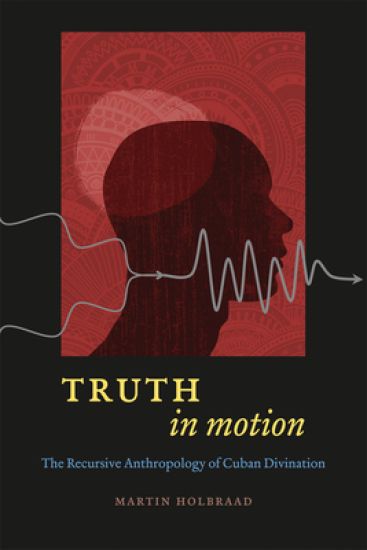
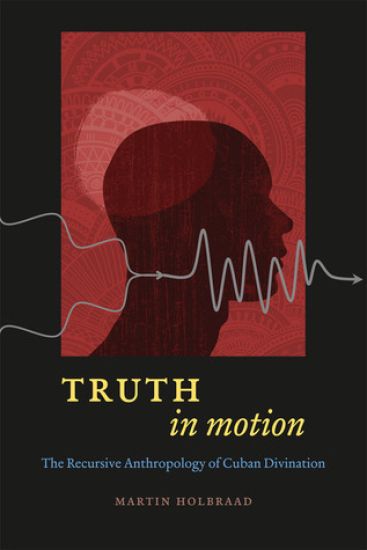
Embarking on an ethnographic journey to the inner barrios of Havana among practitioners of Ifa, a prestigious Afro-Cuban tradition of divination, "Truth in Motion" reevaluates Western ideas about truth in light of the practices and ideas of a wildly different, and highly respected, model. Acutely focusing on Ifa, Martin Holbraad takes the reader inside consultations, initiations and lively public debates to show how Ifa practitioners see truth as something not so much to be represented, but transformed. Central to this position is Holbraad's description of Ifa truth as a motile event that is forged in the ritual of divination, rather than a static state simply needing to be unveiled. Ifa truth, Holbraad shows, is to be conceived as something that moves, literally, and is transformed when different trajectories of meaning are made to collide. Going further, he brings this ethnographic analysis to bear on the discipline of anthropology itself, recasting conflicts of truth and the problem of otherness in anthropological inquiry as rooted not in epistemological differences but ontological ones - truth, he argues, does not simply appear in different forms but exists in them.
Truth in Motion

Truth in Motion

Martin Holbraad

University of Chicago Press
2012
nidottu
Embarking on an ethnographic journey to the inner barrios of Havana among practitioners of Ifa, a prestigious Afro-Cuban tradition of divination, "Truth in Motion" reevaluates Western ideas about truth in light of the practices and ideas of a wildly different, and highly respected, model. Acutely focusing on Ifa, Martin Holbraad takes the reader inside consultations, initiations, and lively public debates to show how Ifa practitioners see truth as something not so much to be represented, but transformed. Central to this position is Holbraad's description of Ifa truth as a motile event that is forged in the ritual of divination, rather than a static state simply needing to be unveiled. Ifa truth, Holbraad shows, is to be conceived as something that moves, literally, and is transformed when different trajectories of meaning are made to collide. Going further, he brings this ethnographic analysis to bear on the discipline of anthropology itself, recasting conflicts of truth and the problem of otherness in anthropological inquiry as rooted not in epistemological differences but ontological ones - truth, he argues, does not simply appear in different forms but exists in them.