Kirjojen hintavertailu – 12 859 828 kirjaa ja 27 kauppaa

Kirjailija

Martin Hollis

Kirjat ja teokset yhdessä paikassa: 9 kirjaa, julkaisuja vuosilta 1988–2015, suosituimpiin kuuluu Explaining and Understanding International Relations. Vertaile teosten hintoja ja tarkista saatavuus suomalaisista kirjakaupoista.

9 kirjaa

Kirjojen julkaisuvuodet: 1988–2015.

Models of Man

Models of Man

Martin Hollis

Cambridge University Press
2015
sidottu
All social theorists and philosophers who seek to explain human action have a 'model of man'; a metaphysical view of human nature that requires its own theory of scientific knowledge. In this influential book, Martin Hollis examines the tensions that arise from the differing views of sociologists, economists and psychologists. He then develops a rationalist model of his own which connects personal and social identity through a theory of rational action and a priori knowledge, allowing humans to both act freely and still be a subject for scientific explanation. Presented in a fresh series livery and including a specially commissioned preface written by Geoffrey Hawthorn, Hollis's important work is made available to a new generation of readers.
Models of Man

Models of Man

Martin Hollis

Cambridge University Press
2015
pokkari
All social theorists and philosophers who seek to explain human action have a 'model of man'; a metaphysical view of human nature that requires its own theory of scientific knowledge. In this influential book, Martin Hollis examines the tensions that arise from the differing views of sociologists, economists and psychologists. He then develops a rationalist model of his own which connects personal and social identity through a theory of rational action and a priori knowledge, allowing humans to both act freely and still be a subject for scientific explanation. Presented in a fresh series livery and including a specially commissioned preface written by Geoffrey Hawthorn, Hollis's important work is made available to a new generation of readers.
Trust within Reason

Trust within Reason

Martin Hollis

Cambridge University Press
1998
sidottu
Some philosophers hold that trust grows fragile when people become too rational. They advocate a retreat from reason and a return to local, traditional values. Others hold that truly rational people are both trusting and trustworthy. Everything hinges on what we mean by ‘reason’ and ‘rational’. If these are understood in an egocentric, instrumental fashion, then they are indeed incompatible with trust. With the help of game theory, Martin Hollis argues against that narrow definition and in favour of a richer, deeper notion of reason founded on reciprocity and the pursuit of the common good. Within that framework he reconstructs the Enlightenment idea of citizens of the world, rationally encountering, and at the same time finding their identity in, their multiple commitments to communities both local and universal.
Invitation to Philosophy

Invitation to Philosophy

Martin Hollis

JOHN WILEY AND SONS LTD
1997
nidottu
In the revised and updated edition of this classic introductory text, Martin Hollis leads his readers through the age-old philosophical questions of free choice and human nature, appearance and reality, reason and experience.
Reason in Action

Reason in Action

Martin Hollis

Cambridge University Press
1995
pokkari
Did Adam and Eve act rationally in eating the fruit of the forbidden tree? That can seem to depend solely on whether they had found the best means to their ends, in the spirit of the ‘economic’ theories of rationality. Martin Hollis respects the elegance and power of these theories but judges their paradoxes endemic. He argues that social action cannot be understood by viewing human beings as abstract individuals with preferences in search of satisfaction, nor by divorcing practical reason from questions of the rationality of norms, principles, practices and ends. These essays, focused on the themes of ‘rational choice’, ‘roles and reasons’ and ‘other cultures, other minds’, make the point and explore alternative approaches. Culled in revised form from twenty-five years’ work, the essays range across periods and disciplines with a philosophical imagination and vivid prose, which will engage philosophers and social scientists alike.
Reason in Action

Reason in Action

Martin Hollis

Cambridge University Press
1995
sidottu
Did Adam and Eve act rationally in eating the fruit of the forbidden tree? That can seem to depend solely on whether they had found the best means to their ends, in the spirit of the ‘economic’ theories of rationality. Martin Hollis respects the elegance and power of these theories but judges their paradoxes endemic. He argues that social action cannot be understood by viewing human beings as abstract individuals with preferences in search of satisfaction, nor by divorcing practical reason from questions of the rationality of norms, principles, practices and ends. These essays, focused on the themes of ‘rational choice’, ‘roles and reasons’ and ‘other cultures, other minds’, make the point and explore alternative approaches. Culled in revised form from twenty-five years’ work, the essays range across periods and disciplines with a philosophical imagination and vivid prose, which will engage philosophers and social scientists alike.
The Theory of Choice

The Theory of Choice

Shaun Heap; Bruce Lyons; Martin Hollis; Robert Sugden; Albert Weale

Blackwell Publishers
1992
nidottu
The book is in three parts with a section of keywords. Part I covers individual choice , Part II examines interactive choice . The final part covers interactive choice .
Explaining and Understanding International Relations

Explaining and Understanding International Relations

Martin Hollis; Steve Smith

Clarendon Press
1991
nidottu
Are the workings of the international world to be explained scientifically, or are they to be understood through their inward meaning? In Explaining and Understanding International Relations philosopher Martin Hollis and international relations scholar Steve Smith join forces to analyse the dominant theories of international relations and to examine the philosophical issues underlying them. The book has three parts. In the first the authors review the growth of the discipline since 1918, pose the 'level of analysis' problem of whether to account for a sytem in terms of its units or vice versa, and contrast the demand of scientific method with those of interpretative understanding. In the second they apply the contrast to four factors often cited in accounting for international behaviour - the international system, the state, bureaucracies, and decision-making individuals. Rival accounts of the games nations play are offered in readiness for the final part, where the authors propose a theoretical agenda, air their differences, and invite readers to take sides. By tackling deep theoretical issues with lucidity and verve this book will excite debate among theorists and students of international relations while also engaging thought about the philosophical character of the social sciences.
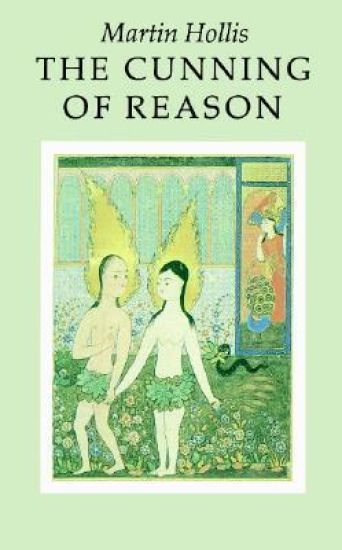
The Cunning of Reason

The Cunning of Reason

Martin Hollis

Cambridge University Press
1988
pokkari
This book is a philosophers’ attempt to bring together ideas put forward by economists, sociologists and political theorists. The author begins by exploring the economist’s assumption that action is rational if it helps to achieve the agent’s goals as efficiently as possible. The assumption is explored with the aid of rational-choice theory and game-theory, but it is rejected in the end for failing to account for the elements of trust and morality which rational social life requires. A discussion of ‘Rational Expectations’ and of ‘maximising’ and ‘satisficing’ leads to a portrait of social actors as rational role-players. Rationality is, finally, the expression of the self in a social world. The book intervenes in intense current debates within and among several disciplines. Its concern is with the true nature of social actors and the proper character of social science. Its arguments are the more challenging for being presented in a simple, incisive and lucid prose. It will be of particular interest to philosophers, social theorists and social scientists interested in the philosophical aspects of their discipline.