Kirjojen hintavertailu – 12 903 725 kirjaa ja 27 kauppaa

Kirjailija

Martin Iddon

Kirjat ja teokset yhdessä paikassa: 9 kirjaa, julkaisuja vuosilta 2013–2026, suosituimpiin kuuluu Hauntology, Nostalgia, and New Music. Vertaile teosten hintoja ja tarkista saatavuus suomalaisista kirjakaupoista.

9 kirjaa

Kirjojen julkaisuvuodet: 2013–2026.

Hauntology, Nostalgia, and New Music

Hauntology, Nostalgia, and New Music

Martin Iddon

Cambridge University Press
2026
pokkari
In the past quarter of a century, or longer, popular cultures and musics both popular and 'new' have become concerned, rather than with futurity, with their own pasts, in a world where, after Fukuyama's 'end of history' or Berardi's 'cancellation of the future', the idea of fundamental historical change has seemed increasingly incredible. This Element is a critical study of music in what Fisher calls 'nostalgia mode', a flattened, high-gloss reproduction of a music indistinguishable from that which already exists, save for its technical perfection, and of hauntological musics critical of this stance, which deploy the music of the past not in reassuring fashion, but to stress that, in 'unwounded' history, they would not still be here. Although normally treated separately, this paradigm applies not only to popular music but also to new music, which has historically claimed the music of the future as its privileged territory.
Hauntology, Nostalgia, and New Music

Hauntology, Nostalgia, and New Music

Martin Iddon

Cambridge University Press
2026
sidottu
In the past quarter of a century, or longer, popular cultures and musics both popular and 'new' have become concerned, rather than with futurity, with their own pasts, in a world where, after Fukuyama's 'end of history' or Berardi's 'cancellation of the future', the idea of fundamental historical change has seemed increasingly incredible. This Element is a critical study of music in what Fisher calls 'nostalgia mode', a flattened, high-gloss reproduction of a music indistinguishable from that which already exists, save for its technical perfection, and of hauntological musics critical of this stance, which deploy the music of the past not in reassuring fashion, but to stress that, in 'unwounded' history, they would not still be here. Although normally treated separately, this paradigm applies not only to popular music but also to new music, which has historically claimed the music of the future as its privileged territory.
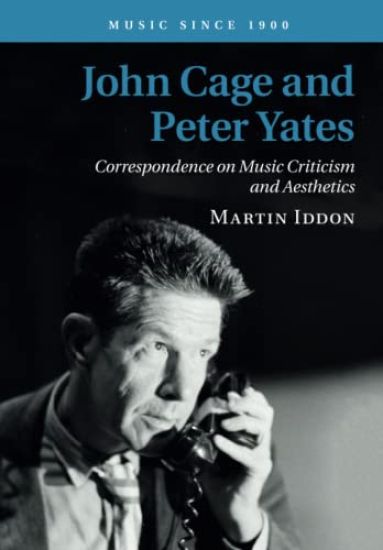
John Cage and Peter Yates

John Cage and Peter Yates

Martin Iddon

Cambridge University Press
2022
pokkari
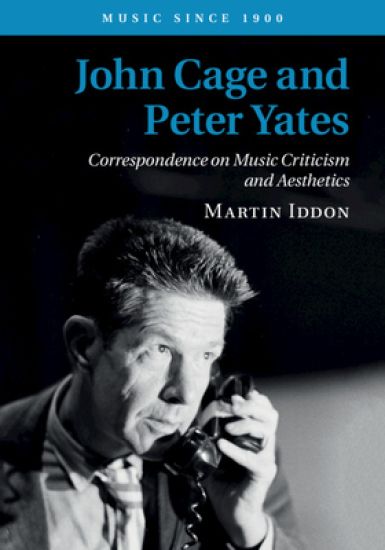
The correspondence between composer John Cage and Peter Yates represents the third and final part of Cage's most significant exchanges of letters, following those with Pierre Boulez and with David Tudor. Martin Iddon's book is the first volume to collect the complete extant correspondence with his critical friend, thus completing the 'trilogy' of Cage correspondence published by Cambridge. By bringing together more than 100 letters, beginning in 1940 and continuing until 1971, Iddon reveals the dialogue within which many of Cage's ideas were first forged and informed, with particular focus on his developing attitudes to music criticism and aesthetics. The correspondence with Yates represents precisely, in alignment with Cage's fastidious neatness, the part of his letter writing in which he engages most directly with the last part of his famous tricolon, 'composing's one thing, performing's another, listening's a third'.
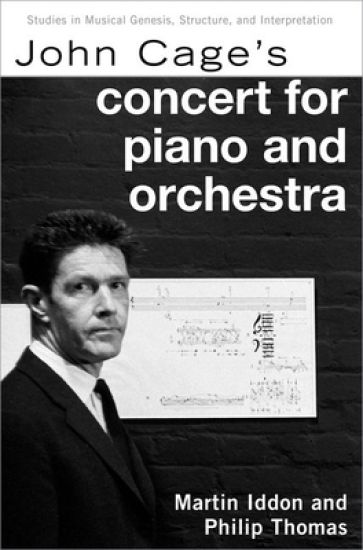
John Cage's Concert for Piano and Orchestra

John Cage's Concert for Piano and Orchestra

Martin Iddon; Philip Thomas

Oxford University Press Inc
2020
sidottu
John Cage's Concert for Piano and Orchestra is one of the seminal works of the second half of the twentieth century, and the centerpiece of the middle period of Cage's output. It is a culmination of Cage's work up to that point, incorporating notation techniques he had spent the past decade developing - techniques which remain radical to this day. But despite Cage's vitality to the musical development of the twentieth century, and the Concert's centrality to his career, the work is still rarely performed and even more rarely examined in detail. In this volume, Martin Iddon and Philip Thomas provide a rich and critical examination of this enormously significant piece, tracing its many contexts and influences - particularly Schoenberg, jazz, and Cage's own compositional practice - through a wide and previously untapped range of archival sources. Iddon and Thomas explain the Concert through a reading of its many histories, especially in performance - from the legendary performer disobedience and audience disorder of its 1958 New York premiere to a no less disastrous European premiere later the same year. They also highlight the importance of the piano soloist who premiered the piece, David Tudor, and its use alongside choreographer Merce Cunningham's Antic Meet. A careful examination of an apparently bewildering piece, the book explores the critical response to the Concert's performances, re-interrogates the mythology surrounding it, and finally turns to the music itself, in all its component parts, to see what it truly asks of performers and listeners.
John Cage and Peter Yates

John Cage and Peter Yates

Martin Iddon

Cambridge University Press
2019
sidottu
The correspondence between composer John Cage and Peter Yates represents the third and final part of Cage's most significant exchanges of letters, following those with Pierre Boulez and with David Tudor. Martin Iddon's book is the first volume to collect the complete extant correspondence with his critical friend, thus completing the 'trilogy' of Cage correspondence published by Cambridge. By bringing together more than 100 letters, beginning in 1940 and continuing until 1971, Iddon reveals the dialogue within which many of Cage's ideas were first forged and informed, with particular focus on his developing attitudes to music criticism and aesthetics. The correspondence with Yates represents precisely, in alignment with Cage's fastidious neatness, the part of his letter writing in which he engages most directly with the last part of his famous tricolon, 'composing's one thing, performing's another, listening's a third'.
John Cage and David Tudor

John Cage and David Tudor

Martin Iddon

Cambridge University Press
2015
pokkari
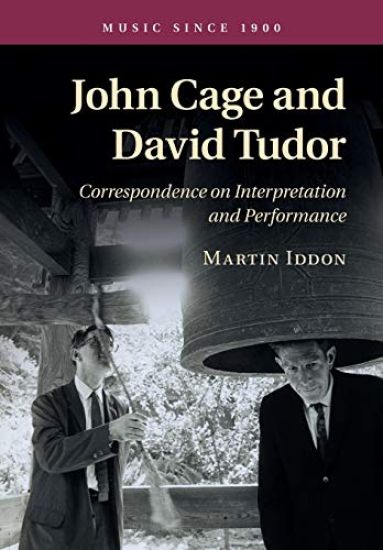
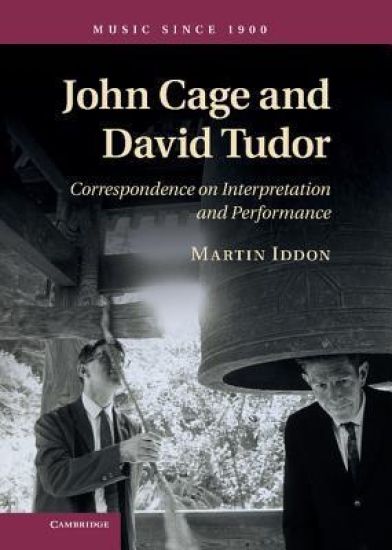
John Cage is best known for his indeterminate music, which leaves a significant level of creative decision-making in the hands of the performer. But how much licence did Cage allow? Martin Iddon's book is the first volume to collect the complete extant correspondence between the composer and pianist David Tudor, one of Cage's most provocative and significant musical collaborators. The book presents their partnership from working together in New York in the early 1950s, through periods on tour in Europe, until the late stages of their work from the 1960s onwards, carried out almost exclusively within the frame of the Merce Cunningham Dance Company. Tackling the question of how much creative flexibility Tudor was granted, Iddon includes detailed examples of the ways in which Tudor realised Cage's work, especially focusing on Music of Changes to Variations II, to show how composer and pianist influenced one another's methods and styles.
New Music at Darmstadt

New Music at Darmstadt

Martin Iddon

Cambridge University Press
2015
pokkari
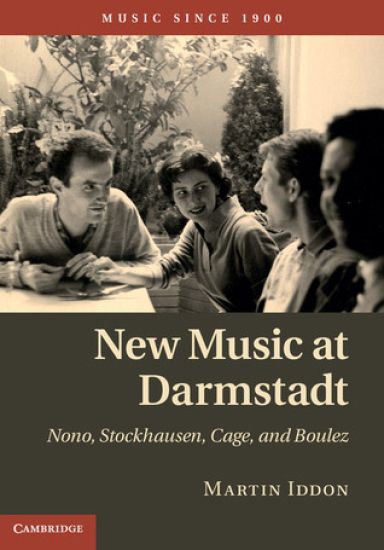
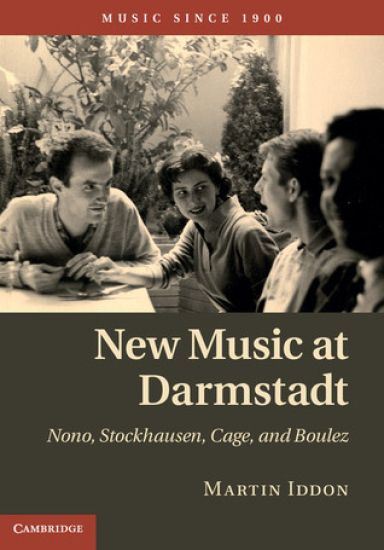
New Music at Darmstadt explores the rise and fall of the so-called 'Darmstadt School', through a wealth of primary sources and analytical commentary. Martin Iddon's book examines the creation of the Darmstadt New Music Courses and the slow development and subsequent collapse of the idea of the Darmstadt School, showing how participants in the West German new music scene, including Herbert Eimert and a range of journalistic commentators, created an image of a coherent entity, despite the very diverse range of compositional practices on display at the courses. The book also explores the collapse of the seeming collegiality of the Darmstadt composers, which crystallised around the arrival there in 1958 of the most famous, and notorious, of all post-war composers, John Cage, an event Carl Dahlhaus opined 'swept across the European avant-garde like a natural disaster'.
New Music at Darmstadt

New Music at Darmstadt

Martin Iddon

Cambridge University Press
2013
sidottu
New Music at Darmstadt explores the rise and fall of the so-called 'Darmstadt School', through a wealth of primary sources and analytical commentary. Martin Iddon's book examines the creation of the Darmstadt New Music Courses and the slow development and subsequent collapse of the idea of the Darmstadt School, showing how participants in the West German new music scene, including Herbert Eimert and a range of journalistic commentators, created an image of a coherent entity, despite the very diverse range of compositional practices on display at the courses. The book also explores the collapse of the seeming collegiality of the Darmstadt composers, which crystallised around the arrival there in 1958 of the most famous, and notorious, of all post-war composers, John Cage, an event Carl Dahlhaus opined 'swept across the European avant-garde like a natural disaster'.
John Cage and David Tudor

John Cage and David Tudor

Martin Iddon

Cambridge University Press
2013
sidottu
John Cage is best known for his indeterminate music, which leaves a significant level of creative decision-making in the hands of the performer. But how much licence did Cage allow? Martin Iddon's book is the first volume to collect the complete extant correspondence between the composer and pianist David Tudor, one of Cage's most provocative and significant musical collaborators. The book presents their partnership from working together in New York in the early 1950s, through periods on tour in Europe, until the late stages of their work from the 1960s onwards, carried out almost exclusively within the frame of the Merce Cunningham Dance Company. Tackling the question of how much creative flexibility Tudor was granted, Iddon includes detailed examples of the ways in which Tudor realised Cage's work, especially focusing on Music of Changes to Variations II, to show how composer and pianist influenced one another's methods and styles.