Kirjojen hintavertailu – 12 903 725 kirjaa ja 27 kauppaa
Kirjailija
Martin Jacoby
Kirjat ja teokset yhdessä paikassa: 13 kirjaa, julkaisuja vuosilta 1919–2020, suosituimpiin kuuluu Pyridin, Chinolin, Chinin, Chininderivate. Cocaingruppe. Curare und Curarealkaloide. Veratrin und Protoveratrin. Aconitingruppe. Pelletierin. Strychningruppe. Santonin. Pikrotoxin und verwandte Körper. Apomorphin, Apocodein, Ipecacuanha-Alkaloide. Colchic. Vertaile teosten hintoja ja tarkista saatavuus suomalaisista kirjakaupoista.
J. Bock; R. Boehm; E. Bürgi; M. Cremer; Arthur R. Cushny; Walter E. Dixon; A. Ellinger; Ph. Ellinger; E. St. Faust; Alfred Fröhlich; H. Fühner; R. Gottlieb; O. Gros; A. Heffter; L. J. Henderson; W. Heubner; R. Höber; Reid Hunt; Martin Jacoby; G. Joachimoglu; A. Jodlbauer; R. Kobert; M. Kochmann; A. Loewy; R. Magnus; J. Pohl; E. Poulsson; E. Rohde; E. Rost; K. Spiro; W. Straub; P. Trendelenburg; W. Wiechowski
Dieser Buchtitel ist Teil des Digitalisierungsprojekts Springer Book Archives mit Publikationen, die seit den Anfängen des Verlags von 1842 erschienen sind. Der Verlag stellt mit diesem Archiv Quellen für die historische wie auch die disziplingeschichtliche Forschung zur Verfügung, die jeweils im historischen Kontext betrachtet werden müssen. Dieser Titel erschien in der Zeit vor 1945 und wird daher in seiner zeittypischen politisch-ideologischen Ausrichtung vom Verlag nicht beworben.
XI. Contributions to the knowledge of African Phytophagous Coleoptera. Part II is an unchanged, high-quality reprint of the original edition of 1895. Hansebooks is editor of the literature on different topic areas such as research and science, travel and expeditions, cooking and nutrition, medicine, and other genres. As a publisher we focus on the preservation of historical literature. Many works of historical writers and scientists are available today as antiques only. Hansebooks newly publishes these books and contributes to the preservation of literature which has become rare and historical knowledge for the future.
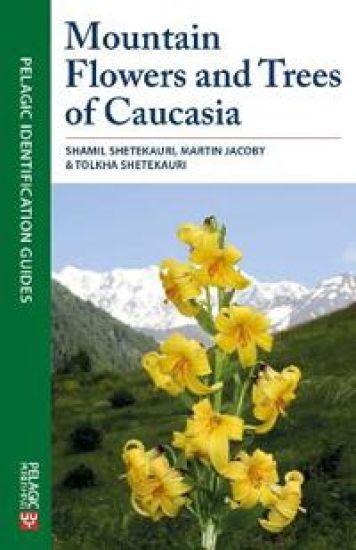
The mountains of Caucasia lie between the Black and Caspian Seas and on the boundary between Europe and Asia. They include the highest, most dramatic, least spoiled and least known mountain ranges of the northern hemisphere after the Himalayas and Rockies. The area supports about 6,400 species of vascular plant of which a quarter occur nowhere else (i.e. they are endemic to the region), and about 850 species of vertebrate animal of which some 120 are endemic. This is the highest percentage of endemism in the temperate world, and makes Caucasia one of the most important hotspots of biodiversity on Earth. Mountain Flowers & Trees of Caucasia describes and illustrates in full colour nearly all the wild flowers, trees and shrubs that can be found over 1,000 metres above sea level – 1,009 species. The authors hope that this field guide will encourage you to visit the mountains of Caucasia to delight in their unique and spectacular assemblage of flowering plants, and so contribute to its conservation. The authors include an overview of vegetation in Caucasia, along with a key to families, and keys to genera of selected families. This second edition has increased the number of species described to over a thousand, and adopted the modern systematic order of Plant Families described by the Angiosperm Phylogeny Group to show evolutionary relationships. The order of genera within each Family generally follows that of Flora Europaea. To ease the problem of synonyms, Mountain Flowers not only makes use of The Plant List (tPL), which is easily accessible on line, but gives a substantial list of other synonyms not included in tPL. Each species has a unique number which allows its description, photograph, synonyms and index entry to be easily linked.
IV daB es einen Gegensatz zwischen theoretischel' Medizin und Reil- kunst nicht gibt, daB vielmehr das Verstandnis des Experimentes eins der unbedingt notwendigen Rilfsmittel ist, welcher der Arzt fiir die kunstgerechte Ausiibung seiner schwierigen Aufgabe bedarf. Natiirlich darf man die Zeit des Studierenden und ebensowenig die knappen Stunden, die dem Arzt fiir seine Fortbildung bleiben, nicht zu sehr in Anspruch nehmen. Darum war Kiirze angebracht, die sich auch ohne Opferung wertvollen Materials erreiehen lieB. Immer war ieh darauf bedacht, den Zusammenhang mit del' Praxis zu betonen. Experimentelle Therapie ist durchaus geeignet, im wahrsten Sinne praktische Dienste zu leisten. Rier lernt der Arzt, was naturwissenschaftlich feststeht. Wer experimentelle Therapie stu- diert hat, ist befahigt zu unterseheiden, ob eine neu empfohlene Heilmethode saehlieh fundiert ist oder ob eiil. dilettantiseher Irr- weg eingesehlagen wurde, dessen Beschreiten fiir den arztlichen Stand ebenso sehadlieh ist wie fiir die kranken Menschen. Hier _gehen die Aufgaben der experimentellen Therapie durehaus mit der altbewahrten Pharmakologie parallel. Wenn auch die neue Auflage dazu beitragen wird, zum kri- tisehen Optimismus zu erziehen, so wird das Buch weiterhin seinen Zweck erfiillen. Berlin, September 1919. Martin Jacoby. Inhaltsverzeic hnis.