

Kirjailija
Martin Laird
Kirjat ja teokset yhdessä paikassa: 9 kirjaa, julkaisuja vuosilta 2004–2026, suosituimpiin kuuluu Ins Stille Land. Vertaile teosten hintoja ja tarkista saatavuus suomalaisista kirjakaupoista.
9 kirjaa
Kirjojen julkaisuvuodet: 2004–2026.
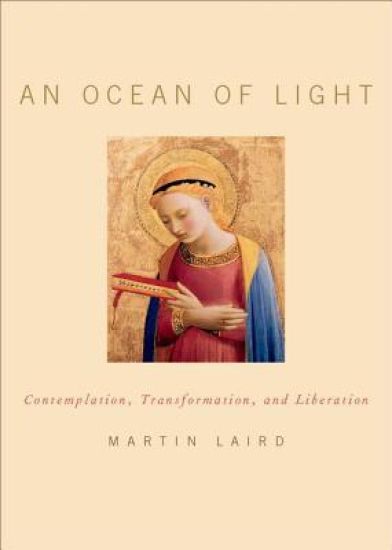
For people drawn to a life of contemplation, the dawning of luminous awareness in a mind full of clutter is deeply liberating. In the third of his best-selling books on Christian contemplative life, Martin Laird turns his attention to those who are well settled in their contemplative practice. An Ocean of Light speaks both to those just entering the contemplative path and to those with a maturing practice of contemplation. Gradually, the practice of contemplation lifts the soul, freeing it from the blockages that introduce confusion into our identity and thus confusion about the mystery we call God. In the course of a lifetime of inner silencing, the flower of awareness emerges: a living realization that we have never been separate from God or from the rest of humanity while we each fully become what each of us is created to be. In contemplation we become so silent before God that the "before" drops away. Those whose lives have led them deeply into the silent land realize this, but not in the way that we realize that the square root of 144 is 12. Laird draws from a wide and diverse range of writers-from St. Augustine, Evagrius Ponticus, and St. Teresa of Avila to David Foster Wallace, Flannery O'Connor, Virginia Woolf, and Franz Wright-to ground his insight in an ancient practice and give it a voice in contemporary language. With his characteristic lyricism and gentleness, Laird guides readers through new challenges of contemplative life, such as making ourselves the focus of our own contemplative project; dealing with old pain; transforming the isolation of loneliness and depression into a liberating solidarity with all who suffer; and the danger of using a spiritual practice as a strategy to acquire and control.
Confessions
Augustine of Hippo; Martin Laird
Darton,Longman Todd Ltd
2013
nidottu
Halvin toimitettuna 30,90 €
‘A canticle to God, and full of psychological insights that might have been written yesterday, the Confessions are the story of a soul, and also the story of God, and how he is constantly at work seeking us.’ Confessions is perhaps the most important spiritual autobiography of all: it chronicles Saint Augustine’s wild, dissonant youth and subsequent conversion to Christianity, as well as providing significant divine and philosophical insight. Bestselling author, Fr Benignus O’Rourke OSA, provides a new and luminescent translation of Confessions, his beautiful and eloquent prose shedding new light on the various shades of meaning in Saint Augustine’s meditations and stories. Each book is prefaced with an introduction providing further accessibility and depth of understanding to this seminal work. Fr Benignus O’Rourke O. S. A is an Augustinian friar and a member of the community at Clare Priory, Suffolk, and the bestselling author of Finding Your Hidden Treasure (DLT, 2010).
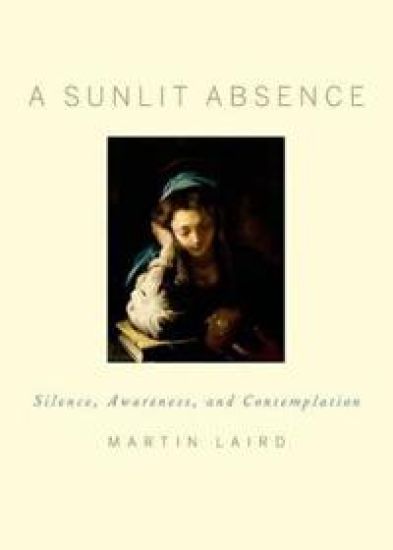
"The practice of contemplation is one of the great spiritual arts," writes Martin Laird in A Sunlit Absence. "Not a technique but a skill, it harnesses the winds of grace that lead us out into the liberating sea of silence." In this companion volume to his bestselling Into the Silent Land, Laird focuses on a quality often overlooked by books on Christian meditation: a vast and flowing spaciousness that embraces both silence and sound, and transcends all subject/object dualisms. Drawing on the wisdom of great contemplatives from St. Augustine and St. Teresa of Avila to St. Hesychios, Simone Weil, and many others, Laird shows how we can uncover the deeper levels of awareness that rest within us like buried treasure waiting to be found. The key insight of the book is that as our practice matures, so will our experience of life's ordeals, sorrows, and joys expand into generous, receptive maturity. We learn to see whatever difficulties we experience in meditation--boredom, lethargy, arrogance, depression, grief, anxiety--not as obstacles to be overcome but as opportunities to practice surrender to what is. With clarity and grace Laird shows how we can move away from identifying with our turbulent, ever-changing thoughts and emotions to the cultivation of a "sunlit absence"--the luminous awareness in which God's presence can most profoundly be felt. Addressed to both beginners and intermediates on the pathless path of still prayer, A Sunlit Absence offers wise guidance on the specifics of contemplative practice as well as an inspiring vision of the purpose of such practice and the central role it can play in our spiritual lives.
The most important journey in life is the journey inward--to the depths of our own being. It is a journey we are all invited to make. It takes us beyond words and images into silence. The silence allows the restless mind to become still and in the stillness we enter a new world. We return to our hearts. Here we find our true selves. We discover an ancient way of finding God that has almost become lost. Slowly, we realize that we are in union with the source of life and love itself. Our whole life changes. Our goal now is to take God's love to others in our everyday lives.
The first in-depth study of Gregory of Nyssa, this book shows how for Gregory the darkness of faith is what unites the believer with God. Through this union by faith alone, God yet speaks through the deeds and discourse of the believer. While the believer is immersed in the darkness of unknowing, they are also transformed in light. Laird alters the way in which we understand Gregory's mystical theology.
Into the Silent Land
Martin Laird
Oxford University Press Inc
2006
sidottu
Halvin toimitettuna 23,90 €
Into the Silent Land brings together scholarship, pastoral practice and the authorâ??s own personal experience. It offers new insights for the student but is especially intended for the non-specialist reader who feels drawn to the world of silent prayer.
Scholars of Gregory of Nyssa have long acknowledged the centrality of faith in his theory of divine union. To date, however, there has been no sustained examination of this key topic. The present study fills this gap and elucidates important auxiliary themes that accrue to Gregory's notion of faith as a faculty of apophatic union with God. The result adjusts how we understand the Cappadocian's apophaticism in general and his so-called mysticism of darkness in particular. After a general discussion of the increasing value of faith in late Neoplatonism and an overview of important work done on Gregorian faith, this study moves on to sketch a portrait of the mind and its dynamic, varying cognitive states and how these respond to the divine pedagogy of scripture, baptism, and the presence of God. With this portrait of the mind as a backdrop we see how Gregory values faith for its ability to unite with God, who remains beyond the comprehending grasp of mind. A close examination of the relationship between faith and mind shows Gregory bestowing on faith qualities which Plotinus would have granted only to the `crest of the wave of intellect'. While Gregorian faith serves as the faculty of apophatic union with God, faith yet gives something to mind. This dimension of Gregory's apophaticism has gone largely unnoticed by scholars. At the apex of an apophatic ascent faith unites with God the Word; by virtue of this union the believer takes on the qualities of the Word, who speaks (logophasis) in the deeds and discourse of the believer. Finally this study redresses how Gregory has been identified with a `mysticism of darkness' and argues that he proposes no less a `mysticism of light'.