Kirjojen hintavertailu – 12 859 824 kirjaa ja 27 kauppaa

Kirjailija

Martin Levy

Kirjat ja teokset yhdessä paikassa: 4 kirjaa, julkaisuja vuosilta 2004–2024, suosituimpiin kuuluu Doctor Barnardo. Vertaile teosten hintoja ja tarkista saatavuus suomalaisista kirjakaupoista.

4 kirjaa

Kirjojen julkaisuvuodet: 2004–2024.

Roundhouse

Roundhouse

Martin Levy

ibidem-Verlag, Jessica Haunschild u Christian Schon
2024
nidottu
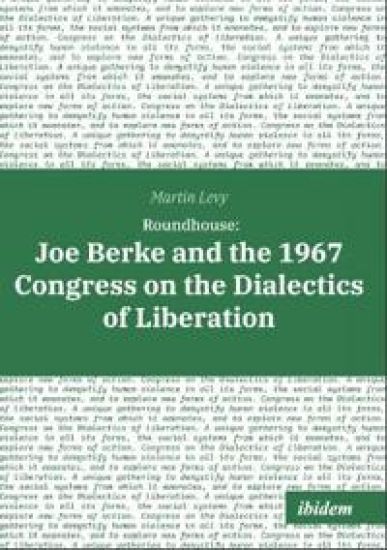
The 1967 ‘Summer of Love’ brought all sorts of unusual people and events to London but perhaps nothing so extraordinary as the Congress on the Dialectics of Liberation. The congress, organized by the American ‘anti-psychiatrist’ Joe Berke, with help from Leon Redler, R. D. Laing, David Cooper, and a host of students, ex-students, psychiatric ‘patients’, and secretaries, took place at the Roundhouse in Chalk Farm Road over two weeks during July, and was designed to ‘demystify human violence in all its forms, the social systems from which it emanates, and to explore new forms of action.’ But that bald summary of the purpose of the congress, accurate as it is, hardly does justice to its immediate achievements or to its long-term significance. Mingling with the many then famous speakers: Allen Ginsberg, Herbert Marcuse, Paul Goodman, Stokely Carmichael, Gregory Bateson, C. L. R. James, Julian Beck, Emmett Grogan, Thich Nhat Hanh, Paul Sweezy, John Gerassi, and Lucien Goldmann, were many younger people who arrived with their own ideas and who themselves went onto distinguished and influential careers in the arts, politics and academia. One was the American artist Carolee Schneemann, who devised a happening which was performed on the last day of the congress. Another was the British psychoanalyst and feminist Juliet Mitchell. A third was the American feminist, Angela Davis. This book, which is in part a biography of Joe Berke, traces the Congress from its origins in the United States to its major outgrowth The Anti-University of London, and concludes with some brief reflections on the congress’s relevance to today’s ‘revolutionary’ identity-based politics.
Ban the Bomb!

Ban the Bomb!

Martin Levy; Paul Rogers

ibidem-Verlag, Jessica Haunschild u Christian Schon
2021
nidottu
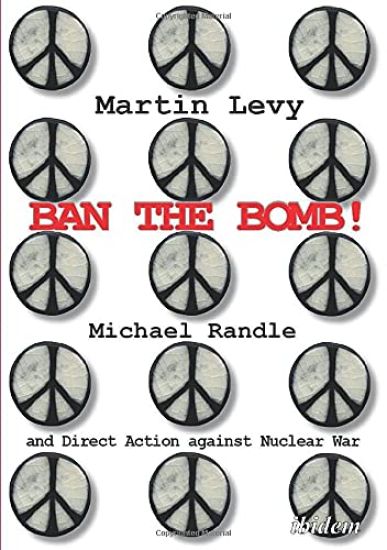
During the 1950s, Michael Randle helped pioneer a new form of direct action against nuclear war, based on the teachings of Mahatma Gandhi. At the forefront of the British campaign, he worked closely with Peace News editor Hugh Brock (19141985) and other distinguished anti-nuclear pacifists such as Pat Arrowsmith, April Carter, and Ian Dixon, serving as chairman of the Direct Action Committee against Nuclear War (1958-1961) and secretary of the Committee of 100 (1960-1961). In 1966, he helped spring the Russian spy George Blake from Wormwood Scrubs Prison. Thereafter, he campaigned vigorously on behalf of the Greek democratic opposition, conscientious objectors, and Soviet dissidents. He has always been a man of rare candour and singular energy and principles, even enduring imprisonment for his beliefs. Nowadays, Michael lives in Shipley near Bradford, where he continues to write as a respected expert on people power. Martin Levys interviews with Michael Randle introduce the reader to a tumultuous life that is nothing short of extraordinary.
Doctor Barnardo

Doctor Barnardo

Martin Levy

Amberley Publishing
2015
pokkari
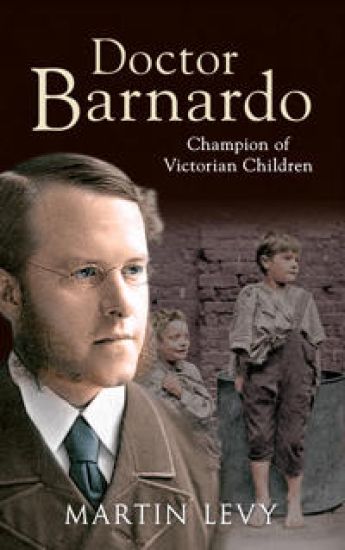
Born in Dublin in 1845, Thomas John Barnardo was a workaholic Irishman whose non-stop efforts in the cause of children’s welfare landed him in an early grave at the age of sixty. However, in his own area of work it’s fair to say he changed Britain forever, as much as any one man can. Much of modern child welfare started with him. Martin Levy digs into the filth and rot of what was the world’s biggest empire to discover what this man was up to, what he was up against and how wonderfully well he succeeded. In the cause of the children, he went banging on the door of his Victorian world and refused to stop until the day he died.
Love & Madness: The Murder of Martha Ray, Mistress of the Fourth Earl of Sandwich
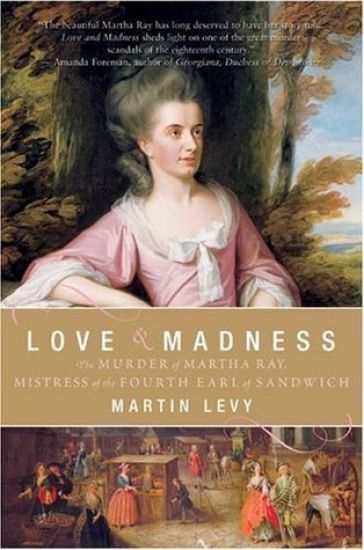
On a spring evening in 1779, as she emerged from London's Covent Garden Theatre, a beautiful young woman was shot in the head at point-blank range by a man in a black suit. The brutal murder was even more shocking because of the victim's identity -- she was Martha Ray, live-in mistress to the Earl of Sandwich and devotee of the arts. The man accused of her murder was none other than James Hackman, a respected Anglican minister and Ray's former lover. The aftermath of the crime created an uproar in London high society, as aristocrats debated Hackman's motives. Had he intended to commit suicide, as he later claimed, but, in a moment of weakness, turned his gun on Ray instead? This riveting tale of a crime of passion re-creates the slaying and the clergyman's trial, which was the unrivaled media sensation of its time.