Kirjojen hintavertailu – 12 859 818 kirjaa ja 27 kauppaa

Kirjailija

Martin Luther King

Kirjat ja teokset yhdessä paikassa: 74 kirjaa, julkaisuja vuosilta 1992–2026, suosituimpiin kuuluu Dr. Martin Luther King Jr. on Love. Vertaile teosten hintoja ja tarkista saatavuus suomalaisista kirjakaupoista.

74 kirjaa

Kirjojen julkaisuvuodet: 1992–2026.

Where Do We Go from Here

Where Do We Go from Here

Martin Luther King; Coretta Scott King

Beacon Press
2010
pokkari

Halvin toimitettuna 22,60 €

In 1967, Dr. Martin Luther King, Jr., isolated himself from the demands of the civil rights movement, rented a house in Jamaica with no telephone, and labored over his final manuscript. In this prophetic work, which has been unavailable for more than ten years, he lays out his thoughts, plans, and dreams for America's future, including the need for better jobs, higher wages, decent housing, and quality education. With a universal message of hope that continues to resonate, King demanded an end to global suffering, asserting that humankind-for the first time-has the resources and technology to eradicate poverty.
The Papers of Martin Luther King, Jr., Volume VI

The Papers of Martin Luther King, Jr., Volume VI

Martin Luther King

University of California Press
2007
sidottu
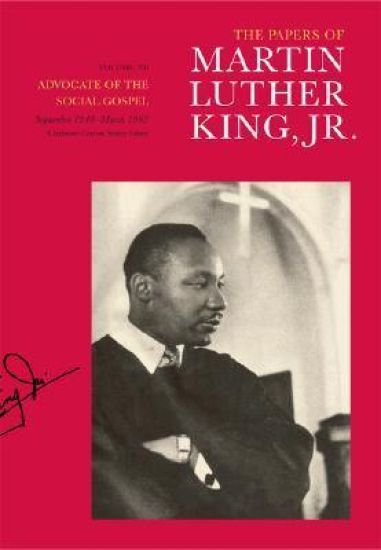
Dedicated to documenting the life of America's best-known advocate for peace and justice, "The Papers of Martin Luther King, Jr." breaks the chronology of its series to present King's never-before-published sermon file. In 1997 Mrs. Coretta Scott King granted the King Papers Project permission to examine papers kept in boxes in the basement of the Kings' home. The most significant finding was a battered cardboard box that held more than two hundred folders containing documents King used to prepare his celebrated sermons. This private collection that King kept in his study sheds considerable light on the theology and preaching preparation of one of the most noted orators of the modern era. These illuminating papers reveal that King's concern about poverty, human rights, and social justice was clearly present in his earliest handwritten sermons, which conveyed a message of faith, hope, and love for the dispossessed. His enduring message can be charted through his years as a seminary student, as pastor of Dexter Avenue Baptist Church, as a leader of the Montgomery bus boycott, and, ultimately, as an internationally renowned proponent of human rights who saw himself mainly as a preacher and 'advocate of the social gospel.' Ten of the original and unedited sermons King submitted for publication in the 1963 book "Strength to Love" and audio versions of King's most famous sermons are the culmination of this groundbreaking work.
Coretta

Coretta

Martin Luther King; Octavia Vivian

Augsburg Fortress
2006
pokkari
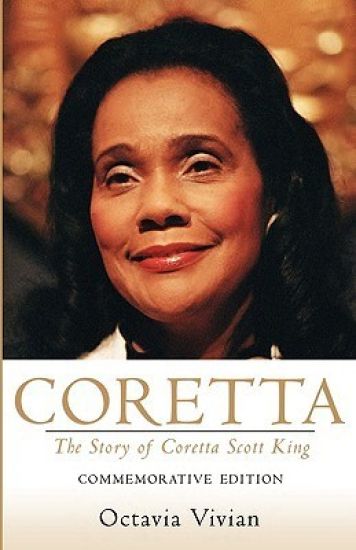
In this first biography of Coretta Scott King, written by her friend Octavia Vivian, the reader meets a determined young girl who grew up in Alabama and worked her way through Antioch College only to discover that she was not allowed to teach in the white schools in Ohio. She pursued a musical career in Boston, where she met Martin Luther King, Jr. The Montgomery bus boycott in 1955 brought Dr. King and his wife into national prominence. Since then, the nation has seen the beauty and composure of Coretta Scott King as she has continued to speak and act on behalf of civil rights. First published in 1970 by Fortress Press, this commemorative edition has been thoroughly updated, includes a black and white photo gallery, and is full of warmth and human interest, telling the story of Coretta Scott King from her childhood to her death in February 2006.
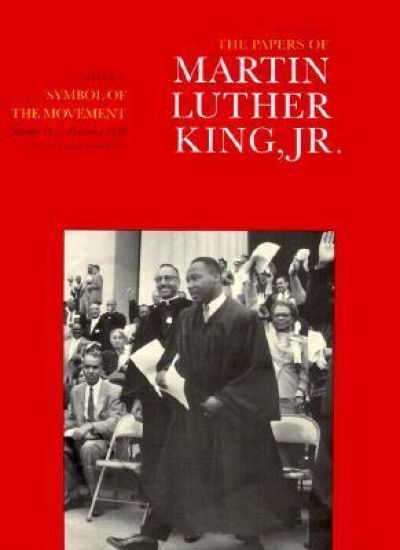
The Papers of Martin Luther King, Jr., Volume V

The Papers of Martin Luther King, Jr., Volume V

Martin Luther King

University of California Press
2005
sidottu
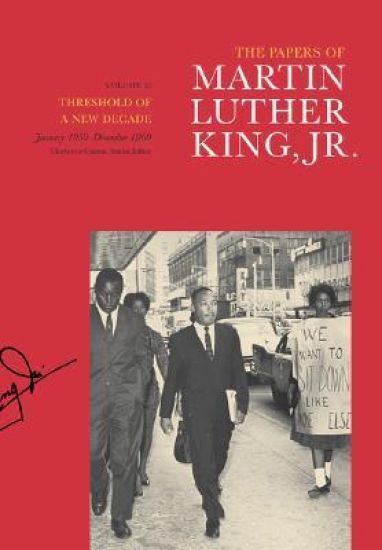
"The Papers of Martin Luther King, Jr." has become the definitive record of the most significant correspondence, sermons, speeches, published writings, and unpublished manuscripts of one of America's best-known advocates for peace and justice. "Threshold of a New Decade, Volume V" of the planned fourteen-volume series, illustrates the growing sophistication and effectiveness of King and the organizations he led while providing an unparalleled look into the surprising emergence of the sit-in protests that sparked the social struggles of the 1960s. During this pivotal period of his career, King traveled to India in early 1959 to meet with Prime Minister Nehru and other associates of Mahatma Gandhi. After returning to Montgomery, King confronted the continuing ineffectiveness of his Southern Christian Leadership Conference (SCLC) by demanding personnel changes and agreeing to relocate to Atlanta at the beginning of 1960. King's move took place just before African American students in the South reclaimed the energy of the Montgomery bus boycott with their bold sit-in protests, which King predicted would become 'an integral part of the history which is reshaping the world, replacing a dying order with modern democracy'. He was arrested in October after participating in a sit-in protest in Atlanta. His resulting imprisonment led presidential candidate John F. Kennedy to phone his sympathies to King's wife, Coretta, a move many credit for providing the margin of victory in the close election of 1960.
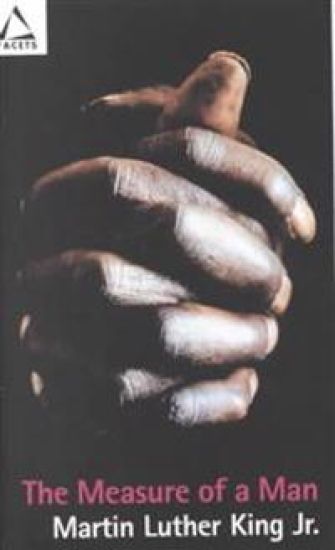
The Measure of a Man

The Measure of a Man

Martin Luther King

Augsburg Fortress
2001
nidottu
Why nonviolence mattersEloquent and passionate, reasoned and sensitive, this pair of meditations by the revered civil-rights leader contains the theological roots of his political and social philosophy of nonviolent activism.
The Papers of Martin Luther King, Jr., Volume IV

The Papers of Martin Luther King, Jr., Volume IV

Martin Luther King

University of California Press
2000
sidottu
Acclaimed by "Ebony" magazine as 'one of those rare publishing events that generate as much excitement in the cloistered confines of the academy as they do in the general public', "The Papers of Martin Luther King, Jr." chronicles one of the twentieth century's most dynamic personalities and one of the nation's greatest social struggles. King's call for racial justice and his faith in the power of nonviolence to engender a major transformation of American society is movingly conveyed in this authoritative multivolume series. In "Volume IV", with the Montgomery bus boycott at an end, King confronts the sudden demands of celebrity while trying to identify the next steps in the burgeoning struggle for equality. Anxious to duplicate the success of the boycott, he spends much of 1957 and 1958 establishing the Southern Christian Leadership Conference. But advancing the movement in the face of dogged resistance, he finds that it is easier to inspire supporters with his potent oratory than to organize a mass movement for social change. Yet King remains committed: 'The vast possibilities of a nonviolent, non-cooperative approach to the solution of the race problem are still challenging indeed. I would like to remain a part of the unfolding development of this approach for a few more years'. King's budding international prestige is affirmed in March 1957, when he attends the independence ceremonies in Ghana, West Africa. Two months later his first national address, at the 'Prayer Pilgrimage for Freedom', is widely praised, and in June 1958, King's increasing prominence is recognized with a long-overdue White House meeting. During this period King also cultivates alliances with the labor and pacifist movements, and international anticolonial organizations. As "Volume IV" closes, King is enjoying the acclaim that has greeted his first book, Stride Toward Freedom, only to suffer a near-fatal stabbing in New York City.
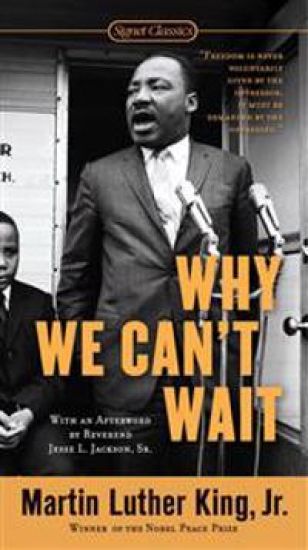
Why We Can't Wait

Why We Can't Wait

Martin Luther King

Penguin Putnam Inc
2000
nidottu

Halvin toimitettuna 13,80 €

Martin Luther King's classic exploration of the events and forces behind the Civil Rights Movement--including his Letter from Birmingham Jail, April 16, 1963. "There comes a time when the cup of endurance runs over, and men are no longer willing to be plunged into the abyss of despair." In 1963, Birmingham, Alabama, was perhaps the most racially segregated city in the United States. The campaign launched by Dr. Martin Luther King, Jr., and the Civil Rights movement on the segregated streets of Birmingham demonstrated to the world the power of nonviolent direct action. In this remarkable book--winner of the Nobel Peace Prize--Dr. King recounts the story of Birmingham in vivid detail, tracing the history of the struggle for civil rights back to its beginnings three centuries ago and looking to the future, assessing the work to be done beyond Birmingham to bring about full equality for African Americans. Above all, Dr. King offers an eloquent and penetrating analysis of the events and pressures that propelled the Civil Rights movement from lunch counter sit-ins and prayer marches to the forefront of American consciousness. Since its publication in the 1960s, Why We Can't Wait has become an indisputable classic. Now, more than ever, it is an enduring testament to the wise and courageous vision of Martin Luther King, Jr. Includes photographs and an Afterword by Reverend Jesse L. Jackson, Sr.
The Papers of Martin Luther King, Jr., Volume III

The Papers of Martin Luther King, Jr., Volume III

Martin Luther King

University of California Press
1997
sidottu
Martin Luther King, Jr.'s ideas - his call for racial equality, his faith in the ultimate triumph of justice, his insistence on the power of nonviolence to bring about a major transformation of American society - are as vital and timely as ever. The wealth of his writings, both published and unpublished, is now preserved in this authoritative, chronologically arranged multi-volume edition. Volume III chronicles the Montgomery bus boycott of 1956 and Dr. King's emergence as a public figure who attracted international attention. Included is the galvanizing speech he gave on the first day of the bus boycott, transcribed from a fragile tape recording and published here in its entirety for the first time. Also included are his remarks to an angry crowd after the bombing of his home and his powerful speech at the 1956 NAACP convention. King's words from this period reveal the evolution of his distinctive blend of Christian and Gandhian ideas and show his appreciation of the broader significance of the Montgomery movement, a protest that revealed the 'longing for human dignity that motivates oppressed people all over the world'. "The Papers of Martin Luther King, Jr." is a testament to a man whose life and teaching continue to have a profound influence not only on Americans, but on people of all nations. The Martin Luther King, Jr., Papers Project at Stanford University was established by The Center for Nonviolent Social Change, Inc., in 1984.
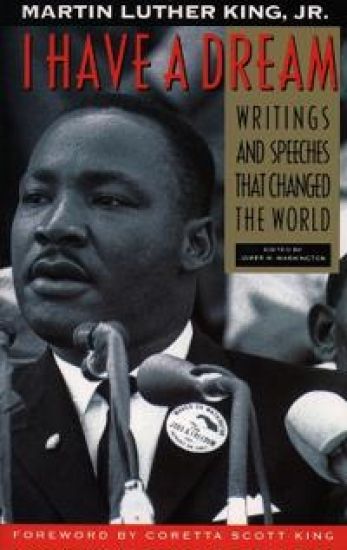
I Have a Dream

I Have a Dream

Martin Luther King

HarperOne
1992
nidottu
"His life informed us, his dreams sustain us yet."*On August 28, 1963, Martin Luther King Jr. stood in front of the Lincoln Memorial looking out over thousands of troubled Americans who had gathered in the name of civil rights and uttered his now famous words, "I have a dream . . ." It was a speech that changed the course of history. This fortieth-anniversary edition honors Martin Luther King Jr.'s courageous dream and his immeasurable contribution by presenting his most memorable words in a concise and convenient edition. As Coretta Scott King says in her foreword, "This collection includes many of what I consider to be my husband's most important writings and orations." In addition to the famed keynote address of the 1963 march on Washington, the renowned civil rights leader's most influential words included here are the "Letter from a Birmingham Jail," the essay "Pilgrimage to Nonviolence," and his last sermon, "I See the Promised Land," preached the day before he was assassinated. Editor James M. Washington arranged the selections chronologically, providing headnotes for each selection that give a running history of the civil rights movement and related events. In his introduction, Washington assesses King's times and significance.*From the citation of the posthumous award of the Presidential Medal of Freedom to the Reverend Dr. Martin Luther King Jr., July 4, 1977
The Papers of Martin Luther King, Jr., Volume I

The Papers of Martin Luther King, Jr., Volume I

Martin Luther King

University of California Press
1992
sidottu
More than two decades since his death, Martin Luther King, Jr.'s ideas - his call for racial equality, his faith in the ultimate triumph of justice, and his insistence on the power of nonviolent struggle to bring about a major transformation of American society - are as vital and timely as ever. The wealth of his writings, both published and unpublished, that constitute his intellectual legacy are now preserved in this authoritative, chronologically arranged, multi-volume edition. Faithfully reproducing the texts of his letters, speeches, sermons, student papers, and articles, this edition has no equal. Volume One contains many previously unpublished documents beginning with the letters King wrote to his mother and father during his childhood. We read firsthand his surprise and delight in his first encounter (during a trip to Connecticut) with the less segregated conditions in the North. Through his student essays and exams, we discover King's doubts about the religion of his father and we can trace his theological development. We learn of his longing for the emotional conversion experience that he witnessed others undergoing, and we follow his search to know God through study at theological seminaries. Throughout the first volume, we are treated to tantalizing hints of his mature rhetorical abilities, as in his 1945 letter to the Atlanta Constitution that spoke out against white racism. Each volume in this series contains an introductory essay that traces the biographical details of Dr. King's life during the period covered. Ample annotations accompany the documents. Each volume also contains a chronology of key events in his life and a "Calendar of Documents" that lists all important, extant documents authored by King or by others, including those that are not trnascribed in the document itself. The preparation of this edition is sponsored by the Martin Luther King, Jr. Center for Nonviolent Social Change in Atlanta with Stanford University and Emory University.