Kirjojen hintavertailu – 12 859 819 kirjaa ja 27 kauppaa

Kirjailija

Martin Luther

Kirjat ja teokset yhdessä paikassa: 962 kirjaa, julkaisuja vuosilta 1856–2026, suosituimpiin kuuluu Isä Meidän Selitys. Vertaile teosten hintoja ja tarkista saatavuus suomalaisista kirjakaupoista.

962 kirjaa

Kirjojen julkaisuvuodet: 1856–2026.

Det vigtige

Det vigtige

Martin Luther

Eksistensen - RPC
2016
nidottu
Det vigtige er et udvalg af Martin Luthers bønner, der ikke tidligere er udgivet på dansk “Vi skal bede på samme måde, som en hund ser på et stykke kød”, siger Luther i en af sine bordtaler. Luthers bønner er som bordtalerne karakteriseret ved en udogmatisk tone. Luther henvender sig i sine bønner direkte og tillidsfuldt til Gud i en klar erkendelse af egen skrøbelighed. Bogen er på en gang en bønnebog til dagligbrug og en mulighed for at lære reformatoren Martin Luther bedre at kende. Forord af Peter Skov­Jakobsen, biskop Københavns Stift.
Contra Juan Salchicha (Hans Wurst)

Contra Juan Salchicha (Hans Wurst)

Martin Luther

Createspace Independent Publishing Platform
2016
nidottu
Libro que puede servir de ejemplo para ilustrar las ltimas pol micas que sostuvo el Dr. Lutero, en este caso contra un destacado pr ncipe del bando cat lico en Alemania, el duque Enrique el Joven, de Braunschweig-Wolfenb ttel. La guerra de panfletos entre este pr ncipe cat lico y los dos l deres de la Liga de Esmalcalda, el pr ncipe-elector Juan Federico de Sajonia y el landgrave Felipe de Hesse, hab a comenzado en la primavera de 1538 por motivos pol ticos y territoriales. Lutero, que al principio se hab a mantenido al margen de esta pol mica, no tuvo m s remedio de entrar en ella cuando el duque Enrique le acuso de llamar a su se or "Juan Salchicha". Para defenderse a s mismo de tal acusaci n y a su se or territorial, Lutero aplic dicho nombre al propio duque Enrique, atac a ste por ser un agente del papa, y de paso aprovech para diferenciar entre la verdadera y santa Iglesia de Cristo (representada por los Reformados) y la iglesia del diablo (representada por el papa y sus ac litos).
The Freedom of a Christian, 1520

The Freedom of a Christian, 1520

Martin Luther

Fortress Press,U.S.
2016
nidottu
Timothy J. Wengert skilfully provides a clear understanding of the historical context from which the treatise The Freedom of a Christian and his accompanying Letter to Pope Leo X arose. As controversy concerning his writings grew, Luther was instructed to write a reconciliation-minded letter to Pope Leo X (1475-1521). To this letter he appended a no polemical tract describing the heart of his beliefs, The Freedom of a Christian. Luther's Latin version added an introduction and a lengthy appendix not found in the German edition. The two editions arose out of the different audiences for them: the one addressed to theologians, clerics, and church leaders (for whom Latin was the common language), and one addressed to the German-speaking public, which included the nobility, townsfolk, many from the lesser clergy, and others who could read (or have Luther's writings read to them). This volume is excerpted from The Annotated Luther series, Volume 1. Each volume in the series contains new introductions, annotations, illustrations, and notes to help shed light on Luther's context and to interpret his writings for today.

To the Christian Nobility of the German Nation, 1520
With great clarity and insight, James M. Estes illuminates Luther's call to secular authorities to help with the reform of the church in this important 1520 treatise. Starting with the Ninety-Five Theses in 1517, Luther's appeals for reform had been addressed to the ecclesiastical hierarchy, whose divinely imposed responsibility for such things he took for granted. By the early months of 1520, however, Luther had come to the conclusion that nothing could be expected from Rome but intransigent opposition to reform of any sort. It was only at this point that he began to write of the need for secular rulers to intervene with measures that would clear the way for ecclesiastical reform. Concerned that Christendom was going to ruin, Luther argued that with such an emergency looming, anyone who was able to do so should help in whatever way possible. This volume is excerpted from The Annotated Luther series, Volume 1. Each volume in the series contains new introductions, annotations, illustrations, and notes to help shed light on Luther's context and to interpret his writings for today.

Treatise on Good Works, 1520

Treatise on Good Works, 1520

Martin Luther

Fortress Press,U.S.
2016
nidottu
In sermons and pamphlets, Luther and his colleagues claimed that salvation came by faith alone and not by works. Although the better-known pamphlets of 1520-To the Christian Nobility of the German Nation Concerning the Improvement of the Christian Estate, The Babylonian Captivity of the Church, and The Freedom of a Christian- would also appear, Timothy J. Wengert shows how Luther's Treatise on Good Works fulfilled. Luther's own prediction that it would be one of the clearest and most accessible introductions to Luther's reforming work and theology. Luther's main goal was to commend a new, down-to-earth piety to all Christians. This piety was new, because at its centre was a radically different meaning of good works that would transform the way believers practiced their faith. This volume is excerpted from The Annotated Luther series, Volume 1. Each volume in the series contains new introductions, annotations, illustrations, and notes to help shed light on Luther's context and to interpret his writings for today. The translations of Luther's writings include updates of Luther's Works, American Edition, or new translations of Luther's German or Latin writings.
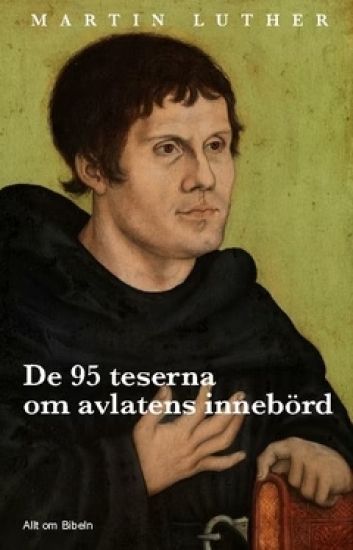
De 95 teserna om avlatens innebörd

De 95 teserna om avlatens innebörd

Martin Luther

Allt om bibeln
2016
nidottu
Ända sedan den kristna församlingens födelse har det funnits en strävan att se till att den var ”ren” och fri från synd vid Jesu återkomst. Om någon medlem begick en uppenbar synd, såg de övriga det som sin uppgift att få honom att inse sitt felsteg och be Gud om förlåtelse. Men då synden också skadade hela församlingen, tilläts inte den som begått en grov synd (även om han förlåtits av Gud) delta i nattvarden förrän han gjort bot och visat sin ånger i praktisk handling. De som begått mycket allvarliga synder kunde tvingas företa långa pilgrimsfärder, stränga fastor etc. På medeltiden infördes dock möjligheten att få straffet lindrat. Syndaren behövde bara göra en mindre bot, som att besöka en viss kyrka, läsa vissa böner, ge bidrag till något fromt ändamål etc. Som bevis på att man fått avlat utfärdade kyrkan ett ”avlatsbrev”. När Peterskyrkan i Rom skulle byggas förklarade vissa präster att ett ekonomiskt bidrag till bygget skulle innebära fullständig befrielse från straff - fullständig ”avlat”. Resultatet blev en veritabel avlatshandel. Människor trodde sig kunna köpa befrielse från syndastraff genom att ge gåvor till kyrkan - utan att vare sig ånger, omvändelse eller bättring fanns med i bilden. En som reagerade mot denna handel var munken Martin Luther. Han ville ha en debatt om avlatens innebörd, och på kvällen 31 oktober 1517 spikade han upp ett anslag med 95 teser på porten till Slottskyrkan i sin hemstad Wittenberg. Det blev början på den reformation som kom att omvandla hela den västerländska kyrkan. Nästa år är det följaktligen 500 år sedan denna avgörande händelse. Detta kommer att firas stort i hela den lutherska kyrkovärlden. Därför är det också dags att Luthers 95 teser publiceras på nytt på svenska. Det är 70 år sedan sist.
On the Freedom of a Christian

On the Freedom of a Christian

Martin Luther

Lulu.com
2016
nidottu
Perhaps no work of Martin Luther so captures the revolutionary zeal and theological boldness of his vision. By studying the "On the Freedom of a Christian" you have arrived at the very origin of the Reformation. Although the concept of "justification by faith alone" is well-founded in Scripture, it met with the utter rejection and resistance of the Renaissance Catholic Church. This should have come as no surprise, since Renaissance Catholicism had turned selling salvation to believers in exchange for money and services into an extremely profitable business. "On the Freedom of a Christian" is the second of the three landmark essays that made the case for Reformation in 1520. Reaching across half a millennium Luther teaches us in his own words why salvation is freely available to all believers, in exchange only for their faithful belief in God. Find out for yourself why the Renaissance Catholic Church found it impossible to defend their exploitative practices against Luther's argument.