Kirjojen hintavertailu – 12 859 827 kirjaa ja 27 kauppaa

Kirjailija

Martin McCauley

Kirjat ja teokset yhdessä paikassa: 28 kirjaa, julkaisuja vuosilta 1983–2025, suosituimpiin kuuluu Who's Who in Russia since 1900. Vertaile teosten hintoja ja tarkista saatavuus suomalaisista kirjakaupoista.

28 kirjaa

Kirjojen julkaisuvuodet: 1983–2025.

Origins of the Cold War 1941–1949

Origins of the Cold War 1941–1949

Martin McCauley

TAYLOR FRANCIS LTD
2025
nidottu

Halvin toimitettuna 58,10 €

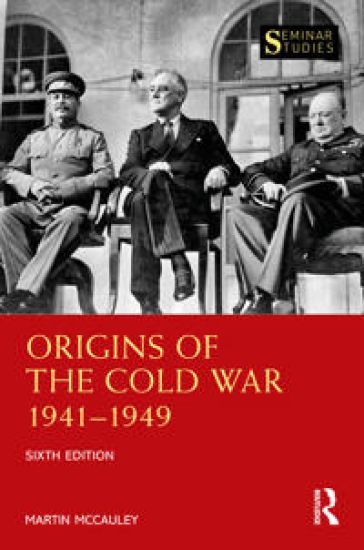
Now in its sixth edition, Origins of the Cold War 1941–1949 offers a new perspective on the momentous conflict between the Soviet Union and the United States, covering the tumultuous years of 1941 to 1949. Adopting an internationalist approach, McCauley builds on the fifth edition by tracing the evolution of the post-imperial world after 1945. Chapters have been updated and expanded to include analyses of countries such as India, Pakistan and Malaya and an exciting discussion of the new Cold War history, which seeks to understand the mistakes and misperceptions of the Western allies. Moreover, this sixth edition offers readers insight into how Stalin ruled, with additional chapters delving into state secrecy and the books in Stalin’s library. Combining the latest scholarship with accessible primary sources, Origins of the Cold War 1941–1949 stands as a valuable introduction to a fascinating period and will be useful to scholars and students of modern global history and international affairs.
Origins of the Cold War 1941–1949

Origins of the Cold War 1941–1949

Martin McCauley

TAYLOR FRANCIS LTD
2025
sidottu
Now in its sixth edition, Origins of the Cold War 1941–1949 offers a new perspective on the momentous conflict between the Soviet Union and the United States, covering the tumultuous years of 1941 to 1949. Adopting an internationalist approach, McCauley builds on the fifth edition by tracing the evolution of the post-imperial world after 1945. Chapters have been updated and expanded to include analyses of countries such as India, Pakistan and Malaya and an exciting discussion of the new Cold War history, which seeks to understand the mistakes and misperceptions of the Western allies. Moreover, this sixth edition offers readers insight into how Stalin ruled, with additional chapters delving into state secrecy and the books in Stalin’s library. Combining the latest scholarship with accessible primary sources, Origins of the Cold War 1941–1949 stands as a valuable introduction to a fascinating period and will be useful to scholars and students of modern global history and international affairs.
Origins of the Cold War 1941–1949

Origins of the Cold War 1941–1949

Martin McCauley

Routledge
2021
nidottu
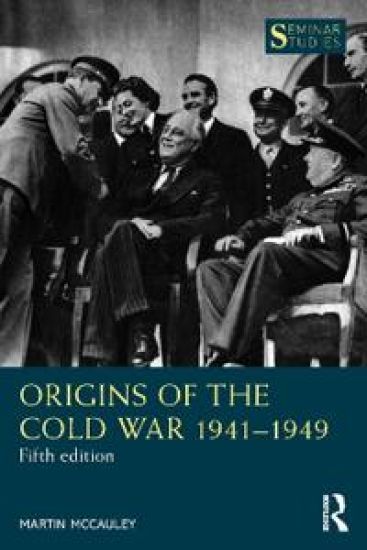
Now in its fifth edition, Origins of the Cold War 1941–1949 covers the formative years of the momentous struggle that developed between two superpowers, the United States and the Soviet Union. This accessible text explains how the Cold War originated and developed between 1941 and 1949 and involved the entire globe, with proxy wars being fought much to the detriment of the developing world. The fifth edition is revised, updated and expanded to include new material on topics such as the efforts of the Soviet Union, the UK and France to prevent the outbreak of World War II; the reasons behind the Molotov–Ribbentrop Pact; atomic diplomacy and the role played by Soviet spies in the West; the culture wars and propaganda; Churchill’s efforts to entice the US into the war against Germany; the role of Hollywood in promoting intervention; the US’s insouciance concerning the danger of a Japanese attack; the astonishing success of the Soviet Union in recruiting high level American officials to provide invaluable information on politics, science, engineering and avionics; and more. Incorporating the most recent scholarship, Martin McCauley provides students with an invaluable introduction to a fascinating period that shaped today's world. The book is an important staple for courses on modern global history and international affairs.

Origins of the Cold War 1941–1949

Origins of the Cold War 1941–1949

Martin McCauley

Routledge
2021
sidottu
Now in its fifth edition, Origins of the Cold War 1941–1949 covers the formative years of the momentous struggle that developed between two superpowers, the United States and the Soviet Union. This accessible text explains how the Cold War originated and developed between 1941 and 1949 and involved the entire globe, with proxy wars being fought much to the detriment of the developing world. The fifth edition is revised, updated and expanded to include new material on topics such as the efforts of the Soviet Union, the UK and France to prevent the outbreak of World War II; the reasons behind the Molotov–Ribbentrop Pact; atomic diplomacy and the role played by Soviet spies in the West; the culture wars and propaganda; Churchill’s efforts to entice the US into the war against Germany; the role of Hollywood in promoting intervention; the US’s insouciance concerning the danger of a Japanese attack; the astonishing success of the Soviet Union in recruiting high level American officials to provide invaluable information on politics, science, engineering and avionics; and more. Incorporating the most recent scholarship, Martin McCauley provides students with an invaluable introduction to a fascinating period that shaped today's world. The book is an important staple for courses on modern global history and international affairs.
Stalin and Stalinism

Stalin and Stalinism

Martin McCauley

Routledge
2019
sidottu
One of the most successful dictators of the twentieth century, Stalin transformed the Communist Party of the Soviet Union into one of the world’s leading political parties. Stalin and Stalinism explores how he ammassed, retained and deployed power to dominate, not only his close associates, but the population of the Soviet Union and Soviet Empire. Moving from leader to autocrat and finally despot, Stalin played a key role in shaping the first half of the twentieth century with, at one time, around one-third of the planet adopting his system. His influence lives on – despite turning their backs on Stalin’s anti-capitalism in the later twentieth century, countries such as China and Vietnam retain his political model – the unbridled power of the Communist Party. First published in 1983, Stalin and Stalinism has established itself as one of the most popular textbooks for those who want to understand the Stalin phenomenon. This updated fourth edition draws on a wealth of new publications, and includes increased discussion on culture, religion and the new society that Stalin fashioned as well as more on spying, Stalin's legacy, and his character as well as his actions. Supported by a chronology of key events, Who’s Who and Guide to Further Reading, this concise assessment of one of the major figures of the twentieth-century world history remains an essential read for students of the subject.
Stalin and Stalinism

Stalin and Stalinism

Martin McCauley

Routledge
2019
nidottu
One of the most successful dictators of the twentieth century, Stalin transformed the Communist Party of the Soviet Union into one of the world’s leading political parties. Stalin and Stalinism explores how he ammassed, retained and deployed power to dominate, not only his close associates, but the population of the Soviet Union and Soviet Empire. Moving from leader to autocrat and finally despot, Stalin played a key role in shaping the first half of the twentieth century with, at one time, around one-third of the planet adopting his system. His influence lives on – despite turning their backs on Stalin’s anti-capitalism in the later twentieth century, countries such as China and Vietnam retain his political model – the unbridled power of the Communist Party. First published in 1983, Stalin and Stalinism has established itself as one of the most popular textbooks for those who want to understand the Stalin phenomenon. This updated fourth edition draws on a wealth of new publications, and includes increased discussion on culture, religion and the new society that Stalin fashioned as well as more on spying, Stalin's legacy, and his character as well as his actions. Supported by a chronology of key events, Who’s Who and Guide to Further Reading, this concise assessment of one of the major figures of the twentieth-century world history remains an essential read for students of the subject.
The Khrushchev Era 1953-1964

The Khrushchev Era 1953-1964

Martin McCauley

Routledge
2017
sidottu
History and politics students alike will welcome this new Seminar Study which analyses the Khrushchev era -- a critical period of Soviet and world history. It was Khrushchev who, in 1957, finally filled the political vacuum left by the death of Stalin in 1953. He was an erratic, impulsive, inspirational and innovative leader who addressed the fundamental problems of the country - and yet he was, Martin McCauley argues, "a brilliant failure''. In this study the author explores all aspects of the Khrushchev era: including reforms in agriculture, economic policy, crises in Eastern Europe, the Cuban Missile Crisis of 1962, de-Stalinisation and Khrushchev's attempts to reform the Communist Party.
The Cold War 1949-2016

The Cold War 1949-2016

Martin McCauley

Routledge
2017
nidottu
Covering the development of the Cold War from the mid-twentieth century to the present day, The Cold War 1949–2016 explores the struggle for world domination that took place between the United States and the Soviet Union following the Second World War. The conflict between these two superpowers shaped global history for decades, and this book examines how this conflict developed into a nuclear arms race, spurred much of the wider world towards war and eventually resulted in the collapse of the Soviet empire. In this accessible yet comprehensive volume, Martin McCauley examines not only the actions of the United States and the Soviet Union but also the effects upon and involvement of other regions such as Africa, Central America, Asia, Europe and the Middle East. Key themes include the Sino-Soviet relationship and the global ambitions of the newly formed People’s Republic of China, the rise and fall of communism in countries such as Cuba, Angola and Ethiopia, the US defeat in Vietnam, the gradual unravelling of the Soviet Union and the changing shape of the post–Cold War world. Providing a wide-ranging overview of the main turning points of the conflict and illustrated throughout with photographs and maps, this is essential reading for all students of the Cold War and its lasting global impact.
The Cold War 1949-2016

The Cold War 1949-2016

Martin McCauley

Routledge
2017
sidottu
Covering the development of the Cold War from the mid-twentieth century to the present day, The Cold War 1949–2016 explores the struggle for world domination that took place between the United States and the Soviet Union following the Second World War. The conflict between these two superpowers shaped global history for decades, and this book examines how this conflict developed into a nuclear arms race, spurred much of the wider world towards war and eventually resulted in the collapse of the Soviet empire. In this accessible yet comprehensive volume, Martin McCauley examines not only the actions of the United States and the Soviet Union but also the effects upon and involvement of other regions such as Africa, Central America, Asia, Europe and the Middle East. Key themes include the Sino-Soviet relationship and the global ambitions of the newly formed People’s Republic of China, the rise and fall of communism in countries such as Cuba, Angola and Ethiopia, the US defeat in Vietnam, the gradual unravelling of the Soviet Union and the changing shape of the post–Cold War world. Providing a wide-ranging overview of the main turning points of the conflict and illustrated throughout with photographs and maps, this is essential reading for all students of the Cold War and its lasting global impact.
Afghanistan and Central Asia

Afghanistan and Central Asia

Martin McCauley

Routledge
2017
sidottu
The Afghan crisis has grabbed the attention of the entire world, and underlined the desperate need in the West for a better understanding of the region and its challenges in the face of increasingly militant interpretations of Islam. Carved up and fought over by the British and Tsarist Russia in the nineteenth century, and under Soviet domination for much of the twentieth, the lonely passes, deserts and peoples of the five Central Asian republics have remained shrouded in obscurity. Even Afghanistan, the site of almost constant conflict since the Soviet invasion of 1978, is little known beyond the media images of the Islamic fundamentalist Taliban movement. Martin McCauley draws on his vast knowledge of the region and its history to provide a clear and highly readable account of Afghanistan and the Central Asian republics of Kazakhstan, Kyrgyzstan, Tasikistan, Turkmenistan, Uzbekistan, from their medieval pasts to the unpredictable present. Illuminating languages and landscapes, cultures and society, he examines the rise of militant Islam and its impact on the region, the push and pull of global economics and politics, and possibilities for stability in an inherently unstable part of the world.
Bandits, Gangsters and the Mafia

Bandits, Gangsters and the Mafia

Martin McCauley

Routledge
2016
sidottu
During the 1990s, the "roving bandits", big business or the oligarchs, stole Russia. They gained influence over President Yeltsin and his government, and gradually shaped policy in their own interests. In this first comprehensive account to explain why Russia took the course it did, Martin McCauley examines the period through the prism of government, including Yeltsin's shadow government, and looks at the military, police, security and intelligence services. Relations between Moscow and the regions, industry, agriculture, social policy and foreign policy are also explored.
The Soviet Union 1917-1991

The Soviet Union 1917-1991

Martin Mccauley

Routledge
2016
sidottu
A second edition of this famous survey has been eagerly awaited. When the first edition appeared Brezhnev was still in power, Gorbachev did not make it to the index, and the USSR was a superpower. Today the Soviet experiment is over and the USSR no longer exists. How? Why? Martin McCauley has reworked and greatly expanded his book to answer these questions, and to provide a complete account of the Soviet years. Essential reading to an appreciation of recent history -- and to a better understanding of whatever happens next.
Origins of the Cold War 1941-1949

Origins of the Cold War 1941-1949

Martin McCauley

Routledge
2015
nidottu
Origins of the Cold War 1941-1949 covers the formative years of the momentous struggle which developed between two superpowers, the Soviet Union and the United States. It not only involved these titans but also the rest of the globe; many proxy wars were fought much to the detriment of the developing world. In a clear, concise manner, this book explains how the Cold War originated and developed between 1941 and 1949. The fourth edition is revised, updated and expanded to include new material on topics such as the culture wars and Stalin’s view of Marxism. The introduction looks at the various approaches which have been adopted to analyse the Cold War and the challenges to arrive at a theory which can explain it. The book explores questions such as: - Who was responsible for the Cold War? - Was it inevitable or could it have been avoided? - Was Stalin genuinely interested in a post-war agreement? Illustrated with maps and figures and containing a chronology and who’s who of key individuals, Origins of the Cold War 1941-1949 incorporates the most recent scholarship, theories and information to provide students with an invaluable introduction to a fascinating period that shaped today's world.
The Rise and Fall of the Soviet Union

The Rise and Fall of the Soviet Union

Martin McCauley

Routledge
2015
sidottu
'An expert in probing mafia-type relationships in present-day Russia, Martin McCauley here offers a vigorously written scrutiny of Soviet politics and society since the days of Lenin and Stalin.'John Keep, Professor Emeritus, University of Toronto. The birth of the Soviet Union surprised many; its demise amazed the whole world. How did imperial Russia give way to the Soviet Union in 1917, and why did the USSR collapse so quickly in 1991? Marxism promised paradise on earth, but the Communist Party never had true power, instead allowing Lenin and Stalin to become dictators who ruled in its name. The failure of the planned economy to live up to expectations led to a boom in the unplanned economy, in particular the black market. In turn, this led to the growth of organised crime and corruption within the government. The Rise and Fall of the Soviet Union examines the strengths, weaknesses, and contradictions of the first Marxist state, and reassesses the role of power, authority and legitimacy in Soviet politics. Including first-person accounts, anecdotes, illustrations and diagrams to illustrate key concepts, McCauley provides a seminal history of twentieth-century Russia.
The Rise and Fall of the Soviet Union
'An expert in probing mafia-type relationships in present-day Russia, Martin McCauley here offers a vigorously written scrutiny of Soviet politics and society since the days of Lenin and Stalin.'John Keep, Professor Emeritus, University of Toronto. The birth of the Soviet Union surprised many; its demise amazed the whole world. How did imperial Russia give way to the Soviet Union in 1917, and why did the USSR collapse so quickly in 1991? Marxism promised paradise on earth, but the Communist Party never had true power, instead allowing Lenin and Stalin to become dictators who ruled in its name. The failure of the planned economy to live up to expectations led to a boom in the unplanned economy, in particular the black market. In turn, this led to the growth of organised crime and corruption within the government. The Rise and Fall of the Soviet Union examines the strengths, weaknesses, and contradictions of the first Marxist state, and reassesses the role of power, authority and legitimacy in Soviet politics. Including first-person accounts, anecdotes, illustrations and diagrams to illustrate key concepts, McCauley provides a seminal history of twentieth-century Russia.
Afghanistan and Central Asia

Afghanistan and Central Asia

Martin McCauley

Longman
2002
nidottu
The Afghan crisis has grabbed the attention of the entire world, and underlined the desperate need in the West for a better understanding of the region and its challenges in the face of increasingly militant interpretations of Islam. Carved up and fought over by the British and Tsarist Russia in the nineteenth century, and under Soviet domination for much of the twentieth, the lonely passes, deserts and peoples of the five Central Asian republics have remained shrouded in obscurity. Even Afghanistan, the site of almost constant conflict since the Soviet invasion of 1978, is little known beyond the media images of the Islamic fundamentalist Taliban movement. Martin McCauley draws on his vast knowledge of the region and its history to provide a clear and highly readable account of Afghanistan and the Central Asian republics of Kazakhstan, Kyrgyzstan, Tasikistan, Turkmenistan, Uzbekistan, from their medieval pasts to the unpredictable present. Illuminating languages and landscapes, cultures and society, he examines the rise of militant Islam and its impact on the region, the push and pull of global economics and politics, and possibilities for stability in an inherently unstable part of the world.
Bandits, Gangsters and the Mafia

Bandits, Gangsters and the Mafia

Martin McCauley

Routledge
2001
nidottu
During the 1990s, the "roving bandits", big business or the oligarchs, stole Russia. They gained influence over President Yeltsin and his government, and gradually shaped policy in their own interests. In this first comprehensive account to explain why Russia took the course it did, Martin McCauley examines the period through the prism of government, including Yeltsin's shadow government, and looks at the military, police, security and intelligence services. Relations between Moscow and the regions, industry, agriculture, social policy and foreign policy are also explored.
Who's Who in Russia since 1900

Who's Who in Russia since 1900

Martin McCauley; Martin Mccauley

Routledge
1997
nidottu
Who's Who is Russia and the Soviet Union is a unique reference guide which examines the leading political, economic, cultural, military, scientific and sporting personalities from 1900-1991. Through analysis of figures such as Stalin, Brezhnev, Khrushchev, Yeltsin, Ratushinskaya and Sakharov, a comprehensive portrait of Russian and Soviet society in this era emerges. The book takes the reader up to the collapse of the Soviet Union and provides:- detailed biographical information on each leading figure- bibliographical references with entries as an aid to further research- a comprehensive glossary of Russian terms, concepts and institutions and a useful chronology of events- an accessible and user-friendly A-Z layout- an invaluable guide for students, teachers, researchers, and the general reader alike.
Who's Who in Russia since 1900

Who's Who in Russia since 1900

Martin McCauley; Martin Mccauley

Routledge
1997
sidottu
Who's Who is Russia and the Soviet Union is a unique reference guide which examines the leading political, economic, cultural, military, scientific and sporting personalities from 1900-1991. Through analysis of figures such as Stalin, Brezhnev, Khrushchev, Yeltsin, Ratushinskaya and Sakharov, a comprehensive portrait of Russian and Soviet society in this era emerges. The book takes the reader up to the collapse of the Soviet Union and provides:- detailed biographical information on each leading figure- bibliographical references with entries as an aid to further research- a comprehensive glossary of Russian terms, concepts and institutions and a useful chronology of events- an accessible and user-friendly A-Z layout- an invaluable guide for students, teachers, researchers, and the general reader alike.