Kirjojen hintavertailu – 12 903 724 kirjaa ja 27 kauppaa

Kirjailija

Martin Millett

Kirjat ja teokset yhdessä paikassa: 6 kirjaa, julkaisuja vuosilta 2013–2025, suosituimpiin kuuluu Burial, Society and Context in the Roman World. Vertaile teosten hintoja ja tarkista saatavuus suomalaisista kirjakaupoista.

6 kirjaa

Kirjojen julkaisuvuodet: 2013–2025.

The Romanization of Britain

The Romanization of Britain

Martin Millett; Charlotte Higgins

Cambridge University Press
2025
pokkari
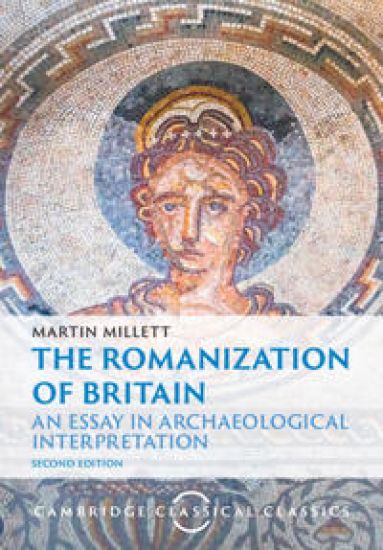
The Romanization of Britain was greeted, on first publication, as an innovative study of cultural change and interaction, offering a bold new perspective on Roman Britain based on archaeological evidence. It set out to explore the social dynamics of cultural change from a local perspective by looking at the patterns of interaction between provincial peoples and imperial power. Drawing together a wide range of excavated data as well as textual evidence, it provided a new synthesis of the province whilst offering an alternative way of understanding cultural change in the Roman Empire more widely. Its publication served to catalyse debate, stimulating very considerable discussion and generating a wide variety of responses in a range of publications. This revised edition adds a new introductory essay exploring the genesis of this classic work and reviewing the subsequent debate, while also recalibrating the author's perspective on cultural change within the wider Roman provinces.
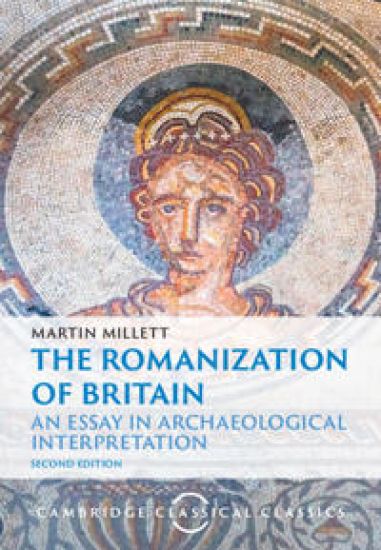
The Romanization of Britain

The Romanization of Britain

Martin Millett; Charlotte Higgins

Cambridge University Press
2025
sidottu
The Romanization of Britain was greeted, on first publication, as an innovative study of cultural change and interaction, offering a bold new perspective on Roman Britain based on archaeological evidence. It set out to explore the social dynamics of cultural change from a local perspective by looking at the patterns of interaction between provincial peoples and imperial power. Drawing together a wide range of excavated data as well as textual evidence, it provided a new synthesis of the province whilst offering an alternative way of understanding cultural change in the Roman Empire more widely. Its publication served to catalyse debate, stimulating very considerable discussion and generating a wide variety of responses in a range of publications. This revised edition adds a new introductory essay exploring the genesis of this classic work and reviewing the subsequent debate, while also recalibrating the author's perspective on cultural change within the wider Roman provinces.
Isurium Brigantum

Isurium Brigantum

Rose Ferraby; Martin Millett

Society of Antiquaries of London
2020
sidottu
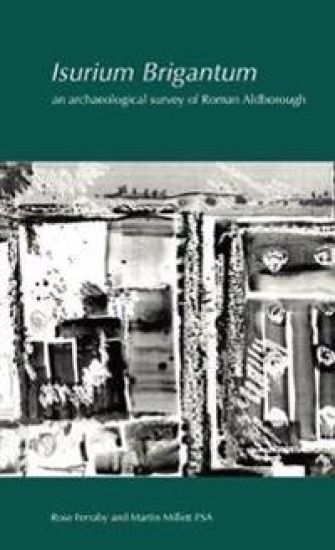
Modern-day Aldborough, in North Yorkshire, lies on the site of Isurium Brigantum, the former administrative capital of the Brigantes, one of the largest indigenous tribes of Roman Britain. Strategically located on Dere Street, by the second century AD it had become a key Roman town engaged with the supply of the northern frontier, with buildings and mosaics that reveal a thriving economy through to the fourth century. In the eighteenth and nineteenth centuries, the site of Isurium Brigantum was the subject of important antiquarian investigations. However, unlike some southern counterparts - for example, Calleva Atrebatum or Verulamium - in the twentieth century it attracted less archaeological attention. Then, in 2009 a team of archaeologists led by Dr Rose Ferraby and Professor Martin Millett began a major re-examination of the site. This included large-scale geophysical surveys using both gradiometry and high-resolution ground-penetrating radar. Most of the town and its surroundings were revealed, allowing its development from the second century AD to the medieval period to be mapped with great accuracy. Brought together in this volume for the first time are the results of those surveys, together with a re-evaluation of the earlier antiquarian work and more recent archaeological fieldwork and excavations - some never before published. The resulting volume provides historians and archaeologists with exciting new information about the topography and development of the Roman town and later landscape, together with a thorough review of the town in the broader context of Roman Britain and the western Empire. The volume is complemented by an interactive digital archive, which is free to access.
Burial, Society and Context in the Roman World

Burial, Society and Context in the Roman World

John Pearce; Martin Millett; Manuela Struck

Oxbow Books
2015
nidottu
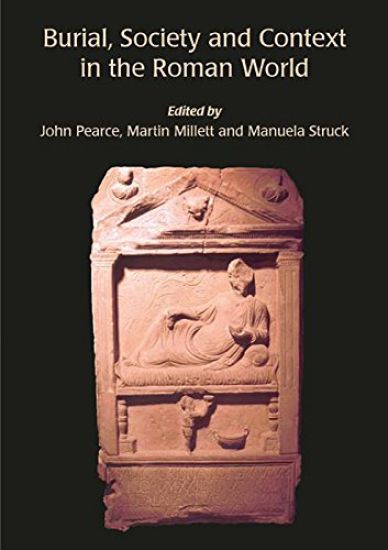
Although a large number of cemeteries have been explored in Roman Britain they have never been seen as central to the study of the province. This collection of twenty-eight papers, from a symposium held at the University of Durham in 1997, explores different approaches to examine the contribution that cemeteries can make to our wider understanding of Roman society. The papers are grouped under five headings: The reconstruction of mortuary rituals; Burial and social status; The dead in the landscape; Burial and ethnicity and society; Religion and Burial in late Roman Britain and Italy.
Ocriculum (Otricoli, Umbria)

Ocriculum (Otricoli, Umbria)

Sophie Hay; Simon Keay; Martin Millett

British School at Rome
2013
nidottu
The remarkable extent, state of preservation and monuments of Ocriculum make this one of the most important archaeological sites in ancient Italy. Located close to the river Tiber, north of Rome on the Via Flaminia, many travellers were drawn to Otricoli and its landscape, lured by its beauty. Significant monumental remains of the Roman town are still visible: the amphitheatre, the theatre, the forum area, basilica, baths and nymphaeum. Academic studies devoted to this important town are many, and this volume represents a further contribution to our understanding of the ancient town. Here are published the results of the urban survey in 2002–5. Field survey was coupled with a geophysical survey that has identified new features. This work adds greatly to our understanding of the ancient town and tells a different story to that usually told of Roman towns in terms of scale, layout and organization, as well as architectural and sculptural finds; and thus contributes significantly to debate on Roman urbanism. With contributions by Luana Cenciaioli, Sophy Downes, Rose Ferraby, Enrico Floridi, Shawn Graham, Salvatore Piro, Tim Sly, Lacey M. Wallace, Andrew Wallace-Hadrill and Sabrina Zampini