

Kirjailija
Martin Mills
Kirjat ja teokset yhdessä paikassa: 12 kirjaa, julkaisuja vuosilta 2001–2022, suosituimpiin kuuluu Business Owners Your Questions Answered. Vertaile teosten hintoja ja tarkista saatavuus suomalaisista kirjakaupoista.
12 kirjaa
Kirjojen julkaisuvuodet: 2001–2022.
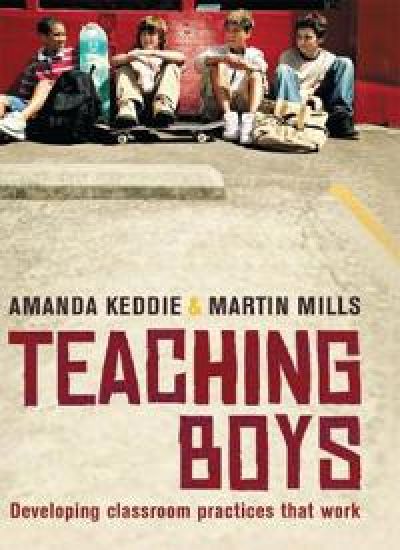
Persistently cheeky, disruptive, even aggressive boys can be found in classrooms everywhere, as can the victims of bullying. These boys' behaviours often pose a problem to themselves as well as to others. As the hotly contested debates about boys' education swirl around them, what can teachers actually do to improve boys' performance in the classroom? Teaching Boys provides a practical framework for teachers to improve boys' education in ways that are appropriate for their school context and also sustainable. Drawing on intensive research in classrooms where innovative teachers are achieving good outcomes with boys, Keddie and Mills show how other teachers can learn from their success. They acknowledge that there are no simple solutions, but show that what teachers do in the classroom really does matter. They emphasise the importance of understanding the impact of dominant and subversive masculinities at all levels of schooling, on both boys and girls.'What is original about this book is that it marries theory and practice in a way that speaks to the everyday realities and concerns of teachers who work with boys in schools'Associate Professor Wayne Martino, The University of Western Ontario'What is impressive about Teaching Boys is the way in which Keddie and Mills pull together the best research on boys and schooling with the best research on pedagogies.'Professor Bob Lingard, The University of Edinburgh
Autonomy, Accountability and Social Justice provides an account of recent developments in English state education, with a particular focus on the ‘academisation’ of schooling. It examines how head teachers, teachers and others working in diverse education settings navigate the current policy environment. The authors provide readers with insight into the complex decision-making processes that shape school responses to current educational agendas and examine the social justice implications of these responses. The book draws on Nancy Fraser’s social justice framework and her theorising of neoliberalism to explore current tensions associated with moves towards both greater autonomy for and accountability of state schooling. These tensions are presented through four case studies that centre upon 1) a group of local authority primary schools, 2) an academy ‘chain’, 3) a co-operative secondary school and 4) an alternative education setting. The book identifies the ‘emancipatory’ possibilities of these approaches amid the complex demands of autonomy and accountability seizing English schools. Informed by a consideration of market parameters and social protectionist ideals, this examination provides rich insights into how English schools have emancipatory capacity. Autonomy, Accountability and Social Justice makes a major theoretical contribution to understandings of how the market is working alongside the regulation of schooling and the implications of this for social justice. By drawing on the experiences of those working in schools, it demonstrates that the tensions associated with autonomy and accountability within the current education policy environment can be both productive and unproductive for social justice.
Autonomy, Accountability and Social Justice provides an account of recent developments in English state education, with a particular focus on the ‘academisation’ of schooling. It examines how head teachers, teachers and others working in diverse education settings navigate the current policy environment. The authors provide readers with insight into the complex decision-making processes that shape school responses to current educational agendas and examine the social justice implications of these responses. The book draws on Nancy Fraser’s social justice framework and her theorising of neoliberalism to explore current tensions associated with moves towards both greater autonomy for and accountability of state schooling. These tensions are presented through four case studies that centre upon 1) a group of local authority primary schools, 2) an academy ‘chain’, 3) a co-operative secondary school and 4) an alternative education setting. The book identifies the ‘emancipatory’ possibilities of these approaches amid the complex demands of autonomy and accountability seizing English schools. Informed by a consideration of market parameters and social protectionist ideals, this examination provides rich insights into how English schools have emancipatory capacity. Autonomy, Accountability and Social Justice makes a major theoretical contribution to understandings of how the market is working alongside the regulation of schooling and the implications of this for social justice. By drawing on the experiences of those working in schools, it demonstrates that the tensions associated with autonomy and accountability within the current education policy environment can be both productive and unproductive for social justice.
Re-imagining Schooling for Education
Glenda McGregor; Martin Mills; Kitty Te Riele; Aspa Baroutsis; Debra Hayes
Palgrave Macmillan
2018
nidottu
This book provokes a conversation about what supportive schooling contexts for both students and teachers might look like, and considers how schooling can contribute to a more socially-just society. It takes as its starting point the position of the most marginalised students, many of whom have either been rejected by or have rejected mainstream schooling, and argues that the experiences of these students suggest that it is time for schools to be reimagined for all young people. Utilizing both theory and data, the volume critiques many of the issues in conventional schools that work against education, and presents evidence ‘from the field’ in the form of data from unconventional schooling sites, which demonstrates some of the structural, relational, curricular and pedagogical changes that appear to be enabling schooling for education for their students. It will be essential reading for students and researchers in the fields of education, sociology and social work, and will also be of great interest to practising teachers.
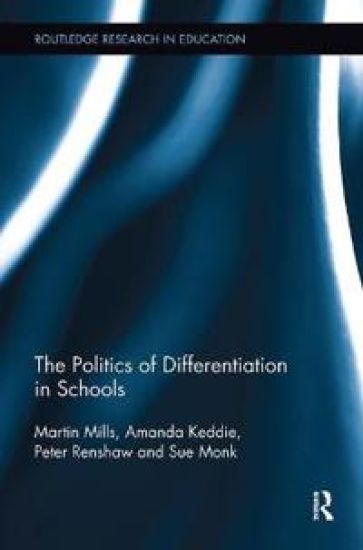
The Politics of Differentiation in Schools
Martin Mills; Amanda Keddie; Peter Renshaw; Sue Monk
Routledge
2018
nidottu
In many English-speaking countries, teachers are encouraged to differentiate their classrooms, and in some cases, through various policy mechanisms. This encouragement is often accompanied by threats and sanctions for not making the grade. By exploring the ways in which one education system in Australia has mandated differentiation through an audit of teacher practices, this book provides a timely engagement with the relationship between differentiated classrooms and social justice. It covers tensions, for instance, between providing culturally-appropriate classrooms, including constructing engaging and relevant curricula, and lowering expectations for students who have traditionally been marginalised by schooling. The data for this book has been collected from the same group of teachers over a period of three years, and offers detailed insights into how a particular politics of differentiation has played itself out in the context of a ‘global reform movement’ that has focused on improving student outcomes.
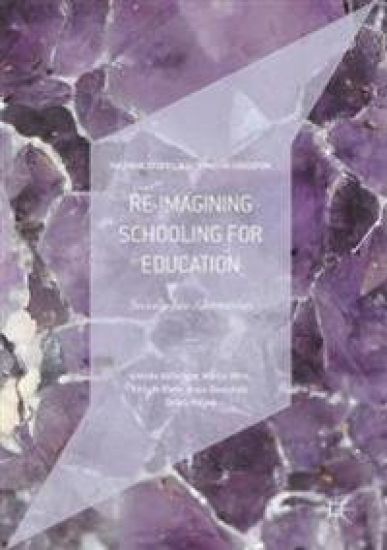
Re-imagining Schooling for Education
Glenda McGregor; Martin Mills; Kitty Te Riele; Aspa Baroutsis; Debra Hayes
Palgrave Macmillan
2017
sidottu
This book provokes a conversation about what supportive schooling contexts for both students and teachers might look like, and considers how schooling can contribute to a more socially-just society. It takes as its starting point the position of the most marginalised students, many of whom have either been rejected by or have rejected mainstream schooling, and argues that the experiences of these students suggest that it is time for schools to be reimagined for all young people. Utilizing both theory and data, the volume critiques many of the issues in conventional schools that work against education, and presents evidence ‘from the field’ in the form of data from unconventional schooling sites, which demonstrates some of the structural, relational, curricular and pedagogical changes that appear to be enabling schooling for education for their students. It will be essential reading for students and researchers in the fields of education, sociology and social work, and will also be of great interest to practising teachers.
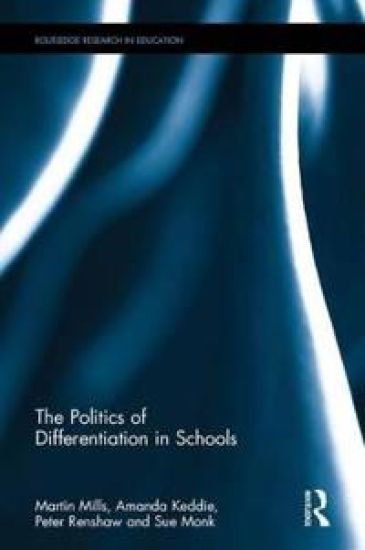
The Politics of Differentiation in Schools
Martin Mills; Amanda Keddie; Peter Renshaw; Sue Monk
Routledge
2016
sidottu
In many English-speaking countries, teachers are encouraged to differentiate their classrooms, and in some cases, through various policy mechanisms. This encouragement is often accompanied by threats and sanctions for not making the grade. By exploring the ways in which one education system in Australia has mandated differentiation through an audit of teacher practices, this book provides a timely engagement with the relationship between differentiated classrooms and social justice. It covers tensions, for instance, between providing culturally-appropriate classrooms, including constructing engaging and relevant curricula, and lowering expectations for students who have traditionally been marginalised by schooling. The data for this book has been collected from the same group of teachers over a period of three years, and offers detailed insights into how a particular politics of differentiation has played itself out in the context of a ‘global reform movement’ that has focused on improving student outcomes.

Many young people failed by the school system are those who face a range of social and economic challenges due to multiple forms of injustice. This book provides an insight into the educational practices that work to re-engage young people who have become disenchanted with traditional schooling. It examines the lives of students and workers who participate in education sites on the fringes of mainstream education, and includes a rich tapestry of personal experiences from those who have been failed by their schooling experiences. The book draws upon research of international relevance conducted in a range of ‘Flexible Learning Centres’ and ‘democratic schools’ in Australia and the UK; it suggests that improving the retention levels of young people in formal education will require schooling practices to change. Students who have become disengaged from mainstream schooling do re-engage in the learning process of many alternative schools, indicating that teaching practices and forms of organisation which work in alternative sites can also provide lessons for mainstream schooling, thereby encouraging a more socially just education system. Included in the book: contexts of contemporary schooling who chooses flexible learning centres and why democratic schools: students and teachers working together teaching in ‘the margins’ case studies: ‘oppositional alternatives’. All young people have the capacity to learn and to enjoy learning; they do not ‘fail school’, rather, schools fail them. The teachers, workers and students who have shared their stories provide significant insights into how we might change this situation, and the book will be invaluable reading for postgraduates and researchers in the fields of education, the sociology of education, school reform and social work.
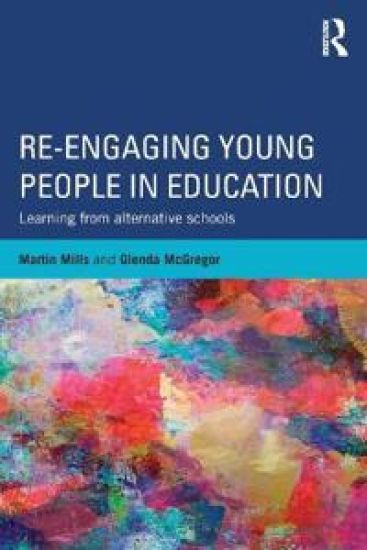
Many young people failed by the school system are those who face a range of social and economic challenges due to multiple forms of injustice. This book provides an insight into the educational practices that work to re-engage young people who have become disenchanted with traditional schooling. It examines the lives of students and workers who participate in education sites on the fringes of mainstream education, and includes a rich tapestry of personal experiences from those who have been failed by their schooling experiences. The book draws upon research of international relevance conducted in a range of ‘Flexible Learning Centres’ and ‘democratic schools’ in Australia and the UK; it suggests that improving the retention levels of young people in formal education will require schooling practices to change. Students who have become disengaged from mainstream schooling do re-engage in the learning process of many alternative schools, indicating that teaching practices and forms of organisation which work in alternative sites can also provide lessons for mainstream schooling, thereby encouraging a more socially just education system. Included in the book: contexts of contemporary schooling who chooses flexible learning centres and why democratic schools: students and teachers working together teaching in ‘the margins’ case studies: ‘oppositional alternatives’. All young people have the capacity to learn and to enjoy learning; they do not ‘fail school’, rather, schools fail them. The teachers, workers and students who have shared their stories provide significant insights into how we might change this situation, and the book will be invaluable reading for postgraduates and researchers in the fields of education, the sociology of education, school reform and social work.
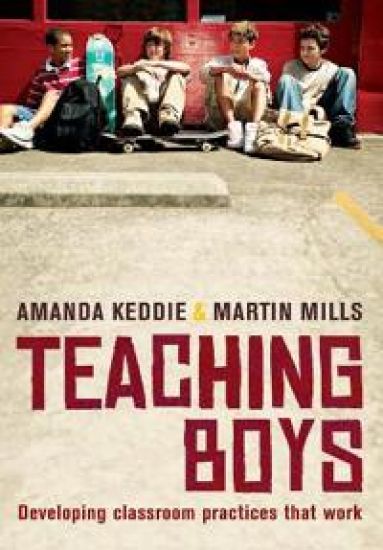
Persistently cheeky, disruptive, even aggressive boys can be found in classrooms everywhere, as can the victims of bullying. These boys' behaviours often pose a problem to themselves as well as to others. As the hotly contested debates about boys' education swirl around them, what can teachers actually do to improve boys' performance in the classroom? Teaching Boys provides a practical framework for teachers to improve boys' education in ways that are appropriate for their school context and also sustainable. Drawing on intensive research in classrooms where innovative teachers are achieving good outcomes with boys, Keddie and Mills show how other teachers can learn from their success. They acknowledge that there are no simple solutions, but show that what teachers do in the classroom really does matter. They emphasise the importance of understanding the impact of dominant and subversive masculinities at all levels of schooling, on both boys and girls.'What is original about this book is that it marries theory and practice in a way that speaks to the everyday realities and concerns of teachers who work with boys in schools'Associate Professor Wayne Martino, The University of Western Ontario'What is impressive about Teaching Boys is the way in which Keddie and Mills pull together the best research on boys and schooling with the best research on pedagogies.'Professor Bob Lingard, The University of Edinburgh
"Finally! A book that not only shows how the problem of 'school violence' is really a problem of boys' violence, but also a book that offers concrete, gender-based interventions to help all of us - parents, teachers, community - work to reduce it. It is not an overstatement to say that this book will save lives" - Professor Michael Kimmel, SUNY Stony Brook." This is an important book in which Martin Mills provides a carefully argued analysis of gender-based violence in schools as well as a wealth of strategies for challenging its many facets. Challenging Violence in Schools is a grim reminder that the current narrow fixation with academic achievement needs to be broadened if schools are to act responsibly in playing their part in making the future. This book should be compulsory reading for all teachers. - Professor Pat Mahony, University of Surrey Roehampton." The contemporary concern about boys in schooling most often works within a 'competing victims syndrome', seeking to pit the interests of boys against those of girls. The strength of Martin Mills' book is that it takes a different stance in relation to boys in schooling. It focuses upon the ways dominant constructions of masculinity can lead to inappropriate and dangerous behaviours in schools. These violent behaviours affect the lives of all those in and associated with schools, including many other boys, many girls, as well as teachers. Drawing on research, Mills analyses and seeks to understand these issues and also makes useful recommendations for teachers and others in schools wanting to address these matters. This book is mandatory reading for anyone concerned with this important issue." - Professor Bob Lingard, Graduate School of Education, The University of Queensland.* Why are boys the major perpetrators of violence in schools?* What are the significant issues which schools need to take into account when dealing with boys' violence?* What are some practical strategies for addressing these issues? This book explores the relationship between violence and masculinity within schools. There is a clear need to explore this relationship. A substantial amount of evidence exists which demonstrates how boys are the major perpetrators of violence in schools - from extreme acts of violence such as school shootings in the US to more common forms of schoolyard bullying - and that both girls and boys are their victims. The book suggests that violence has been 'masculinized' in such a way that boys often perpetrate violence as a means of demonstrating their perception of what counts as a valued form of masculinity. This masculinization of violence has often meant that girls experience violence from boys who are seeking to demonstrate their superiority over girls, and it has also meant that some boys often experience violence due to their non-conformity to dominant images of masculinity. In order to support these arguments the book draws on extensive interview data collected from boys and teachers who were involved in anti-violence programs in their schools.