
Kirjailija
Martin Oppermann
Kirjat ja teokset yhdessä paikassa: 4 kirjaa, julkaisuja vuosilta 2006–2013, suosituimpiin kuuluu Zu. Vertaile teosten hintoja ja tarkista saatavuus suomalaisista kirjakaupoista.
4 kirjaa
Kirjojen julkaisuvuodet: 2006–2013.
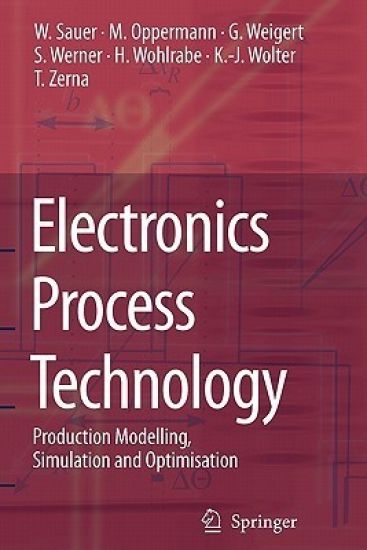
Electronics Process Technology
Wilfried Sauer; Martin Oppermann; Gerald Weigert; Sebastian Werner; Heinz Wohlrabe; Klaus-Jürgen Wolter; Thomas Zerna
Springer London Ltd
2010
nidottu
In electronics manufacture, the expanding range of products and the smaller-and-smaller scale of increasingly integrated components is producing a trend towards complex and fault-susceptible processes. This fact, coupled with shorter production times and the importance of quality assurance necessitates that process technology be more adaptable and open to new procedures than ever before. "Electronics Process Technology" is a systemised presentation of new techniques and methods in electronics manufacture. Planning, preparation and execution are interlinked to achieve robust manufacturing processes that realise optimum quality, costs and quantities in the final product. Topics covered include: - modelling of manufacturing processes; - graph-theoretical approach to manufacturing planning; - process simulation and optimisation including cost optimisation; - quality assurance and statistical process analysis and control; - reliability models for electronic products and - assembly accuracy.
Studienarbeit aus dem Jahr 2002 im Fachbereich Politik - Internationale Politik - Region: Osteuropa, Note: 2.0, Otto-von-Guericke-Universit t Magdeburg (IPW), Veranstaltung: Die Europ ische Union zwischen Integration und Erweiterung, 9 Quellen im Literaturverzeichnis, Sprache: Deutsch, Abstract: Die Europ ische Union (EU) besteht seit dem Inkrafttreten des Maastrichter Vertrages am 1.11.1993. Sie ging aus den Europ ischen Gemeinschaften in Verbindung mit einer "Gemeinsamen Au en- und Sicherheitspolitik" sowie "Zusammenarbeit in den Bereichen Justiz und Inneres" hervor. Mitgliedsl nder sind seit 1995 Belgien, D nemark, Deutschland, Finnland, Frankreich, Griechenland, Gro britannien, Irland, Italien, Luxemburg, die Niederlande, sterreich, Schweden, Spanien und Portugal. Die Aufgaben und Kompetenzen der EU werden durch gemeinsame Organe wahrgenommen, so zum Beispiel als oberstes Organ der Ministerrat und als Exekutive die Kommission der EU. Die Zielsetzung, welche in der 1986 unterzeichneten Einheitlichen Europ ischen Akte niedergelegt ist, basiert auf einem Einigungsprogramm, das ber Zollunion, gemeinsamen Binnenmarkt, einheitliches europ isches W hrungssystem und die politische Zusammenarbeit die Verwirklichung der polischen Union anstrebt. Die Erweiterung der Europ ischen Union ist eine gro e Herausforderung f r alle Mitgliedstaaten und die beitrittswilligen L nder. Sie dient der politischen und wirtschaftlichen St rkung Europas und verfolgt dar ber hinaus globale machtpolitische Aspekte. So sollen z. B. in der ersten Runde der Erweiterung 10 Staaten in die Union integriert werden. Allein dadurch vergr ert sich die Bev lkerungszahl um ca. 100 Millionen auf etwa 480 Millionen EU-B rger (vgl. W hlert, Torsten 2001). Dies soll Handel und Wirtschaft beleben und sich positiv auf die Weiterentwicklung und das Zusammenwachsen des europ ischen Marktes auswirken. Verbunden mit einer wachsenden Wirtschaftskraft gewinnt die EU auch auf internationaler B hne an Gewicht und Ei
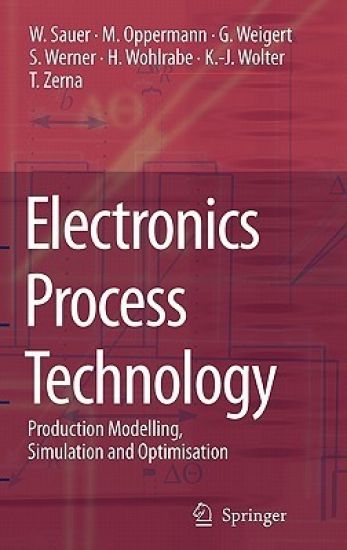
Electronics Process Technology
Wilfried Sauer; Martin Oppermann; Gerald Weigert; Sebastian Werner; Heinz Wohlrabe; Klaus-Jürgen Wolter; Thomas Zerna
Springer London Ltd
2006
sidottu
In electronics manufacture, the expanding range of products and the smaller-and-smaller scale of increasingly integrated components is producing a trend towards complex and fault-susceptible processes. This fact, coupled with shorter production times and the importance of quality assurance necessitates that process technology be more adaptable and open to new procedures than ever before. "Electronics Process Technology" is a systemised presentation of new techniques and methods in electronics manufacture. Planning, preparation and execution are interlinked to achieve robust manufacturing processes that realise optimum quality, costs and quantities in the final product. Topics covered include: - modelling of manufacturing processes; - graph-theoretical approach to manufacturing planning; - process simulation and optimisation including cost optimisation; - quality assurance and statistical process analysis and control; - reliability models for electronic products and - assembly accuracy.